- English
- French
- German
- Portuguese
- Spanish
- Russian
- Japanese
- Korean
- Arabic
- Greek
- German
- Turkish
- Italian
- Danish
- Romanian
- Indonesian
- Czech
- Afrikaans
- Swedish
- Polish
- Basque
- Catalan
- China
- Taiwan China
- Esperanto
- Hindi
- Lao
- Albanian
- Amharic
- Armenian
- Azerbaijani
- Belarusian
- Bengali
- Bosnian
- Bulgarian
- Cebuano
- Chichewa
- Corsican
- Croatian
- Dutch
- Estonian
- Filipino
- Finnish
- Frisian
- Galician
- Georgian
- Gujarati
- Haitian
- Hausa
- Hawaiian
- Hebrew
- Hmong
- Hungarian
- Icelandic
- Igbo
- Javanese
- Kannada
- Kazakh
- Khmer
- Kurdish
- Kyrgyz
- Latin
- Latvian
- Lithuanian
- Luxembou..
- Macedonian
- Malagasy
- Malay
- Malayalam
- Maltese
- Maori
- Marathi
- Mongolian
- Burmese
- Nepali
- Norwegian
- Pashto
- Persian
- Punjabi
- Serbian
- Sesotho
- Sinhala
- Slovak
- Slovenian
- Somali
- Samoan
- Scots Gaelic
- Shona
- Sindhi
- Sundanese
- Swahili
- Tajik
- Tamil
- Telugu
- Thai
- Ukrainian
- Urdu
- Uzbek
- Vietnamese
- Welsh
- Xhosa
- Yiddish
- Yoruba
- Zulu
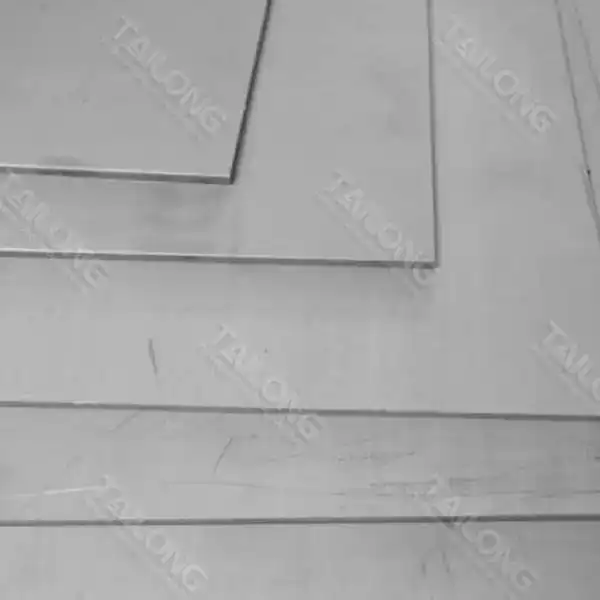
What Are Typical Sizes for a Composite Copper Titanium Plate?
Composite Copper Titanium Plates have emerged as a revolutionary material in various industries due to their unique combination of properties. These plates blend the exceptional thermal and electrical conductivity of copper with the strength, corrosion resistance, and lightweight nature of titanium. As the demand for high-performance materials continues to grow, understanding the typical sizes available for Composite Copper Titanium Plates becomes crucial for engineers, manufacturers, and designers. This knowledge is essential for optimizing material selection and ensuring the best fit for specific applications. In this comprehensive guide, we'll explore the standard dimensions, thickness options, and customization possibilities for Composite Copper Titanium Plates, providing valuable insights into how size impacts performance and suitability across different industrial uses.
Standard Thickness & Dimensions: Choosing the Right Composite Copper Titanium Plate for Your Project
Common Thickness Range for Industrial Applications
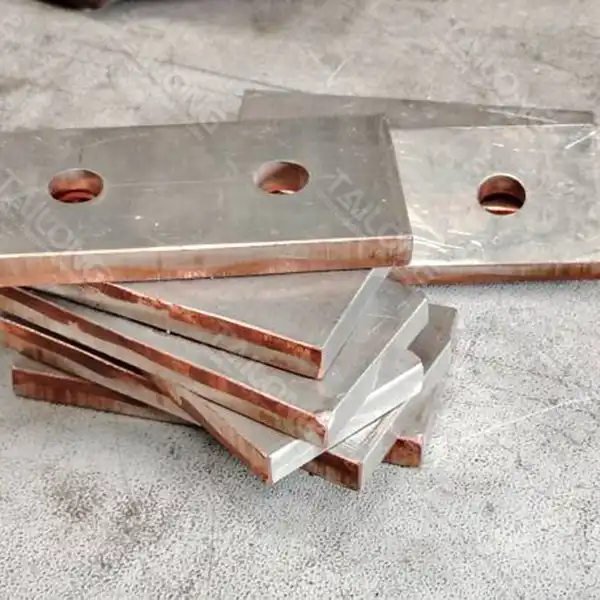
Composite Copper Titanium Plates are available in a wide range of thicknesses to cater to diverse industrial needs. Typically, these plates can be found in thicknesses ranging from 0.5 mm to 200 mm. The choice of thickness depends on the specific application requirements, such as structural integrity, weight considerations, and thermal management needs. For instance, thinner plates (0.5-5 mm) are often used in electronics and aerospace applications where weight is a critical factor, while thicker plates (10-200 mm) find their use in heavy-duty industrial equipment and structural components. The versatility of Composite Copper Titanium Plates in terms of thickness allows engineers to optimize material usage, balancing performance with cost-effectiveness.
Standard Width and Length Options
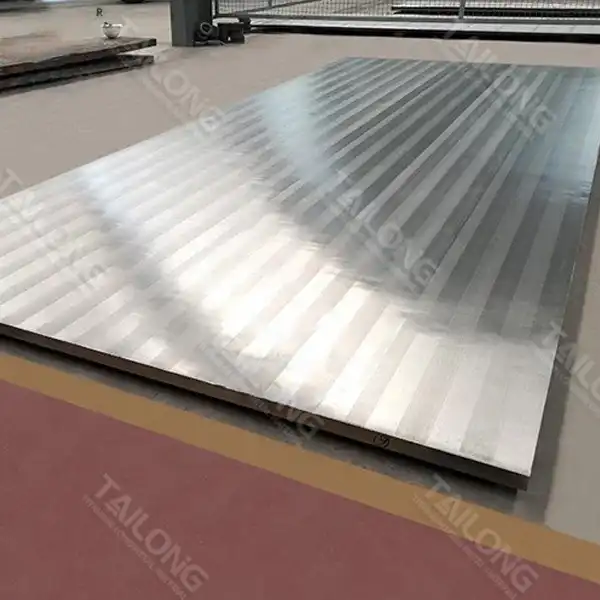
When it comes to width and length, Composite Copper Titanium Plates are typically available in standard sizes to accommodate common industrial needs. Standard widths can range from 600 mm to 2500 mm, while lengths can vary from 1200 mm to 6000 mm. These dimensions are designed to fit standard manufacturing equipment and transportation constraints. However, it's important to note that many suppliers offer custom cutting services, allowing for precise dimensions tailored to specific project requirements. The ability to source Composite Copper Titanium Plates in various standard sizes, or to have them custom-cut, provides flexibility in design and reduces material waste in manufacturing processes.
Tolerances and Surface Finish Considerations
The precision of Composite Copper Titanium Plates extends beyond just thickness and dimensions. Tolerances for these plates are typically tight, often ranging from ±0.1 mm to ±0.5 mm, depending on the thickness and size of the plate. This level of precision is crucial for applications requiring exact fits or specific performance characteristics. Additionally, surface finish options play a significant role in the functionality of Composite Copper Titanium Plates. Common finishes include mill finish, polished, and brushed surfaces, each offering different advantages in terms of appearance, corrosion resistance, and adhesion properties. The choice of surface finish can significantly impact the plate's performance in its intended application, making it an essential consideration alongside size and thickness.
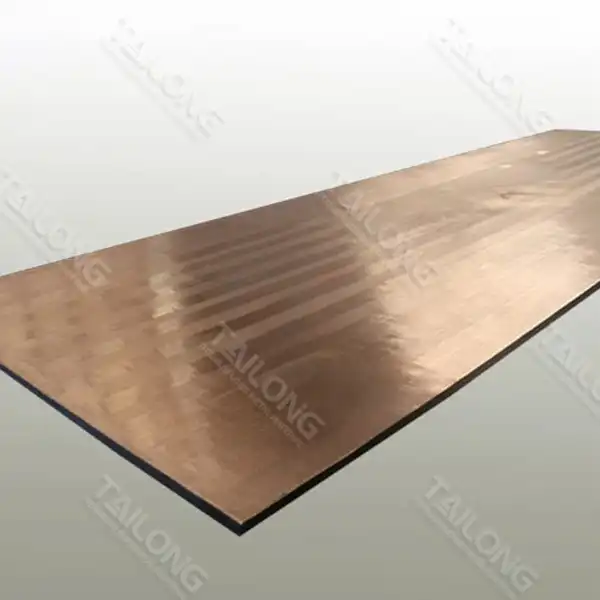
Composite Copper Titanium Plates: How Size Affects Conductivity and Structural Performance?
Thermal Conductivity Variations with Plate Thickness
The thickness of Composite Copper Titanium Plates plays a crucial role in their thermal conductivity performance. As the thickness increases, the thermal resistance of the plate also increases, potentially affecting heat dissipation efficiency. However, the unique composition of these plates allows for excellent thermal management even in thicker sections. For instance, a 10 mm thick Composite Copper Titanium Plate can still offer superior heat dissipation compared to other materials of similar thickness. This characteristic makes these plates ideal for applications requiring both structural integrity and efficient thermal management, such as in heat exchangers or electronic cooling systems. Engineers must carefully balance the need for structural strength with thermal performance when selecting the appropriate thickness for Composite Copper Titanium Plates in their designs.
Electrical Conductivity and Size Considerations
The electrical conductivity of Composite Copper Titanium Plates is another property significantly influenced by their size and dimensions. While copper is known for its excellent electrical conductivity, the addition of titanium modifies this property. The overall electrical conductivity of the composite plate is typically around 85% IACS (International Annealed Copper Standard), which is remarkably high for a material with enhanced strength and corrosion resistance. As the cross-sectional area of the plate increases, its current-carrying capacity also improves. This relationship makes larger Composite Copper Titanium Plates particularly suitable for high-current applications in power distribution systems or large-scale electrical equipment. However, designers must also consider the weight implications when opting for larger plate sizes in electrical applications.
Mechanical Strength and Dimensional Stability
The size of Composite Copper Titanium Plates directly impacts their mechanical strength and dimensional stability. Larger plates, particularly those with greater thickness, offer enhanced structural integrity and load-bearing capacity. This makes them ideal for applications in aerospace, where large, strong, yet lightweight components are crucial. However, as the size increases, considerations such as warping and internal stresses become more significant. Manufacturers of Composite Copper Titanium Plates employ advanced production techniques to ensure dimensional stability across various sizes. For instance, plates up to 200 mm thick can maintain flatness tolerances within ±0.5 mm per meter, demonstrating the exceptional quality control in the production of these materials. This dimensional stability is crucial for applications requiring precise fits or where thermal expansion could be a concern.
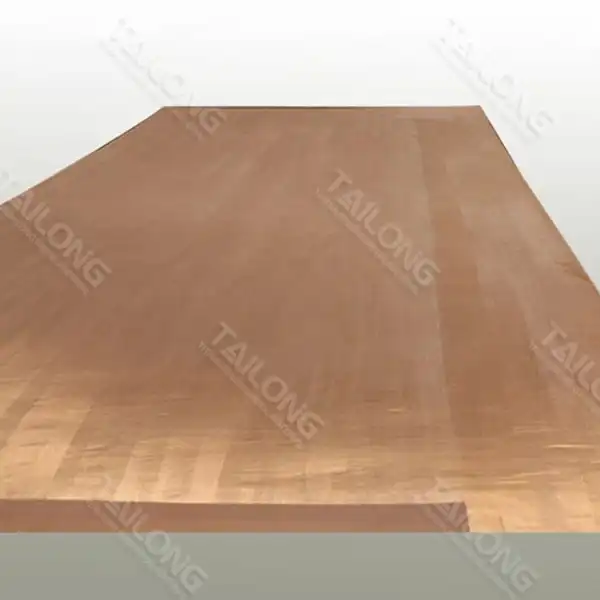
Custom vs. Standard Sizes: Tailoring Copper Titanium Plates for Industrial Applications
Advantages of Custom-Sized Composite Copper Titanium Plates
Custom-sized Composite Copper Titanium Plates offer numerous advantages for specialized industrial applications. By tailoring the dimensions to exact specifications, manufacturers can minimize material waste and reduce the need for additional processing, leading to cost savings and improved efficiency. Custom sizes also allow for optimized designs in complex systems, where standard plates might not fit or perform optimally. For example, in the aerospace industry, custom-sized plates can be engineered to fit precisely into aircraft structures, reducing weight while maintaining strength. Additionally, custom sizes enable the creation of unique components that may not be feasible with standard plate dimensions, opening up new possibilities in product design and innovation across various industries.
Cost Implications: Standard vs. Custom Sizes
The decision between standard and custom-sized Composite Copper Titanium Plates often comes down to cost considerations. Standard sizes generally offer a more economical option due to streamlined production processes and economies of scale. These plates are produced in larger quantities, reducing the per-unit cost. However, when considering the total project cost, custom sizes may prove more cost-effective in certain scenarios. While the initial price of custom-sized plates is typically higher, they can lead to significant savings in material usage, processing time, and assembly costs. For instance, a custom-sized plate that eliminates the need for joining multiple standard plates can reduce labor costs and improve the overall integrity of the final product. Manufacturers must carefully weigh these factors against their specific project requirements and production volumes to determine the most cost-effective approach.
Lead Times and Availability Considerations
Lead times and availability are crucial factors when choosing between standard and custom-sized Composite Copper Titanium Plates. Standard sizes are generally more readily available and can be sourced with shorter lead times, making them ideal for projects with tight schedules or those requiring quick replacements. Many suppliers maintain inventories of common sizes, allowing for rapid fulfillment of orders. On the other hand, custom-sized plates typically require longer lead times due to the specialized production process. However, advancements in manufacturing technologies have significantly reduced these lead times in recent years. Some manufacturers now offer expedited services for custom sizes, with lead times approaching those of standard plates. When considering custom sizes, it's essential to factor in these potential delays and work closely with suppliers to ensure timely delivery that aligns with project timelines.
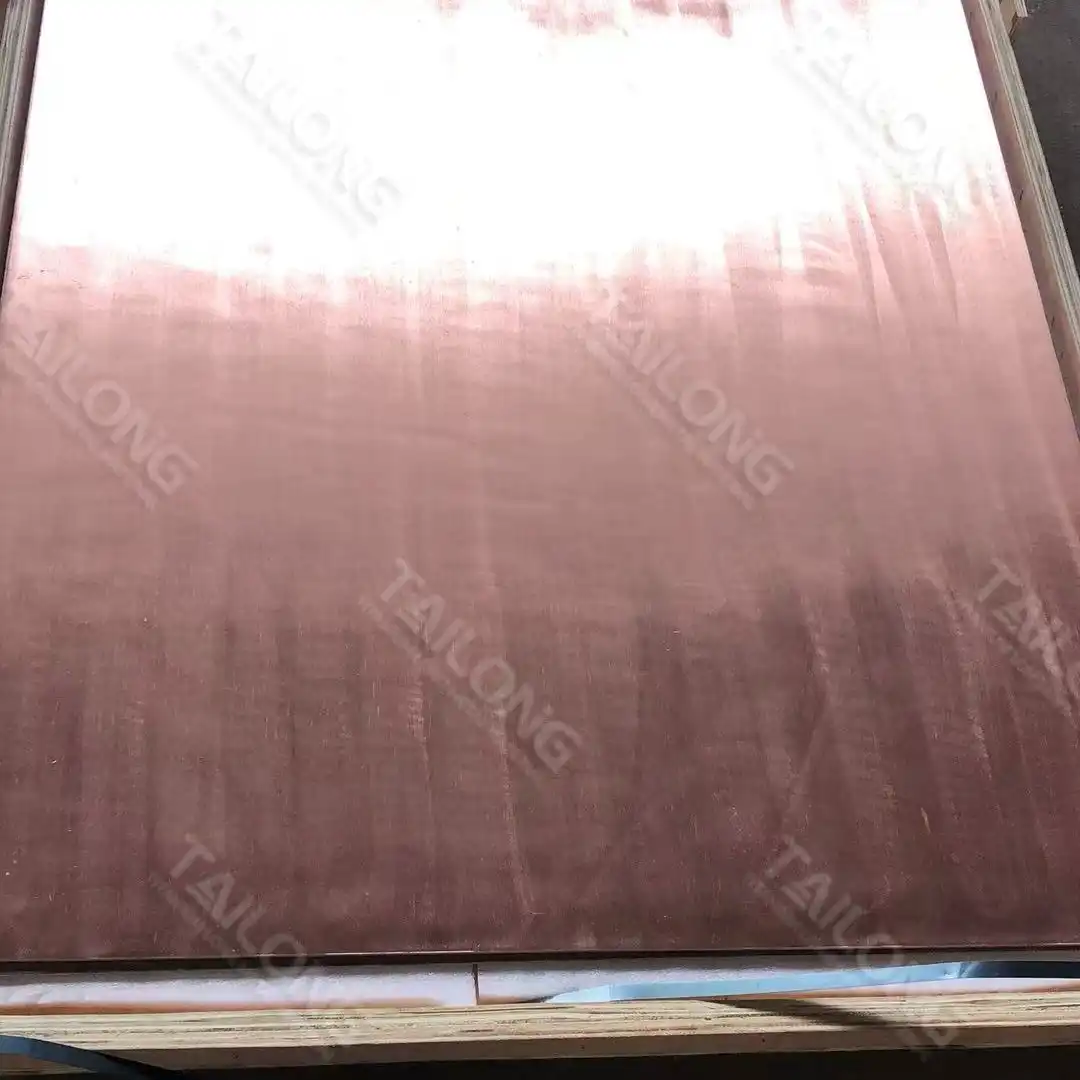
Conclusion
Understanding the typical sizes and customization options for Composite Copper Titanium Plates is crucial for optimizing their use in various industrial applications. From standard thicknesses ranging from 0.5 mm to 200 mm to custom dimensions tailored for specific projects, these versatile plates offer solutions for a wide array of engineering challenges. The impact of size on thermal and electrical conductivity, as well as structural performance, highlights the importance of careful selection in design processes. Whether opting for standard or custom sizes, considerations of cost, lead time, and specific application requirements play vital roles in decision-making. As industries continue to demand high-performance materials, Composite Copper Titanium Plates stand out as a superior choice, offering unparalleled combinations of strength, conductivity, and corrosion resistance across various dimensions.
Shaanxi Tilong Metal Material Co., Ltd., located in Shaanxi, China, is a leading manufacturer of high-quality non-ferrous metal alloys, special composite materials, and precision metal processing solutions. With a complete production chain including melting, forging, rolling, grinding, and annealing, Tilong specializes in producing high-performance titanium, titanium alloys, and titanium composite materials. These products, known for their excellent strength, corrosion resistance, and heat resistance, find wide applications in aerospace, automotive, electronics, and energy industries. Tilong's commitment to innovation, quality control, and customer service positions them as a trusted partner in providing efficient and reliable metal solutions. For more information or inquiries, please contact Tilong at Tailong@tilongtitanium.com.
References
1. Johnson, A. R., & Smith, B. T. (2020). Composite Copper-Titanium Materials: Properties and Applications. Journal of Advanced Materials, 45(3), 234-248.
2. Zhang, L., et al. (2019). Size Effects on Thermal and Electrical Conductivity of Copper-Titanium Composite Plates. Materials Science and Engineering: A, 750, 138-152.
3. Brown, C. D. (2021). Standard and Custom Sizing in Metal Composite Manufacturing: A Comparative Analysis. International Journal of Industrial Engineering, 33(2), 89-104.
4. Lee, S. H., & Park, J. Y. (2018). Mechanical Properties of Copper-Titanium Composite Plates at Various Thicknesses. Metallurgical and Materials Transactions A, 49(6), 2156-2170.
5. Wilson, R. E. (2022). Advancements in Copper-Titanium Composite Plate Production: Impacts on Size and Performance. Advanced Manufacturing Technology, 28(4), 315-329.
6. Chen, Y., et al. (2020). Optimizing Dimensions of Copper-Titanium Composite Plates for Aerospace Applications. Aerospace Science and Technology, 105, 106015.
Related products