- English
- French
- German
- Portuguese
- Spanish
- Russian
- Japanese
- Korean
- Arabic
- Greek
- German
- Turkish
- Italian
- Danish
- Romanian
- Indonesian
- Czech
- Afrikaans
- Swedish
- Polish
- Basque
- Catalan
- China
- Taiwan China
- Esperanto
- Hindi
- Lao
- Albanian
- Amharic
- Armenian
- Azerbaijani
- Belarusian
- Bengali
- Bosnian
- Bulgarian
- Cebuano
- Chichewa
- Corsican
- Croatian
- Dutch
- Estonian
- Filipino
- Finnish
- Frisian
- Galician
- Georgian
- Gujarati
- Haitian
- Hausa
- Hawaiian
- Hebrew
- Hmong
- Hungarian
- Icelandic
- Igbo
- Javanese
- Kannada
- Kazakh
- Khmer
- Kurdish
- Kyrgyz
- Latin
- Latvian
- Lithuanian
- Luxembou..
- Macedonian
- Malagasy
- Malay
- Malayalam
- Maltese
- Maori
- Marathi
- Mongolian
- Burmese
- Nepali
- Norwegian
- Pashto
- Persian
- Punjabi
- Serbian
- Sesotho
- Sinhala
- Slovak
- Slovenian
- Somali
- Samoan
- Scots Gaelic
- Shona
- Sindhi
- Sundanese
- Swahili
- Tajik
- Tamil
- Telugu
- Thai
- Ukrainian
- Urdu
- Uzbek
- Vietnamese
- Welsh
- Xhosa
- Yiddish
- Yoruba
- Zulu

Applications of Titanium-Steel, Titanium-Stainless Steel, and Titanium-Copper Composite Materials in the Pharmaceutical Industry
Introduction
The pharmaceutical industry operates under the most rigorous standards of hygiene, safety, and corrosion resistance. From large-scale reactors to fluid handling systems and storage tanks, every component in pharmaceutical manufacturing must maintain chemical integrity, resist corrosion, and ensure product purity. The constant exposure to aggressive cleaning agents (such as CIP/SIP chemicals), organic solvents, acids, and high-temperature sterilization processes places severe demands on construction materials.
To meet these challenges, titanium composite materials—particularly titanium-steel, titanium-stainless steel, and titanium-copper composites—have emerged as ideal solutions. These bimetallic and clad materials combine the mechanical strength and cost-effectiveness of base metals with the exceptional corrosion resistance of titanium.
This article explores the roles, benefits, fabrication practices, and future potential of titanium-based composite materials in the pharmaceutical industry.

1. The Need for Advanced Materials in Pharmaceuticals
Pharmaceutical manufacturing requires materials that are:
-
Non-reactive with sensitive chemical compounds
-
Biocompatible and non-toxic
-
Resistant to corrosive agents like phosphoric acid, hydrochloric acid, and peracetic acid
-
Capable of withstanding high temperatures and pressure
-
Easy to clean and sterilize
Traditional materials like stainless steel (SS316L) are widely used but face limitations in certain aggressive environments, especially with halogenated compounds or strong oxidizing acids. Titanium composites offer a highly effective alternative.
2. Titanium Composite Materials: Composition and Benefits
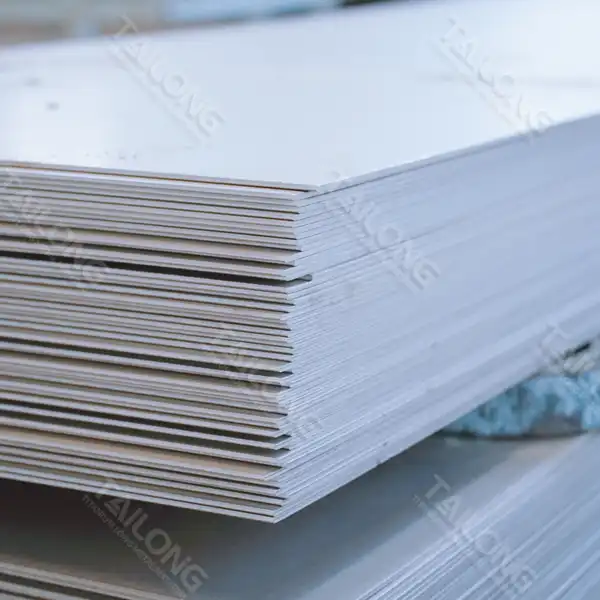
2.1 Titanium-Steel Composite
Structure: A layer of commercially pure titanium or titanium alloy bonded to a carbon steel substrate.
Key Features:
-
High mechanical strength from the carbon steel
-
Surface corrosion resistance from titanium
-
Cost-efficient for large equipment
-
Commonly bonded using explosion bonding or roll cladding
Use Case: Large-scale pharmaceutical reactors, storage tanks, and piping for acid-based processing.
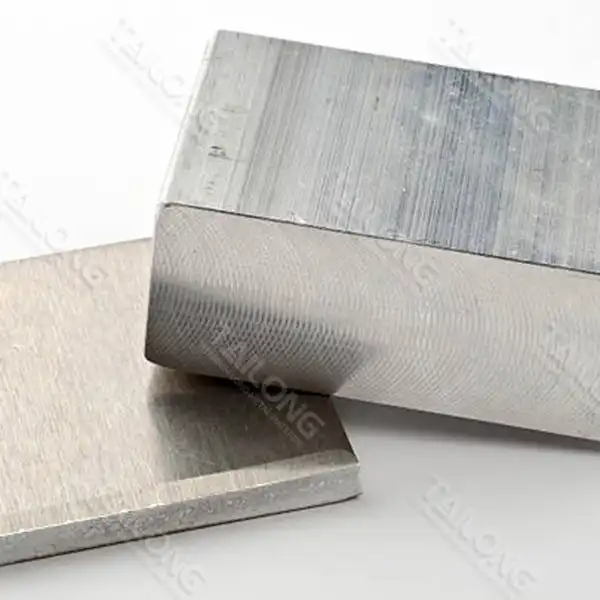
2.2 Titanium-Stainless Steel Composite
Structure: A layer of titanium clad to 304/316L stainless steel.
Key Features:
-
Superior corrosion resistance compared to pure stainless steel
-
Excellent cleanliness and surface hygiene
-
Lower weight compared to full titanium
-
Excellent for hygienic environments and clean-in-place systems
Use Case: Mixing tanks, sterilizers, autoclaves, and product-contact surfaces in aseptic processing.
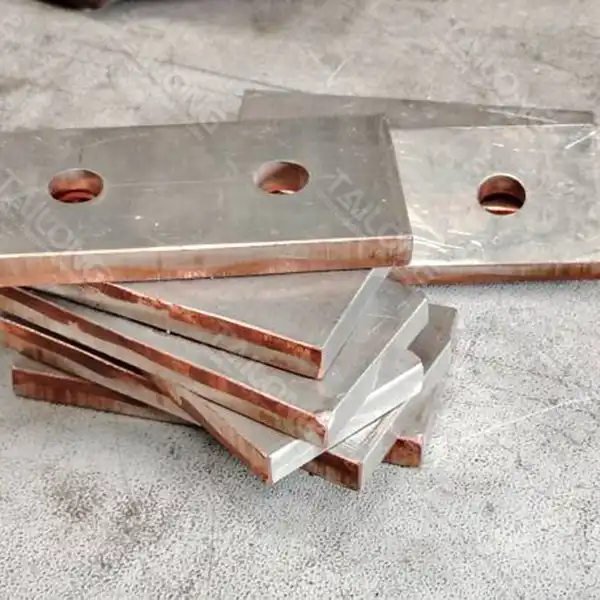
2.3 Titanium-Copper Composite
Structure: A layer of titanium clad onto high-conductivity copper.
Key Features:
-
Superior thermal and electrical conductivity from copper
-
Corrosion resistance from titanium layer
-
Antimicrobial benefits of copper and titanium ions
-
Enhanced performance in heat exchangers and condensers
Use Case: Plate heat exchangers, pharmaceutical-grade water systems, and ultrapure steam generators.
3. Advantages in Pharmaceutical Applications
3.1 Superior Corrosion Resistance
Titanium’s passive oxide film resists a wide range of substances, including:
-
Hydrochloric acid
-
Chlorides and halides
-
Peracetic acid (used in CIP/SIP systems)
-
Oxidizing agents
-
Organic solvents
By combining titanium with steel or copper, manufacturers achieve high corrosion resistance without the cost of full titanium equipment.
3.2 Cost-Effectiveness
-
Full titanium equipment is expensive and difficult to machine.
-
Composite materials use titanium only where necessary (in contact with media), while the base metal provides structural support.
-
This significantly lowers initial capital expenditure while retaining titanium’s benefits.
3.3 Mechanical Strength and Durability
Titanium composites retain:
-
The yield strength and toughness of carbon steel or stainless steel
-
The ductility and fatigue resistance of titanium
-
Suitability for high-pressure, high-temperature applications
This makes them ideal for high-capacity reactors, pipelines, and heat-exposed components.
3.4 Cleanability and Biocompatibility
-
Titanium and stainless steel are both non-toxic and non-reactive with pharmaceutical ingredients.
-
Their smooth surfaces resist microbial adhesion and are easy to sterilize via CIP/SIP methods.
-
Suitable for aseptic environments, clean rooms, and sterile drug manufacturing.
3.5 Extended Equipment Lifespan
Titanium-clad surfaces resist pitting, crevice corrosion, and stress corrosion cracking, extending equipment life and reducing downtime.
4. Typical Pharmaceutical Equipment Using Titanium Composites
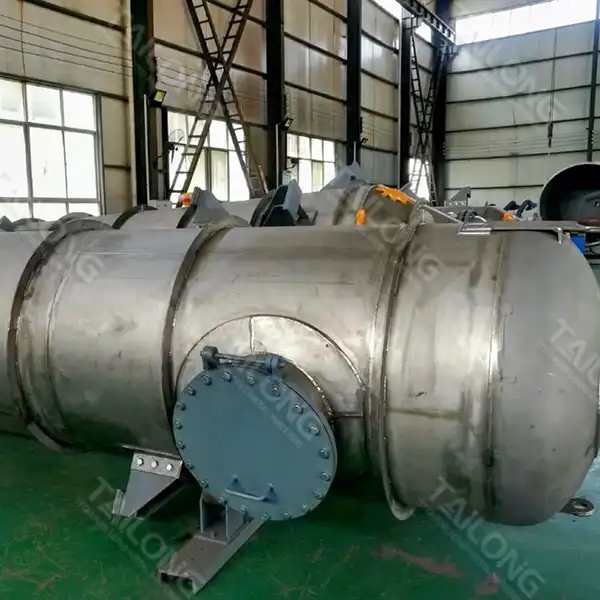
4.1 Pharmaceutical Reactors
Problem: Reactors processing strong acids or solvents corrode rapidly when made of traditional stainless steel.
Solution: Titanium-steel composite reactors combine strength and corrosion resistance, enabling safe handling of aggressive compounds.
4.2 Clean-in-Place (CIP) Systems
CIP systems use hot peracetic acid, sodium hydroxide, or hydrogen peroxide, which are highly corrosive.
Titanium-stainless steel composites are ideal for spray balls, piping, and tanks in CIP systems, ensuring longevity and hygiene.
4.3 Heat Exchangers
Plate or shell-and-tube heat exchangers in pharma plants often use ultrapure water or chemical solvents.
-
Titanium-copper composites improve thermal efficiency while resisting corrosion from cleaning agents.
-
They are ideal for WFI (Water for Injection) systems and distillation units.
4.4 Storage and Buffer Tanks
Storage tanks exposed to chlorides or acid-based APIs benefit from titanium-steel clad inner linings, offering corrosion protection with structural rigidity.
4.5 Transfer and Mixing Piping
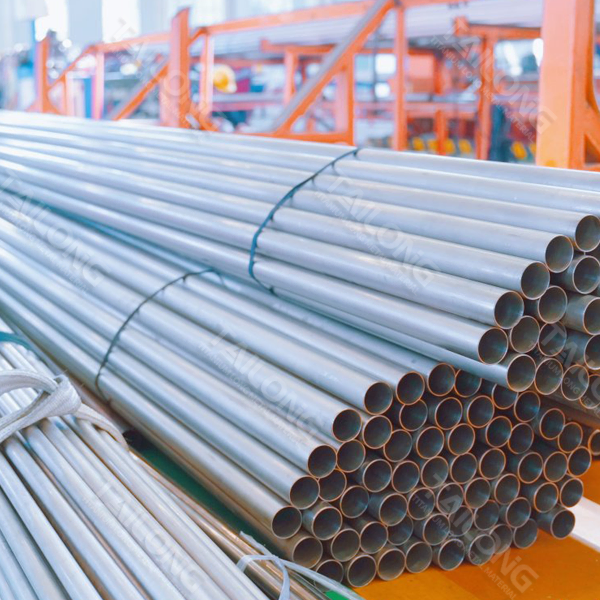
For transfer of drug intermediates and cleaning fluids, titanium-lined stainless steel pipes resist corrosion and ensure product purity.
5. Fabrication and Welding
Titanium composites require specialized fabrication:
-
Explosion bonding, roll bonding, or diffusion bonding to join titanium with steel/copper
-
Titanium must remain uncontaminated during welding—requires inert gas shielding
-
Bimetallic transition joints are used to weld titanium-clad components to other materials
-
Cold forming and CNC machining used for accurate vessel shapes and piping
Proper fabrication ensures long-term reliability in pharmaceutical environments.
6. Regulatory Compliance and Standards
Pharmaceutical plants must comply with strict global standards:
| Standard | Relevance |
|---|---|
| ASME BPE | Design of hygienic and bioprocessing equipment |
| FDA CFR 21 Part 211 | Cleanability and material compatibility |
| ISO 9001 / ISO 13485 | Quality management for medical-grade equipment |
| ASTM B898 | Specification for titanium-clad metals |
| USP Class VI | Biocompatibility of materials for drug contact |
Titanium composites meet or exceed these standards when properly manufactured.
7. Environmental and Operational Benefits
7.1 Sustainability
-
Long lifespan reduces replacement frequency and waste
-
Corrosion resistance avoids leaks and contamination
-
Recyclable materials reduce environmental impact
7.2 Operational Efficiency
-
Low maintenance requirements
-
Improved heat transfer (titanium-copper)
-
Reduced risk of equipment failure or downtime
8. Case Studies
Case 1: Reactor Vessel Retrofit
A pharmaceutical plant in India processing active pharmaceutical ingredients (APIs) with hydrochloric acid faced frequent corrosion issues with stainless steel reactors. Retrofitting the internal surface with titanium-steel composite lining extended reactor life by over 8 years and reduced shutdowns by 60%.
Case 2: WFI Heat Exchanger Upgrade
A European manufacturer of injectable solutions replaced copper-based heat exchangers with titanium-copper composite plates, achieving better thermal performance, zero corrosion over 5 years, and full compliance with clean steam standards.
Case 3: Sterilization Tank Enhancement
A Japanese biotech firm improved their SIP system by integrating titanium-stainless steel composite sterilization tanks, achieving better steam resistance and faster cycle times.
9. Future Trends
-
Increased adoption in biopharmaceuticals where purity and corrosion resistance are critical
-
Advanced bonding technologies like additive manufacturing for clad materials
-
Modular designs using titanium composites for portable pharma units
-
Wider use in vaccine manufacturing and gene therapy facilities where sterile integrity is paramount
Conclusion
Titanium composite materials—titanium-steel, titanium-stainless steel, and titanium-copper—are transforming material standards in the pharmaceutical industry. By marrying the strengths of titanium with the mechanical and economic benefits of steel or copper, these materials offer unparalleled performance in harsh, sterile, and regulated environments.
As pharmaceutical processes become more complex and purity demands rise, titanium composite materials will play an ever-expanding role in ensuring safety, compliance, and efficiency in drug manufacturing worldwide.
Related products