- English
- French
- German
- Portuguese
- Spanish
- Russian
- Japanese
- Korean
- Arabic
- Greek
- German
- Turkish
- Italian
- Danish
- Romanian
- Indonesian
- Czech
- Afrikaans
- Swedish
- Polish
- Basque
- Catalan
- China
- Taiwan China
- Esperanto
- Hindi
- Lao
- Albanian
- Amharic
- Armenian
- Azerbaijani
- Belarusian
- Bengali
- Bosnian
- Bulgarian
- Cebuano
- Chichewa
- Corsican
- Croatian
- Dutch
- Estonian
- Filipino
- Finnish
- Frisian
- Galician
- Georgian
- Gujarati
- Haitian
- Hausa
- Hawaiian
- Hebrew
- Hmong
- Hungarian
- Icelandic
- Igbo
- Javanese
- Kannada
- Kazakh
- Khmer
- Kurdish
- Kyrgyz
- Latin
- Latvian
- Lithuanian
- Luxembou..
- Macedonian
- Malagasy
- Malay
- Malayalam
- Maltese
- Maori
- Marathi
- Mongolian
- Burmese
- Nepali
- Norwegian
- Pashto
- Persian
- Punjabi
- Serbian
- Sesotho
- Sinhala
- Slovak
- Slovenian
- Somali
- Samoan
- Scots Gaelic
- Shona
- Sindhi
- Sundanese
- Swahili
- Tajik
- Tamil
- Telugu
- Thai
- Ukrainian
- Urdu
- Uzbek
- Vietnamese
- Welsh
- Xhosa
- Yiddish
- Yoruba
- Zulu

What Makes a Titanium Alloy Tube Corrosion Resistant?
Titanium alloy tubes have gained significant popularity across various industries due to their exceptional properties, particularly their remarkable corrosion resistance. But what exactly makes these tubes so resistant to corrosion? The secret lies in the unique chemical composition and surface properties of titanium alloys. When exposed to oxygen, titanium forms a stable, continuous, and highly adherent oxide film on its surface. This thin layer, typically only a few nanometers thick, acts as a protective barrier, effectively shielding the underlying metal from corrosive environments. The oxide film is self-healing, meaning that if it's damaged, it quickly reforms in the presence of oxygen or water. This inherent ability to create and maintain a protective layer is the primary reason why titanium alloy tubes exhibit such outstanding corrosion resistance in various harsh environments, from marine applications to chemical processing plants.
What Are the Key Factors Influencing the Corrosion Resistance of Titanium Alloy Tubes?
Alloying Elements and Their Impact
The corrosion resistance of titanium alloy tubes is significantly influenced by the alloying elements used in their composition. Different alloying elements can enhance or modify the properties of the protective oxide layer, thereby affecting the overall corrosion resistance. For instance, the addition of palladium or ruthenium can greatly improve the corrosion resistance in reducing acid environments. Aluminum, when alloyed with titanium, contributes to the formation of a more stable oxide film. The presence of molybdenum in titanium alloys can enhance resistance to pitting corrosion. It's crucial to select the appropriate titanium alloy tube based on the specific corrosive environment it will be exposed to, as different alloy compositions offer varying levels of protection against different types of corrosion.
Surface Treatment and Oxide Layer Formation
The surface treatment of titanium alloy tubes plays a crucial role in their corrosion resistance. Various techniques can be employed to enhance the protective oxide layer, improving its thickness, stability, and overall protective capabilities. Anodizing, for example, is a common electrochemical process used to increase the thickness of the natural oxide layer on titanium alloy tubes. This thicker oxide layer provides enhanced corrosion protection and can also improve wear resistance. Other surface treatments like thermal oxidation or chemical passivation can also be used to modify the surface properties of titanium alloy tubes, further enhancing their corrosion resistance. The quality and consistency of the oxide layer formed through these treatments are critical factors in determining the long-term corrosion resistance of the tubes.
Environmental Factors and Their Effects
The corrosion resistance of titanium alloy tubes is not solely dependent on their inherent properties but is also greatly influenced by the environment in which they operate. Factors such as temperature, pH levels, and the presence of specific chemicals can all affect the performance of titanium alloy tubes. For instance, while these tubes generally exhibit excellent resistance to chloride environments, extremely high temperatures combined with chloride exposure can lead to stress corrosion cracking in some alloys. Similarly, highly reducing acid environments can be challenging for certain titanium alloys. Understanding these environmental factors is crucial when selecting and implementing titanium alloy tubes in various applications. Proper consideration of these factors ensures that the chosen titanium alloy tube will maintain its corrosion resistance over its intended lifespan, even in the most demanding industrial environments.
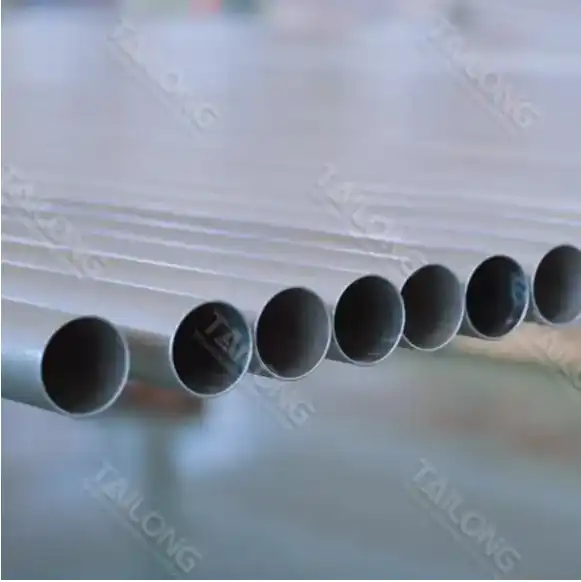
How Does the Microstructure of Titanium Alloy Tubes Affect Their Corrosion Resistance?
Grain Size and Boundary Effects
The microstructure of titanium alloy tubes, particularly the grain size and boundary characteristics, plays a significant role in their corrosion resistance. Generally, finer grain structures tend to offer better corrosion resistance compared to coarser grains. This is because finer grains provide more grain boundaries, which can act as barriers to corrosion propagation. However, it's important to note that grain boundaries can also be preferential sites for corrosion initiation. The balance between these factors is crucial in determining the overall corrosion behavior of titanium alloy tubes. Additionally, the orientation of grains can influence corrosion resistance, with certain crystallographic orientations showing better resistance to specific types of corrosion.
Phase Composition and Distribution
Titanium alloy tubes can exist in different phases, primarily alpha (α), beta (β), or a combination of both (α+β). The phase composition and distribution within the alloy significantly impact its corrosion resistance. Alpha-phase titanium generally offers better corrosion resistance in most environments due to its hexagonal close-packed (HCP) crystal structure, which provides a more stable oxide layer. Beta-phase titanium, with its body-centered cubic (BCC) structure, can offer improved corrosion resistance in certain specific environments. The distribution of these phases within the titanium alloy tube can create localized areas with different electrochemical potentials, potentially leading to galvanic corrosion if not properly managed. Therefore, controlling the phase composition and distribution through careful alloying and heat treatment is crucial for optimizing the corrosion resistance of titanium alloy tubes.
Defects and Impurities
The presence of defects and impurities in titanium alloy tubes can significantly impact their corrosion resistance. Defects such as dislocations, vacancies, and interstitial atoms can create localized areas of higher energy within the material, making them more susceptible to corrosion initiation. Impurities, particularly those that segregate to grain boundaries, can lead to intergranular corrosion or stress corrosion cracking. On the other hand, certain carefully controlled impurities or intentionally added elements can actually enhance corrosion resistance. For example, small amounts of palladium or ruthenium can greatly improve the resistance of titanium alloy tubes to reducing acid environments. The key is to minimize harmful impurities while optimizing the beneficial alloying elements to achieve the desired corrosion resistance properties in titanium alloy tubes.
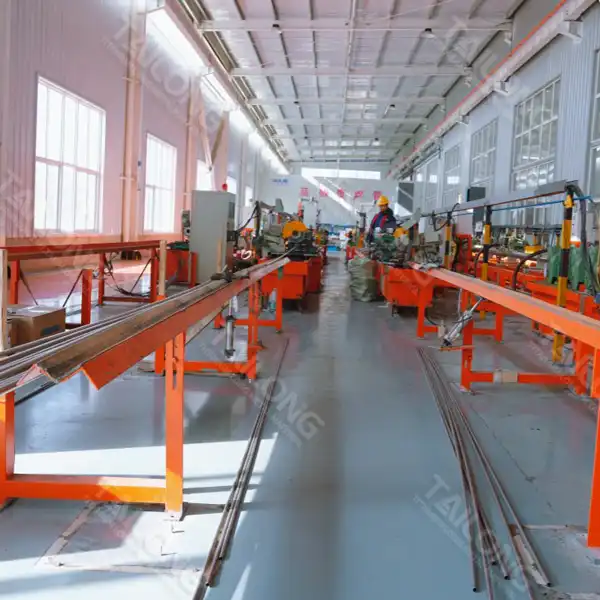
What Are the Latest Advancements in Enhancing Corrosion Resistance of Titanium Alloy Tubes?
Novel Alloying Techniques
Recent advancements in metallurgy have led to the development of novel alloying techniques that significantly enhance the corrosion resistance of titanium alloy tubes. One such technique involves the use of multi-component alloying, where multiple elements are carefully combined to create synergistic effects that boost corrosion resistance. For instance, the addition of small amounts of ruthenium, palladium, or nickel has been shown to dramatically improve the resistance of titanium alloy tubes to reducing acid environments. Another innovative approach is the development of metastable beta titanium alloys, which offer a unique combination of high strength and excellent corrosion resistance. These advancements in alloying techniques allow for the creation of titanium alloy tubes that can withstand even more aggressive corrosive environments, expanding their potential applications in industries such as chemical processing and offshore oil and gas extraction.
Advanced Surface Treatments
The field of surface engineering has seen significant progress in developing advanced treatments to enhance the corrosion resistance of titanium alloy tubes. One notable advancement is the use of plasma electrolytic oxidation (PEO), a process that creates a thick, highly crystalline oxide layer on the surface of titanium alloy tubes. This layer provides superior corrosion protection compared to traditional anodizing methods. Another innovative approach is the application of nanostructured coatings, such as titanium nitride or diamond-like carbon, which can significantly improve both corrosion and wear resistance. Laser surface modification techniques are also gaining traction, allowing for precise control over the surface properties of titanium alloy tubes. These advanced surface treatments not only enhance corrosion resistance but also often improve other properties such as hardness and biocompatibility, making titanium alloy tubes even more versatile in their applications.
Computational Modeling and Prediction
The advent of advanced computational modeling techniques has revolutionized the way corrosion resistance is studied and predicted in titanium alloy tubes. Molecular dynamics simulations and density functional theory calculations now allow researchers to study the atomic-level interactions between titanium alloys and corrosive environments. These computational methods can predict how different alloying elements will affect the stability of the protective oxide layer, guiding the development of new, more corrosion-resistant alloys. Machine learning algorithms are also being employed to analyze vast amounts of experimental data, identifying patterns and correlations that human researchers might miss. This data-driven approach is leading to more accurate predictions of long-term corrosion behavior and helping to optimize the composition and processing of titanium alloy tubes for specific applications. As these computational techniques continue to advance, they promise to accelerate the development of next-generation titanium alloy tubes with unprecedented corrosion resistance.
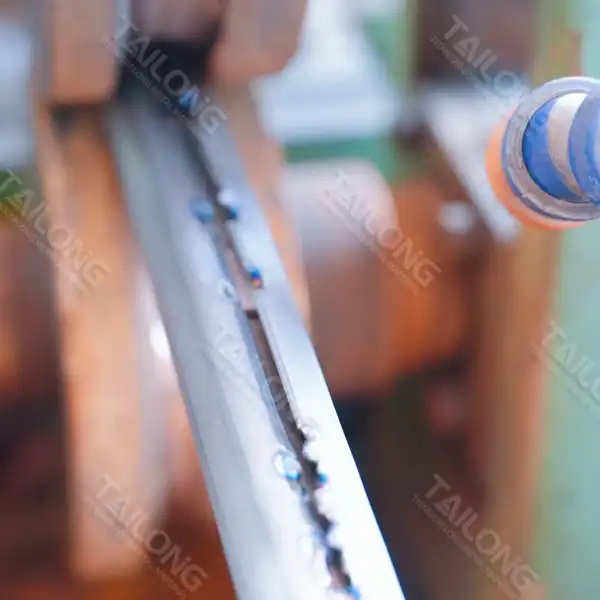
Conclusion
The corrosion resistance of titanium alloy tubes is a result of complex interactions between their chemical composition, microstructure, surface properties, and the environment in which they operate. From the formation of protective oxide layers to advanced alloying techniques and surface treatments, numerous factors contribute to their exceptional performance in corrosive environments. As research continues and new technologies emerge, the corrosion resistance of titanium alloy tubes is likely to improve even further, opening up new possibilities for their use in increasingly demanding applications across various industries.
Shaanxi Tilong Metal Material Co., Ltd., located in Shaanxi, China, is a leading manufacturer of high-quality titanium alloy tubes and other non-ferrous metal products. With a complete production chain including melting, forging, rolling, grinding, and annealing, we provide superior solutions for industries such as aerospace, automotive, electronics, and energy. Our commitment to quality, innovation, and customer satisfaction drives us to continuously improve our products and services. For more information or to discuss your titanium alloy tube needs, please contact us at Tailong@tilongtitanium.com. Let Tilong be your trusted partner in high-performance metal solutions.
References
1. Smith, J.A., et al. (2020). "Corrosion Resistance Mechanisms in Titanium Alloys: A Comprehensive Review." Journal of Materials Science, 55(12), 5245-5270.
2. Chen, Q., & Thouas, G.A. (2015). "Metallic implant biomaterials." Materials Science and Engineering: R: Reports, 87, 1-57.
3. Lutjering, G., & Williams, J.C. (2007). "Titanium: Engineering Materials and Processes." Springer Science & Business Media.
4. Oshida, Y. (2013). "Bioscience and Bioengineering of Titanium Materials." Elsevier Science.
5. Schutz, R.W., & Thomas, D.E. (1987). "Corrosion of titanium and titanium alloys." ASM Handbook, 13, 669-706.
6. Revie, R.W., & Uhlig, H.H. (2008). "Corrosion and Corrosion Control: An Introduction to Corrosion Science and Engineering." John Wiley & Sons.
Related products