- English
- French
- German
- Portuguese
- Spanish
- Russian
- Japanese
- Korean
- Arabic
- Greek
- German
- Turkish
- Italian
- Danish
- Romanian
- Indonesian
- Czech
- Afrikaans
- Swedish
- Polish
- Basque
- Catalan
- China
- Taiwan China
- Esperanto
- Hindi
- Lao
- Albanian
- Amharic
- Armenian
- Azerbaijani
- Belarusian
- Bengali
- Bosnian
- Bulgarian
- Cebuano
- Chichewa
- Corsican
- Croatian
- Dutch
- Estonian
- Filipino
- Finnish
- Frisian
- Galician
- Georgian
- Gujarati
- Haitian
- Hausa
- Hawaiian
- Hebrew
- Hmong
- Hungarian
- Icelandic
- Igbo
- Javanese
- Kannada
- Kazakh
- Khmer
- Kurdish
- Kyrgyz
- Latin
- Latvian
- Lithuanian
- Luxembou..
- Macedonian
- Malagasy
- Malay
- Malayalam
- Maltese
- Maori
- Marathi
- Mongolian
- Burmese
- Nepali
- Norwegian
- Pashto
- Persian
- Punjabi
- Serbian
- Sesotho
- Sinhala
- Slovak
- Slovenian
- Somali
- Samoan
- Scots Gaelic
- Shona
- Sindhi
- Sundanese
- Swahili
- Tajik
- Tamil
- Telugu
- Thai
- Ukrainian
- Urdu
- Uzbek
- Vietnamese
- Welsh
- Xhosa
- Yiddish
- Yoruba
- Zulu
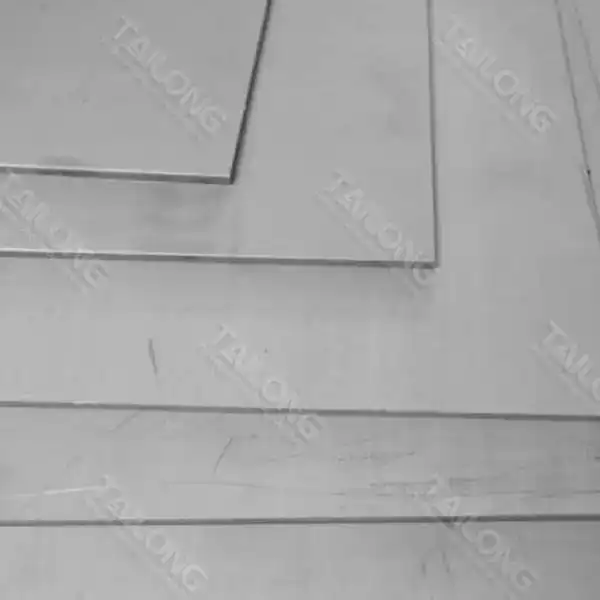
What Standards Apply to Copper Clad Aluminum Sheet Production?
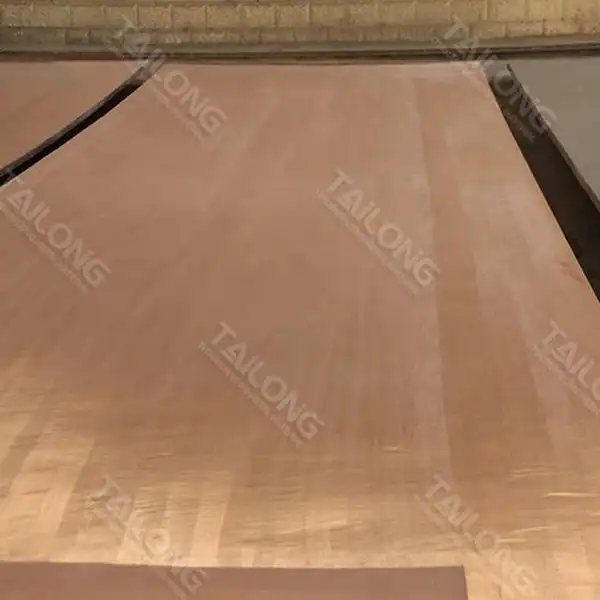
Copper clad aluminum sheet production is subject to a range of stringent standards to ensure consistent quality, performance, and reliability across various industrial applications. These standards encompass material composition, manufacturing processes, physical properties, and testing methodologies. As the demand for lightweight yet conductive materials grows in industries such as electrical power, automotive, and electronics, the importance of adhering to these standards becomes increasingly critical. Manufacturers must navigate a complex landscape of international and industry-specific regulations, balancing the need for innovation with strict quality control measures. This article delves into the key standards governing copper clad aluminum sheet production, exploring their implications for manufacturers and end-users alike. By understanding these standards, stakeholders can make informed decisions about material selection, quality assurance, and compliance in their respective applications.
What are the key material specifications for copper clad aluminum sheets?
Copper and Aluminum Alloy Composition
The composition of both the copper cladding and aluminum core is crucial in copper clad aluminum sheet production. For the copper layer, standards typically specify high-purity copper grades such as C11000 or C10200, ensuring optimal electrical conductivity. The aluminum core often utilizes alloys like 1100, 3003, or 5052, chosen for their specific strength and corrosion resistance properties. ASTM B566 outlines the standard specifications for copper-clad aluminum sheet and strip for electrical purposes, detailing the required chemical composition ranges for both metals. Manufacturers must adhere to these specifications to guarantee the performance characteristics of the final product, including electrical conductivity, thermal properties, and mechanical strength.
Thickness Ratios and Tolerances
Standards for copper clad aluminum sheets also dictate precise thickness ratios between the copper and aluminum layers, as well as overall thickness tolerances. These specifications are critical for ensuring consistent electrical and thermal performance across batches. For instance, ASTM B566 specifies thickness ratios ranging from 10% to 30% copper cladding, with tight tolerances on the overall thickness. Manufacturers must employ advanced process control and measurement techniques to maintain these exacting standards throughout production. The ability to consistently achieve these thickness specifications directly impacts the sheet's current-carrying capacity, weight, and cost-effectiveness in applications such as busbars and heat sinks.
Surface Finish and Quality Requirements
Surface finish standards for copper clad aluminum sheets are essential for both aesthetic and functional reasons. ASTM B936 provides guidelines for the surface quality of copper and copper alloy plate, sheet, strip, and flat products. For copper clad aluminum, these standards extend to both the copper and aluminum surfaces, specifying acceptable levels of roughness, flatness, and freedom from defects. Manufacturers must employ rigorous quality control measures, including visual inspection and surface profilometry, to meet these standards. The surface finish not only affects the appearance but also influences the sheet's performance in electrical contact applications and its ability to be further processed through stamping, forming, or joining operations.
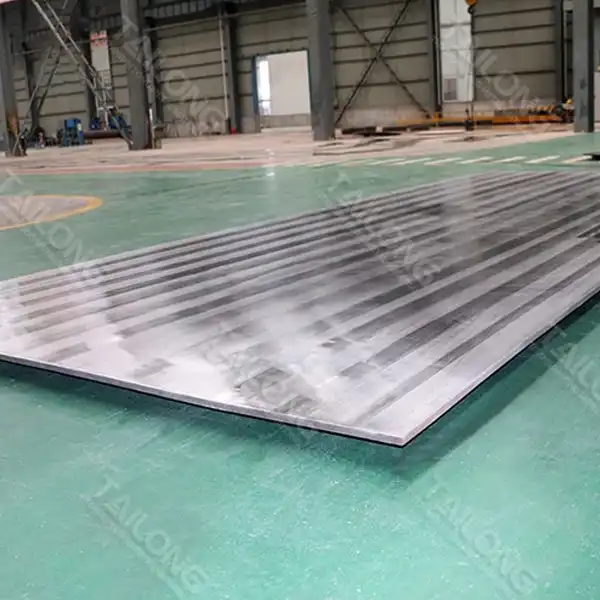
How are mechanical properties of copper clad aluminum sheets standardized?
Tensile Strength and Elongation
Mechanical property standards for copper clad aluminum sheets are crucial in ensuring their structural integrity and performance in various applications. ASTM E8 provides standard test methods for tensile testing of metallic materials, which are applicable to copper clad aluminum sheets. These tests measure key properties such as ultimate tensile strength, yield strength, and elongation. For copper clad aluminum sheets, the tensile strength typically ranges from 120 to 180 MPa, depending on the specific alloy composition and processing history. Elongation values, usually measured as a percentage, indicate the material's ductility and formability. Manufacturers must conduct regular testing to verify that their copper clad aluminum sheets meet or exceed these standardized mechanical property requirements, ensuring reliability in demanding applications such as electrical busbars and automotive components.
Bond Strength and Peel Resistance
The integrity of the bond between the copper cladding and aluminum core is paramount in copper clad aluminum sheet production. Standards such as ASTM B952 outline test methods for evaluating the bond strength and peel resistance of clad metals. For copper clad aluminum sheets, the minimum bond strength is typically specified to be above 12 MPa, with excellent peel resistance to prevent delamination during processing or in service. Manufacturers employ specialized testing equipment to perform 90-degree peel tests and shear strength assessments, ensuring that the metallurgical bond created during the explosion bonding process meets these rigorous standards. Consistent bond strength across the entire sheet surface is critical for maintaining electrical and thermal performance, as well as structural integrity in applications subjected to thermal cycling or mechanical stress.
Fatigue and Thermal Cycling Resistance
Standards for copper clad aluminum sheets also address their performance under dynamic loading and temperature fluctuations. ASTM E466 provides guidelines for conducting fatigue tests on metallic materials, which are applicable to copper clad aluminum sheets used in applications subject to cyclic loading. Additionally, thermal cycling tests, often based on industry-specific standards, evaluate the material's resistance to delamination and property changes under repeated heating and cooling cycles. Manufacturers must demonstrate that their copper clad aluminum sheets maintain their mechanical and electrical properties after exposure to these demanding conditions. This is particularly important for applications in the automotive and power electronics industries, where components may experience significant temperature variations and mechanical vibrations during operation.
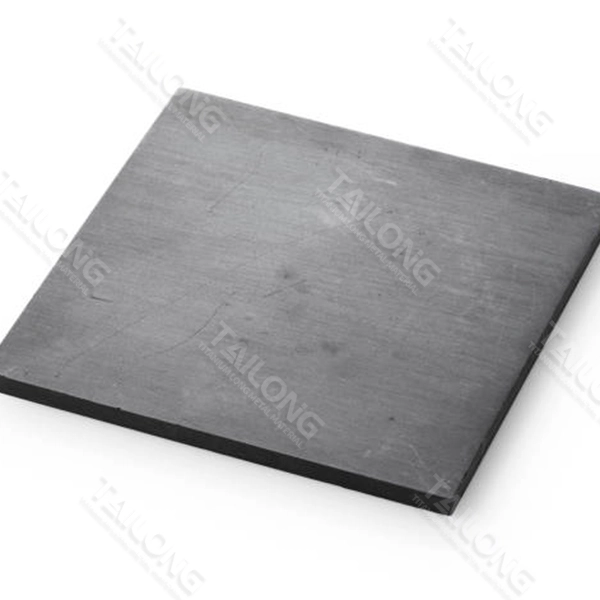
What quality control standards govern copper clad aluminum sheet production?
Non-Destructive Testing Methods
Quality control standards for copper clad aluminum sheet production heavily emphasize non-destructive testing (NDT) methods to ensure product integrity without compromising the material. ASTM E1316 provides standard terminology for NDT, while specific techniques such as ultrasonic testing are detailed in standards like ASTM E214. For copper clad aluminum sheets, manufacturers typically employ ultrasonic C-scan imaging to detect any delaminations, voids, or inhomogeneities in the bond interface. Eddy current testing, governed by standards such as ASTM E309, is also used to assess the uniformity of the copper cladding thickness and to detect any surface or near-surface defects. These NDT methods allow for 100% inspection of production batches, ensuring that every copper clad aluminum sheet meets the required quality standards before being released for use in critical applications such as power distribution systems or aerospace components.
Dimensional and Geometric Tolerances
Precise dimensional and geometric tolerances are crucial in copper clad aluminum sheet production, particularly for applications requiring tight fit or specific electrical characteristics. Standards such as ASTM B248 provide guidelines for general dimensional tolerances of wrought copper and copper alloy plate, sheet, strip, and rolled bar products, which are applicable to the copper cladding. For the overall copper clad aluminum sheet, manufacturers often refer to ISO 2768 for general dimensional and geometrical tolerances. These standards specify allowable deviations in thickness, width, length, flatness, and edge straightness. Advanced measurement techniques, including coordinate measuring machines (CMM) and laser scanning, are employed to verify compliance with these exacting tolerances. Maintaining consistent dimensions is critical for ensuring proper fit in assembly processes and predictable electrical performance in applications such as busbars and electromagnetic shielding.
Surface Cleanliness and Contamination Control
Surface cleanliness standards are paramount in copper clad aluminum sheet production, particularly for applications in electronics and sensitive electrical systems. ASTM F22 provides standard test methods for hydrophobic surface films by the water-break test, which is often used to assess the cleanliness of metallic surfaces. For copper clad aluminum sheets, manufacturers must implement rigorous cleaning and handling protocols to prevent contamination that could affect bonding, soldering, or electrical contact resistance. Surface analysis techniques such as X-ray photoelectron spectroscopy (XPS) or Auger electron spectroscopy (AES) may be employed to verify surface composition and detect any organic or inorganic contaminants. Maintaining high standards of surface cleanliness is essential for ensuring consistent performance in applications such as printed circuit boards, where even minute contaminants can lead to defects or reliability issues.
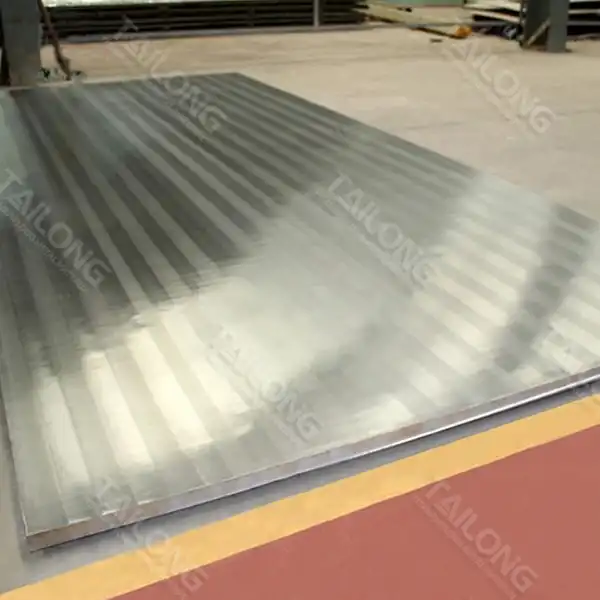
Conclusion
The production of copper clad aluminum sheets is governed by a comprehensive set of standards that ensure consistent quality, performance, and reliability. These standards cover material specifications, mechanical properties, and quality control processes, reflecting the critical nature of this composite material in various industrial applications. By adhering to these rigorous standards, manufacturers like Shaanxi Tilong Metal Material Co., Ltd. can produce high-quality copper clad aluminum sheets that meet the demanding requirements of the electrical, automotive, and electronics industries. As technology advances and applications evolve, these standards will continue to play a crucial role in driving innovation and maintaining the integrity of copper clad aluminum sheet production.
For more information on high-quality metal solutions and copper clad aluminum sheets, please contact Shaanxi Tilong Metal Material Co., Ltd. at Tailong@tilongtitanium.com or visit our facility at No. 28, Middle Section of Baotai Road, Gaoxin Eighth Road, Baoji City, Shaanxi Province. Our team of experts is ready to assist you with your specific metal material needs and provide innovative solutions for your projects.
References
1. ASTM B566-19, "Standard Specification for Copper-Clad Aluminum Sheet and Strip for Electrical Purposes", ASTM International, 2019.
2. JIS H4000, "Aluminum and Aluminum Alloy Sheets, Strips and Plates", Japanese Industrial Standards Committee, 2014.
3. ISO 5889, "Copper and copper alloy sheet and strip -- Technical conditions of delivery", International Organization for Standardization, 2017.
4. ASTM B952-17, "Standard Test Method for Bond Strength of Clad Metals", ASTM International, 2017.
5. IEC 60468, "Method of measurement of resistivity of metallic materials", International Electrotechnical Commission, 2018.
6. GB/T 32182, "Copper clad aluminum sheet and strip for electrical purposes", Standardization Administration of China, 2015.
Related products