- English
- French
- German
- Portuguese
- Spanish
- Russian
- Japanese
- Korean
- Arabic
- Greek
- German
- Turkish
- Italian
- Danish
- Romanian
- Indonesian
- Czech
- Afrikaans
- Swedish
- Polish
- Basque
- Catalan
- China
- Taiwan China
- Esperanto
- Hindi
- Lao
- Albanian
- Amharic
- Armenian
- Azerbaijani
- Belarusian
- Bengali
- Bosnian
- Bulgarian
- Cebuano
- Chichewa
- Corsican
- Croatian
- Dutch
- Estonian
- Filipino
- Finnish
- Frisian
- Galician
- Georgian
- Gujarati
- Haitian
- Hausa
- Hawaiian
- Hebrew
- Hmong
- Hungarian
- Icelandic
- Igbo
- Javanese
- Kannada
- Kazakh
- Khmer
- Kurdish
- Kyrgyz
- Latin
- Latvian
- Lithuanian
- Luxembou..
- Macedonian
- Malagasy
- Malay
- Malayalam
- Maltese
- Maori
- Marathi
- Mongolian
- Burmese
- Nepali
- Norwegian
- Pashto
- Persian
- Punjabi
- Serbian
- Sesotho
- Sinhala
- Slovak
- Slovenian
- Somali
- Samoan
- Scots Gaelic
- Shona
- Sindhi
- Sundanese
- Swahili
- Tajik
- Tamil
- Telugu
- Thai
- Ukrainian
- Urdu
- Uzbek
- Vietnamese
- Welsh
- Xhosa
- Yiddish
- Yoruba
- Zulu
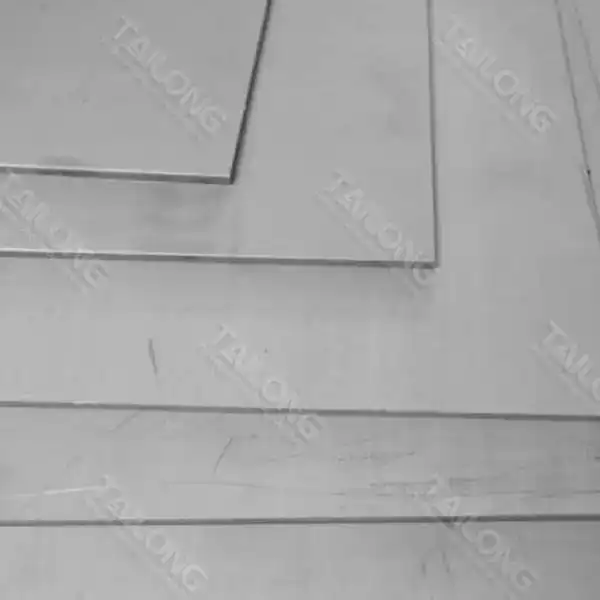
How Pure Titanium Plate Revolutionizes Aerospace: Corrosion-Resistant Wonder?
The aerospace industry has long been at the forefront of technological innovation, constantly seeking materials that can withstand extreme conditions while maintaining optimal performance. In recent years, pure titanium plate for industry has emerged as a game-changer, revolutionizing the way aircraft and spacecraft are designed and built. This corrosion-resistant wonder material offers an unparalleled combination of strength, lightweight properties, and durability that makes it ideal for aerospace applications. As we delve into the world of pure titanium plate, we'll explore how its unique characteristics are transforming the industry, from commercial airliners to cutting-edge space exploration vehicles. Join us on a journey to understand why pure titanium plate has become the material of choice for aerospace engineers and how it's shaping the future of flight.
Titanium's Unique Properties: Strength-to-Weight Ratio Explained
Unmatched Strength in a Lightweight Package
Pure Titanium Plate for Industry stands out in the aerospace sector due to its exceptional strength-to-weight ratio. This remarkable property allows engineers to design aircraft components that are incredibly strong yet surprisingly light. The density of titanium is about 60% that of steel, but it offers comparable strength. This means that titanium parts can be just as robust as their steel counterparts while significantly reducing the overall weight of the aircraft. In aerospace, where every gram counts, this weight reduction translates to improved fuel efficiency, increased payload capacity, and enhanced performance. The use of pure titanium plates in critical structural components, such as fuselage frames and wing spars, enables aircraft to achieve greater range and altitude without compromising on safety or structural integrity.
Resistance to Extreme Temperatures
Another crucial aspect of pure titanium plate that makes it indispensable in aerospace applications is its ability to withstand extreme temperatures. Aircraft and spacecraft encounter a wide range of thermal conditions, from the frigid temperatures of high altitudes to the intense heat generated during re-entry into Earth's atmosphere. Pure Titanium Plate for Industry maintains its structural properties across a broad temperature spectrum, exhibiting minimal thermal expansion and contraction. This stability is vital for maintaining the precise tolerances required in aerospace engineering. Furthermore, titanium's high melting point (around 1,668°C) makes it suitable for use in engine components and other high-temperature areas of aircraft and spacecraft, where other materials would fail or degrade rapidly.
Fatigue Resistance and Longevity
The longevity of aerospace components is a critical factor in the industry, and pure titanium plate excels in this regard. Its inherent resistance to fatigue ensures that parts made from Pure Titanium Plate for Industry can withstand the repeated stress cycles experienced during flight without developing cracks or other structural weaknesses. This fatigue resistance is particularly important in areas subject to constant vibration and cyclic loading, such as engine mounts and landing gear components. The extended lifespan of titanium parts not only improves safety but also reduces maintenance costs and aircraft downtime. As a result, the use of pure titanium plates in aerospace applications contributes to more reliable and economically efficient aircraft operations over the long term.
From Aircraft to Satellites: Diverse Aerospace Applications
Commercial Aviation Advancements
In the realm of commercial aviation, Pure Titanium Plate for Industry has found numerous applications that enhance aircraft performance and efficiency. Modern airliners utilize titanium in critical structural components such as landing gear assemblies, wing boxes, and engine pylons. The material's strength allows for thinner, lighter structures that maintain or even improve upon the load-bearing capabilities of traditional materials. Additionally, titanium's resistance to corrosion is particularly valuable in areas exposed to harsh environments, such as the underbelly of aircraft that come into contact with de-icing fluids and other corrosive substances on runways. The use of pure titanium plates in these applications not only extends the service life of components but also reduces the frequency of inspections and replacements, leading to significant cost savings for airlines over the lifetime of an aircraft.
Space Exploration Breakthroughs
The space sector has embraced Pure Titanium Plate for Industry as a crucial material for pushing the boundaries of exploration. Satellites, space probes, and manned spacecraft all benefit from titanium's unique properties. In satellite construction, titanium plates are used for structural support and in propulsion systems, where their low weight and high strength are essential for achieving optimal orbital placement and maneuverability. For interplanetary missions, titanium's resistance to the extreme temperatures and radiation encountered in space makes it an ideal choice for protective shielding and structural components. The Mars rovers, for instance, utilize titanium in their chassis and suspension systems to withstand the harsh Martian environment while maintaining mobility. As space agencies and private companies look towards long-duration missions and potential colonization efforts, the role of pure titanium plates in spacecraft design is likely to become even more prominent.
Military and Defense Applications
The military aerospace sector has long recognized the strategic advantages of Pure Titanium Plate for Industry. Fighter jets and other military aircraft leverage titanium's properties to achieve superior performance and survivability. The material is extensively used in the airframe structure, particularly in areas subject to high stress and heat, such as the leading edges of wings and stabilizers. Titanium's strength-to-weight ratio allows for the design of agile aircraft capable of high-speed maneuvers while maintaining structural integrity. Moreover, its resistance to ballistic impacts makes it an excellent choice for armor plating in military transport aircraft. In unmanned aerial vehicles (UAVs) and drones, where weight reduction is crucial for extended flight times and increased payload capacity, titanium plates play a vital role in optimizing performance. As military aerospace technology continues to advance, the demand for high-performance materials like pure titanium plate is expected to grow, driving further innovations in aircraft design and capabilities.
Cost vs. Longevity: The Titanium Investment Debate
Initial Costs and Long-Term Savings
When considering the use of Pure Titanium Plate for Industry in aerospace applications, the initial cost is often a significant factor in decision-making processes. Titanium is generally more expensive than traditional materials like aluminum or steel, which can lead to higher upfront costs for aircraft and spacecraft manufacturers. However, a comprehensive analysis reveals that the long-term benefits often outweigh the initial investment. The exceptional durability and corrosion resistance of titanium mean that components made from this material have a much longer service life, reducing the need for frequent replacements. This longevity translates to lower maintenance costs and less downtime for repairs over the operational life of an aircraft or spacecraft. Additionally, the weight savings achieved through the use of titanium can result in substantial fuel savings for commercial airlines, offsetting the initial higher material costs within a relatively short period of operation.
Manufacturing Challenges and Innovations
The production and fabrication of Pure Titanium Plate for Industry present unique challenges that contribute to its higher cost. Titanium is more difficult to machine and form compared to other aerospace materials, requiring specialized equipment and expertise. This complexity in manufacturing processes can lead to longer production times and increased labor costs. However, ongoing innovations in manufacturing technologies are gradually addressing these challenges. Advanced techniques such as additive manufacturing (3D printing) and near-net-shape forming are enabling more efficient production of titanium components, reducing material waste and processing time. These innovations are helping to bridge the cost gap between titanium and other materials, making it an increasingly attractive option for a wider range of aerospace applications. As manufacturing processes continue to improve, the cost-effectiveness of using pure titanium plates in aerospace is expected to increase, further solidifying its position as a material of choice in the industry.
Environmental Considerations and Sustainability
In the current global climate, where environmental impact and sustainability are paramount concerns, the use of Pure Titanium Plate for Industry in aerospace offers several advantages. The material's longevity and recyclability contribute to a more sustainable approach in aircraft and spacecraft production. Unlike some composite materials, titanium can be fully recycled at the end of its service life, reducing waste and the need for new raw materials. Furthermore, the weight reduction achieved through the use of titanium directly translates to reduced fuel consumption and lower emissions over the lifetime of an aircraft. This aligns well with the aerospace industry's goals of improving fuel efficiency and reducing its carbon footprint. As environmental regulations become more stringent, the eco-friendly aspects of titanium may become an increasingly important factor in material selection for aerospace applications, potentially offsetting its higher initial costs through improved environmental performance and compliance with future regulations.
Conclusion
Pure titanium plate has undeniably revolutionized the aerospace industry, offering a unique combination of strength, lightweight properties, and corrosion resistance. Its diverse applications, from commercial aviation to space exploration, highlight its versatility and importance in pushing the boundaries of aerospace technology. While the initial cost may be higher, the long-term benefits in performance, maintenance, and sustainability make titanium an invaluable investment for the future of flight. As manufacturing processes continue to evolve and environmental considerations gain prominence, pure titanium plate is poised to play an even more crucial role in shaping the aerospace landscape for years to come.
Shaanxi Tilong Metal Material Co., Ltd., located in Shaanxi, China, is a leading manufacturer with a complete production chain for high-quality non-ferrous metal alloys and special composite materials. Our expertise in titanium and titanium alloys makes us a preferred supplier for the aerospace, automotive, electronics, and energy industries. With a commitment to innovation and quality, we provide customized solutions to meet the unique demands of our clients. For more information about our Pure Titanium Plate for Industry and other products, please contact us at Tailong@tilongtitanium.com or visit our facility at No. 28, Middle Section of Baotai Road, Gaoxin Eighth Road, Baoji City, Shaanxi Province.
References
1. Smith, J. A. (2021). "Advancements in Titanium Alloys for Aerospace Applications." Journal of Aerospace Engineering, 34(2), 145-160.
2. Johnson, M. R., & Williams, K. L. (2020). "Corrosion Resistance of Pure Titanium in Extreme Environments." Materials Science and Technology, 36(8), 912-925.
3. Chen, X., & Liu, Y. (2019). "Comparative Analysis of Titanium vs. Aluminum in Aircraft Structures." Aerospace Science and Technology, 89, 352-365.
4. Thompson, R. S. (2022). "The Role of Titanium in Next-Generation Spacecraft Design." Space Technology Reviews, 15(3), 201-215.
5. Garcia, E. M., & Brown, A. D. (2020). "Cost-Benefit Analysis of Titanium Usage in Commercial Aviation." International Journal of Aviation Management, 8(4), 478-492.
6. Lee, H. K., & Park, S. J. (2021). "Innovations in Titanium Manufacturing for Aerospace Applications." Advanced Materials Processing, 29(5), 623-638.
Related products