- English
- French
- German
- Portuguese
- Spanish
- Russian
- Japanese
- Korean
- Arabic
- Greek
- German
- Turkish
- Italian
- Danish
- Romanian
- Indonesian
- Czech
- Afrikaans
- Swedish
- Polish
- Basque
- Catalan
- China
- Taiwan China
- Esperanto
- Hindi
- Lao
- Albanian
- Amharic
- Armenian
- Azerbaijani
- Belarusian
- Bengali
- Bosnian
- Bulgarian
- Cebuano
- Chichewa
- Corsican
- Croatian
- Dutch
- Estonian
- Filipino
- Finnish
- Frisian
- Galician
- Georgian
- Gujarati
- Haitian
- Hausa
- Hawaiian
- Hebrew
- Hmong
- Hungarian
- Icelandic
- Igbo
- Javanese
- Kannada
- Kazakh
- Khmer
- Kurdish
- Kyrgyz
- Latin
- Latvian
- Lithuanian
- Luxembou..
- Macedonian
- Malagasy
- Malay
- Malayalam
- Maltese
- Maori
- Marathi
- Mongolian
- Burmese
- Nepali
- Norwegian
- Pashto
- Persian
- Punjabi
- Serbian
- Sesotho
- Sinhala
- Slovak
- Slovenian
- Somali
- Samoan
- Scots Gaelic
- Shona
- Sindhi
- Sundanese
- Swahili
- Tajik
- Tamil
- Telugu
- Thai
- Ukrainian
- Urdu
- Uzbek
- Vietnamese
- Welsh
- Xhosa
- Yiddish
- Yoruba
- Zulu
How Does Shape Memory Effect Influence Nickel-Titanium Alloy Plate ASTM Standards?
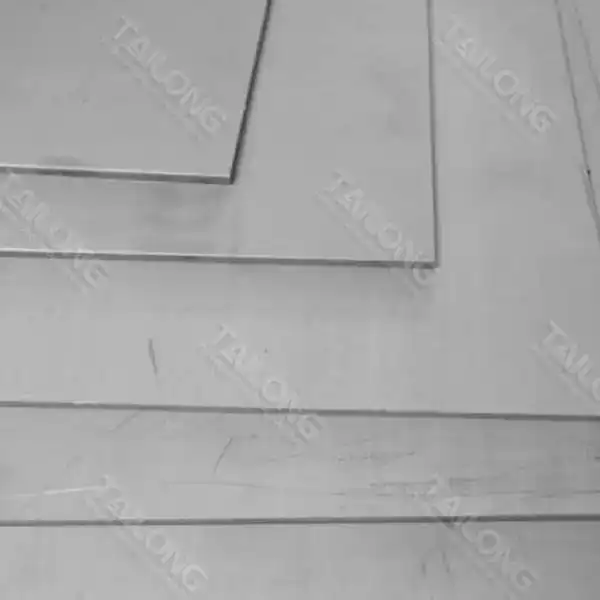
The shape memory effect in Nickel-Titanium Alloy Plate ASTM Standard has revolutionized various industries, prompting the development of specific ASTM standards to ensure consistent quality and performance. This unique property allows NiTi plates to return to their original shape after deformation when heated above a certain temperature. The influence of this effect on ASTM standards is profound, as it necessitates specialized testing methods and parameters to accurately assess the material's behavior. These standards play a crucial role in ensuring the reliability and predictability of NiTi alloy plates in applications ranging from aerospace to medical devices. Understanding the interplay between the shape memory effect and ASTM standards is essential for engineers, manufacturers, and researchers working with these advanced materials, as it directly impacts product design, quality control, and overall performance in real-world applications.
Measuring Shape Recovery: Key ASTM Parameters
Transformation Temperature Testing
ASTM standards for Nickel-Titanium alloy plates place significant emphasis on transformation temperature testing. This critical parameter determines the temperatures at which the material undergoes phase transformations, directly affecting its shape memory properties. The ASTM F2082 standard outlines specific methods for measuring transformation temperatures using techniques such as Differential Scanning Calorimetry (DSC). These tests typically involve heating and cooling the NiTi sample through its transformation range while measuring heat flow. The resulting data provides crucial information about the austenite start (As), austenite finish (Af), martensite start (Ms), and martensite finish (Mf) temperatures. These parameters are essential for predicting the behavior of NiTi plates in various applications and ensuring consistent performance across different batches of material.
Stress-Strain Behavior Analysis
Another critical aspect of Nickel-Titanium Alloy Plate ASTM Standard for Nickel-Titanium alloy plates is the analysis of stress-strain behavior. The unique superelastic properties of NiTi alloys require specialized testing procedures to accurately characterize their mechanical behavior. ASTM F2516 provides guidelines for conducting tensile testing on superelastic NiTi materials, including specific requirements for specimen preparation, test conditions, and data analysis. These tests typically involve loading and unloading cycles to assess the material's ability to recover its original shape after deformation. Key parameters measured include the upper plateau strength, lower plateau strength, and residual elongation. These measurements are crucial for understanding the material's behavior under different loading conditions and ensuring its suitability for specific applications, particularly in medical devices and aerospace components.
Fatigue and Durability Assessment
ASTM standards also address the fatigue and durability of Nickel-Titanium alloy plates, which are critical factors in many applications. The shape memory effect can significantly influence the material's long-term performance under cyclic loading conditions. ASTM E8 and ASTM E466 provide guidelines for conducting fatigue tests on metallic materials, including NiTi alloys. These tests typically involve subjecting the material to repeated cycles of stress or strain to assess its resistance to fatigue failure. For NiTi plates, special considerations must be made to account for the unique stress-strain behavior and potential phase transformations during testing. The results of these tests are crucial for predicting the lifespan of components made from NiTi plates and ensuring their reliability in demanding applications such as automotive safety systems and aerospace actuators.

Temperature-Induced Transformations in NiTi Plates
Austenite to Martensite Transition
The austenite to martensite transition is a fundamental aspect of the shape memory effect in Nickel-Titanium alloy plates, and it plays a significant role in ASTM standards. This transition occurs when the material is cooled below its transformation temperature, resulting in a change from the high-temperature austenite phase to the low-temperature martensite phase. ASTM standards, such as ASTM F2004, provide guidelines for characterizing this transformation using techniques like X-ray diffraction and transmission electron microscopy. These methods allow for the precise determination of crystal structures and phase compositions at different temperatures. Understanding this transition is crucial for predicting the behavior of NiTi plates in applications where temperature fluctuations are expected, such as in aerospace components or thermal actuators. The ASTM standards ensure that manufacturers can consistently produce NiTi plates with the desired transformation characteristics, enabling reliable performance across a wide range of operating conditions.
Reverse Transformation and Shape Recovery
The reverse transformation from martensite to austenite, which is responsible for the shape recovery in Nickel-Titanium Alloy Plate ASTM Standard, is another critical aspect addressed by ASTM standards. This process occurs when the material is heated above its austenite finish temperature (Af), causing it to return to its original, pre-deformed shape. ASTM F2082 provides guidelines for measuring the shape memory recovery ratio, which quantifies the material's ability to recover its original shape after deformation. This test typically involves deforming the NiTi plate at a low temperature, then heating it above its Af temperature and measuring the degree of shape recovery. The ASTM standards ensure that these measurements are conducted consistently across different laboratories and manufacturers, enabling reliable comparisons between different NiTi alloy compositions and processing methods. This standardization is crucial for industries that rely on the precise control of shape memory properties, such as in the development of medical stents or automotive safety devices.
Thermal Cycling Effects on Material Properties
ASTM standards also address the effects of thermal cycling on the properties of Nickel-Titanium alloy plates, as repeated temperature-induced transformations can impact the material's long-term performance. ASTM F2082 includes guidelines for assessing the stability of transformation temperatures and shape memory properties over multiple thermal cycles. These tests typically involve subjecting the NiTi plate to repeated heating and cooling cycles while monitoring changes in transformation temperatures, shape recovery, and mechanical properties. The results of these tests are crucial for predicting the long-term reliability of NiTi components in applications where frequent temperature changes are expected, such as in aerospace actuators or energy harvesting devices. ASTM standards ensure that manufacturers can produce NiTi plates with consistent and stable properties, even after numerous thermal cycles, thereby guaranteeing their performance in demanding real-world applications.
Implications for Industrial Applications and Testing
Quality Control and Manufacturing Standards
The influence of the shape memory effect on ASTM standards for Nickel-Titanium alloy plates has significant implications for quality control and manufacturing processes. These standards provide a framework for ensuring consistent material properties and performance across different production batches. For instance, ASTM F2063 outlines specific requirements for the chemical composition and mechanical properties of wrought Nickel-Titanium shape memory alloys used in medical devices. Manufacturers must adhere to these standards to produce NiTi plates that meet the stringent requirements of industries such as aerospace and healthcare. The standards also guide the development of robust quality control procedures, including regular testing of transformation temperatures, mechanical properties, and shape memory characteristics. By following these ASTM standards, manufacturers can ensure that their NiTi plates consistently meet the performance criteria required for critical applications, reducing the risk of product failures and improving overall reliability.
Design Considerations for NiTi-Based Products
The interplay between the shape memory effect and Nickel-Titanium Alloy Plate ASTM Standard significantly influences the design process for products incorporating Nickel-Titanium alloy plates. Engineers must consider the specific requirements outlined in standards such as ASTM F2516 when designing components that utilize the unique properties of NiTi alloys. These standards provide crucial information on material behavior under different loading conditions and temperature ranges, enabling designers to optimize product performance and reliability. For example, in the development of medical stents, designers must account for the superelastic properties of NiTi plates as defined by ASTM standards to ensure proper deployment and long-term stability within the body. Similarly, in aerospace applications, the shape memory properties characterized by ASTM F2082 must be carefully considered when designing actuators or adaptive structures. By adhering to these standards, designers can create innovative products that fully leverage the capabilities of NiTi alloy plates while ensuring compliance with industry regulations and safety requirements.
Advancements in Testing Methodologies
The unique properties of Nickel-Titanium alloy plates, particularly their shape memory effect, have driven advancements in testing methodologies reflected in ASTM standards. These advancements are crucial for accurately characterizing the behavior of NiTi materials and ensuring their suitability for various applications. For instance, ASTM has developed specialized testing procedures for assessing the fatigue properties of superelastic NiTi alloys, taking into account their unique stress-strain behavior. These methods, outlined in standards such as ASTM E466, allow for more accurate prediction of component lifespans in applications subject to cyclic loading. Additionally, the development of dynamic mechanical analysis techniques, as described in ASTM E2254, has enabled more precise characterization of the temperature-dependent properties of NiTi plates. These advanced testing methodologies not only improve the accuracy of material characterization but also facilitate the development of new NiTi alloy compositions with enhanced properties. As a result, industries can continue to push the boundaries of what is possible with shape memory alloys, leading to innovative applications and improved product performance.
Conclusion
The shape memory effect significantly influences Nickel-Titanium Alloy Plate ASTM Standard for Nickel-Titanium alloy plates, driving the development of specialized testing methods and quality control procedures. These standards ensure consistent material properties and performance across various applications, from medical devices to aerospace components. By providing a framework for measuring transformation temperatures, stress-strain behavior, and fatigue resistance, ASTM standards enable manufacturers and engineers to harness the unique properties of NiTi alloys effectively. As research in this field continues to advance, we can expect further refinement of these standards, leading to new applications and improved product designs that leverage the remarkable capabilities of shape memory alloys.
Shaanxi Tilong Metal Material Co., Ltd., located in Shaanxi, China, is a leading manufacturer with a complete production chain for high-quality non-ferrous metal alloys, including Nickel-Titanium alloy plates. Our state-of-the-art facilities and adherence to international standards ensure that our products meet the stringent requirements of industries such as aerospace, automotive, and medical devices. With our commitment to innovation and customer service, we strive to provide efficient solutions and work closely with our clients to meet their specific needs. For more information about our Nickel-Titanium alloy plates and other products, please contact us at Tailong@tilongtitanium.com.
References
1. ASTM International. (2020). ASTM F2063-18: Standard Specification for Wrought Nickel-Titanium Shape Memory Alloys for Medical Devices and Surgical Implants. West Conshohocken, PA: ASTM International.
2. Otsuka, K., & Wayman, C. M. (Eds.). (1999). Shape Memory Materials. Cambridge University Press.
3. Pelton, A. R., Dicello, J., & Miyazaki, S. (2000). Optimisation of processing and properties of medical grade Nitinol wire. Minimally Invasive Therapy & Allied Technologies, 9(1), 107-118.
4. Lagoudas, D. C. (Ed.). (2008). Shape Memory Alloys: Modeling and Engineering Applications. Springer Science & Business Media.
5. ASTM International. (2019). ASTM F2516-18: Standard Test Method for Tension Testing of Nickel-Titanium Superelastic Materials. West Conshohocken, PA: ASTM International.
6. Mohd Jani, J., Leary, M., Subic, A., & Gibson, M. A. (2014). A review of shape memory alloy research, applications and opportunities. Materials & Design, 56, 1078-1113.
Related products