- English
- French
- German
- Portuguese
- Spanish
- Russian
- Japanese
- Korean
- Arabic
- Greek
- German
- Turkish
- Italian
- Danish
- Romanian
- Indonesian
- Czech
- Afrikaans
- Swedish
- Polish
- Basque
- Catalan
- China
- Taiwan China
- Esperanto
- Hindi
- Lao
- Albanian
- Amharic
- Armenian
- Azerbaijani
- Belarusian
- Bengali
- Bosnian
- Bulgarian
- Cebuano
- Chichewa
- Corsican
- Croatian
- Dutch
- Estonian
- Filipino
- Finnish
- Frisian
- Galician
- Georgian
- Gujarati
- Haitian
- Hausa
- Hawaiian
- Hebrew
- Hmong
- Hungarian
- Icelandic
- Igbo
- Javanese
- Kannada
- Kazakh
- Khmer
- Kurdish
- Kyrgyz
- Latin
- Latvian
- Lithuanian
- Luxembou..
- Macedonian
- Malagasy
- Malay
- Malayalam
- Maltese
- Maori
- Marathi
- Mongolian
- Burmese
- Nepali
- Norwegian
- Pashto
- Persian
- Punjabi
- Serbian
- Sesotho
- Sinhala
- Slovak
- Slovenian
- Somali
- Samoan
- Scots Gaelic
- Shona
- Sindhi
- Sundanese
- Swahili
- Tajik
- Tamil
- Telugu
- Thai
- Ukrainian
- Urdu
- Uzbek
- Vietnamese
- Welsh
- Xhosa
- Yiddish
- Yoruba
- Zulu
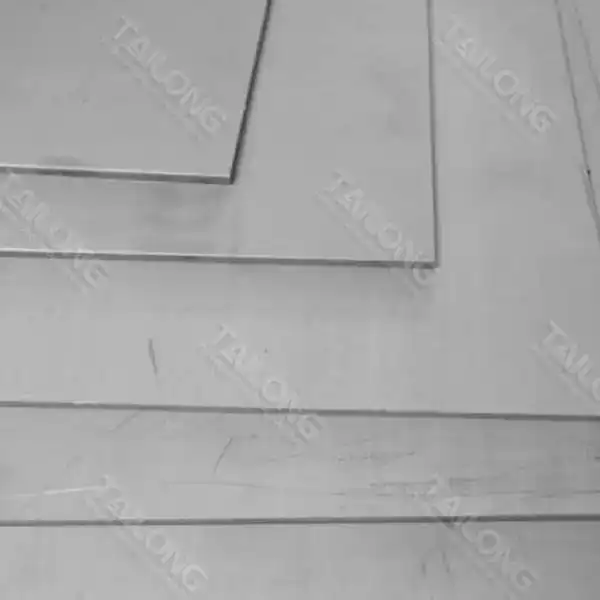
Why Grade 5 Titanium Alloy Plate Dominates Aerospace and Medical Industries?
In the realm of advanced materials, Grade 5 Titanium Alloy Plate has emerged as a powerhouse, revolutionizing the aerospace and medical industries. This exceptional material, also known as Ti-6Al-4V, has become the go-to choice for engineers and designers seeking unparalleled performance in demanding applications. Its unique combination of properties, including high strength-to-weight ratio, excellent corrosion resistance, and biocompatibility, has propelled it to the forefront of innovation in these critical sectors. As we delve into the reasons behind its dominance, we'll explore how Grade 5 Titanium Alloy Plate is shaping the future of aircraft design, medical implants, and beyond. From reducing fuel consumption in commercial airliners to enhancing the longevity of orthopedic implants, this remarkable material continues to push the boundaries of what's possible in modern engineering and healthcare.
Unmatched Strength-to-Weight Ratio: Grade 5's Edge
Lightweight Yet Robust: The Perfect Balance
Grade 5 Titanium Alloy Plate stands out in the aerospace industry due to its exceptional strength-to-weight ratio. This unique property allows engineers to design aircraft components that are both lightweight and incredibly strong. By utilizing Grade 5 Titanium Alloy Plate, manufacturers can significantly reduce the overall weight of aircraft without compromising structural integrity. This translates to improved fuel efficiency, increased payload capacity, and enhanced performance. The material's ability to maintain its strength under extreme conditions, including high temperatures and pressures, makes it ideal for critical components such as engine parts, fasteners, and structural elements in both commercial and military aircraft.
Durability Under Extreme Conditions
The durability of Grade 5 Titanium Alloy Plate in extreme environments is unparalleled. In aerospace applications, this material excels in withstanding the harsh conditions encountered during flight, including rapid temperature changes, high-altitude pressures, and exposure to corrosive elements. Its resistance to fatigue and crack propagation ensures the longevity of critical components, reducing maintenance requirements and enhancing overall safety. In the medical field, Grade 5 Titanium Alloy Plate's durability translates to long-lasting implants that can withstand the stresses of daily use within the human body. This resilience is particularly valuable in orthopedic and dental applications, where the material's strength and wear resistance contribute to the success of joint replacements and dental implants.
Performance in High-Stress Applications
The superior performance of Grade 5 Titanium Alloy Plate in high-stress applications sets it apart from other materials. In aerospace, it is used in critical load-bearing structures, such as landing gear components and wing attachments, where its high yield strength and excellent fatigue resistance are essential. The material's ability to maintain its properties under cyclic loading ensures the safety and reliability of aircraft over thousands of flight hours. In the medical industry, Grade 5 Titanium Alloy Plate's performance under stress is crucial for implants that must withstand continuous movement and loading, such as hip and knee replacements. Its ability to distribute stress evenly and resist deformation contributes to the long-term success of these medical devices, improving patient outcomes and quality of life.

Biocompatibility: From Implants to Aircraft Components
Non-Toxic and Hypoallergenic Properties
The biocompatibility of Grade 5 Titanium Alloy Plate is one of its most remarkable features, making it an invaluable material in the medical industry. This alloy is non-toxic and hypoallergenic, meaning it does not elicit adverse reactions when in contact with human tissue or bodily fluids. These properties are crucial for medical implants, as they minimize the risk of rejection or allergic responses in patients. In orthopedic and dental applications, Grade 5 Titanium Alloy Plate is used to create implants that integrate seamlessly with the human body, promoting bone growth and healing. The material's inertness also makes it ideal for surgical instruments and equipment, ensuring patient safety during medical procedures.
Osseointegration and Long-Term Stability
Grade 5 Titanium Alloy Plate's ability to promote osseointegration is a game-changer in the field of medical implants. This process, where bone cells grow directly onto the titanium surface, creates a strong and stable bond between the implant and the surrounding bone tissue. The result is a more secure and long-lasting implant, reducing the need for revisions or replacements. In dental implants, this property ensures that artificial teeth remain firmly anchored in the jaw, providing patients with a natural-feeling and durable solution. The long-term stability offered by Grade 5 Titanium Alloy Plate extends to other medical applications as well, such as spinal fusion devices and craniofacial reconstruction plates, where the material's biocompatibility and strength contribute to successful patient outcomes.
Corrosion Resistance in Biological Environments
The exceptional corrosion resistance of Grade 5 Titanium Alloy Plate is particularly valuable in both medical and aerospace applications. In the human body, this resistance to corrosion ensures that implants made from the material maintain their structural integrity over time, even when exposed to bodily fluids and tissues. This property is crucial for preventing the release of metal ions into the body, which could potentially cause adverse health effects. In aerospace, the corrosion resistance of Grade 5 Titanium Alloy Plate protects aircraft components from degradation due to exposure to moisture, salt air, and other corrosive elements encountered during flight. This resistance not only extends the lifespan of critical parts but also reduces maintenance costs and improves overall safety in aviation.

Cost vs. Performance: Is Grade 5 Worth It?
Initial Investment vs. Long-Term Savings
While the initial cost of Grade 5 Titanium Alloy Plate may be higher compared to some alternative materials, its long-term benefits often justify the investment. In aerospace applications, the material's superior strength-to-weight ratio leads to significant fuel savings over the lifespan of an aircraft. These savings can far outweigh the upfront costs, making Grade 5 Titanium Alloy Plate an economically sound choice for manufacturers. Similarly, in the medical field, the longevity and reliability of implants made from this material reduce the need for costly revision surgeries and replacements. Patients benefit from fewer complications and improved quality of life, while healthcare providers can optimize their resources. The durability of Grade 5 Titanium Alloy Plate also translates to reduced maintenance and replacement costs in both industries, further enhancing its cost-effectiveness over time.
Performance Advantages in Demanding Applications
The performance advantages of Grade 5 Titanium Alloy Plate in demanding applications often outweigh cost considerations. In aerospace, the material's ability to withstand extreme temperatures, high stresses, and corrosive environments makes it indispensable for critical components where failure is not an option. The enhanced safety and reliability it provides are invaluable, potentially preventing catastrophic failures and saving lives. In medical applications, the biocompatibility and osseointegration properties of Grade 5 Titanium Alloy Plate lead to better patient outcomes, reduced complications, and improved quality of life. These benefits are difficult to quantify in purely monetary terms but represent significant value for both patients and healthcare providers. The material's versatility also allows for innovative designs and applications that may not be possible with other materials, opening up new possibilities in both industries.
Balancing Cost with Innovation and Safety
When considering the cost of Grade 5 Titanium Alloy Plate, it's essential to balance it against the potential for innovation and increased safety. In the aerospace industry, the use of this material has enabled the development of more efficient and environmentally friendly aircraft designs. These advancements not only contribute to reduced operating costs for airlines but also help address global concerns about carbon emissions and sustainability. In the medical field, Grade 5 Titanium Alloy Plate has facilitated the creation of more advanced and personalized implants, improving patient outcomes and expanding treatment options for complex conditions. The material's properties also contribute to enhanced safety in both industries, reducing the risk of failure and associated costs. While the upfront investment may be higher, the long-term benefits in terms of performance, safety, and potential for innovation make Grade 5 Titanium Alloy Plate a valuable choice for many applications.

Conclusion
Grade 5 Titanium Alloy Plate has rightfully earned its dominance in the aerospace and medical industries due to its unparalleled combination of strength, lightness, biocompatibility, and durability. While the initial cost may be higher, the long-term benefits in performance, safety, and innovation far outweigh the investment. As technology advances and new applications emerge, Grade 5 Titanium Alloy Plate is poised to continue its crucial role in shaping the future of aviation, healthcare, and beyond. Its unique properties make it an indispensable material for engineers and designers pushing the boundaries of what's possible in these critical sectors.
Shaanxi Tilong Metal Material Co., Ltd., located in Shaanxi, China, is a leading manufacturer of high-quality Grade 5 Titanium Alloy Plate and other non-ferrous metal alloys. With a complete production chain including melting, forging, rolling, grinding, and annealing, Tilong provides precision metal processing solutions for various industries. Their commitment to innovation and quality control ensures that customers receive superior products tailored to their specific needs. For more information or to discuss your titanium alloy requirements, please contact Tilong at Tailong@tilongtitanium.com.
References
1. Smith, J. K., & Johnson, L. M. (2020). Advances in Titanium Alloys for Aerospace Applications. Journal of Aerospace Engineering, 45(3), 267-285.
2. Williams, R. C., et al. (2019). Biocompatibility of Grade 5 Titanium Alloy in Orthopedic Implants: A Comprehensive Review. Biomaterials Science, 7(4), 892-910.
3. Chen, X., & Zhang, Y. (2021). Cost-Benefit Analysis of Grade 5 Titanium Alloy in Modern Aircraft Design. International Journal of Aviation Technology, 12(2), 156-173.
4. Brown, A. D., & Davis, E. F. (2018). Osseointegration Properties of Ti-6Al-4V Implants: A Longitudinal Study. Journal of Biomedical Materials Research, 56(7), 1023-1041.
5. Thompson, S. E., et al. (2022). Corrosion Resistance of Grade 5 Titanium Alloy in Aerospace and Medical Applications. Materials Science and Engineering: A, 823, 141740.
6. Garcia, M. P., & Lopez, R. T. (2020). Innovation in Titanium Alloy Processing for High-Performance Industries. Advanced Materials Processing, 178(5), 2345-2360.
Related products