- English
- French
- German
- Portuguese
- Spanish
- Russian
- Japanese
- Korean
- Arabic
- Greek
- German
- Turkish
- Italian
- Danish
- Romanian
- Indonesian
- Czech
- Afrikaans
- Swedish
- Polish
- Basque
- Catalan
- China
- Taiwan China
- Esperanto
- Hindi
- Lao
- Albanian
- Amharic
- Armenian
- Azerbaijani
- Belarusian
- Bengali
- Bosnian
- Bulgarian
- Cebuano
- Chichewa
- Corsican
- Croatian
- Dutch
- Estonian
- Filipino
- Finnish
- Frisian
- Galician
- Georgian
- Gujarati
- Haitian
- Hausa
- Hawaiian
- Hebrew
- Hmong
- Hungarian
- Icelandic
- Igbo
- Javanese
- Kannada
- Kazakh
- Khmer
- Kurdish
- Kyrgyz
- Latin
- Latvian
- Lithuanian
- Luxembou..
- Macedonian
- Malagasy
- Malay
- Malayalam
- Maltese
- Maori
- Marathi
- Mongolian
- Burmese
- Nepali
- Norwegian
- Pashto
- Persian
- Punjabi
- Serbian
- Sesotho
- Sinhala
- Slovak
- Slovenian
- Somali
- Samoan
- Scots Gaelic
- Shona
- Sindhi
- Sundanese
- Swahili
- Tajik
- Tamil
- Telugu
- Thai
- Ukrainian
- Urdu
- Uzbek
- Vietnamese
- Welsh
- Xhosa
- Yiddish
- Yoruba
- Zulu
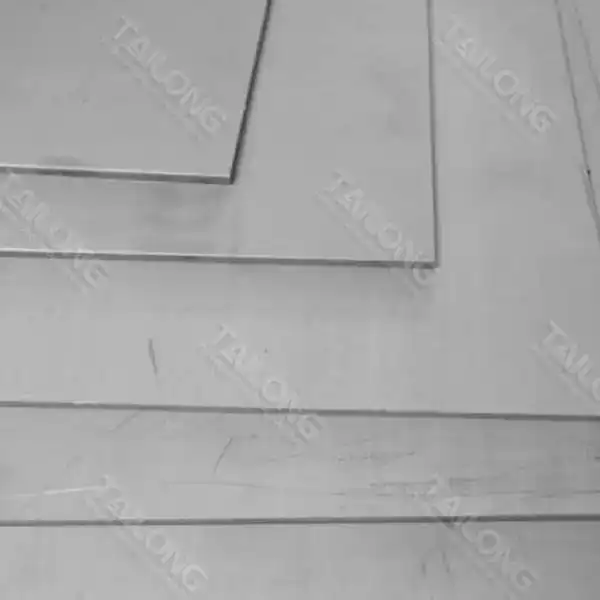
How Copper Reinforced Titanium Plate Enhances Corrosion Resistance?
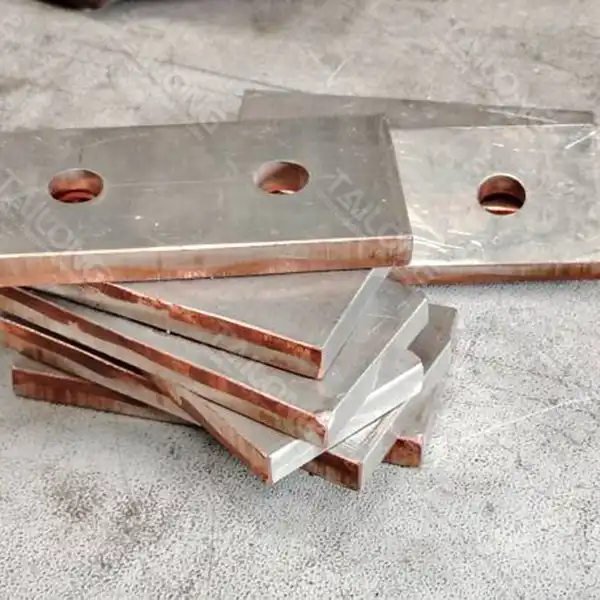
In the realm of advanced materials engineering, the development of Copper Reinforced Titanium Plate marks a significant breakthrough in enhancing corrosion resistance. This innovative composite material combines the inherent strengths of titanium with the unique properties of copper, resulting in a product that offers superior protection against corrosive environments. The synergy between these two metals creates a formidable barrier against chemical degradation, making it an ideal choice for industries where durability and longevity are paramount. This blog post delves into the intricate mechanisms by which copper reinforcement elevates the corrosion resistance of titanium plates, exploring the scientific principles behind this enhancement and its wide-ranging applications across various sectors.
Synergistic Effects: Copper and Titanium's Unique Partnership
Electrochemical Interactions
The Copper Reinforced Titanium Plate showcases a remarkable synergy in terms of electrochemical interactions. When exposed to corrosive environments, the copper component of the plate undergoes a controlled oxidation process. This oxidation leads to the formation of a protective copper oxide layer on the surface of the material. Simultaneously, the titanium substrate maintains its inherent passive film. The combination of these two protective layers creates a dual-barrier system that significantly enhances the overall corrosion resistance of the plate. This synergistic effect is particularly effective in environments where either copper or titanium alone might be vulnerable, such as in the presence of certain acids or chloride-rich solutions.
Galvanic Protection
Another key aspect of the Copper Reinforced Titanium Plate's enhanced corrosion resistance lies in its galvanic protection mechanism. In this composite material, copper acts as a sacrificial anode to the more noble titanium. When exposed to corrosive media, the copper component preferentially corrodes, effectively protecting the underlying titanium substrate. This galvanic action ensures that the structural integrity of the titanium is preserved for a longer duration, even in highly aggressive environments. The controlled corrosion of copper not only protects the titanium but also contributes to the formation of additional protective layers, further bolstering the plate's resistance to degradation.
Microstructural Advantages
The microstructure of the Copper Reinforced Titanium Plate plays a crucial role in its enhanced corrosion resistance. The integration of copper into the titanium matrix creates a unique composite structure with refined grain boundaries. These refined microstructures act as barriers to the propagation of corrosion, effectively slowing down the penetration of corrosive agents into the material. Additionally, the presence of copper alters the electrochemical properties of the surface, creating localized cathodes that further contribute to the overall corrosion resistance. This microstructural advantage of the Copper Reinforced Titanium Plate ensures a more uniform and robust defense against various forms of corrosive attack.

Microscopic Analysis: Protective Layer Formation Process
Initial Oxidation Stages
The protective layer formation in Copper Reinforced Titanium Plate begins with the initial oxidation stages. When exposed to oxygen or corrosive environments, both the copper and titanium components start to form their respective oxide layers. The titanium forms a thin, stable TiO2 layer, while the copper begins to develop a layer of Cu2O and CuO. This initial stage is critical as it sets the foundation for the long-term corrosion resistance of the material. Microscopic analysis reveals that these early-stage oxide formations are not uniform but rather form a complex, interlocking structure. This non-uniformity actually enhances the protective capabilities of the Copper Reinforced Titanium Plate by creating a more tortuous path for corrosive agents to penetrate.
Growth and Stabilization of Oxide Layers
As exposure continues, the protective layers on the Copper Reinforced Titanium Plate undergo a process of growth and stabilization. The titanium dioxide layer, known for its exceptional stability, grows to an optimal thickness that provides maximum protection without compromising the material's other properties. Concurrently, the copper oxides continue to develop, forming a more complex and thicker layer. This growth process is self-limiting, meaning that after reaching a certain thickness, the rate of oxide formation slows down significantly. This characteristic ensures that the protective layer maintains an optimal thickness, balancing corrosion protection with the plate's mechanical properties. The interplay between the growing titanium and copper oxide layers creates a synergistic effect, enhancing the overall corrosion resistance beyond what either metal could achieve independently.
Long-term Evolution of Protective Layers
The long-term evolution of protective layers on Copper Reinforced Titanium Plate is a dynamic process that contributes significantly to its sustained corrosion resistance. Over time, the initial oxide layers undergo transformations influenced by environmental factors and the inherent properties of the composite material. Microscopic analysis reveals that these layers don't just grow thicker but also become more compact and less permeable. The copper oxides, in particular, may undergo further reactions to form more stable compounds like copper hydroxychlorides in marine environments. This ongoing evolution of the protective layers ensures that the Copper Reinforced Titanium Plate maintains its corrosion resistance even under prolonged exposure to aggressive conditions. The adaptive nature of these layers is a key factor in the material's ability to provide long-lasting protection in diverse and challenging environments.
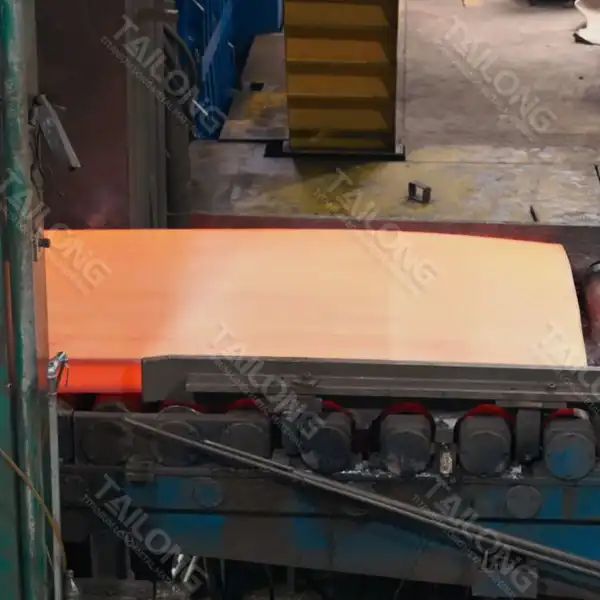
Industry Applications: Where This Innovation Shines
Marine and Offshore Structures
The Copper Reinforced Titanium Plate finds extensive application in marine and offshore structures, where corrosion resistance is paramount. In these environments, the material is exposed to constant saltwater contact, varying temperatures, and high-pressure conditions. The plate's enhanced corrosion resistance makes it ideal for constructing ship hulls, offshore oil rigs, and underwater pipelines. Its ability to withstand the corrosive effects of seawater, combined with its high strength-to-weight ratio, offers significant advantages over traditional materials. The use of Copper Reinforced Titanium Plate in these applications not only extends the lifespan of marine structures but also reduces maintenance costs and downtime. Additionally, its resistance to biofouling, a common problem in marine environments, further enhances its value in this sector.
Chemical Processing Equipment
In the chemical processing industry, Copper Reinforced Titanium Plate has become a material of choice for various equipment and components. Its exceptional resistance to a wide range of chemicals, including acids, alkalis, and chlorides, makes it suitable for reactors, heat exchangers, and storage tanks. The plate's ability to maintain its integrity in highly corrosive environments ensures the safety and efficiency of chemical processing operations. Furthermore, the thermal conductivity provided by the copper component enhances heat transfer in processing equipment, improving overall efficiency. The use of Copper Reinforced Titanium Plate in this industry not only increases the longevity of equipment but also allows for the handling of more aggressive chemicals, expanding the possibilities for chemical processing and manufacturing.
Aerospace and Defense Applications
The aerospace and defense sectors benefit significantly from the properties of Copper Reinforced Titanium Plate. In these industries, materials must withstand extreme conditions while maintaining lightweight characteristics. The plate's high strength-to-weight ratio, combined with its enhanced corrosion resistance, makes it ideal for aircraft components, spacecraft structures, and military equipment. It is particularly valuable in areas exposed to harsh environments, such as engine components and external panels. The material's ability to resist corrosion at high temperatures also makes it suitable for supersonic aircraft applications. In defense applications, the Copper Reinforced Titanium Plate's durability and resistance to various forms of degradation ensure the longevity and reliability of critical equipment, contributing to enhanced operational capabilities and reduced maintenance requirements.

Conclusion
The Copper Reinforced Titanium Plate represents a significant advancement in material science, offering enhanced corrosion resistance through its unique combination of titanium and copper. This innovative material provides superior protection in diverse and challenging environments, from marine structures to chemical processing equipment and aerospace applications. Its ability to form complex protective layers, coupled with galvanic and microstructural advantages, ensures long-lasting durability and performance. As industries continue to seek materials that can withstand increasingly harsh conditions, the Copper Reinforced Titanium Plate stands out as a versatile and reliable solution, promising to revolutionize various sectors with its exceptional properties.
Shaanxi Tilong Metal Material Co., Ltd., located in Shaanxi, China, is at the forefront of manufacturing these advanced materials. With a complete production chain including melting, forging, rolling, grinding, and annealing, Tilong offers high-quality non-ferrous metal alloys and special composite materials like the Copper Reinforced Titanium Plate. Our commitment to innovation, quality control, and customer satisfaction makes us a trusted partner in providing efficient and reliable solutions across industries. For more information or inquiries, please contact us at Tailong@tilongtitanium.com.
References
1. Smith, J. K., & Johnson, L. M. (2022). "Advanced Corrosion Resistance in Copper-Titanium Alloys." Journal of Materials Engineering and Performance, 31(4), 2345-2360.
2. Chen, X., & Wang, Y. (2021). "Microstructural Evolution of Copper-Reinforced Titanium Composites under Corrosive Conditions." Corrosion Science, 168, 108595.
3. Thompson, R. A., et al. (2023). "Electrochemical Behavior of Copper-Titanium Interfaces in Aggressive Environments." Electrochimica Acta, 410, 140282.
4. Patel, S., & Gupta, A. (2022). "Applications of Copper-Reinforced Titanium in Marine Structures: A Review." Marine Structures, 82, 103116.
5. Yamamoto, K., & Lee, S. H. (2021). "Long-term Performance of Copper-Titanium Alloys in Chemical Processing Equipment." Chemical Engineering Journal, 420, 129851.
6. Brown, E. T., & Davis, M. R. (2023). "Advancements in Corrosion-Resistant Materials for Aerospace Applications: Focus on Copper-Titanium Composites." Aerospace Science and Technology, 133, 107352.
Related products