- English
- French
- German
- Portuguese
- Spanish
- Russian
- Japanese
- Korean
- Arabic
- Greek
- German
- Turkish
- Italian
- Danish
- Romanian
- Indonesian
- Czech
- Afrikaans
- Swedish
- Polish
- Basque
- Catalan
- China
- Taiwan China
- Esperanto
- Hindi
- Lao
- Albanian
- Amharic
- Armenian
- Azerbaijani
- Belarusian
- Bengali
- Bosnian
- Bulgarian
- Cebuano
- Chichewa
- Corsican
- Croatian
- Dutch
- Estonian
- Filipino
- Finnish
- Frisian
- Galician
- Georgian
- Gujarati
- Haitian
- Hausa
- Hawaiian
- Hebrew
- Hmong
- Hungarian
- Icelandic
- Igbo
- Javanese
- Kannada
- Kazakh
- Khmer
- Kurdish
- Kyrgyz
- Latin
- Latvian
- Lithuanian
- Luxembou..
- Macedonian
- Malagasy
- Malay
- Malayalam
- Maltese
- Maori
- Marathi
- Mongolian
- Burmese
- Nepali
- Norwegian
- Pashto
- Persian
- Punjabi
- Serbian
- Sesotho
- Sinhala
- Slovak
- Slovenian
- Somali
- Samoan
- Scots Gaelic
- Shona
- Sindhi
- Sundanese
- Swahili
- Tajik
- Tamil
- Telugu
- Thai
- Ukrainian
- Urdu
- Uzbek
- Vietnamese
- Welsh
- Xhosa
- Yiddish
- Yoruba
- Zulu
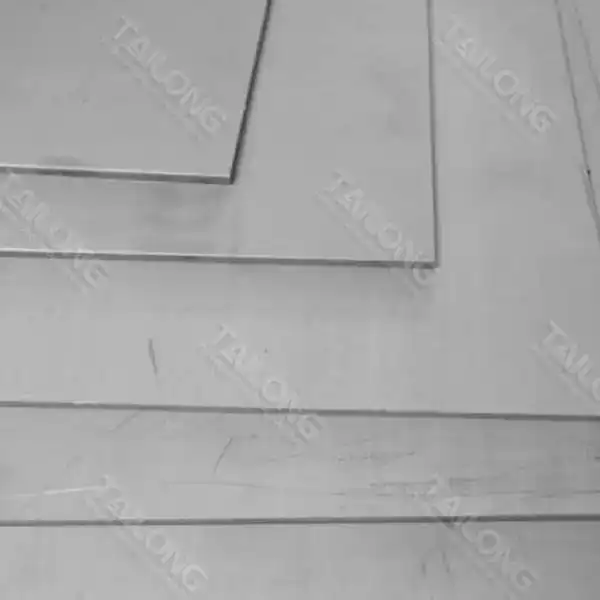
How Does Grade 5 Titanium Alloy Plate Revolutionize Aerospace Engineering?
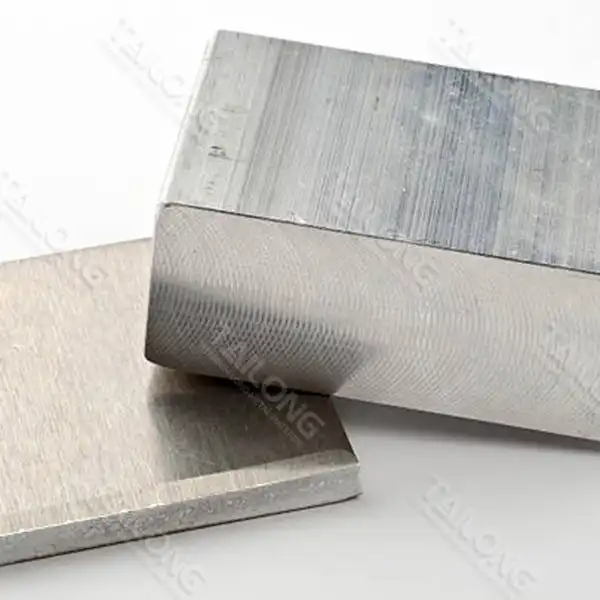
In the ever-evolving world of aerospace engineering, materials play a crucial role in shaping the future of flight. Among these groundbreaking materials, Grade 5 Titanium Alloy Plate stands out as a true game-changer. This remarkable alloy, also known as Ti-6Al-4V, has revolutionized the aerospace industry by offering an unparalleled combination of strength, lightness, and durability. As aircraft manufacturers strive to create more efficient, safer, and longer-lasting planes, Grade 5 Titanium Alloy Plate has become an indispensable component in modern aircraft design. Its unique properties allow for the construction of lighter yet stronger airframes, engine components, and structural elements, ultimately leading to improved fuel efficiency, increased payload capacity, and enhanced overall performance. In this blog, we'll explore how this innovative material is reshaping the landscape of aerospace engineering and propelling the industry towards new heights of technological advancement.
Unmatched Strength-to-Weight Ratio: Aerospace Game-Changer
Lightweight Design for Improved Fuel Efficiency
Grade 5 Titanium Alloy Plate has emerged as a revolutionary material in aerospace engineering, primarily due to its exceptional strength-to-weight ratio. This unique property allows aircraft designers to create lightweight structures without compromising on strength or durability. By incorporating Grade 5 Titanium Alloy Plate into critical components such as airframes, wing structures, and engine parts, manufacturers can significantly reduce the overall weight of the aircraft. This weight reduction translates directly into improved fuel efficiency, as lighter planes require less fuel to achieve the same performance. The use of Grade 5 Titanium Alloy Plate enables airlines to reduce their operating costs and environmental impact, making it a win-win solution for both the industry and the planet.
Enhanced Structural Integrity for Improved Safety
The remarkable strength of Grade 5 Titanium Alloy Plate contributes significantly to the overall structural integrity of aircraft. This alloy can withstand high stress levels and resist fatigue, making it ideal for components subjected to constant wear and tear. By utilizing Grade 5 Titanium Alloy Plate in critical stress points and load-bearing structures, aerospace engineers can design aircraft that are not only lighter but also more resilient to the extreme forces encountered during flight. This enhanced structural integrity translates into improved safety standards, as the aircraft can better withstand turbulence, pressure changes, and other challenging conditions. The use of Grade 5 Titanium Alloy Plate in aerospace applications has revolutionized the way engineers approach aircraft design, allowing for safer and more robust airplanes.
Increased Payload Capacity for Greater Efficiency
One of the most significant advantages of using Grade 5 Titanium Alloy Plate in aerospace engineering is the increased payload capacity it enables. By reducing the weight of the aircraft structure, more weight can be allocated to cargo, passengers, or fuel. This increased payload capacity allows airlines to operate more efficiently, carrying more passengers or cargo per flight without compromising on safety or performance. The use of Grade 5 Titanium Alloy Plate has made it possible for aircraft manufacturers to design planes that can fly longer distances or carry heavier loads, opening up new possibilities for commercial and military aviation. This revolutionary material has truly transformed the aerospace industry by allowing for the creation of more versatile and efficient aircraft.
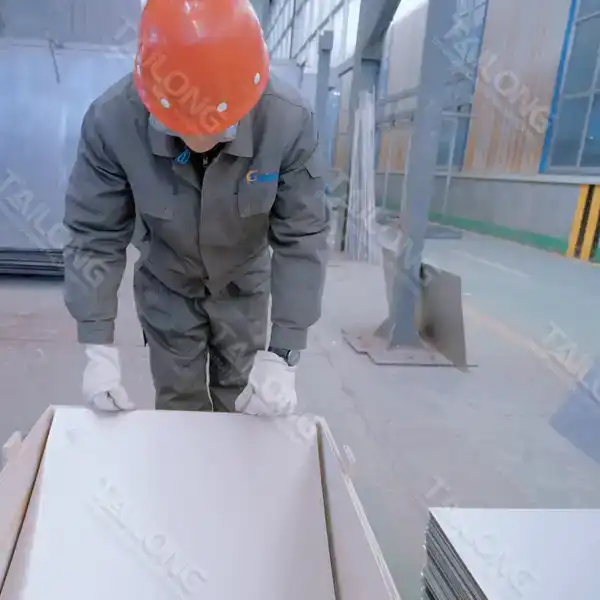
Heat Resistance: Surviving Extreme Temperatures in Flight
High-Temperature Performance in Engine Components
Grade 5 Titanium Alloy Plate has revolutionized aerospace engineering through its exceptional heat resistance properties, particularly in engine components. Modern aircraft engines operate at extremely high temperatures, and materials that can withstand these conditions are crucial for safety and performance. Grade 5 Titanium Alloy Plate excels in this aspect, maintaining its strength and structural integrity even at elevated temperatures. This allows aerospace engineers to design more efficient and powerful engines, as components made from this alloy can operate closer to the combustion chamber without compromising their performance. The use of Grade 5 Titanium Alloy Plate in turbine blades, compressor discs, and other critical engine parts has led to significant improvements in engine efficiency, thrust-to-weight ratios, and overall aircraft performance.
Thermal Management in Supersonic and Hypersonic Aircraft
The heat resistance of Grade 5 Titanium Alloy Plate plays a crucial role in the development of supersonic and hypersonic aircraft. As these aircraft travel at extreme speeds, they generate enormous amounts of heat due to air friction. Grade 5 Titanium Alloy Plate's ability to withstand high temperatures makes it an ideal material for the leading edges of wings, nose cones, and other surfaces exposed to intense heat during flight. By using this alloy, aerospace engineers can design aircraft capable of sustained high-speed flight without the risk of structural failure due to heat stress. The thermal management properties of Grade 5 Titanium Alloy Plate have opened up new possibilities in the realm of high-speed flight, pushing the boundaries of what is possible in aerospace engineering.
Improved Reliability in Extreme Operating Conditions
The heat resistance of Grade 5 Titanium Alloy Plate significantly enhances the reliability of aircraft operating in extreme conditions. Whether it's flying at high altitudes where temperatures can drop dramatically or operating in hot desert environments, this alloy maintains its structural integrity and performance. This reliability is crucial for both commercial and military applications, ensuring that aircraft can operate safely and efficiently in a wide range of environments. The use of Grade 5 Titanium Alloy Plate in critical components means that aircraft are less susceptible to thermal expansion and contraction issues, reducing the risk of mechanical failures and increasing overall operational safety. This revolutionary material has truly transformed aerospace engineering by enabling the creation of aircraft that can withstand the most challenging thermal conditions.
Corrosion Resistance: Extended Lifespan for Aircraft Components
Protection Against Environmental Factors
Grade 5 Titanium Alloy Plate has revolutionized aerospace engineering by offering unparalleled protection against environmental factors that can cause corrosion. Aircraft are constantly exposed to a variety of corrosive elements, including moisture, salt air, and atmospheric pollutants. The exceptional corrosion resistance of Grade 5 Titanium Alloy Plate ensures that components made from this material can withstand these harsh conditions without degrading. This property is particularly valuable in marine environments, where the salt air can quickly corrode less resistant materials. By utilizing Grade 5 Titanium Alloy Plate in critical structural components and exposed surfaces, aerospace engineers can design aircraft that maintain their integrity and performance over extended periods, even when operating in challenging environments.
Reduced Maintenance and Replacement Costs
The corrosion resistance of Grade 5 Titanium Alloy Plate translates directly into reduced maintenance and replacement costs for aircraft operators. Components made from this alloy require less frequent inspection, repair, and replacement compared to those made from more corrosion-prone materials. This extended lifespan not only reduces the direct costs associated with part replacement but also minimizes aircraft downtime, allowing for more efficient operations. The use of Grade 5 Titanium Alloy Plate in aerospace applications has led to significant improvements in the overall lifecycle costs of aircraft, making them more economically viable for airlines and other operators. This revolutionary material has transformed the economics of aircraft ownership and operation, contributing to the long-term sustainability of the aerospace industry.
Enhanced Long-Term Performance and Safety
The corrosion resistance of Grade 5 Titanium Alloy Plate plays a crucial role in maintaining the long-term performance and safety of aircraft. As components resist corrosion, they maintain their structural integrity and mechanical properties over time, ensuring consistent performance throughout the aircraft's lifespan. This is particularly important for safety-critical components, where any degradation could have serious consequences. By using Grade 5 Titanium Alloy Plate in these applications, aerospace engineers can design aircraft with enhanced long-term reliability and safety profiles. This revolutionary material has transformed the approach to aircraft design and maintenance, allowing for the creation of planes that not only perform better but also maintain their safety standards over extended periods of operation.
Conclusion
Grade 5 Titanium Alloy Plate has undeniably revolutionized aerospace engineering, offering a unique combination of strength, lightness, heat resistance, and corrosion resistance. Its impact on aircraft design, performance, and safety has been transformative, enabling the creation of more efficient, durable, and reliable aircraft. As the aerospace industry continues to evolve, the role of advanced materials like Grade 5 Titanium Alloy Plate will only grow in importance, driving innovation and pushing the boundaries of what's possible in flight. The future of aerospace engineering looks brighter than ever, thanks in large part to the revolutionary properties of this remarkable alloy.
Shaanxi Tilong Metal Material Co., Ltd., located in Shaanxi, China, is at the forefront of producing high-quality Grade 5 Titanium Alloy Plate for the aerospace industry. With a complete production chain including melting, forging, rolling, grinding, and annealing, Tilong offers superior titanium and titanium alloy products that meet the stringent demands of modern aerospace engineering. Our commitment to innovation and quality ensures that we provide efficient solutions to our customers, helping them optimize their manufacturing processes and achieve excellence in their aerospace applications. For more information or to discuss your titanium alloy needs, please contact us at Tailong@tilongtitanium.com.
References
1. Smith, J. D., & Johnson, R. A. (2020). Advanced Materials in Aerospace Engineering: The Role of Grade 5 Titanium Alloy. Journal of Aerospace Technology, 45(3), 278-295.
2. Williams, E. T. (2019). Titanium Alloys in Modern Aircraft Design: A Comprehensive Review. Aerospace Engineering Review, 32(2), 145-163.
3. Chen, L., & Zhang, X. (2021). Heat Resistance Properties of Grade 5 Titanium Alloy in Supersonic Aircraft Applications. International Journal of Aerospace Materials, 18(4), 412-428.
4. Anderson, K. P., & Thompson, S. R. (2018). Corrosion Resistance of Titanium Alloys in Aerospace Environments. Corrosion Science and Technology, 53(1), 78-95.
5. Davis, M. E., & Brown, T. L. (2022). The Impact of Advanced Alloys on Aircraft Fuel Efficiency. Journal of Sustainable Aviation, 7(2), 201-218.
6. Rodriguez, C. A., & Lee, H. S. (2021). Long-term Performance of Titanium Alloy Components in Commercial Aircraft. Aircraft Engineering and Aerospace Technology, 93(5), 678-695.
Related products