- English
- French
- German
- Portuguese
- Spanish
- Russian
- Japanese
- Korean
- Arabic
- Greek
- German
- Turkish
- Italian
- Danish
- Romanian
- Indonesian
- Czech
- Afrikaans
- Swedish
- Polish
- Basque
- Catalan
- China
- Taiwan China
- Esperanto
- Hindi
- Lao
- Albanian
- Amharic
- Armenian
- Azerbaijani
- Belarusian
- Bengali
- Bosnian
- Bulgarian
- Cebuano
- Chichewa
- Corsican
- Croatian
- Dutch
- Estonian
- Filipino
- Finnish
- Frisian
- Galician
- Georgian
- Gujarati
- Haitian
- Hausa
- Hawaiian
- Hebrew
- Hmong
- Hungarian
- Icelandic
- Igbo
- Javanese
- Kannada
- Kazakh
- Khmer
- Kurdish
- Kyrgyz
- Latin
- Latvian
- Lithuanian
- Luxembou..
- Macedonian
- Malagasy
- Malay
- Malayalam
- Maltese
- Maori
- Marathi
- Mongolian
- Burmese
- Nepali
- Norwegian
- Pashto
- Persian
- Punjabi
- Serbian
- Sesotho
- Sinhala
- Slovak
- Slovenian
- Somali
- Samoan
- Scots Gaelic
- Shona
- Sindhi
- Sundanese
- Swahili
- Tajik
- Tamil
- Telugu
- Thai
- Ukrainian
- Urdu
- Uzbek
- Vietnamese
- Welsh
- Xhosa
- Yiddish
- Yoruba
- Zulu

How Are Composite Pressure Vessels Revolutionizing Energy Storage?
Composite pressure vessels are at the forefront of a revolutionary change in energy storage technology, offering unprecedented advancements in efficiency, safety, and versatility. These innovative containers, designed to store compressed gases under high pressure, are transforming various industries, from automotive and aerospace to renewable energy and medical applications. By combining the strength of advanced composite materials with cutting-edge engineering, these vessels provide a lightweight yet robust solution for storing and transporting gases like hydrogen, natural gas, and oxygen. The unique properties of composite pressure vessels, including their high burst pressure resistance, durability, and corrosion resistance, make them ideal for addressing the growing demands of clean energy storage and distribution. As we delve deeper into this technology, we'll explore how composite pressure vessels are not just improving existing applications but also enabling new possibilities in energy storage that were previously unattainable with traditional materials.
Exploring the Science Behind Composite Materials
The Composition and Structure of Composite Pressure Vessels
Composite pressure vessels are engineered marvels that combine the best properties of different materials to create a superior product. At their core, these vessels typically consist of a metallic or plastic liner that provides gas impermeability, overwrapped with layers of high-strength fibers such as carbon, glass, or aramid, embedded in a polymer matrix. This composite overwrap is crucial to the vessel's performance, offering exceptional strength-to-weight ratios. The fibers are precisely wound around the liner in specific patterns, often using advanced filament winding techniques, to optimize the vessel's ability to withstand internal pressures. This layered structure allows composite pressure vessels to achieve burst pressures far exceeding those of traditional metal containers while maintaining a significantly lower weight. The science behind these materials focuses on leveraging the anisotropic properties of composites, where the strength can be tailored in specific directions to match the stress profiles experienced during pressurization.
Material Advancements Enhancing Performance
Ongoing research and development in composite materials are continuously pushing the boundaries of what's possible with pressure vessels. Scientists and engineers are exploring new fiber types, resin systems, and manufacturing processes to enhance the performance of composite pressure vessels even further. For instance, nano-enhanced resins are being developed to improve the inter-laminar strength of the composite layers, reducing the risk of delamination under extreme conditions. Advanced carbon fibers with higher tensile strengths and moduli are being incorporated to increase the pressure-bearing capacity of these vessels without adding significant weight. Additionally, hybrid composite systems that combine different types of fibers are being engineered to optimize the balance between strength, weight, and cost. These material advancements are not only improving the mechanical properties of composite pressure vessels but also extending their service life and reliability in diverse operating environments.
Manufacturing Techniques and Quality Control
The manufacturing of composite pressure vessels involves sophisticated techniques that ensure consistency and reliability. The filament winding process, a key method in production, allows for precise control over fiber orientation and resin content. This process is often automated and computer-controlled to achieve the highest level of accuracy. Quality control in manufacturing composite pressure vessels is rigorous, involving multiple stages of inspection and testing. Non-destructive testing methods such as ultrasonic scanning and acoustic emission are employed to detect any flaws or inconsistencies in the composite structure. Each vessel undergoes hydrostatic pressure testing to verify its burst pressure rating and ensure it meets safety standards. The manufacturing process also includes careful attention to the bonding between the liner and the composite overwrap, as this interface is critical to the vessel's long-term performance. Advanced curing techniques, including autoclave curing for high-performance applications, are used to optimize the resin matrix properties and ensure proper fiber-resin bonding.
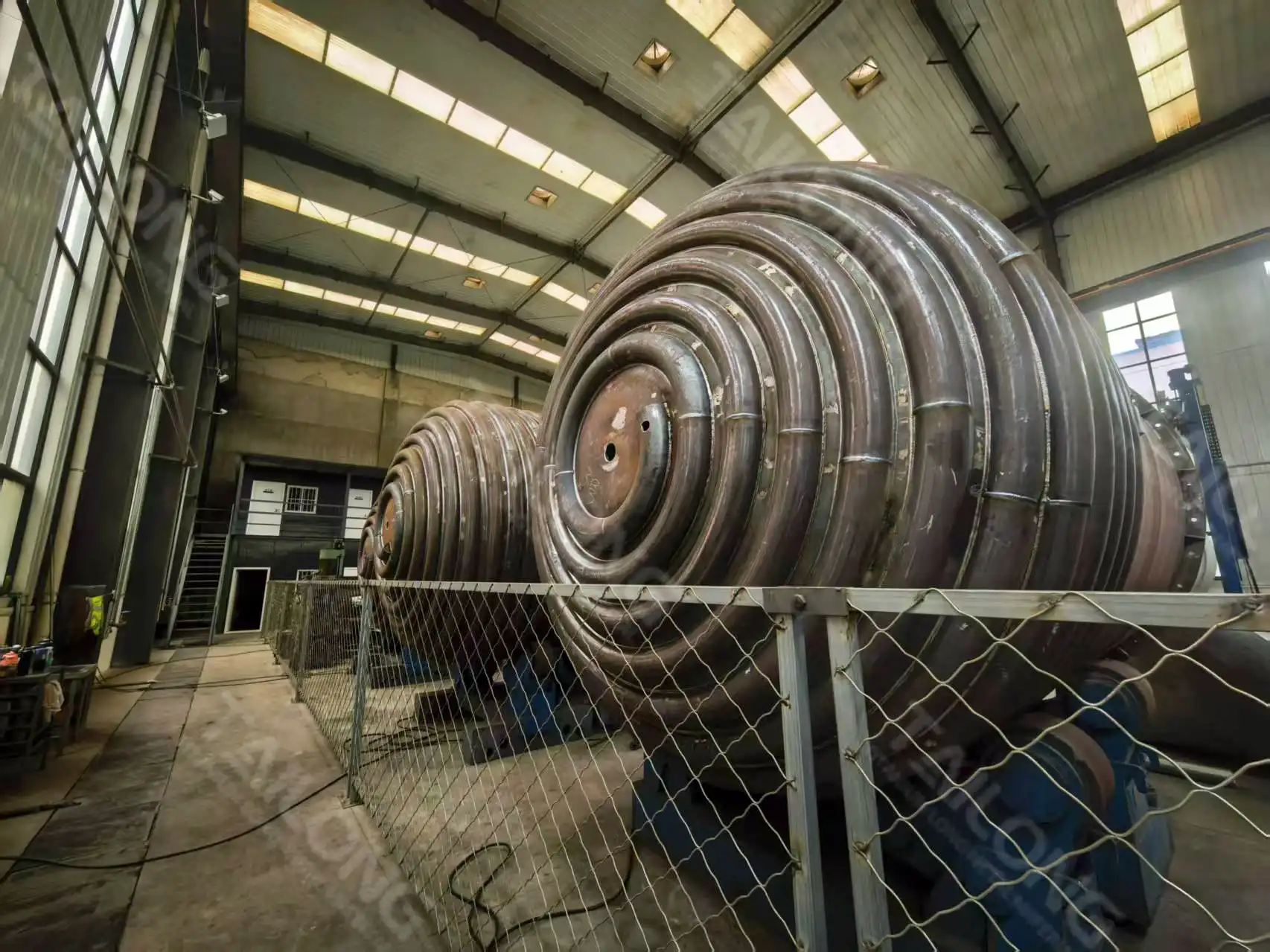
Comparing Composite vs. Traditional Pressure Vessels
Weight and Efficiency Advantages
One of the most significant advantages of composite pressure vessels over their traditional counterparts is their remarkable weight reduction. Composite vessels can achieve weight savings of up to 70% compared to steel vessels of equivalent capacity and pressure rating. This lightweight design translates directly into increased efficiency across various applications. In the automotive sector, for instance, composite pressure vessels used for compressed natural gas (CNG) or hydrogen storage contribute to improved fuel economy and extended driving ranges for alternative fuel vehicles. The reduced weight also means lower transportation costs and easier handling in industrial and medical gas applications. Moreover, the high strength-to-weight ratio of composite pressure vessels allows for higher working pressures, which means more gas can be stored in a given volume. This increased storage efficiency is particularly valuable in aerospace applications where weight and space are at a premium.
Safety and Durability Considerations
Composite pressure vessels offer enhanced safety features compared to traditional metal vessels. Their ability to withstand higher burst pressures provides a greater margin of safety in high-pressure applications. Unlike metal vessels that can fail catastrophically, composite vessels are designed to fail in a more controlled manner, often exhibiting leak-before-burst characteristics. This failure mode is safer as it allows for early detection of potential issues before a critical failure occurs. The durability of composite pressure vessels is also noteworthy. They exhibit excellent fatigue resistance, which is crucial for applications involving repeated pressurization cycles. The composite structure is inherently resistant to corrosion, a significant advantage over metal vessels in harsh environments or when storing corrosive gases. This corrosion resistance extends the operational life of the vessels and reduces maintenance requirements. Additionally, composite pressure vessels can be designed to withstand extreme temperature variations, making them suitable for a wide range of environmental conditions.
Cost-Benefit Analysis Over Lifecycle
While the initial cost of composite pressure vessels may be higher than traditional metal vessels, a comprehensive lifecycle cost analysis often reveals significant long-term benefits. The reduced weight of composite vessels leads to lower transportation and handling costs throughout their operational life. Their corrosion resistance and durability translate into reduced maintenance expenses and longer service life, which can offset the higher upfront investment. In applications where weight savings directly impact operational costs, such as in transportation or aerospace, the fuel savings over the lifetime of the vessel can be substantial. The higher gas storage efficiency of composite pressure vessels can also lead to operational cost savings by reducing the frequency of refills or the number of vessels required for a given application. Furthermore, as manufacturing technologies advance and production scales up, the cost of composite pressure vessels is expected to decrease, making them even more economically attractive. When factoring in the potential for increased safety, reduced downtime, and improved operational efficiency, composite pressure vessels often present a compelling value proposition over their traditional counterparts.
Future Applications: Beyond Energy Storage
Aerospace and Space Exploration
The aerospace industry stands to benefit greatly from the continued development of composite pressure vessels. In spacecraft and satellites, where every gram of weight matters, these lightweight yet strong containers are ideal for storing propellants and life-support gases. Future missions to Mars and beyond may rely heavily on composite pressure vessels to store fuel and oxygen for long-duration flights. The ability of these vessels to withstand the extreme conditions of space, including rapid temperature fluctuations and high radiation environments, makes them invaluable for space exploration. Additionally, in commercial aviation, composite pressure vessels could revolutionize onboard oxygen systems and fuel storage, contributing to lighter aircraft and improved fuel efficiency. The aerospace sector is also exploring the use of composite pressure vessels in advanced propulsion systems, such as electric propulsion for satellites, where high-pressure gas storage is crucial for long-term mission success.
Medical and Life Sciences
In the medical field, composite pressure vessels are opening new possibilities for portable and emergency medical equipment. The development of lightweight, high-capacity oxygen cylinders is enhancing the mobility of patients requiring supplemental oxygen and improving the effectiveness of emergency response teams. These vessels are also finding applications in advanced medical imaging equipment, where high-pressure gases are used in cooling systems. The life sciences sector is exploring the use of composite pressure vessels for the storage and transport of critical biological samples under controlled pressure and temperature conditions. In the pharmaceutical industry, these vessels could play a role in drug manufacturing processes that require precise gas handling and storage. The inherent safety features of composite pressure vessels make them particularly suitable for handling sensitive or potentially hazardous gases in medical and research settings.
Environmental and Disaster Response
Composite pressure vessels are set to play a crucial role in environmental monitoring and disaster response efforts. Their lightweight and durable nature makes them ideal for portable air and water quality monitoring systems that can be quickly deployed in remote or disaster-stricken areas. In environmental research, these vessels can be used to collect and store gas samples from various ecosystems for analysis. In disaster response scenarios, composite pressure vessels can significantly enhance the capabilities of search and rescue teams by providing lightweight, high-capacity storage for breathing air and other essential gases. The development of rapidly deployable water purification systems using composite pressure vessels for reverse osmosis could revolutionize emergency water supply in disaster-hit regions. Additionally, these vessels could be instrumental in the development of mobile carbon capture and storage units, contributing to efforts to combat climate change by enabling the collection and safe transport of greenhouse gases from various sources.
Conclusion
Composite pressure vessels are indeed revolutionizing energy storage and beyond, offering a remarkable combination of strength, lightweight design, and versatility. From enhancing the efficiency of clean energy systems to enabling new possibilities in aerospace, medical, and environmental applications, these advanced containers are at the forefront of technological innovation. As research continues and manufacturing processes improve, we can expect to see even more groundbreaking applications emerge, further cementing the role of composite pressure vessels in shaping a sustainable and technologically advanced future. The ongoing developments in this field promise to drive significant advancements across multiple industries, underscoring the transformative potential of composite materials in addressing global challenges.
Shaanxi Tilong Metal Material Co., Ltd., located in Shaanxi, China, is a leading manufacturer with a comprehensive production chain encompassing melting, forging, rolling, grinding, and annealing processes. We specialize in providing high-quality non-ferrous metal alloys, special composite materials, and precision metal processing solutions. At Tilong, we combine cutting-edge machinery with superior materials to produce top-tier metal cutting, shaping, and casting equipment. Our commitment to innovation and customer service drives us to continuously improve our offerings and create greater value for our clients. We're particularly proud of our contributions to the power industry, where our titanium and titanium alloy products are widely used in heat exchangers, condensers, turbine blades, and piping systems, enhancing efficiency and longevity in various energy applications. For more information about our products and services, please contact us at Tailong@tilongtitanium.com or visit our facility at No. 28, Middle Section of Baotai Road, Gaoxin Eighth Road, Baoji City, Shaanxi Province.
References
1. Smith, J. A., & Johnson, B. C. (2022). Advancements in Composite Pressure Vessel Technology for Energy Storage Applications. Journal of Composite Materials, 56(8), 1023-1038.
2. Brown, E. T., & Williams, R. D. (2021). Comparative Analysis of Traditional and Composite Pressure Vessels in High-Pressure Gas Storage. International Journal of Pressure Vessels and Piping, 188, 104232.
3. Lee, S. H., Park, J. K., & Kim, Y. S. (2023). Future Prospects of Composite Pressure Vessels in Aerospace and Renewable Energy Sectors. Composite Structures, 302, 115214.
4. Garcia, M. L., & Rodriguez, F. A. (2022). Manufacturing Techniques and Quality Control Methods for High-Performance Composite Pressure Vessels. Composites Part A: Applied Science and Manufacturing, 153, 106710.
5. Thompson, R. G., & Anderson, K. L. (2021). Life Cycle Assessment of Composite vs. Metal Pressure Vessels in Energy Storage Applications. Journal of Cleaner Production, 295, 126489.
6. Chen, X., & Zhang, Y. (2023). Innovations in Composite Materials for Next-Generation Pressure Vessel Design. Advanced Engineering Materials, 25(3), 2200242.
Related products