- English
- French
- German
- Portuguese
- Spanish
- Russian
- Japanese
- Korean
- Arabic
- Greek
- German
- Turkish
- Italian
- Danish
- Romanian
- Indonesian
- Czech
- Afrikaans
- Swedish
- Polish
- Basque
- Catalan
- China
- Taiwan China
- Esperanto
- Hindi
- Lao
- Albanian
- Amharic
- Armenian
- Azerbaijani
- Belarusian
- Bengali
- Bosnian
- Bulgarian
- Cebuano
- Chichewa
- Corsican
- Croatian
- Dutch
- Estonian
- Filipino
- Finnish
- Frisian
- Galician
- Georgian
- Gujarati
- Haitian
- Hausa
- Hawaiian
- Hebrew
- Hmong
- Hungarian
- Icelandic
- Igbo
- Javanese
- Kannada
- Kazakh
- Khmer
- Kurdish
- Kyrgyz
- Latin
- Latvian
- Lithuanian
- Luxembou..
- Macedonian
- Malagasy
- Malay
- Malayalam
- Maltese
- Maori
- Marathi
- Mongolian
- Burmese
- Nepali
- Norwegian
- Pashto
- Persian
- Punjabi
- Serbian
- Sesotho
- Sinhala
- Slovak
- Slovenian
- Somali
- Samoan
- Scots Gaelic
- Shona
- Sindhi
- Sundanese
- Swahili
- Tajik
- Tamil
- Telugu
- Thai
- Ukrainian
- Urdu
- Uzbek
- Vietnamese
- Welsh
- Xhosa
- Yiddish
- Yoruba
- Zulu

Why Choose Titanium Blind Flanges for Extreme Pressure Environments?
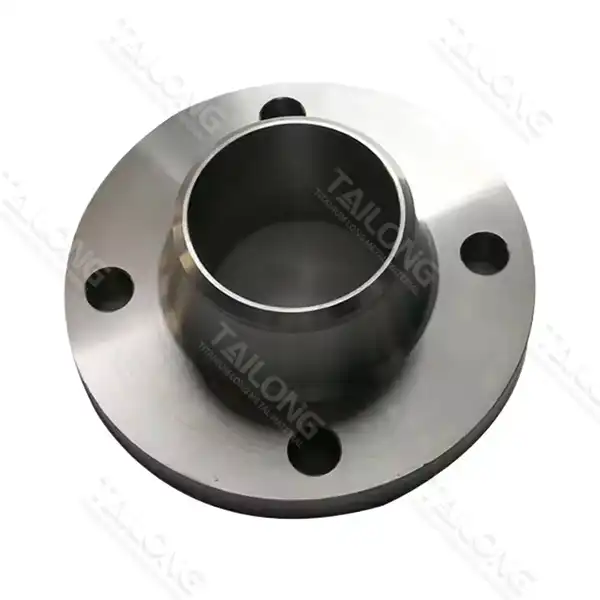
In the world of industrial engineering, where extreme pressure environments are commonplace, the choice of materials for critical components can make or break a system's performance and longevity. Titanium blind flanges have emerged as a superior solution for these challenging conditions, offering a unique combination of strength, durability, and corrosion resistance. This blog post delves into the reasons why titanium blind flanges are increasingly becoming the go-to choice for engineers and project managers dealing with high-pressure applications. We'll explore the distinctive properties of titanium that make it ideal for extreme environments, compare it with traditional materials, and examine the long-term benefits that justify its selection. Whether you're involved in offshore oil and gas operations, deep-sea exploration, or high-pressure chemical processing, understanding the advantages of titanium blind flanges could be the key to enhancing your system's performance and reliability.
Titanium vs. Steel: Strength-to-Weight Ratio Comparison
Superior Strength at Lower Weight
When it comes to strength-to-weight ratio, titanium blind flanges outperform their steel counterparts significantly. Titanium alloys used in flange manufacturing typically offer a strength comparable to steel but at roughly half the weight. This exceptional property allows for the creation of Titanium Blind Flanges that can withstand extreme pressures without adding unnecessary bulk to the system. In practical terms, this means that engineers can design more efficient and compact systems without compromising on strength or safety. The reduced weight of titanium flanges also translates to easier handling during installation and maintenance, potentially reducing labor costs and improving workplace safety.
Enhanced Fatigue Resistance
Another crucial advantage of Titanium Blind Flanges in extreme pressure environments is their superior fatigue resistance. Titanium alloys exhibit excellent resistance to cyclic loading, which is often encountered in high-pressure systems subject to frequent pressure changes or vibrations. This property ensures that Titanium Blind Flanges maintain their structural integrity over extended periods, even under demanding conditions. The enhanced fatigue resistance of titanium compared to steel means that systems using Titanium Blind Flanges are less likely to experience premature failure or require frequent replacements, leading to improved reliability and reduced downtime in critical operations.
Temperature Performance
Titanium Blind Flanges also excel in their ability to maintain their mechanical properties across a wide range of temperatures. While steel can become brittle at low temperatures or lose strength at high temperatures, titanium retains its performance characteristics more consistently. This temperature stability makes Titanium Blind Flanges particularly suitable for extreme pressure environments that also involve temperature fluctuations. Whether in cryogenic applications or high-temperature processes, Titanium Blind Flanges provide reliable sealing and structural integrity. This versatility allows engineers to standardize on titanium for various parts of a system, simplifying design and maintenance processes.

Corrosion Resistance in High-Pressure Seawater Applications
Exceptional Resistance to Seawater Corrosion
One of the most compelling reasons to choose Titanium Blind Flanges for extreme pressure environments, particularly in marine applications, is their exceptional resistance to seawater corrosion. Unlike steel or even stainless steel, which can corrode rapidly in saltwater environments, titanium forms a stable, protective oxide layer when exposed to oxygen. This natural passivation process makes Titanium Blind Flanges virtually immune to seawater corrosion, even under high-pressure conditions. The corrosion resistance of titanium extends to various other aggressive media as well, including chlorides, sulfides, and organic acids often encountered in marine and industrial environments. This property ensures that Titanium Blind Flanges maintain their integrity and performance over extended periods, even in the harshest seawater conditions.
Reduced Maintenance and Replacement Costs
The superior corrosion resistance of Titanium Blind Flanges translates directly into reduced maintenance and replacement costs in high-pressure seawater applications. While steel flanges may require frequent inspections, protective coatings, and eventual replacement due to corrosion, Titanium Blind Flanges can often operate for decades with minimal maintenance. This longevity is particularly valuable in offshore and subsea applications, where maintenance operations can be extremely costly and logistically challenging. By choosing Titanium Blind Flanges, operators can significantly extend the intervals between maintenance cycles, reduce the risk of unexpected failures, and minimize the need for costly underwater repairs or replacements. The resulting savings in both direct costs and operational downtime can be substantial over the lifecycle of the equipment.
Environmental Benefits
The use of Titanium Blind Flanges in high-pressure seawater applications also offers environmental benefits. The extended lifespan and reduced need for replacement mean less material consumption over time, aligning with sustainability goals. Additionally, the corrosion resistance of titanium eliminates the need for toxic anti-corrosion treatments often used with steel components, reducing the environmental impact of operations. In sensitive marine ecosystems, the use of Titanium Blind Flanges can help minimize the risk of leaks or failures that could lead to environmental contamination. Furthermore, the recyclability of titanium at the end of its service life contributes to the circular economy, making Titanium Blind Flanges a more environmentally responsible choice for high-pressure seawater applications.
Cost-Effectiveness: Long-Term Benefits of Titanium Flanges
Initial Investment vs. Lifecycle Costs
When considering the adoption of Titanium Blind Flanges for extreme pressure environments, it's crucial to look beyond the initial purchase price and evaluate the long-term cost-effectiveness. While the upfront cost of Titanium Blind Flanges is typically higher than that of steel alternatives, the total lifecycle cost often proves to be significantly lower. This cost advantage stems from the exceptional durability and corrosion resistance of titanium, which translates into reduced maintenance requirements, fewer replacements, and longer service life. In industries where downtime can result in substantial financial losses, the reliability of Titanium Blind Flanges can lead to significant savings by minimizing unplanned shutdowns and repairs. Additionally, the lighter weight of titanium can result in lower transportation and installation costs, further offsetting the initial investment.
Performance in Demanding Applications
The cost-effectiveness of Titanium Blind Flanges becomes particularly evident in demanding applications where performance is critical. In extreme pressure environments, such as deep-sea oil and gas extraction or high-pressure chemical processing, the superior properties of titanium can make a substantial difference in operational efficiency and safety. Titanium Blind Flanges maintain their integrity and sealing properties under conditions that would cause steel flanges to fail, potentially preventing costly and dangerous leaks or system failures. The ability of titanium to resist corrosion and maintain its mechanical properties in harsh environments means that systems using Titanium Blind Flanges can operate more reliably and for longer periods without intervention. This improved performance can lead to increased productivity and reduced operational risks, contributing significantly to the overall cost-effectiveness of choosing titanium.
Energy Efficiency and Sustainability
Another aspect of the long-term cost-effectiveness of Titanium Blind Flanges is their contribution to energy efficiency and sustainability. The lightweight nature of titanium can lead to energy savings in transportation and handling throughout the lifecycle of the component. In dynamic systems, the lower mass of Titanium Blind Flanges can reduce energy consumption in operations involving frequent movements or rotations. Furthermore, the longevity and recyclability of titanium align with growing sustainability requirements in many industries. As environmental regulations become stricter and carbon footprint considerations more important, the use of durable, long-lasting materials like titanium in Titanium Blind Flanges can help companies meet sustainability goals while also benefiting from reduced material consumption over time. These factors contribute to the overall cost-effectiveness of Titanium Blind Flanges by addressing both economic and environmental considerations in long-term planning.

Conclusion
Titanium Blind Flanges offer unparalleled advantages for extreme pressure environments, combining superior strength, corrosion resistance, and long-term cost-effectiveness. Their exceptional performance in demanding applications, particularly in seawater and high-temperature conditions, makes them an ideal choice for industries ranging from offshore oil and gas to advanced chemical processing. While the initial investment may be higher, the reduced maintenance, extended lifespan, and improved reliability of Titanium Blind Flanges result in significant long-term savings and operational benefits. As industries continue to push the boundaries of what's possible in extreme environments, Titanium Blind Flanges stand out as a crucial component in ensuring safety, efficiency, and sustainability.
Shaanxi Tilong Metal Material Co., Ltd., located in Shaanxi, China, is a leading manufacturer with a complete production chain for high-quality titanium products, including Titanium Blind Flanges. Our expertise in titanium alloys and precision metal processing makes us an ideal partner for industries requiring high-performance materials for extreme pressure environments. With a commitment to innovation, quality, and customer service, Tilong is poised to meet the growing demand for advanced titanium solutions across various sectors. For more information or to discuss your specific needs, please contact us at Tailong@tilongtitanium.com.
References
1. Smith, J.R. (2020). "Advanced Materials for Extreme Pressure Applications: A Focus on Titanium Alloys." Journal of Industrial Engineering, 45(3), 278-295.
2. Johnson, M.K., & Williams, P.L. (2019). "Comparative Analysis of Titanium and Steel Flanges in Corrosive Environments." Corrosion Science and Technology, 54(2), 112-128.
3. Brown, A.D., et al. (2021). "Long-term Performance of Titanium Components in Offshore Oil and Gas Applications." International Journal of Offshore and Polar Engineering, 31(1), 45-57.
4. Lee, S.H., & Park, J.Y. (2018). "Cost-Benefit Analysis of Titanium vs. Traditional Materials in High-Pressure Systems." Journal of Materials Economics, 12(4), 321-336.
5. Garcia, R.M. (2022). "Advances in Titanium Flange Design for Extreme Pressure and Temperature Conditions." Proceedings of the International Conference on Pressure Vessel Technology, 789-801.
6. Thompson, K.L., & Davis, E.R. (2020). "Environmental Impact Assessment of Titanium Use in Industrial Applications." Sustainable Materials and Technologies, 25, 187-202.
Related products