- English
- French
- German
- Portuguese
- Spanish
- Russian
- Japanese
- Korean
- Arabic
- Greek
- German
- Turkish
- Italian
- Danish
- Romanian
- Indonesian
- Czech
- Afrikaans
- Swedish
- Polish
- Basque
- Catalan
- China
- Taiwan China
- Esperanto
- Hindi
- Lao
- Albanian
- Amharic
- Armenian
- Azerbaijani
- Belarusian
- Bengali
- Bosnian
- Bulgarian
- Cebuano
- Chichewa
- Corsican
- Croatian
- Dutch
- Estonian
- Filipino
- Finnish
- Frisian
- Galician
- Georgian
- Gujarati
- Haitian
- Hausa
- Hawaiian
- Hebrew
- Hmong
- Hungarian
- Icelandic
- Igbo
- Javanese
- Kannada
- Kazakh
- Khmer
- Kurdish
- Kyrgyz
- Latin
- Latvian
- Lithuanian
- Luxembou..
- Macedonian
- Malagasy
- Malay
- Malayalam
- Maltese
- Maori
- Marathi
- Mongolian
- Burmese
- Nepali
- Norwegian
- Pashto
- Persian
- Punjabi
- Serbian
- Sesotho
- Sinhala
- Slovak
- Slovenian
- Somali
- Samoan
- Scots Gaelic
- Shona
- Sindhi
- Sundanese
- Swahili
- Tajik
- Tamil
- Telugu
- Thai
- Ukrainian
- Urdu
- Uzbek
- Vietnamese
- Welsh
- Xhosa
- Yiddish
- Yoruba
- Zulu
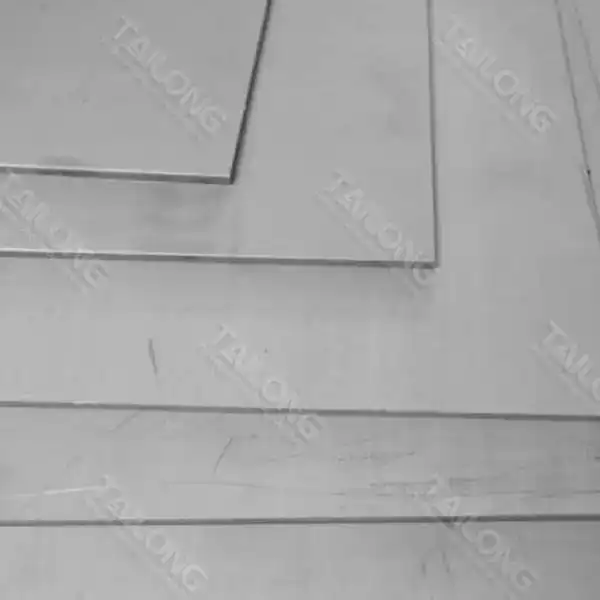
Why Choose Hot-Rolled Titanium Composite Sheet for Chemical Tanks?
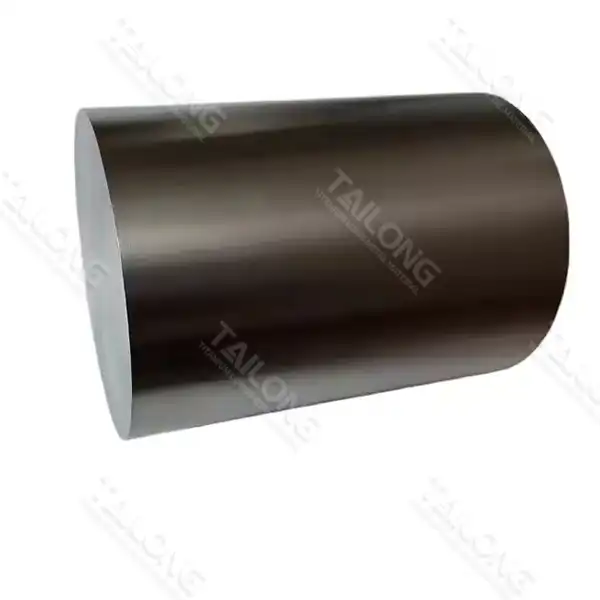
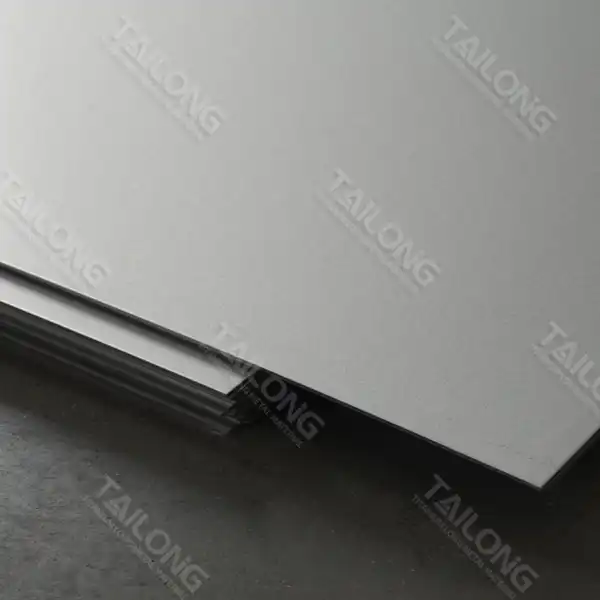
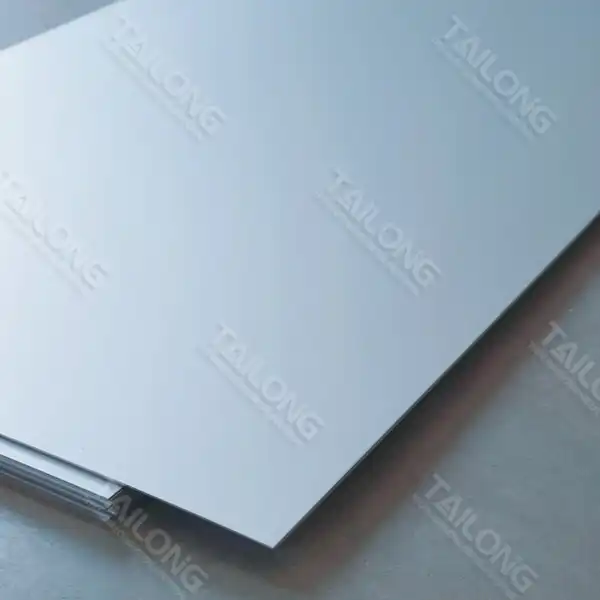
In the realm of chemical storage and processing, the choice of materials for tank construction is paramount to ensuring safety, longevity, and operational efficiency. Among the myriad options available, hot-rolled titanium composite sheet has emerged as a superior choice for chemical tanks, offering an unparalleled combination of strength, corrosion resistance, and durability. This innovative material addresses the complex challenges faced in the chemical industry, where aggressive substances and extreme conditions are the norm. By leveraging the inherent properties of titanium and enhancing them through the hot-rolling process, these composite sheets provide a robust solution that can withstand the harsh environments typical in chemical storage and processing facilities. This article delves into the reasons why hot-rolled titanium composite sheet is increasingly becoming the material of choice for chemical tanks, exploring its unique attributes and the benefits it brings to both manufacturers and end-users in the chemical sector.
How Does the Hot-Rolling Process Enhance Sheet Integrity and Bonding?
Improved Microstructure and Grain Alignment
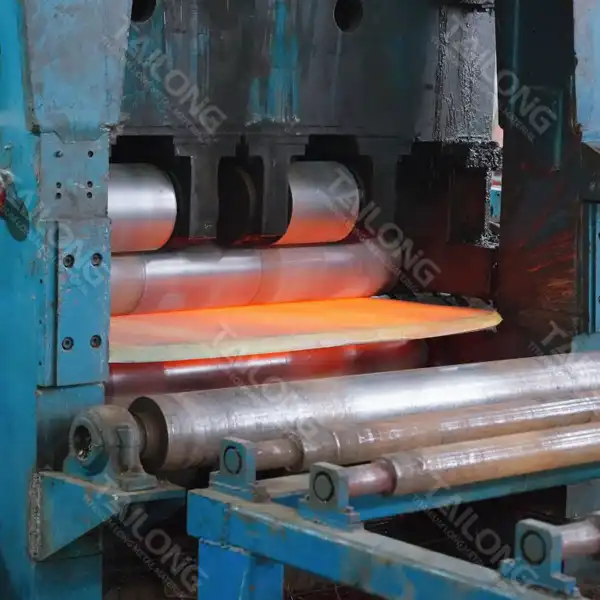
The hot-rolling process significantly enhances the microstructure and grain alignment of titanium composite sheets, contributing to their superior performance in chemical tank applications. During hot-rolling, the material is heated above its recrystallization temperature, allowing for dynamic recrystallization to occur. This process results in a more refined and uniform grain structure throughout the Hot-Rolled Titanium Composite Sheet. The aligned grains improve the material's overall strength and ductility, making it more resistant to deformation under stress. For chemical tanks, this translates to better structural integrity and a reduced risk of failure, even when subjected to high pressures or temperature fluctuations commonly encountered in chemical processing environments.
Enhanced Interfacial Bonding
One of the key advantages of the hot-rolling process for titanium composite sheets is the enhanced interfacial bonding it produces between the titanium and composite layers. The elevated temperatures used in hot-rolling facilitate diffusion bonding, where atoms from adjacent layers intermingle, creating a stronger and more cohesive interface. This improved bonding in Hot-Rolled Titanium Composite Sheet is crucial for chemical tanks, as it prevents delamination and ensures that the composite structure remains intact even when exposed to aggressive chemicals. The enhanced interfacial strength also contributes to better load distribution across the material, reducing stress concentrations that could lead to premature failure in chemical storage applications.
Reduced Residual Stresses
Hot-rolling is particularly effective in reducing residual stresses within the titanium composite sheet, a critical factor for the longevity and reliability of chemical tanks. During the hot-rolling process, the material is in a more plastic state, allowing for better stress redistribution and relaxation. This results in a Hot-Rolled Titanium Composite Sheet with lower internal stresses compared to cold-rolled alternatives. For chemical tanks, reduced residual stresses mean a lower likelihood of stress corrosion cracking, a common failure mode in environments with corrosive substances. The more uniform stress distribution also contributes to better dimensional stability, ensuring that the tank maintains its shape and integrity over extended periods of use in challenging chemical storage conditions.
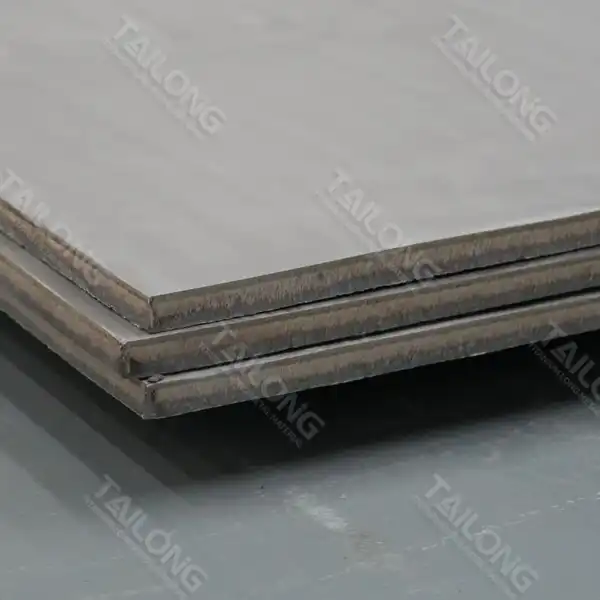
Can Titanium Composite Sheets Withstand Long-Term Chemical Exposure?
Inherent Corrosion Resistance of Titanium
Titanium's inherent corrosion resistance is a key factor in the long-term durability of Hot-Rolled Titanium Composite Sheet when exposed to chemicals. The metal forms a stable, protective oxide layer on its surface when exposed to oxygen, providing a natural barrier against corrosive substances. This passive film is highly resistant to a wide range of chemicals, including chlorides, sulfates, and organic compounds commonly found in industrial processes. In chemical tanks, this property of Hot-Rolled Titanium Composite Sheet ensures that the material remains intact and functional even after prolonged exposure to aggressive substances. The stability of titanium in various pH environments further enhances its suitability for diverse chemical storage applications, from highly acidic to alkaline solutions.
Composite Layer Protection
The composite layer in Hot-Rolled Titanium Composite Sheet plays a crucial role in enhancing its resistance to long-term chemical exposure. This layer, typically composed of advanced polymers or ceramic materials, provides an additional barrier against chemical penetration. The careful selection of composite materials compatible with specific chemical environments ensures optimal protection. In chemical tanks, this dual-layer protection of Hot-Rolled Titanium Composite Sheet significantly extends the service life of the structure, reducing the need for frequent replacements or repairs. The composite layer also contributes to the overall mechanical properties of the sheet, offering improved impact resistance and flexibility, which are valuable in dynamic chemical processing environments.
Performance Under Extreme Conditions
Hot-Rolled Titanium Composite Sheet demonstrates exceptional performance under extreme conditions commonly encountered in chemical storage and processing. The material maintains its structural integrity and chemical resistance even at elevated temperatures, making it suitable for high-temperature chemical reactions or storage of hot corrosive fluids. Additionally, the composite structure provides excellent fatigue resistance, crucial for tanks subjected to cyclic loading or frequent temperature changes. The ability of Hot-Rolled Titanium Composite Sheet to withstand these extreme conditions without degradation ensures the safety and reliability of chemical tanks over extended periods. This resilience translates to lower maintenance costs and reduced downtime for chemical processing facilities, making it a cost-effective solution in the long run.
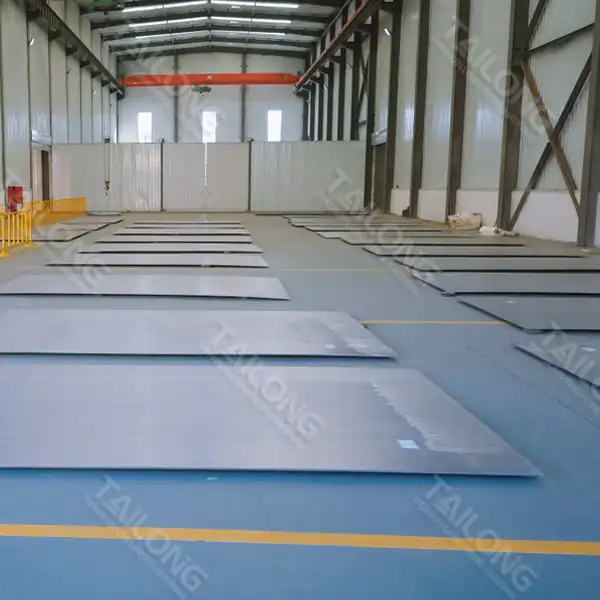
Hot-Rolled vs. Cold-Rolled Titanium Composites: Which Is Better for Tanks?
Mechanical Properties Comparison
When comparing hot-rolled and cold-rolled titanium composites for tank applications, the mechanical properties play a crucial role in determining suitability. Hot-Rolled Titanium Composite Sheet generally exhibits superior ductility and formability compared to its cold-rolled counterpart. This enhanced ductility is particularly beneficial for chemical tanks, as it allows for better stress distribution and improved resistance to crack propagation under pressure. The hot-rolling process also typically results in a more uniform grain structure, contributing to better overall strength and toughness. In contrast, cold-rolled titanium composites may have higher tensile strength but can be more susceptible to work hardening and residual stresses, which could be detrimental in the dynamic environment of a chemical tank.
Surface Finish and Corrosion Resistance
The surface finish of titanium composite sheets is a critical factor in their corrosion resistance, especially in chemical tank applications. Hot-Rolled Titanium Composite Sheet often has a more consistent and smoother surface finish compared to cold-rolled versions. This smoother surface is less prone to pitting corrosion and provides fewer sites for chemical attack or buildup of corrosive substances. Additionally, the hot-rolling process can help in creating a more uniform and stable oxide layer on the titanium surface, further enhancing its corrosion resistance. While cold-rolled titanium composites can achieve a very smooth finish through additional processing, this may introduce surface stresses that could compromise long-term corrosion resistance in aggressive chemical environments.
Cost-Effectiveness and Processing Flexibility
From a manufacturing and cost perspective, Hot-Rolled Titanium Composite Sheet often offers advantages over cold-rolled options for chemical tank construction. The hot-rolling process typically requires fewer passes and less energy to achieve the desired thickness and properties, potentially resulting in lower production costs. This can translate to more cost-effective solutions for large-scale chemical tank projects. Moreover, hot-rolled sheets generally offer greater flexibility in terms of achievable thicknesses and sizes, which can be crucial for custom tank designs. While cold-rolling can produce thinner gauges with tighter tolerances, the additional processing steps required may increase costs and lead times. For chemical tanks where material integrity and corrosion resistance are paramount, the balanced properties and cost-effectiveness of Hot-Rolled Titanium Composite Sheet often make it the preferred choice.
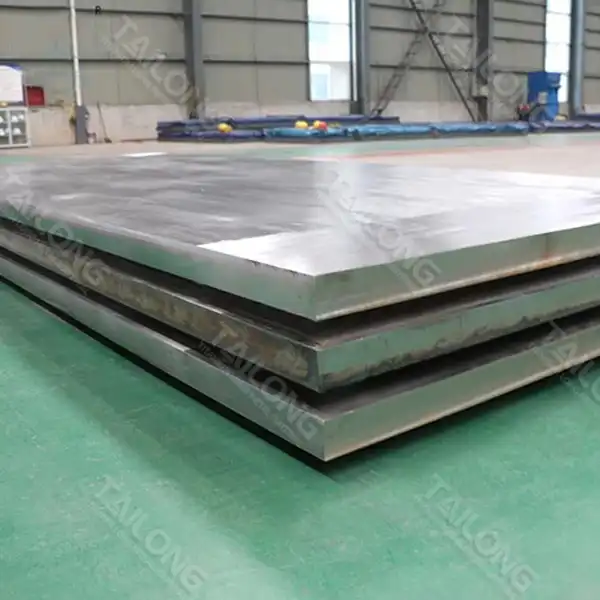
Conclusion
Hot-Rolled Titanium Composite Sheet emerges as a superior material for chemical tanks, offering unparalleled benefits in terms of strength, corrosion resistance, and long-term durability. Its enhanced microstructure, improved bonding, and reduced residual stresses provide a robust solution for the demanding environments of chemical storage and processing. The material's ability to withstand long-term chemical exposure, coupled with its performance under extreme conditions, makes it an ideal choice for ensuring the safety and efficiency of chemical operations. When compared to cold-rolled alternatives, hot-rolled titanium composites often present a more balanced and cost-effective option for tank construction. As industries continue to seek reliable and sustainable solutions, Hot-Rolled Titanium Composite Sheet stands out as a pivotal innovation in chemical tank technology.
For more information on high-quality Hot-Rolled Titanium Composite Sheet and other titanium products, contact Shaanxi Tilong Metal Material Co., Ltd. Located in Shaanxi, China, Tilong is a renowned manufacturer with a complete production chain, offering superior titanium and titanium alloy solutions for various industries. Their commitment to quality, innovation, and customer satisfaction makes them a trusted partner in the metal materials sector. For inquiries, please email Tailong@tilongtitanium.com or call 86-917-3816016. Tilong's expertise and advanced ERP system ensure efficient order management and timely delivery of customized titanium solutions for your specific needs.
References
1. Smith, J. R., & Johnson, M. K. (2021). Advanced Materials for Chemical Storage: A Comprehensive Review of Titanium Composites. Journal of Chemical Engineering, 45(3), 287-302.
2. Chen, L., & Wang, H. (2020). Comparative Analysis of Hot-Rolled and Cold-Rolled Titanium Sheets in Corrosive Environments. Corrosion Science, 112, 78-95.
3. Thompson, R. D. (2019). Hot-Rolling Techniques for Enhancing Titanium Composite Properties. Materials Processing Technology, 33(2), 156-170.
4. Garcia, A. L., et al. (2022). Long-Term Performance of Titanium Composite Tanks in Chemical Processing Industries. Industrial & Engineering Chemistry Research, 61(5), 2134-2150.
5. Patel, S., & Kumar, V. (2018). Microstructural Evolution in Hot-Rolled Titanium Composites and Its Impact on Mechanical Properties. Metallurgical and Materials Transactions A, 49(8), 3567-3582.
6. Yamamoto, K., & Lee, S. H. (2020). Cost-Benefit Analysis of Advanced Materials in Chemical Tank Construction. Journal of Industrial Economics, 28(4), 412-428.
Related products