- English
- French
- German
- Portuguese
- Spanish
- Russian
- Japanese
- Korean
- Arabic
- Greek
- German
- Turkish
- Italian
- Danish
- Romanian
- Indonesian
- Czech
- Afrikaans
- Swedish
- Polish
- Basque
- Catalan
- China
- Taiwan China
- Esperanto
- Hindi
- Lao
- Albanian
- Amharic
- Armenian
- Azerbaijani
- Belarusian
- Bengali
- Bosnian
- Bulgarian
- Cebuano
- Chichewa
- Corsican
- Croatian
- Dutch
- Estonian
- Filipino
- Finnish
- Frisian
- Galician
- Georgian
- Gujarati
- Haitian
- Hausa
- Hawaiian
- Hebrew
- Hmong
- Hungarian
- Icelandic
- Igbo
- Javanese
- Kannada
- Kazakh
- Khmer
- Kurdish
- Kyrgyz
- Latin
- Latvian
- Lithuanian
- Luxembou..
- Macedonian
- Malagasy
- Malay
- Malayalam
- Maltese
- Maori
- Marathi
- Mongolian
- Burmese
- Nepali
- Norwegian
- Pashto
- Persian
- Punjabi
- Serbian
- Sesotho
- Sinhala
- Slovak
- Slovenian
- Somali
- Samoan
- Scots Gaelic
- Shona
- Sindhi
- Sundanese
- Swahili
- Tajik
- Tamil
- Telugu
- Thai
- Ukrainian
- Urdu
- Uzbek
- Vietnamese
- Welsh
- Xhosa
- Yiddish
- Yoruba
- Zulu
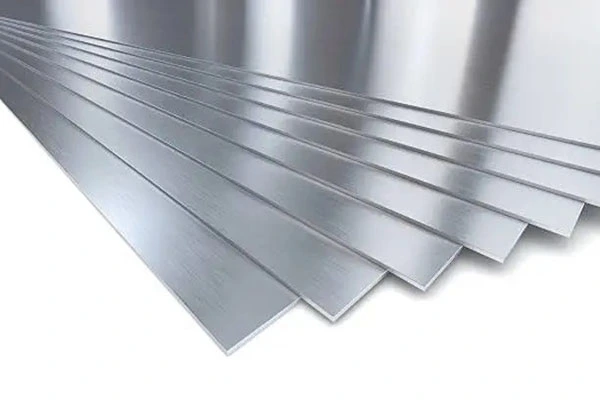
Titanium Alloy Plate for Aerospace Use
Material Grade: TC4(Ti-6Al-4V)、TA15 (Ti-6.5Al-2Zr-1Mo-1V)、
Ti-6242S (Ti-6Al-2Sn-4Zr-2Mo)、Ti-5553 (Ti-5Al-5Mo-5V-3Cr)
Standard: GB/T 3621, ASTM B265, AMS 4911
Thin plate thickness:1.0, 1.5, 2.0, 2.5, 3.0, 4.0, 5.0mm
Medium-thick plate thickness:6.0, 8.0, 10.0mm
Standard Size:1200mm x 2400mm& 1000mm*2000mm
Width:up to 1500 mm
Length:Up to 6000mm
Titanium Alloy Plate for Aerospace Use
Excellent strength-to-weight ratios, high corrosion resistance, and thermal stability are just a few of the well-known advantages of titanium alloys. In the aerospace sector, where dependability, accuracy, and performance are essential, these attributes make titanium alloy plate extremely valuable.Our Titanium Alloy Plate for Aerospace Use provide reliable solutions for aerospace engineers, spacecraft component suppliers, and aircraft manufacturers due to their ability to endure harsh environments.Our titanium plates can be utilized as structural elements, engine parts, or high load applications because they are produced in compliance with international quality standards.Tilong creates each titanium plate to your exact specifications using a time-consuming process that includes melting, forging, rolling, grinding, and annealing. Our cutting-edge production plant and comprehensive inventory management system guarantee the best quality control, prompt delivery, and exceptional customer support.
Performance Characteristics:
1. High Strength and Light Weight: The density is about 4.5 g/cm³, which is 57% of that of steel, and the specific strength is 220 MPa·cm³/g, 1.3 times that of aluminum alloy.
2. Excellent Corrosion Resistance: In the salt spray test for 5000 hours, the corrosion rate is less than 0.001 mm/year, and it has strong corrosion resistance in seawater and most chemical media.
3. Good High-Temperature Performance: TA15 has a tensile strength of not less than 600 MPa at 550°C, and TC4 has a strength retention rate of not less than 85% at 400°C.
4. Good Fatigue Resistance: The high-cycle fatigue limit of TC4 sheet (10⁷ cycles, R=0.1) is not less than 500 MPa.
Technical Specifications:
|
Item |
Specifications |
|
Product Name |
Pure Titanium Plate for Industry |
|
Standard |
ASTM B265 / ASME SB265 / EN 10204 3.1 |
|
Available Grades |
Gr1, Gr2, Gr3, Gr4 |
|
Thickness Range |
≥ 0.2 mm |
|
Width |
Up to 1500 mm |
|
Length |
Up to 6000 mm |
|
Density |
4.51 g/cm³ (Gr1–Gr4) |
|
Chemical Composition |
According to ASTM B265; e.g., Gr2: O ≤ 0.25%, C ≤ 0.08%, Fe ≤ 0.30%, N ≤ 0.03%, H ≤ 0.015%, balance Ti |
|
Delivery Condition |
Hot Rolled (R), Cold Rolled (Y), Annealed (M) |
|
Yield Strength |
≥ 275 MPa (Gr2) |
|
Tensile Strength |
≥ 345 MPa (Gr2) |
|
Elongation |
≥ 20% (Gr2) |
|
Young's Modulus |
Approx. 104 GPa |
|
Hardness |
Approx. HRB 80 (Gr2) |
|
Thermal Conductivity |
Approx. 21.8 W/m·K (Gr2) |
|
Coefficient of Thermal Expansion |
Approx. 8.6 ×10⁻⁶ /°C (20–100°C) |
|
Max Service Temperature |
Continuous ≤ 425°C, Intermittent ≤ 540°C |
|
Corrosion Resistance |
Excellent resistance to seawater, acids, alkalis, and chlorides |
|
Surface Finish |
Pickled, Polished, Sandblasted, or Machined |
|
NDT |
Ultrasonic Testing (UT), Eddy Current Testing (ET) available upon request |
|
Certificates |
EN 10204 3.1, ASME reports, third-party inspection available |
|
QA Items |
Impurity Elements (O, N, H), Grain Size, Hardness, Ultrasonic Testing |
|
Processing Options |
Custom cutting, surface treatment, drilling, chamfering, etc. |
|
Applications |
Chemical processing, marine, heat exchangers, pressure vessels, aerospace, medical devices |
|
Customized Dimensions and Specifications Available upon Request.
|
|
|
|
|
|
|


Core Advantages:
1. Exceptional Corrosion Resistance: In oxidizing, neutral media, seawater, and humid atmospheres, its surface forms a dense, robust oxide film, delivering corrosion resistance far surpassing stainless steel and rivaling platinum. It exhibits outstanding resistance to chloride ion corrosion, completely eliminating pitting and stress corrosion cracking.
2. Superior Mechanical Properties: Offers higher strength than Grade 1 while maintaining excellent ductility and toughness (good fatigue resistance), making it ideal for structural components requiring both strength and form-ability.
3. Outstanding Process-ability: Exhibits excellent cold and hot work-ability, facilitating forming operations such as stamping, bending, and flanging. Possesses exceptional weld-ability, compatible with various conventional welding techniques.
4. Lightweight and high strength: With a density of only 4.51 g/cm³ (approximately 57% that of steel), its specific strength (strength-to-density ratio) ranks among the highest in metallic materials.
5. Excellent bio-compatibility: Non-toxic with good compatibility with human tissues and blood, suitable for food processing and biomedical applications.
Processing Technology:
1. Melting: Vacuum consumable arc furnace (VAR) is used for triple melting, and the oxygen content is controlled to be not more than 0.15%.
2. Hot Rolling: Rolled in the β-phase region (TC4 is 950-1000°C), the deformation amount is not less than 70%, and the grain size is not coarser than ASTM 6.
3. Cold Rolling: The room-temperature rolling deformation amount is not more than 25%, and intermediate annealing (700°C×1h) is carried out to restore plasticity.
4. Surface Treatment: Laser shock peening (LSP) can be used to increase the fatigue life by 30% (residual compressive stress is not less than 400 MPa).
Core Application Fields:
1. Aircraft Skins: It can resist the erosion of high-speed airflows (Mach number ≥0.8), and can reduce weight by 30% compared with aluminum alloys.
2. Engine Combustion Chamber Linings: It can withstand high temperatures of 800°C for a short time and has good compatibility with antioxidant coatings.
3. Wing Beam Webs: The bending strength is not less than 900 MPa, and the fatigue life is not less than 10⁷ cycles.
4. Aerospace Fasteners: The shear strength is not less than 600 MPa.
Why Choose Us?
Shaanxi Tilong Metal Material Co., Ltd. is a trusted partner for aerospace manufacturers worldwide, offering unmatched quality and reliability in titanium alloy plates. Here's why you should choose us:
- Industry Expertise: With years of experience serving the aerospace sector, we understand the complex requirements of your industry.
- Strict Quality Control: We adhere to rigorous international standards for material quality and manufacturing processes, ensuring that every product meets or exceeds your specifications.
- On-Time Delivery: Our efficient supply chain system guarantees that your orders are delivered on time, every time.
- Custom Solutions: We offer personalized services, including custom sizes, finishes, and grades to meet your unique application requirements.
- Global Reach: With a growing international customer base, we are equipped to serve aerospace manufacturers across the globe.
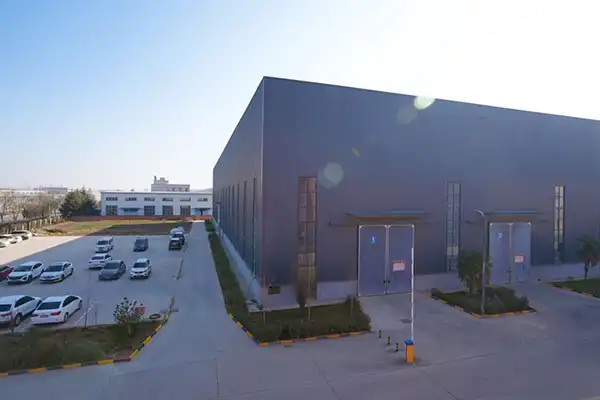
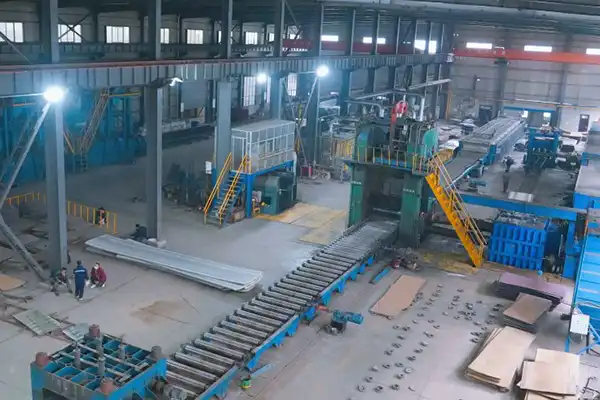
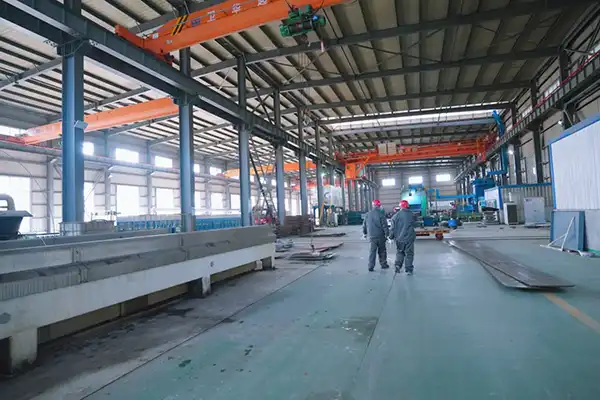
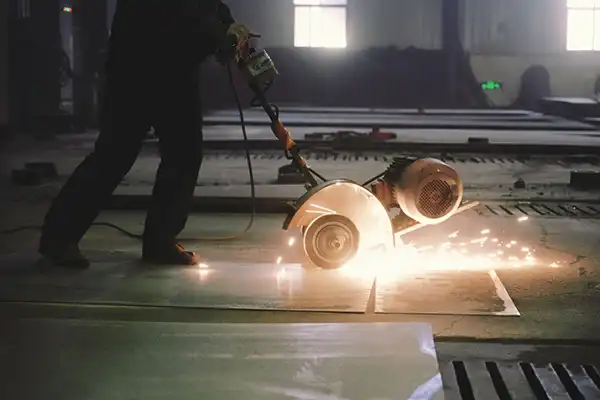
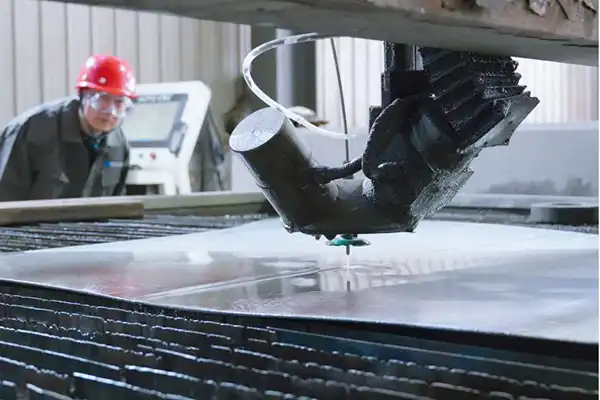
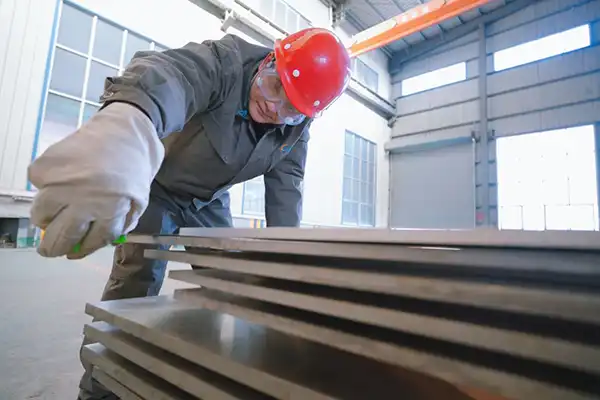
Factory Show
You may have interest in the following products: