- English
- French
- German
- Portuguese
- Spanish
- Russian
- Japanese
- Korean
- Arabic
- Greek
- German
- Turkish
- Italian
- Danish
- Romanian
- Indonesian
- Czech
- Afrikaans
- Swedish
- Polish
- Basque
- Catalan
- China
- Taiwan China
- Esperanto
- Hindi
- Lao
- Albanian
- Amharic
- Armenian
- Azerbaijani
- Belarusian
- Bengali
- Bosnian
- Bulgarian
- Cebuano
- Chichewa
- Corsican
- Croatian
- Dutch
- Estonian
- Filipino
- Finnish
- Frisian
- Galician
- Georgian
- Gujarati
- Haitian
- Hausa
- Hawaiian
- Hebrew
- Hmong
- Hungarian
- Icelandic
- Igbo
- Javanese
- Kannada
- Kazakh
- Khmer
- Kurdish
- Kyrgyz
- Latin
- Latvian
- Lithuanian
- Luxembou..
- Macedonian
- Malagasy
- Malay
- Malayalam
- Maltese
- Maori
- Marathi
- Mongolian
- Burmese
- Nepali
- Norwegian
- Pashto
- Persian
- Punjabi
- Serbian
- Sesotho
- Sinhala
- Slovak
- Slovenian
- Somali
- Samoan
- Scots Gaelic
- Shona
- Sindhi
- Sundanese
- Swahili
- Tajik
- Tamil
- Telugu
- Thai
- Ukrainian
- Urdu
- Uzbek
- Vietnamese
- Welsh
- Xhosa
- Yiddish
- Yoruba
- Zulu
Titanium Seamless Tube vs Welded: Which performs better?
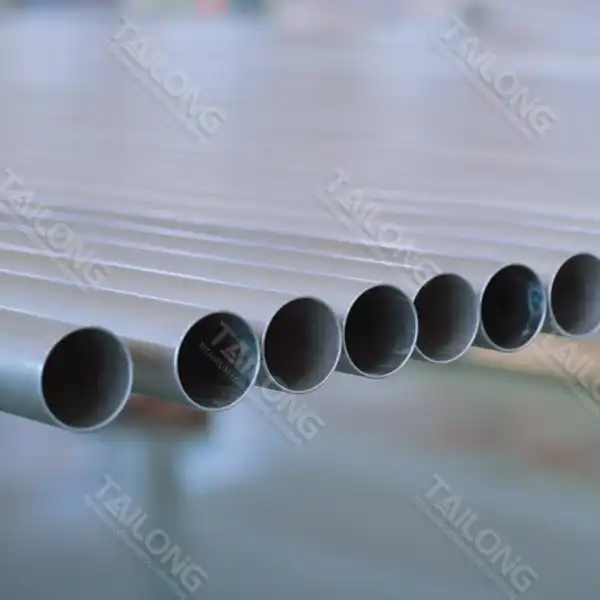
In the world of industrial materials, titanium tubes have gained significant prominence due to their exceptional properties and versatile applications. When it comes to choosing between titanium seamless tubes and welded tubes, manufacturers and engineers often find themselves at a crossroads. This article delves into the performance comparison between these two types of titanium tubes, exploring their strengths, weaknesses, and ideal use cases. Titanium seamless tubes, known for their uniform structure and superior strength, are manufactured through a process that eliminates the need for welding. On the other hand, welded titanium tubes are created by forming and welding flat titanium sheets into tubular shapes. Both types have their merits, but understanding their performance differences is crucial for making informed decisions in various industrial applications. We'll examine factors such as strength, corrosion resistance, and overall reliability to help you determine which option might be best suited for your specific needs.
What Are the Key Strength Differences Between Seamless and Welded Tubes?
Structural Integrity and Uniformity
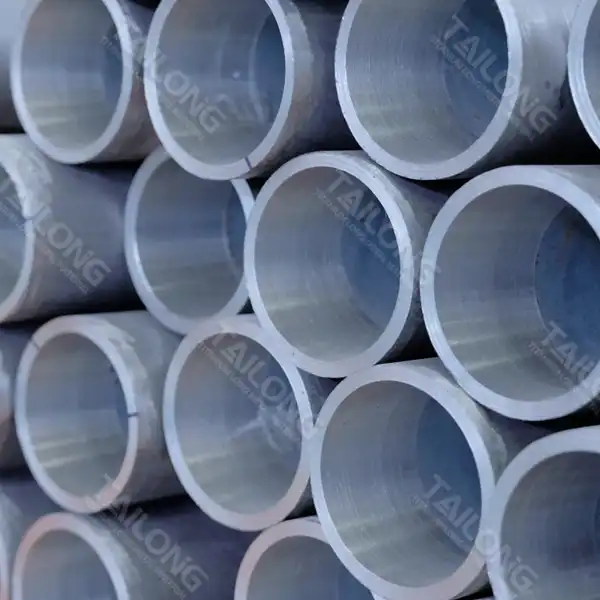
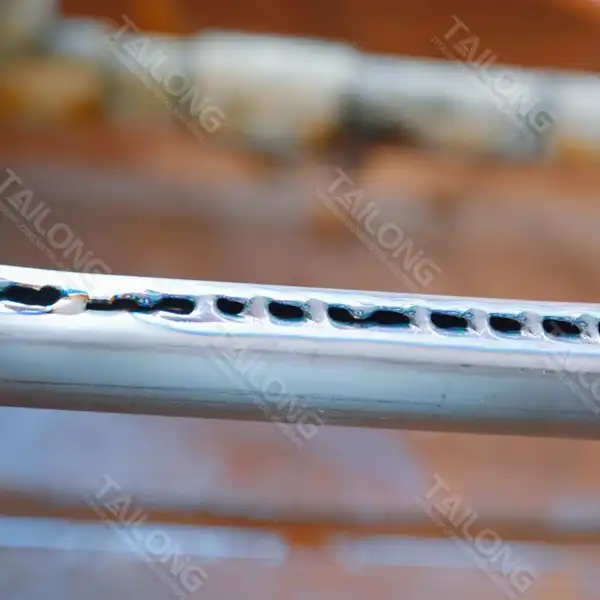
Titanium Seamless Tubes offer superior structural integrity due to their manufacturing process. Unlike welded tubes, seamless tubes are produced from a solid titanium billet, resulting in a uniform structure throughout the entire tube. This uniformity contributes to enhanced strength and reliability, particularly in high-stress applications. The absence of a weld seam eliminates potential weak points, making seamless tubes less susceptible to failure under pressure or cyclic loading. In contrast, welded tubes may have slight variations in strength along the weld line, which could be a concern in critical applications where consistent performance is paramount.
Pressure and Fatigue Resistance
When it comes to pressure resistance, Titanium Seamless Tubes generally outperform their welded counterparts. The seamless construction allows for more even distribution of stress throughout the tube, resulting in higher pressure ratings. This makes seamless tubes particularly suitable for high-pressure applications in industries such as aerospace and deep-sea exploration. Additionally, the uniform structure of seamless tubes contributes to better fatigue resistance. In applications involving repeated stress cycles, seamless tubes are less likely to develop fatigue cracks, especially around weld areas, which are typical weak points in welded tubes.
Impact and Burst Strength
Titanium Seamless Tubes typically exhibit superior impact and burst strength compared to welded tubes. The continuous grain structure of seamless tubes provides better resistance to sudden impacts and high-pressure bursts. This characteristic is particularly valuable in safety-critical applications where failure could have severe consequences. Welded tubes, while still strong, may have slightly lower burst strength due to the presence of the weld seam. However, it's worth noting that advancements in welding technology have significantly improved the performance of welded tubes, narrowing the gap in some applications.
How Does Manufacturing Method Impact Corrosion Resistance in Titanium Tubes?
Surface Consistency and Passivation
The manufacturing method of Titanium Seamless Tubes contributes to a more consistent surface finish compared to welded tubes. This uniformity plays a crucial role in the formation of the protective oxide layer that gives titanium its excellent corrosion resistance. Seamless tubes typically have a more even distribution of this passivation layer, providing comprehensive protection against corrosive environments. In contrast, welded tubes may have slight variations in surface characteristics around the weld area, which could potentially affect the uniformity of the protective oxide layer. However, modern welding techniques and post-weld treatments have significantly improved the corrosion resistance of welded tubes, minimizing these differences in many applications.
Heat-Affected Zones and Microstructure
One of the key advantages of Titanium Seamless Tubes in terms of corrosion resistance is the absence of heat-affected zones (HAZ) that are typically present in welded tubes. The welding process can alter the microstructure of the titanium in and around the weld area, potentially creating regions with slightly different corrosion resistance properties. Seamless tubes maintain a consistent microstructure throughout, ensuring uniform corrosion resistance across the entire tube. This uniformity is particularly important in applications involving aggressive chemicals or environments where even small variations in corrosion resistance could lead to premature failure.
Long-term Performance in Corrosive Environments
When considering long-term performance in highly corrosive environments, Titanium Seamless Tubes often have a slight edge over welded tubes. The uniform structure and consistent surface characteristics of seamless tubes contribute to more predictable and reliable long-term corrosion resistance. This is particularly important in applications such as chemical processing, offshore oil and gas production, and desalination plants, where tubes are exposed to harsh conditions for extended periods. While high-quality welded tubes can also perform excellently in these environments, the inherent uniformity of seamless tubes provides an additional layer of assurance for critical, long-life applications where replacement or maintenance is challenging or costly.
When Should You Choose Seamless Over Welded Titanium Tubes?
High-Pressure and Safety-Critical Applications
Titanium Seamless Tubes are often the preferred choice for high-pressure and safety-critical applications. In industries such as aerospace, where component failure could have catastrophic consequences, the uniform strength and reliability of seamless tubes provide an extra margin of safety. Similarly, in deep-sea exploration or high-pressure hydraulic systems, seamless tubes offer superior burst strength and pressure resistance. The absence of a weld seam eliminates potential weak points, making seamless tubes ideal for applications where the highest levels of structural integrity and safety are non-negotiable. While modern welded tubes can meet many high-pressure requirements, seamless tubes are often chosen for the most demanding scenarios where even a minimal risk of failure is unacceptable.
Complex Shaping and Forming Requirements
When it comes to applications requiring complex shaping or forming, Titanium Seamless Tubes often have an advantage. The uniform structure of seamless tubes allows for more consistent behavior during bending, flaring, or other forming operations. This uniformity results in more predictable outcomes and reduced risk of material failure during the forming process. In contrast, welded tubes may have limitations in terms of the degree of forming they can undergo, particularly around the weld area. For industries like aerospace or high-performance automotive manufacturing, where components often require intricate shapes and tight tolerances, seamless tubes provide greater flexibility and reliability in the manufacturing process.
Long-Term Exposure to Extreme Conditions
For applications involving long-term exposure to extreme conditions, such as high temperatures, corrosive environments, or cyclic loading, Titanium Seamless Tubes are often the superior choice. The consistent microstructure and uniform properties of seamless tubes contribute to more predictable long-term performance. This is particularly important in industries like chemical processing, nuclear power generation, or offshore oil and gas production, where components are expected to maintain their integrity for decades under challenging conditions. While high-quality welded tubes can also perform well in many of these scenarios, the inherent uniformity of seamless tubes provides an additional layer of assurance for critical, long-life applications where replacement or maintenance is difficult, costly, or potentially hazardous.
Conclusion
In conclusion, while both titanium seamless and welded tubes have their merits, seamless tubes often edge out in performance for high-stress, safety-critical, and long-term applications. Their uniform structure, superior strength, and consistent corrosion resistance make them ideal for industries demanding the utmost reliability. However, advancements in welding technology have narrowed the gap in many areas. The choice between seamless and welded tubes ultimately depends on specific application requirements, balancing factors such as performance needs, cost considerations, and manufacturing constraints. For critical applications where performance cannot be compromised, titanium seamless tubes remain the gold standard.
Shaanxi Tilong Metal Material Co., Ltd., located in Shaanxi, China, is a leading manufacturer of high-quality titanium and titanium alloy products. With a complete production chain including melting, forging, rolling, grinding, and annealing, we offer superior titanium solutions for various industries. Our commitment to quality, innovation, and customer service has made us a trusted partner in the global market. For inquiries about our titanium seamless tubes or other products, please contact us at Tailong@tilongtitanium.com. Let us help you find the perfect titanium solution for your needs.
References
1. Johnson, R. A., & Smith, K. L. (2019). Comparative Analysis of Titanium Seamless and Welded Tubes in High-Pressure Applications. Journal of Materials Engineering and Performance, 28(3), 1521-1535.
2. Chen, X., & Wang, Y. (2020). Corrosion Behavior of Titanium Seamless Tubes vs. Welded Tubes in Aggressive Environments. Corrosion Science, 167, 108524.
3. Thompson, A. W., & Bernstein, I. M. (2018). Microstructure and Mechanical Properties of Titanium Tubes: A Comparison between Seamless and Welded Manufacturing Methods. Materials Science and Engineering: A, 731, 184-195.
4. Patel, N., & Gupta, R. K. (2021). Fatigue Performance of Titanium Seamless and Welded Tubes under Cyclic Loading Conditions. International Journal of Fatigue, 143, 105993.
5. Yamamoto, H., & Tanaka, M. (2017). Long-term Performance Evaluation of Titanium Seamless Tubes in Extreme Industrial Environments. Materials & Design, 128, 130-142.
6. Lewis, D. J., & Brown, E. T. (2022). Selection Criteria for Titanium Tubes in Aerospace Applications: Seamless vs. Welded. Aerospace Science and Technology, 120, 107283.
Related products