- English
- French
- German
- Portuguese
- Spanish
- Russian
- Japanese
- Korean
- Arabic
- Greek
- German
- Turkish
- Italian
- Danish
- Romanian
- Indonesian
- Czech
- Afrikaans
- Swedish
- Polish
- Basque
- Catalan
- China
- Taiwan China
- Esperanto
- Hindi
- Lao
- Albanian
- Amharic
- Armenian
- Azerbaijani
- Belarusian
- Bengali
- Bosnian
- Bulgarian
- Cebuano
- Chichewa
- Corsican
- Croatian
- Dutch
- Estonian
- Filipino
- Finnish
- Frisian
- Galician
- Georgian
- Gujarati
- Haitian
- Hausa
- Hawaiian
- Hebrew
- Hmong
- Hungarian
- Icelandic
- Igbo
- Javanese
- Kannada
- Kazakh
- Khmer
- Kurdish
- Kyrgyz
- Latin
- Latvian
- Lithuanian
- Luxembou..
- Macedonian
- Malagasy
- Malay
- Malayalam
- Maltese
- Maori
- Marathi
- Mongolian
- Burmese
- Nepali
- Norwegian
- Pashto
- Persian
- Punjabi
- Serbian
- Sesotho
- Sinhala
- Slovak
- Slovenian
- Somali
- Samoan
- Scots Gaelic
- Shona
- Sindhi
- Sundanese
- Swahili
- Tajik
- Tamil
- Telugu
- Thai
- Ukrainian
- Urdu
- Uzbek
- Vietnamese
- Welsh
- Xhosa
- Yiddish
- Yoruba
- Zulu
Why Choose ASTM Grade 1 Pure Titanium Bar for High Corrosion Resistance?
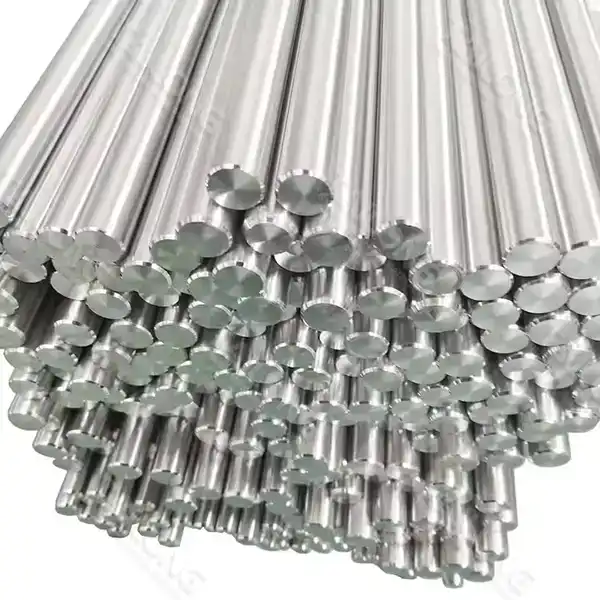
In the world of advanced materials, ASTM Grade 1 Pure Titanium Bar stands out as an exceptional choice for applications requiring high corrosion resistance. This remarkable material has gained significant attention across various industries due to its unparalleled ability to withstand harsh environments and maintain its integrity over extended periods. As engineers and manufacturers seek innovative solutions to combat corrosion-related challenges, ASTM Grade 1 Pure Titanium Bar emerges as a frontrunner, offering a unique combination of strength, durability, and chemical resistance. This blog post delves into the reasons why this particular grade of titanium has become the go-to option for projects demanding superior corrosion resistance, exploring its properties, advantages, and diverse applications across multiple sectors.
Understanding Titanium's Unique Corrosion-Resistant Properties
The Science Behind Titanium's Corrosion Resistance
ASTM Grade 1 Pure Titanium Bar owes its exceptional corrosion resistance to a naturally occurring phenomenon known as passivation. When exposed to oxygen, titanium rapidly forms a thin, stable oxide layer on its surface. This protective film, primarily composed of titanium dioxide, acts as a barrier against corrosive agents, effectively shielding the underlying metal from degradation. The passivation process is self-healing, meaning that if the oxide layer is scratched or damaged, it quickly reforms in the presence of oxygen. This unique characteristic enables ASTM Grade 1 Pure Titanium Bar to maintain its corrosion resistance even in challenging environments, such as seawater, acidic solutions, and industrial chemicals. The stability and durability of this protective layer contribute significantly to the material's long-term performance and reliability in corrosive settings.
Comparing ASTM Grade 1 Titanium to Other Corrosion-Resistant Materials
When it comes to corrosion resistance, ASTM Grade 1 Pure Titanium Bar outperforms many traditional materials commonly used in industrial applications. Unlike stainless steel, which can suffer from pitting and crevice corrosion in chloride-rich environments, titanium remains virtually unaffected. The material's resistance to stress corrosion cracking is superior to that of many high-performance alloys, making it an ideal choice for critical components in aerospace and chemical processing industries. Moreover, ASTM Grade 1 Pure Titanium Bar exhibits excellent resistance to erosion-corrosion, a common issue in fluid handling systems. This combination of properties allows titanium to maintain its structural integrity and performance in environments where other materials would quickly deteriorate, leading to reduced maintenance costs and increased equipment lifespan.
Environmental Factors Affecting Titanium's Corrosion Resistance
While ASTM Grade 1 Pure Titanium Bar boasts impressive corrosion resistance, it's essential to consider the specific environmental conditions in which it will be used. The material performs exceptionally well in oxidizing environments, including exposure to air, water, and many organic compounds. However, its resistance can be compromised in strongly reducing conditions or in the presence of certain fluoride-containing compounds. Temperature also plays a role in titanium's corrosion behavior, with the material maintaining its excellent resistance up to moderately high temperatures. Understanding these factors is crucial for engineers and designers when specifying ASTM Grade 1 Pure Titanium Bar for their applications. By carefully evaluating the operating environment and potential chemical exposures, users can fully leverage the material's corrosion-resistant properties and ensure optimal performance in their specific applications.
ASTM Grade 1 vs. Other Titanium Grades: A Comparison
Mechanical Properties and Composition Differences
ASTM Grade 1 Pure Titanium Bar distinguishes itself from other titanium grades primarily through its high purity and specific mechanical properties. As the purest form of commercially available titanium, Grade 1 contains a minimum of 99.5% titanium, with trace amounts of other elements like iron, carbon, and oxygen. This high purity contributes to its excellent corrosion resistance and weldability. In terms of mechanical properties, ASTM Grade 1 Pure Titanium Bar offers a lower yield strength and tensile strength compared to higher grades but provides superior ductility and formability. These characteristics make it ideal for applications where extreme formability and maximum corrosion resistance are prioritized over high strength. The material's lower oxygen content compared to other grades also contributes to its exceptional corrosion resistance, particularly in reducing environments.
Corrosion Resistance Across Different Titanium Grades
While all titanium grades offer good corrosion resistance, ASTM Grade 1 Pure Titanium Bar stands out for its superior performance in this aspect. The material's high purity and lower interstitial element content result in a more stable and uniform passive layer, providing enhanced protection against various corrosive media. Compared to higher grades like Grade 2 or Grade 5 (Ti-6Al-4V), Grade 1 exhibits better resistance to reducing acids and chloride environments. This makes ASTM Grade 1 Pure Titanium Bar the preferred choice for applications involving exposure to seawater, chlorine-based chemicals, and organic acids. Its exceptional resistance to crevice corrosion and stress corrosion cracking further distinguishes it from other grades, particularly in demanding environments where these forms of localized corrosion can be problematic.
Cost-Benefit Analysis of Using Grade 1 Titanium
When considering the use of ASTM Grade 1 Pure Titanium Bar, it's essential to weigh the initial cost against the long-term benefits. While titanium, in general, may have a higher upfront cost compared to some traditional materials, Grade 1's exceptional corrosion resistance can lead to significant cost savings over the lifetime of a component or system. The material's durability translates to reduced maintenance requirements, longer service life, and fewer replacements, ultimately lowering the total cost of ownership. Additionally, the superior corrosion resistance of ASTM Grade 1 Pure Titanium Bar can eliminate the need for costly protective coatings or corrosion inhibitors, further reducing overall expenses. In applications where material failure due to corrosion could lead to costly downtime or safety risks, the use of Grade 1 titanium can provide invaluable peace of mind and operational reliability.

Top Industries Benefiting from Grade 1 Titanium Bars
Aerospace and Aviation Applications
The aerospace industry greatly benefits from the use of ASTM Grade 1 Pure Titanium Bar, particularly in applications where corrosion resistance is paramount. In aircraft components exposed to harsh environmental conditions, such as hydraulic systems and exhaust components, Grade 1 titanium provides exceptional durability and longevity. Its resistance to salt spray and atmospheric corrosion makes it ideal for coastal and marine aviation applications. The material's low density, combined with its corrosion resistance, contributes to fuel efficiency and reduced maintenance costs for aircraft operators. ASTM Grade 1 Pure Titanium Bar is also used in spacecraft components, where its ability to withstand the extreme conditions of space, including exposure to atomic oxygen and temperature fluctuations, is crucial. The material's excellent fatigue resistance ensures the long-term reliability of critical aerospace structures, making it an indispensable material in this high-stakes industry.
Chemical Processing and Manufacturing
In the chemical processing and manufacturing sectors, ASTM Grade 1 Pure Titanium Bar plays a vital role in ensuring the longevity and safety of equipment exposed to corrosive chemicals. The material's resistance to a wide range of acids, bases, and chlorides makes it ideal for constructing reaction vessels, heat exchangers, and piping systems in chemical plants. Its ability to withstand high temperatures while maintaining corrosion resistance is particularly valuable in processes involving hot, aggressive chemicals. The use of ASTM Grade 1 Pure Titanium Bar in these applications not only extends equipment life but also helps maintain product purity by preventing contamination from material degradation. In the pharmaceutical industry, where material purity and cleanliness are critical, Grade 1 titanium is often the material of choice for processing equipment and storage tanks, ensuring the integrity of sensitive chemical compounds and medications.
Marine and Offshore Industries
The marine and offshore industries heavily rely on ASTM Grade 1 Pure Titanium Bar for its unparalleled resistance to seawater corrosion. In offshore oil and gas platforms, where exposure to salt spray and marine organisms is constant, Grade 1 titanium is used for various components, including heat exchangers, pumps, and valves. Its resistance to pitting and crevice corrosion in chloride-rich environments makes it superior to traditional marine-grade stainless steels. In shipbuilding, ASTM Grade 1 Pure Titanium Bar finds applications in propeller shafts, hull fittings, and desalination equipment, where its corrosion resistance contributes to reduced maintenance and improved vessel performance. The material's high strength-to-weight ratio also makes it attractive for weight-sensitive marine applications. In underwater robotics and oceanographic research equipment, Grade 1 titanium's corrosion resistance and biocompatibility make it an ideal choice for long-term deployment in harsh marine environments.

Conclusion
ASTM Grade 1 Pure Titanium Bar stands out as an exceptional material for applications requiring high corrosion resistance across various industries. Its unique properties, including excellent resistance to a wide range of corrosive environments, lightweight nature, and long-term durability, make it an invaluable choice for engineers and manufacturers. While the initial cost may be higher than some alternatives, the long-term benefits in terms of reduced maintenance, extended service life, and improved performance often justify the investment. As industries continue to push the boundaries of material performance in challenging environments, ASTM Grade 1 Pure Titanium Bar remains a reliable and innovative solution for corrosion-resistant applications.
Shaanxi Tilong Metal Material Co., Ltd., located in Shaanxi, China, is a leading manufacturer and supplier of high-quality titanium products, including ASTM Grade 1 Pure Titanium Bars. With a complete production chain encompassing melting, forging, rolling, grinding, and annealing, Tilong offers comprehensive solutions for various industries. Our commitment to quality, innovation, and customer satisfaction drives us to continuously improve our products and services. For inquiries about our ASTM Grade 1 Pure Titanium Bars or other titanium products, please contact us at Tailong@tilongtitanium.com. Let Tilong be your trusted partner in achieving superior corrosion resistance and performance in your applications.
References
1. ASTM International. (2020). "ASTM B348 - Standard Specification for Titanium and Titanium Alloy Bars and Billets."
2. Schutz, R.W. and Thomas, D.E. (1987). "Corrosion of Titanium and Titanium Alloys." ASM Handbook, Volume 13: Corrosion.
3. Donachie, M.J. (2000). "Titanium: A Technical Guide." ASM International.
4. Leyens, C. and Peters, M. (2003). "Titanium and Titanium Alloys: Fundamentals and Applications." Wiley-VCH.
5. Boyer, R., Welsch, G., and Collings, E.W. (1994). "Materials Properties Handbook: Titanium Alloys." ASM International.
6. Lutjering, G. and Williams, J.C. (2007). "Titanium." Springer-Verlag Berlin Heidelberg.
Related products