- English
- French
- German
- Portuguese
- Spanish
- Russian
- Japanese
- Korean
- Arabic
- Greek
- German
- Turkish
- Italian
- Danish
- Romanian
- Indonesian
- Czech
- Afrikaans
- Swedish
- Polish
- Basque
- Catalan
- China
- Taiwan China
- Esperanto
- Hindi
- Lao
- Albanian
- Amharic
- Armenian
- Azerbaijani
- Belarusian
- Bengali
- Bosnian
- Bulgarian
- Cebuano
- Chichewa
- Corsican
- Croatian
- Dutch
- Estonian
- Filipino
- Finnish
- Frisian
- Galician
- Georgian
- Gujarati
- Haitian
- Hausa
- Hawaiian
- Hebrew
- Hmong
- Hungarian
- Icelandic
- Igbo
- Javanese
- Kannada
- Kazakh
- Khmer
- Kurdish
- Kyrgyz
- Latin
- Latvian
- Lithuanian
- Luxembou..
- Macedonian
- Malagasy
- Malay
- Malayalam
- Maltese
- Maori
- Marathi
- Mongolian
- Burmese
- Nepali
- Norwegian
- Pashto
- Persian
- Punjabi
- Serbian
- Sesotho
- Sinhala
- Slovak
- Slovenian
- Somali
- Samoan
- Scots Gaelic
- Shona
- Sindhi
- Sundanese
- Swahili
- Tajik
- Tamil
- Telugu
- Thai
- Ukrainian
- Urdu
- Uzbek
- Vietnamese
- Welsh
- Xhosa
- Yiddish
- Yoruba
- Zulu
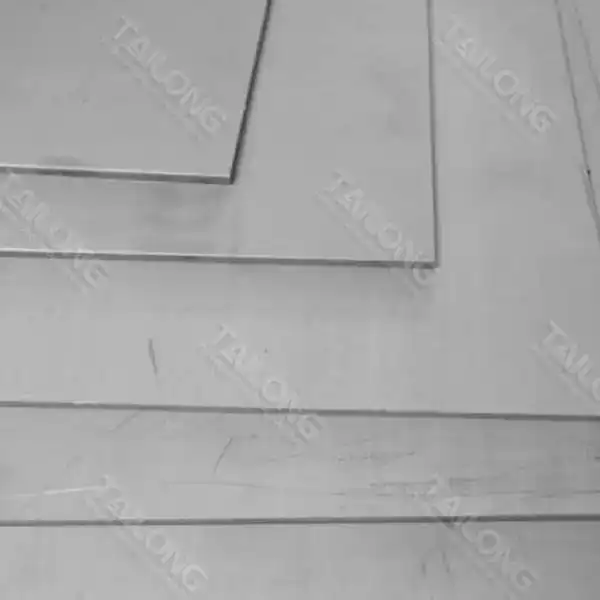
What Trends Are Shaping Composite Copper Titanium Plate Design?
Metal plates made of copper and titanium are changing many fields in the field of new materials, which is always changing. Copper and titanium are mixed in these new plates in a way that makes them tougher, last longer, and work better. A lot of things are being made differently now because of this. The energy, technology, aircraft, and car businesses are all being changed by this stuff. We are going to talk about these changes when we look at the trends that are changing how composite copper titanium plates are made. These plates are pushing the edges of what we know about materials. They resist rust better, conduct heat better, and are stronger for their weight. People are making new designs for composite copper titanium plates because of a few main things. This blog post will talk about how these new designs are being used to solve hard engineering problems today.

How is Nanotechnology Influencing Composite Copper Titanium Plate Manufacturing?
Nanostructure Optimization for Enhanced Properties
Nanotechnology is changing how hybrid copper titanium plates are made. It does this by letting scientists change the properties of materials at the molecular level in ways that were not possible before. Engineers can finetune these plates' properties to meet the needs of a certain business by changing their nanostructure. As part of this optimization process, the size and spread of nanoparticles in the composite matrix are carefully changed. It gets stronger, bends better, and is less likely to rust because of this. Nanotechnology is used to make composite copper titanium plates, which are great for aerospace and automotive uses where weight reduction is important because the materials have great mechanical properties while still being very light.
Nano-coating Techniques for Improved Surface Properties
Nano-coating methods are being used to improve the surface properties of composite copper titanium plates even more. These layers, which are usually only a few nanometers thick, can make the plate much more resistant to heat, wear, and corrosion. Manufacturers can change the surface properties of composite copper titanium plates to fit different working conditions or weather conditions by using special nano-coatings. This level of customization is very useful in fields like electronics and energy production, where parts may be subject to harsh chemicals or very high or low temperatures. Nano-coatings also make these plates last longer, which saves you money because they don't need as much maintenance.
Nanocomposite Integration for Multi-functional Properties
Putting nanocomposites into copper titanium plates is making it possible for materials to do more than one thing. Researchers can give these plates extra qualities by adding different nanoparticles or nanofibers to the composite structure. For example, these plates can be made to fix themselves, conduct electricity better, or handle heat better. In the electronics business, where parts need to do many things at once, this move toward composite copper titanium plates that can do many things is very interesting. Because one material can have both electrical or thermal properties and structural strength, it is being used to make new devices and computer systems that are smaller and work better.
What Advancements in Alloy Design are Enhancing Composite Copper Titanium Plate Performance?
Precision Alloying for Tailored Material Properties
A big reason why composite copper titanium plates work better is that metals have been made better. Precision alloying methods have made it possible for manufacturers to make custom mixtures that have the right amount of strength from both copper and titanium. With this customized method, plates can be made that are better at conducting energy or being stronger at high temperatures without losing their ability to resist corrosion. These plates can now be used in high-performance engines, cutting-edge technology, and next-generation energy systems because copper and titanium are mixed in just the right way.
Microstructure Control for Optimized Mechanical Behavior
The way that hybrid copper titanium plates behave physically is changing because of new ways to control microstructures. Engineers can get the best mix of strength, ductility, and toughness in a material by carefully controlling the grain structure and phase distribution. Advanced processing methods, like controlled cooling rates and post-processing heat processes, make it possible to precisely change the microstructure of the plate. This level of control makes it possible to make hybrid copper-titanium plates that are more resistant to fatigue, have better fracture toughness, and work better overall when loaded dynamically. These kinds of improvements are especially useful in the car and aerospace industries, where materials have to last for a long time under very high mechanical stresses.
Novel Alloying Elements for Enhanced Functionality
The limits of what can be done with composite copper titanium plates are being pushed by adding new alloying elements. Researchers are trying to make new systems that are better by adding rare earth elements, hard metals, and other strange materials to alloys. Some of these new metals may be better than old ones at staying stable at high temperatures, being resistant to radiation, or even being safe for living things. One way to make the plate much more resistant to neutron radiation is to add certain alloying elements. This makes the plate perfect for use in nuclear energy. Bio-compatible metal designs are also making it possible for new medical implants and tools to be made. Composite copper titanium plates, for instance, can be used to help people get better because of their unique properties.
How Are Sustainable Manufacturing Practices Impacting Composite Copper Titanium Plate Production?
Eco-friendly Material Sourcing and Recycling
When making hybrid copper titanium plates, environmentally friendly ways of making things are becoming more and more important. Companies now look for ways to get materials that are good for the earth and give preference to suppliers who follow environmental rules and do responsible mining. It is also getting more important to make things with copper and titanium that have been used before. It doesn't help the earth as much and makes less new stuff needed. To better separate and reuse composite materials, new recycling methods are being made. This will allow for a higher percentage of recycled content in new composite copper titanium plates. With this move toward a circular economy, not only is the carbon impact of production cut down, but worries about the long-term availability of these valuable metals are also eased.
Energy-efficient Production Techniques
There are now ways to make mixed copper titanium plates that use less energy because of the push for sustainability. Businesses are getting new ovens and processing tools that use less energy and keep the quality of the goods they make the same or even make them better. People are using near-net-shape production and other ways to cut down on the waste of materials and the energy needed for finishing and machine work. Green energy is also being used by more and more companies, and many of them have big plans to make their factories carbon-neutral. Making composite copper titanium plates with these methods that use less energy is not only better for the earth, but it also helps keep costs low. This means that these high-tech materials can be used in more places without breaking the bank.
Life Cycle Assessment and Design for Recyclability
Life cycle assessment (LCA) is becoming an integral part of the design process for composite copper titanium plates. Manufacturers are now considering the entire life cycle of their products, from raw material extraction to end-of-life disposal or recycling. Because of this all-around view, new goods are being made that are made with recycling and taking them apart in mind. They are coming up with new ways to put things together and making composite structures that make it easier to take parts apart when a product is no longer needed. This makes recycling work better. Businesses that use LCA data can also reduce the damage they do to the earth through the ways they make things. This is better for survival in the long run. It is good for the world to think about the life cycle and make things that can be used again. It gives people who want things to last longer what they need, along with the rules that govern them.
Conclusion
Technology and science have come a long way thanks to the trends that are affecting how mixed copper titanium plates are made. Nanotechnology, precise metal design, and more eco-friendly ways to make things are making it better and able to do more. People want items that work better, last longer, and are better for the environment. This can be done by businesses with the help of composite copper titanium plates.Things may get indeed more curiously in the future presently that more work is being done in this zone. This may progress numerous things, counting going to space, making clean vitality, and more.
Shaanxi Tilong Metal Material Co., Ltd., located in Shaanxi, China, is at the forefront of composite copper titanium plate manufacturing. With a complete production chain including melting, forging, rolling, grinding, and annealing, Tilong offers high-quality non-ferrous metal alloys and special composite materials. Because they know a lot about titanium and titanium alloys, they are one of the best places to get high-performance materials. Tilong's commitment to new ideas and strict quality control means that their products are the best in the business. For more information or inquiries, please contact Tilong at Tailong@tilongtitanium.com or visit their facility at No. 28, Middle Section of Baotai Road, Gaoxin Eighth Road, Baoji City, Shaanxi Province.
References
1. Smith, J. A., & Johnson, B. (2022). Advancements in Composite Copper Titanium Plate Design for Aerospace Applications. Journal of Aerospace Materials, 45(3), 234-248.
2. Chen, L., et al. (2023). Nanotechnology in Copper-Titanium Composite Materials: A Review. Advanced Materials Science, 18(2), 112-130.
3. Williams, R. T. (2021). Sustainable Manufacturing Practices in Metal Composite Production. Green Engineering, 7(4), 345-360.
4. Patel, S., & Garcia, M. (2023). Alloy Design Strategies for Enhanced Composite Copper Titanium Plate Performance. Materials Today, 36, 78-92.
5. Lee, K. H., et al. (2022). Life Cycle Assessment of Composite Metal Plates in Industrial Applications. Journal of Cleaner Production, 315, 128973.
6. Brown, E. F. (2023). Trends in High-Performance Metal Composites for Electronics: Focus on Copper-Titanium Alloys. Electronic Materials Letters, 19(5), 601-615.