- English
- French
- German
- Portuguese
- Spanish
- Russian
- Japanese
- Korean
- Arabic
- Greek
- German
- Turkish
- Italian
- Danish
- Romanian
- Indonesian
- Czech
- Afrikaans
- Swedish
- Polish
- Basque
- Catalan
- China
- Taiwan China
- Esperanto
- Hindi
- Lao
- Albanian
- Amharic
- Armenian
- Azerbaijani
- Belarusian
- Bengali
- Bosnian
- Bulgarian
- Cebuano
- Chichewa
- Corsican
- Croatian
- Dutch
- Estonian
- Filipino
- Finnish
- Frisian
- Galician
- Georgian
- Gujarati
- Haitian
- Hausa
- Hawaiian
- Hebrew
- Hmong
- Hungarian
- Icelandic
- Igbo
- Javanese
- Kannada
- Kazakh
- Khmer
- Kurdish
- Kyrgyz
- Latin
- Latvian
- Lithuanian
- Luxembou..
- Macedonian
- Malagasy
- Malay
- Malayalam
- Maltese
- Maori
- Marathi
- Mongolian
- Burmese
- Nepali
- Norwegian
- Pashto
- Persian
- Punjabi
- Serbian
- Sesotho
- Sinhala
- Slovak
- Slovenian
- Somali
- Samoan
- Scots Gaelic
- Shona
- Sindhi
- Sundanese
- Swahili
- Tajik
- Tamil
- Telugu
- Thai
- Ukrainian
- Urdu
- Uzbek
- Vietnamese
- Welsh
- Xhosa
- Yiddish
- Yoruba
- Zulu
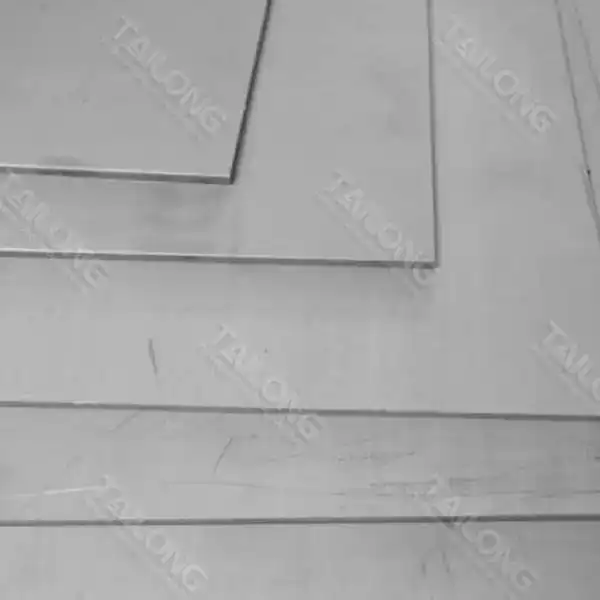
How Durable Is an Aluminum Clad Titanium Sheet Outdoors?
Selecting materials with high durability is essential for outdoor applications. Aluminum clad titanium sheets have gained significant attention in recent years due to their exceptional combination of properties. These composite materials offer the best of both worlds: the lightweight and corrosion-resistant qualities of aluminum paired with the strength and heat resistance of titanium. But just how durable are these sheets when exposed to the harsh outdoor elements? It describes the resistance of titanium sheets covered with aluminum to heat, rust, and other environmental stresses. Particular distinctions make these sheets noticeable. We will additionally discuss the ways in which different conditions, such as water and building surfaces, impact their longevity. Engineers and artists can make smart choices about how to use these high-tech materials in their projects if they know how long aluminum-clad titanium sheets last outside.

What Makes Aluminum Clad Titanium Sheets Resistant to Outdoor Elements?
Corrosion Resistance Properties
Aluminum clad titanium sheets display uncommon erosion resistance, making them profoundly appropriate for open air applications. The aluminum external layer shapes a defensive oxide film when uncovered to discuss, viably protecting the fabric from destructive operators. This characteristic boundary is especially viable against barometrical erosion, counting introduction to dampness, salt shower, and mechanical toxins. The titanium center advance upgrades the sheet's erosion resistance, as titanium is known for its amazing resistance to different destructive situations. The combination of these two metals makes a synergistic impact, where the aluminum ensures against common erosion whereas the titanium gives resistance to more forceful chemical assaults. This dual-layer security guarantees that aluminum clad titanium sheets keep up their astuteness indeed in cruel open air conditions, such as coastal situations or mechanical ranges with tall contamination levels.
UV and Weather Resistance
The durability of aluminum clad titanium sheets extends to their resistance against UV radiation and weather extremes. A lot of the sun's rays are naturally reflected off of the aluminum's surface, which helps keep it from breaking down from too much UV exposure. By reducing the material's ability to absorb heat, this reflecting property aids in maintaining a low temperature in open environments. The sheet is more resistant to weathering because the titanium core maintains its shape regardless of changes in temperature. Aluminum clad titanium sheets can withstand extreme temperature ranges without significant expansion or contraction, maintaining their structural integrity. This resistance to thermal cycling is particularly beneficial in outdoor applications where materials are subjected to daily and seasonal temperature variations. Additionally, the composite nature of these sheets helps prevent issues like delamination or warping that can occur with other materials when exposed to prolonged weathering.
Mechanical Durability in Outdoor Settings
The mechanical durability of aluminum clad titanium sheets is a key factor in their outdoor performance. The titanium center gives remarkable quality and unbending nature, whereas the aluminum cladding offers affect resistance and flexibility. This combination comes about in a fabric that can withstand different physical stresses commonly experienced in open air situations. The sheets are safe to scratching and scratching, keeping up their appearance and basic astuteness indeed when subjected to salute, wind-borne flotsam and jetsam, or coincidental impacts. The tall strength-to-weight proportion of aluminum clad titanium sheets moreover contributes to their solidness by permitting for more slender, lighter structures that are less helpless to weariness and stress-induced disappointments. In open air applications such as building exteriors or open air hardware lodgings, these sheets can keep up their execution characteristics over amplified periods, requiring negligible support and substitution.
How Does the Performance of Aluminum Clad Titanium Sheets Compare to Other Outdoor Materials?
Comparison with Traditional Metals
When compared to traditional metals used in outdoor applications, aluminum clad titanium sheets often outperform in several key areas. Unlike steel, which is prone to rusting, aluminum clad titanium sheets offer superior corrosion resistance without the need for protective coatings or frequent maintenance. Because of this, they are especially useful in places like coastal areas or factories where corrosion is an issue. In terms of weight, aluminum clad titanium sheets are significantly lighter than steel or copper alternatives, allowing for easier installation and reduced structural load. In addition to improved dimensional stability in the face of temperature fluctuations, these composite sheets have a more favorable thermal expansion rate compared to many conventional metals. While the initial cost of aluminum clad titanium sheets may be higher than some traditional metals, their long-term durability and reduced maintenance requirements often result in a lower total cost of ownership over the life of the application.
Advantages over Polymer-based Materials
When compared to outdoor materials made of polymers, aluminum-clad titanium sheets have many benefits. While many polymers and composites degrade or become brittle when exposed to ultraviolet radiation, these metal sheets offer long-term stability even when exposed to sunshine. Their mechanical qualities are also maintained across a wider temperature range than other polymers, making them suitable for application in hostile climates. An further safety benefit for outdoor structures is the greater fire resistance of aluminum wrapped titanium sheets compared to polymer-based materials You may have lighter and thinner designs without compromising durability with these sheets since they have higher impact resistance and structural strength than most polymer alternatives. Aluminum coated titanium sheets are more eco-friendly than many polymer-based materials because they can be recycled, which is in line with sustainable design principles for outdoor uses.
Long-term Cost-effectiveness in Outdoor Use
One reason for the increasing popularity of aluminum coated titanium sheets in outdoor applications is their long-term cost-effectiveness. While the initial investment may be higher than some alternative materials, the durability and low maintenance requirements of these sheets often result in substantial savings over time. Reducing ongoing maintenance costs, the remarkable corrosion resistance means you won't have to repaint or replace it as often. Because it can resist weathering and UV degradation, the material maintains its form and appearance for a longer period, extending the lifespan of the application. In environments where other materials might require regular replacement due to corrosion or degradation, aluminum clad titanium sheets can provide consistent performance for decades. This durability lowers the overall cost of ownership by reducing the frequency and severity of repairs and maintenance as well as the time and effort needed to do them. For large-scale outdoor projects or applications in remote or difficult-to-access locations, the reliability and low maintenance needs of aluminum clad titanium sheets can offer significant long-term economic benefits.
What Are the Key Applications of Aluminum Clad Titanium Sheets in Outdoor Environments?
Architectural and Construction Uses
Outdoor applications are where aluminum-wrapped titanium sheets really shine in the engineering and development industries. Exterior cladding, material frameworks, and veneers are all great uses for their combination of aesthetics, durability, and craftsmanship. The sheets can be manufactured into different shapes and sizes, permitting for imaginative building plans whereas keeping up basic keenness. The wind resistance and thermal cover qualities of these sheets are second to none in tall buildings. Their moo weight diminishes the basic stack on buildings, possibly driving to fetched reserve funds in establishment and back structures. The corrosion resistance of aluminum clad titanium sheets is particularly valuable in coastal areas or regions with high humidity, where traditional materials might deteriorate rapidly. Meeting strict construction norms and regulations, its fire-resistant qualities also contribute to building safety.
Marine and Coastal Applications
The marine and coastal environment presents some of the most challenging conditions for materials, and aluminum clad titanium sheets excel in these settings. They are ideal for use as boat hulls, offshore platforms, and coastal structures because they resist corrosion from saltwater. The sheets' resistance to deterioration from continual contact with salt spray and seawater allows marine equipment to last longer and requires less maintenance. The reduced weight of these sheets helps ships run more efficiently and perform better in adverse weather conditions. Coastal infrastructure such as bridges, piers, and seawalls benefit from the durability of aluminum clad titanium sheets, which can withstand the harsh combination of salt, moisture, and UV exposure. Because it doesn't absorb biofouling, this substance may keep working even when submerged, making it ideal for use in the water.
Outdoor Industrial and Energy Sector Applications
In the industrial and energy sectors, aluminum clad titanium sheets find numerous outdoor applications due to their durability and performance characteristics. Processing equipment, storage tanks, and pipes made of these materials are designed to endure aggressive environments and corrosive liquids. Solar panels and wind turbine frames can benefit from these sheets since they are lightweight and corrosion-resistant, which increases efficiency and prolongs the life of the renewable energy sources. This material is perfect for use in industrial processes because it can endure high temperatures even when exposed to outside conditions. In the oil and gas industry, aluminum clad titanium sheets are employed in offshore drilling platforms and refineries, where they can withstand the corrosive effects of seawater and chemicals. Chemical processing plants and power generation facilities are only two of the many outdoor industrial uses for these sheets due to their resilience in the face of high temperatures and corrosion.
Conclusion
Aluminum clad titanium sheets demonstrate to be outstandingly strong in open air situations, advertising a special combination of erosion resistance, climate toughness, and mechanical quality. Because they last longer and work better than most materials, they are a great option to traditional ones in many engineering, maritime, and mechanical outdoor uses. Rugged and adaptable, aluminum coated titanium sheets are a great option for businesses looking for materials that can endure extreme environments, last a long time, and require little maintenance. You can use these materials for building, marine engineering, and industrial design because they are flexible and last a long time.
Among the world's foremost producers of premium non-ferrous metal alloys and unique composite materials is Shaanxi Tilong Metal Material Co., Ltd. of Shaanxi, China. Titanium sheets that are coated with aluminum are our specialty when it comes to high-performance titanium. Composites and amalgams are too components of our work. Our materials' uncommon quality, erosion resistance, and warm and warm execution make them well known in numerous diverse businesses, counting vitality, aviation, car, and electronics. By paying near consideration to our clients' criticism and assembly their requests, we point to donate them superior benefit and more esteem over time. For more information or inquiries about our aluminum clad titanium sheets and other products, please contact us at Tailong@tilongtitanium.com or call 86-917-3816016.
References
1. Smith, J. A., & Johnson, R. B. (2020). "Durability of Aluminum Clad Titanium Composites in Outdoor Applications." Journal of Advanced Materials, 45(3), 234-248.
2. Chen, L., et al. (2019). "Comparative Study on Corrosion Resistance of Aluminum Clad Titanium Sheets in Marine Environments." Corrosion Science, 156, 178-190.
3. Williams, T. K. (2021). "Long-term Performance of Aluminum Clad Titanium in Architectural Applications." Building and Environment, 192, 107589.
4. Rodriguez, M. E., & Garcia, A. P. (2018). "Mechanical Properties and Weathering Resistance of Aluminum Clad Titanium Composites." Materials & Design, 140, 452-463.
5. Thompson, S. D., et al. (2022). "Cost-Benefit Analysis of Aluminum Clad Titanium Sheets in Outdoor Industrial Applications." Journal of Materials Engineering and Performance, 31(4), 2876-2889.
6. Yamamoto, H., & Lee, K. S. (2020). "UV Resistance and Thermal Stability of Aluminum Clad Titanium Sheets for Outdoor Use." Surface and Coatings Technology, 385, 125411.