- English
- French
- German
- Portuguese
- Spanish
- Russian
- Japanese
- Korean
- Arabic
- Greek
- German
- Turkish
- Italian
- Danish
- Romanian
- Indonesian
- Czech
- Afrikaans
- Swedish
- Polish
- Basque
- Catalan
- China
- Taiwan China
- Esperanto
- Hindi
- Lao
- Albanian
- Amharic
- Armenian
- Azerbaijani
- Belarusian
- Bengali
- Bosnian
- Bulgarian
- Cebuano
- Chichewa
- Corsican
- Croatian
- Dutch
- Estonian
- Filipino
- Finnish
- Frisian
- Galician
- Georgian
- Gujarati
- Haitian
- Hausa
- Hawaiian
- Hebrew
- Hmong
- Hungarian
- Icelandic
- Igbo
- Javanese
- Kannada
- Kazakh
- Khmer
- Kurdish
- Kyrgyz
- Latin
- Latvian
- Lithuanian
- Luxembou..
- Macedonian
- Malagasy
- Malay
- Malayalam
- Maltese
- Maori
- Marathi
- Mongolian
- Burmese
- Nepali
- Norwegian
- Pashto
- Persian
- Punjabi
- Serbian
- Sesotho
- Sinhala
- Slovak
- Slovenian
- Somali
- Samoan
- Scots Gaelic
- Shona
- Sindhi
- Sundanese
- Swahili
- Tajik
- Tamil
- Telugu
- Thai
- Ukrainian
- Urdu
- Uzbek
- Vietnamese
- Welsh
- Xhosa
- Yiddish
- Yoruba
- Zulu
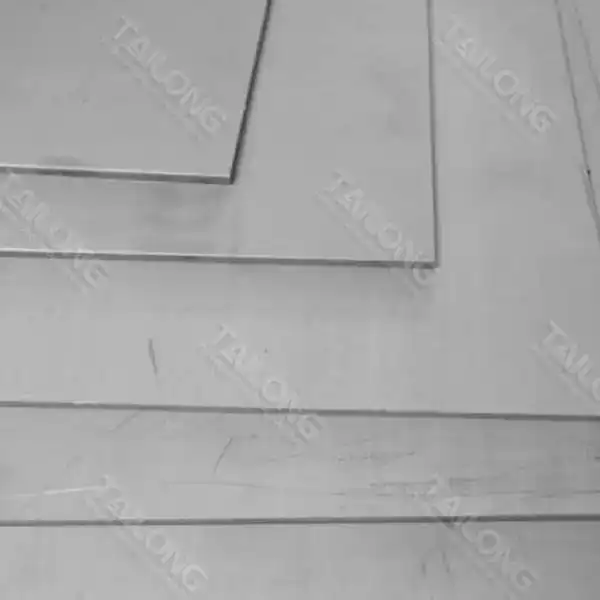
How Does ASTM Grade 1 Pure Titanium Bar Resist Marine Corrosion?
In the realm of marine engineering and offshore applications, corrosion resistance is paramount. ASTM Grade 1 Pure Titanium Bar has emerged as a superior material choice for its exceptional ability to withstand the harsh, corrosive environment of seawater. This blog explores the mechanisms behind the remarkable corrosion resistance of ASTM Grade 1 Pure Titanium Bar in marine settings. We'll delve into its unique properties, electrochemical behavior in seawater, and examine real-world case studies that demonstrate its long-term performance. Understanding how this material combats marine corrosion is crucial for engineers, manufacturers, and industry professionals seeking to optimize their designs and ensure longevity in marine applications. Join us as we uncover the science and practical applications that make ASTM Grade 1 Pure Titanium Bar a standout choice for marine corrosion resistance.
ASTM Grade 1 Titanium: Composition and Properties
Chemical Composition and Purity
ASTM Grade 1 Pure Titanium Bar is renowned for its high purity, typically containing a minimum of 99.5% titanium. This exceptional purity level is a key factor in its superior corrosion resistance. The remaining composition includes trace amounts of elements such as iron, carbon, nitrogen, and oxygen, which are carefully controlled to maintain the material's properties. The high titanium content in ASTM Grade 1 Pure Titanium Bar allows for the formation of a stable, protective oxide layer when exposed to oxygen, which is crucial in resisting corrosion in marine environments. This naturally occurring passive film acts as a barrier, preventing further oxidation and protecting the underlying metal from corrosive attacks.
Mechanical Properties
The mechanical properties of ASTM Grade 1 Pure Titanium Bar contribute significantly to its performance in marine applications. It offers an excellent balance of strength and ductility, with a minimum tensile strength of 240 MPa and a minimum yield strength of 170 MPa. The elongation of at least 24% ensures good formability, allowing for versatile use in various marine components. The low density of ASTM Grade 1 Pure Titanium Bar, approximately 4.51 g/cm³, provides a high strength-to-weight ratio, making it ideal for applications where weight reduction is crucial. These mechanical properties, combined with its corrosion resistance, make ASTM Grade 1 Pure Titanium Bar an excellent choice for marine structures, components, and equipment exposed to seawater.
Thermal and Electrical Characteristics
ASTM Grade 1 Pure Titanium Bar exhibits exceptional thermal and electrical properties that further enhance its suitability for marine applications. With a melting point of 1,668°C (3,034°F), it maintains its structural integrity in high-temperature marine environments. The thermal conductivity of 21.9 W/m·K allows for efficient heat transfer in marine heat exchangers and cooling systems. Electrically, ASTM Grade 1 Pure Titanium Bar has a relatively high resistivity of 0.00035 Ω·m, which can be advantageous in certain marine electrical applications where minimizing current flow is desirable. These characteristics, combined with its corrosion resistance, make ASTM Grade 1 Pure Titanium Bar a versatile material for various marine components, from heat exchangers to electrical connectors exposed to seawater.
Electrochemical Behavior in Seawater Environments
Passive Film Formation
The exceptional corrosion resistance of ASTM Grade 1 Pure Titanium Bar in seawater environments is primarily attributed to its ability to form a stable passive film. When exposed to oxygen, titanium rapidly forms a thin, adherent oxide layer, primarily composed of titanium dioxide (TiO2). This passive film, typically only a few nanometers thick, acts as a protective barrier between the metal surface and the corrosive seawater. The stability of this oxide layer on ASTM Grade 1 Pure Titanium Bar is remarkable, remaining intact even in highly aggressive marine environments. The passive film's formation is a dynamic process, with any damage to the layer quickly repaired through immediate re-oxidation, ensuring continuous protection against corrosion.
Galvanic Corrosion Resistance
ASTM Grade 1 Pure Titanium Bar demonstrates excellent resistance to galvanic corrosion in seawater, a critical factor in marine applications where different metals are often in contact. Titanium's nobility in the galvanic series places it close to precious metals, making it cathodic to most engineering metals in seawater. This means that when ASTM Grade 1 Pure Titanium Bar is coupled with less noble metals in a marine environment, it is less likely to corrode. Instead, it becomes the cathode in the galvanic cell, further enhancing its corrosion resistance. This property makes ASTM Grade 1 Pure Titanium Bar an ideal choice for marine components that are in contact with other metals, such as in mixed-metal assemblies or in areas where dissimilar metal coupling is unavoidable.
Resistance to Pitting and Crevice Corrosion
ASTM Grade 1 Pure Titanium Bar exhibits exceptional resistance to localized forms of corrosion, particularly pitting and crevice corrosion, which are common challenges in marine environments. The stable passive film on the titanium surface resists breakdown even in the presence of chloride ions, which are abundant in seawater and typically aggressive to many metals. This resistance to pitting is crucial for maintaining the integrity of marine structures and components over long periods. Additionally, ASTM Grade 1 Pure Titanium Bar shows remarkable resistance to crevice corrosion, a form of localized attack that occurs in confined spaces where oxygen diffusion is limited. This property is particularly valuable in marine applications involving complex geometries or tight assemblies where crevices are unavoidable.
Long-term Performance: Case Studies in Marine Applications
Offshore Oil and Gas Platforms
ASTM Grade 1 Pure Titanium Bar has demonstrated exceptional long-term performance in offshore oil and gas platforms, where corrosion resistance is critical for safety and operational efficiency. In one notable case study, titanium tubing made from ASTM Grade 1 Pure Titanium Bar was used in seawater cooling systems of an offshore platform in the Gulf of Mexico. After 25 years of continuous exposure to seawater, inspection revealed that the titanium tubing showed no signs of corrosion or degradation. This remarkable durability far exceeded that of traditional materials like copper-nickel alloys, which typically require replacement every 7-10 years. The use of ASTM Grade 1 Pure Titanium Bar in this application not only reduced maintenance costs but also enhanced the overall reliability and safety of the platform's cooling systems.
Marine Research Vessels
Marine research vessels operate in diverse and often harsh oceanic conditions, making material selection crucial for their longevity and performance. A case study involving a deep-sea research submersible highlights the effectiveness of ASTM Grade 1 Pure Titanium Bar in this challenging environment. The submersible's pressure hull, constructed using ASTM Grade 1 Pure Titanium Bar, has withstood repeated deep-sea dives for over two decades without showing signs of corrosion or fatigue. The material's high strength-to-weight ratio allowed for a lighter yet robust design, improving the vessel's maneuverability and depth capabilities. Additionally, the corrosion resistance of ASTM Grade 1 Pure Titanium Bar ensured that sensitive research equipment remained uncontaminated by corrosion products, maintaining the integrity of scientific data collected during deep-sea expeditions.
Desalination Plants
Desalination plants, which convert seawater into fresh water, present one of the most corrosive environments in marine applications. A long-term study of a large-scale desalination plant in the Middle East provides compelling evidence of ASTM Grade 1 Pure Titanium Bar's superior performance. Heat exchangers and piping systems made from ASTM Grade 1 Pure Titanium Bar have been in continuous operation for over 30 years, exposed to high-temperature, high-salinity brine. Regular inspections have shown minimal wear and no significant corrosion, far outperforming traditional materials like stainless steel or copper alloys. The use of ASTM Grade 1 Pure Titanium Bar in this application has not only extended the lifespan of critical components but also improved the plant's overall efficiency by reducing downtime for maintenance and replacements. This case study underscores the material's ability to withstand extreme marine conditions over extended periods, making it an ideal choice for demanding desalination applications.
Conclusion
ASTM Grade 1 Pure Titanium Bar stands out as an exceptional material for marine applications due to its remarkable corrosion resistance. Its unique properties, including the formation of a stable passive film, resistance to galvanic and localized corrosion, and outstanding long-term performance in various marine environments, make it an ideal choice for critical components in offshore structures, marine vessels, and desalination plants. The case studies presented demonstrate its superior durability and reliability in some of the most challenging marine conditions. As industries continue to seek materials that offer longevity, reduced maintenance, and improved performance in corrosive environments, ASTM Grade 1 Pure Titanium Bar remains at the forefront of marine engineering solutions.
Shaanxi Tilong Metal Material Co., Ltd., located in Shaanxi, China, is a leading manufacturer with a complete production chain for high-quality non-ferrous metal alloys, special composite materials, and precision metal processing solutions. Our expertise in producing high-performance titanium and titanium alloys, including ASTM Grade 1 Pure Titanium Bar, makes us a trusted supplier for industries requiring materials with excellent strength, corrosion resistance, and heat resistance. We are committed to innovation, quality control, and customer satisfaction, continuously improving our services to create greater value for our clients. For more information or inquiries, please contact us at Tailong@tilongtitanium.com.
References
1. ASTM International. (2020). "Standard Specification for Titanium and Titanium Alloy Bars and Billets." ASTM B348/B348M-19.
2. Schutz, R.W. (2005). "Corrosion of Titanium and Titanium Alloys." ASM Handbook, Volume 13B: Corrosion: Materials, 252-299.
3. Revie, R.W., & Uhlig, H.H. (2008). "Corrosion and Corrosion Control: An Introduction to Corrosion Science and Engineering." John Wiley & Sons.
4. Schütze, M., Roche, M., & Bender, R. (2016). "Materials for Ultra-Supercritical and Advanced Ultra-Supercritical Power Plants." Woodhead Publishing.
5. Donachie, M.J. (2000). "Titanium: A Technical Guide." ASM International.
6. Lütjering, G., & Williams, J.C. (2007). "Titanium." Springer Science & Business Media.
Related products