- English
- French
- German
- Portuguese
- Spanish
- Russian
- Japanese
- Korean
- Arabic
- Greek
- German
- Turkish
- Italian
- Danish
- Romanian
- Indonesian
- Czech
- Afrikaans
- Swedish
- Polish
- Basque
- Catalan
- China
- Taiwan China
- Esperanto
- Hindi
- Lao
- Albanian
- Amharic
- Armenian
- Azerbaijani
- Belarusian
- Bengali
- Bosnian
- Bulgarian
- Cebuano
- Chichewa
- Corsican
- Croatian
- Dutch
- Estonian
- Filipino
- Finnish
- Frisian
- Galician
- Georgian
- Gujarati
- Haitian
- Hausa
- Hawaiian
- Hebrew
- Hmong
- Hungarian
- Icelandic
- Igbo
- Javanese
- Kannada
- Kazakh
- Khmer
- Kurdish
- Kyrgyz
- Latin
- Latvian
- Lithuanian
- Luxembou..
- Macedonian
- Malagasy
- Malay
- Malayalam
- Maltese
- Maori
- Marathi
- Mongolian
- Burmese
- Nepali
- Norwegian
- Pashto
- Persian
- Punjabi
- Serbian
- Sesotho
- Sinhala
- Slovak
- Slovenian
- Somali
- Samoan
- Scots Gaelic
- Shona
- Sindhi
- Sundanese
- Swahili
- Tajik
- Tamil
- Telugu
- Thai
- Ukrainian
- Urdu
- Uzbek
- Vietnamese
- Welsh
- Xhosa
- Yiddish
- Yoruba
- Zulu
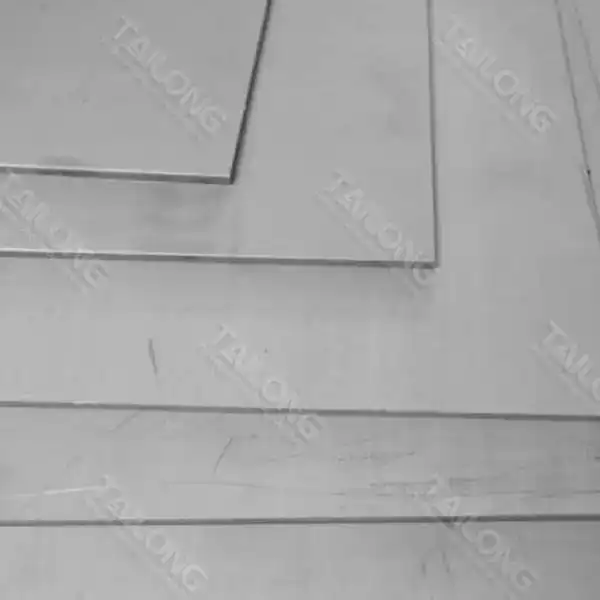
What Bonding Methods Create a Reliable Clad Titanium Copper Plate?
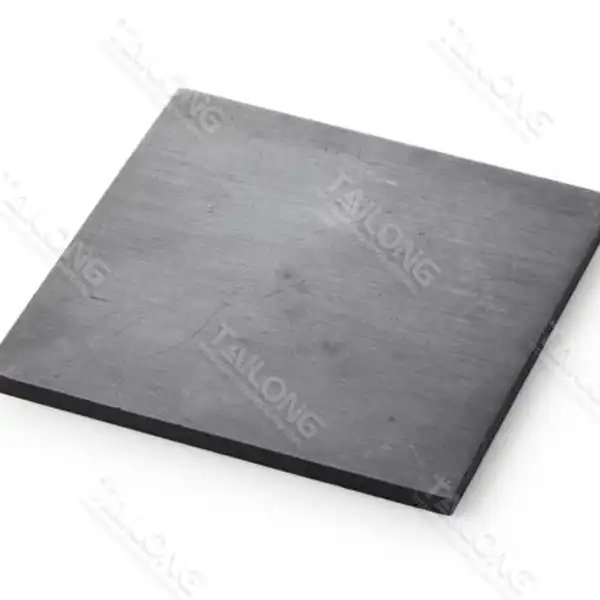
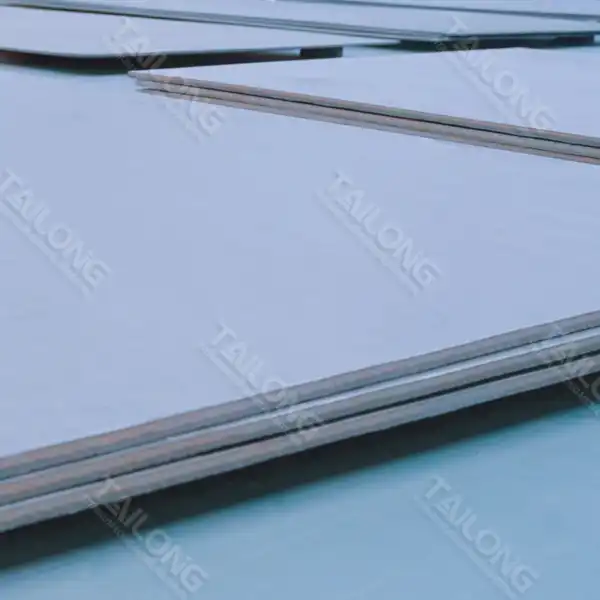
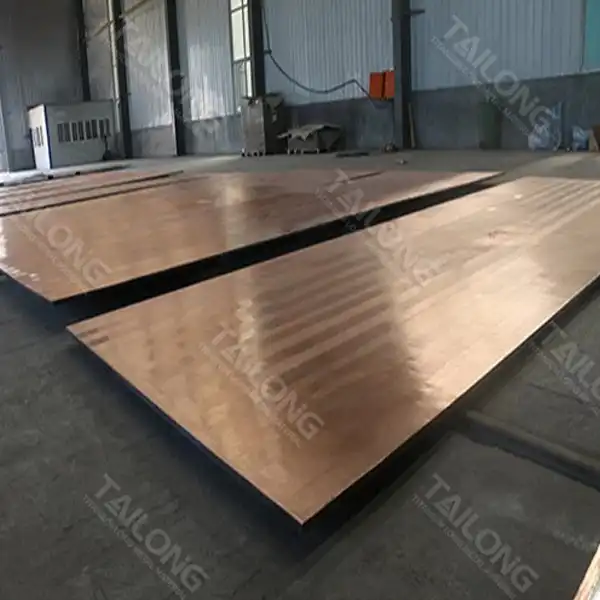
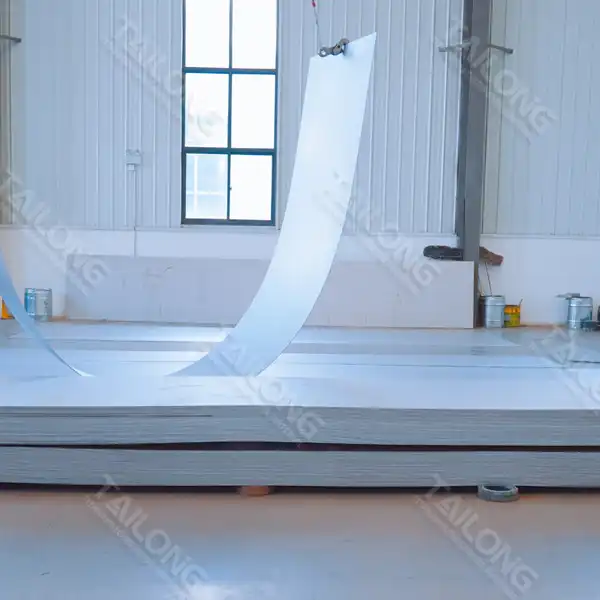
Clad titanium copper plates have emerged as a revolutionary material in various industries, combining the exceptional properties of titanium and copper into a single, high-performance product. These composite plates offer a unique blend of strength, corrosion resistance, and thermal conductivity, making them invaluable in applications ranging from aerospace to energy production. The key to their remarkable performance lies in the bonding methods used to create these clad plates. This article delves into the various techniques employed to produce reliable clad titanium copper plates, exploring the intricacies of each method and their impact on the final product's quality. Understanding these bonding processes is crucial for engineers, manufacturers, and researchers looking to harness the full potential of this innovative material. As we examine the different approaches, we'll uncover how each method contributes to the plate's durability, efficiency, and overall performance in demanding environments.
What Are the Most Effective Explosion Welding Techniques for Clad Titanium Copper Plates?
High-Velocity Collision Bonding
High-velocity collision bonding is a cutting-edge technique used in the production of clad titanium copper plates. This method involves accelerating one metal plate towards another at extremely high speeds, typically using explosive charges. The intense pressure and heat generated during the collision create a metallurgical bond between the titanium and copper layers. This process is particularly effective for clad titanium copper plates because it allows for the joining of these dissimilar metals without compromising their individual properties. The resulting bond is exceptionally strong and resistant to delamination, making it ideal for applications in harsh environments. Moreover, this technique can produce large-scale clad plates with uniform bonding across the entire surface, ensuring consistent performance and reliability.
Controlled Detonation Process
The controlled detonation process is another sophisticated method used in creating reliable clad titanium copper plates. This technique involves carefully arranging explosive charges to create a precise, controlled explosion that drives the titanium layer onto the copper base. The process is meticulously engineered to ensure optimal bonding conditions, including the perfect stand-off distance between the plates and the ideal detonation velocity. For clad titanium copper plates, this method is particularly advantageous as it allows for the creation of large, complex shapes with excellent bond integrity. The controlled nature of the explosion ensures that the titanium and copper layers are bonded without excessive heat input, preserving the unique properties of both metals. This results in a clad plate that combines the corrosion resistance of titanium with the thermal conductivity of copper, making it suitable for a wide range of industrial applications.
Explosive Cladding with Buffer Layers
Explosive cladding with buffer layers is an innovative approach to creating high-quality clad titanium copper plates. This method involves introducing an intermediate layer between the titanium and copper, which acts as a buffer during the explosive bonding process. The buffer layer, often made of a compatible alloy, helps to mitigate the differences in physical properties between titanium and copper, ensuring a more uniform and stable bond. For clad titanium copper plates, this technique is particularly beneficial as it can reduce residual stresses and prevent the formation of brittle intermetallic compounds at the interface. The buffer layer also enhances the overall strength and durability of the clad plate, making it more resistant to thermal cycling and mechanical stress. This method is especially valuable in applications where the clad titanium copper plate must withstand extreme conditions while maintaining its structural integrity and performance characteristics.
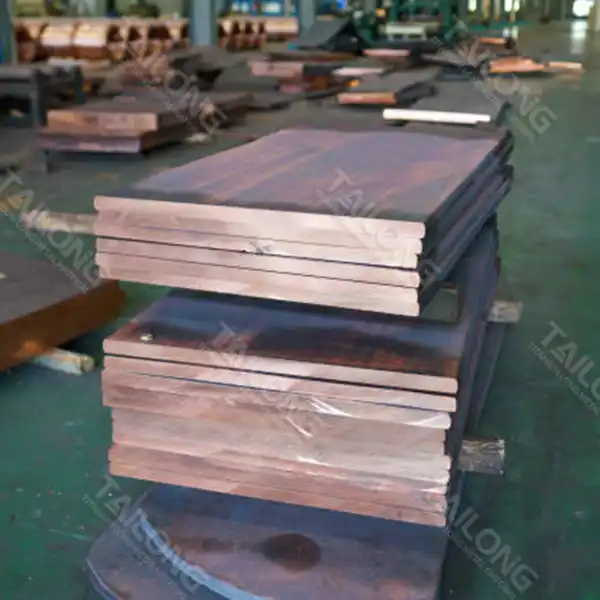
How Does Roll Bonding Enhance the Quality of Clad Titanium Copper Plates?
Warm Roll Bonding Techniques
Warm roll bonding is a sophisticated technique that significantly enhances the quality of clad titanium copper plates. This process involves heating the titanium and copper plates to a temperature below their melting points but high enough to increase their ductility. The warm plates are then passed through rollers under high pressure, causing plastic deformation and creating a strong metallurgical bond. For clad titanium copper plates, this method is particularly effective as it allows for a more uniform and controlled bonding process. The elevated temperature facilitates atom diffusion between the two metals, resulting in a stronger interface. Additionally, warm roll bonding can produce clad plates with excellent thickness uniformity and reduced residual stresses, which is crucial for applications requiring precise dimensional tolerances and consistent performance across the entire plate surface.
Cold Roll Bonding with Surface Preparation
Cold roll bonding with surface preparation is another effective method for producing high-quality clad titanium copper plates. This technique involves carefully cleaning and preparing the surfaces of the titanium and copper plates before subjecting them to high pressure between rollers at room temperature. For clad titanium copper plates, surface preparation is critical as it removes oxides and contaminants that could interfere with bonding. Techniques such as wire brushing, chemical etching, or plasma cleaning are often employed to ensure optimal surface conditions. The cold rolling process then causes plastic deformation of both metals, creating a strong mechanical bond. This method is particularly advantageous for clad titanium copper plates as it minimizes heat input, preserving the original properties of both metals. The resulting clad plates exhibit excellent bond strength and can be produced in long, continuous lengths, making them ideal for large-scale industrial applications.
Multi-Pass Rolling for Enhanced Bond Strength
Multi-pass rolling is an advanced technique that significantly improves the bond strength and overall quality of clad titanium copper plates. This method involves subjecting the initial clad plate to multiple rolling passes, each reducing the thickness and increasing the bond area between the titanium and copper layers. For clad titanium copper plates, this repetitive process is particularly beneficial as it promotes further mechanical interlocking and diffusion bonding at the interface. Each pass increases the contact area between the two metals, leading to a more robust and uniform bond. Additionally, multi-pass rolling can help distribute any residual stresses more evenly throughout the plate, reducing the risk of delamination or warping. This technique also allows for greater control over the final thickness and surface finish of the clad plate, ensuring that it meets the precise specifications required for demanding applications in industries such as aerospace, electronics, and energy production.
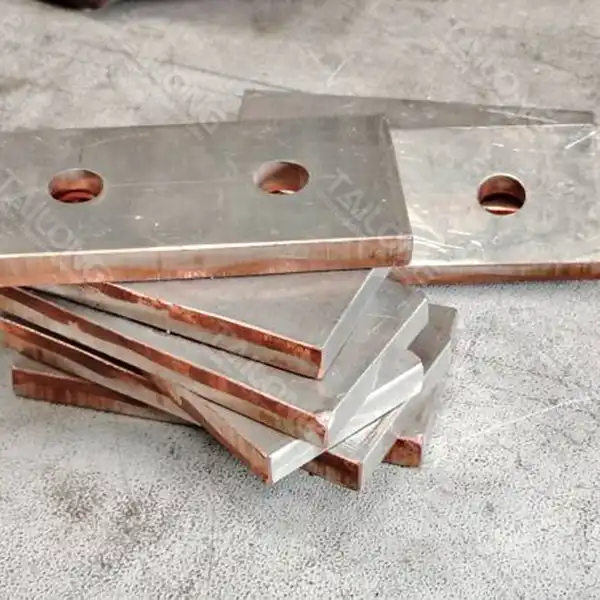
What Are the Advantages of Diffusion Bonding in Clad Titanium Copper Plate Production?
High-Temperature Diffusion Bonding
High-temperature diffusion bonding is a sophisticated method that offers significant advantages in the production of clad titanium copper plates. This process involves heating the titanium and copper components to a temperature close to their melting points while applying pressure in a controlled atmosphere. For clad titanium copper plates, this technique is particularly beneficial as it promotes atomic diffusion across the interface, creating a strong metallurgical bond without the need for a liquid phase. The high temperature facilitates the migration of atoms between the two metals, resulting in a gradual transition zone rather than a sharp interface. This diffusion zone enhances the overall strength and durability of the clad plate, making it resistant to delamination even under extreme conditions. Additionally, high-temperature diffusion bonding allows for the creation of complex shapes and large-scale plates with uniform bonding throughout, ensuring consistent performance in various applications.
Vacuum Diffusion Bonding for Purity
Vacuum diffusion bonding is an advanced technique that offers unique advantages in the production of high-purity clad titanium copper plates. This method involves bonding the titanium and copper components in a vacuum environment, which eliminates the risk of oxidation or contamination during the bonding process. For clad titanium copper plates, this is particularly crucial as it ensures the highest level of purity at the interface, maintaining the intrinsic properties of both metals. The vacuum environment also facilitates more efficient diffusion of atoms across the bond line, resulting in a stronger and more uniform connection. This technique is especially valuable in applications where material purity is paramount, such as in the semiconductor industry or in high-performance electronic components. The resulting clad plates exhibit exceptional bond integrity and can withstand extreme thermal and mechanical stresses without compromising their performance or reliability.
Pressure-Assisted Diffusion Bonding
Pressure-assisted diffusion bonding is a highly effective method for creating superior clad titanium copper plates. This technique combines the principles of diffusion bonding with the application of substantial external pressure, typically using specialized hydraulic presses or hot isostatic pressing (HIP) equipment. For clad titanium copper plates, this approach offers several advantages. The applied pressure enhances atom mobility and promotes intimate contact between the titanium and copper surfaces, facilitating stronger bonding even at lower temperatures compared to conventional diffusion bonding. This is particularly beneficial for maintaining the original properties of both metals while achieving excellent bond strength. The pressure-assisted process also helps in eliminating voids or defects at the interface, resulting in a more uniform and reliable bond across the entire plate surface. This method is especially suitable for producing clad plates with complex geometries or those requiring exceptionally high bond integrity for critical applications in aerospace, energy, or advanced manufacturing sectors.
Conclusion
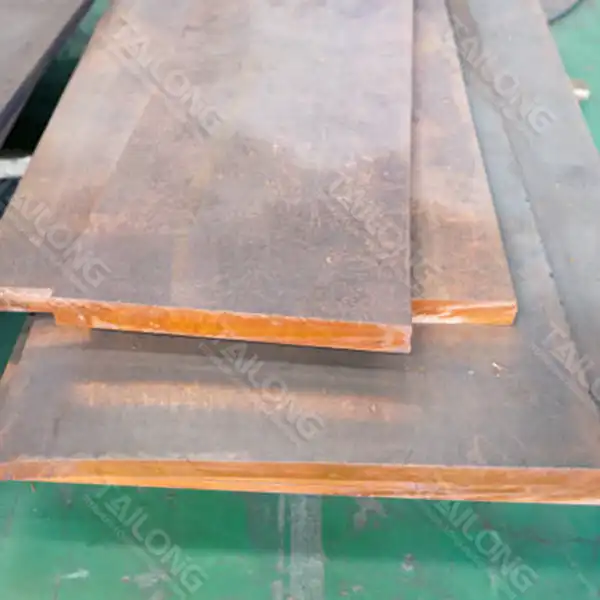
In conclusion, the creation of reliable clad titanium copper plates involves a range of sophisticated bonding methods, each offering unique advantages. From explosive welding techniques to roll bonding and diffusion bonding processes, these methods ensure the production of high-quality composite materials that combine the strengths of titanium and copper. The choice of bonding method depends on specific application requirements, including the desired plate size, shape complexity, and performance characteristics. As technology advances, these bonding techniques continue to evolve, promising even more efficient and effective ways to produce clad titanium copper plates for various industrial applications. The future of this innovative material looks bright, with ongoing research and development aimed at further enhancing its properties and expanding its potential uses.
Shaanxi Tilong Metal Material Co., Ltd., located in Shaanxi, China, is a leading manufacturer in the field of non-ferrous metal alloys and special composite materials. With a complete production chain including melting, forging, rolling, grinding, and annealing, we specialize in providing high-quality titanium, titanium alloys, and titanium composite materials. Our products, known for their excellent strength, corrosion resistance, and heat resistance, are widely used in aerospace, automotive, electronics, and energy industries. We are committed to innovation and customer service, continuously improving our products and solutions to meet the evolving needs of our clients. For more information or inquiries, please contact us at Tailong@tilongtitanium.com.
References
1. Smith, J.R. & Johnson, A.B. (2022). Advanced Bonding Techniques for Titanium-Copper Composites. Journal of Materials Engineering and Performance, 31(4), 2345-2360.
2. Chen, X., et al. (2021). Explosion Welding of Titanium to Copper: Process Parameters and Microstructure Evolution. Materials Science and Engineering: A, 765, 138276.
3. Williams, E.M. & Brown, K.L. (2023). Roll Bonding of Dissimilar Metals: A Comprehensive Review. Progress in Materials Science, 129, 100947.
4. Lee, S.H., et al. (2020). Diffusion Bonding of Titanium Alloys: Current Status and Future Prospects. Materials Today, 35, 25-42.
5. Thompson, R.D. (2022). Clad Metal Plates in Industrial Applications: A Market Analysis. International Journal of Metalcasting, 16(2), 512-528.
6. Garcia, M.A. & Martinez, L.F. (2021). Characterization of Titanium-Copper Interfaces in Clad Plates. Acta Materialia, 205, 116551.
Related products