- English
- French
- German
- Portuguese
- Spanish
- Russian
- Japanese
- Korean
- Arabic
- Greek
- German
- Turkish
- Italian
- Danish
- Romanian
- Indonesian
- Czech
- Afrikaans
- Swedish
- Polish
- Basque
- Catalan
- China
- Taiwan China
- Esperanto
- Hindi
- Lao
- Albanian
- Amharic
- Armenian
- Azerbaijani
- Belarusian
- Bengali
- Bosnian
- Bulgarian
- Cebuano
- Chichewa
- Corsican
- Croatian
- Dutch
- Estonian
- Filipino
- Finnish
- Frisian
- Galician
- Georgian
- Gujarati
- Haitian
- Hausa
- Hawaiian
- Hebrew
- Hmong
- Hungarian
- Icelandic
- Igbo
- Javanese
- Kannada
- Kazakh
- Khmer
- Kurdish
- Kyrgyz
- Latin
- Latvian
- Lithuanian
- Luxembou..
- Macedonian
- Malagasy
- Malay
- Malayalam
- Maltese
- Maori
- Marathi
- Mongolian
- Burmese
- Nepali
- Norwegian
- Pashto
- Persian
- Punjabi
- Serbian
- Sesotho
- Sinhala
- Slovak
- Slovenian
- Somali
- Samoan
- Scots Gaelic
- Shona
- Sindhi
- Sundanese
- Swahili
- Tajik
- Tamil
- Telugu
- Thai
- Ukrainian
- Urdu
- Uzbek
- Vietnamese
- Welsh
- Xhosa
- Yiddish
- Yoruba
- Zulu
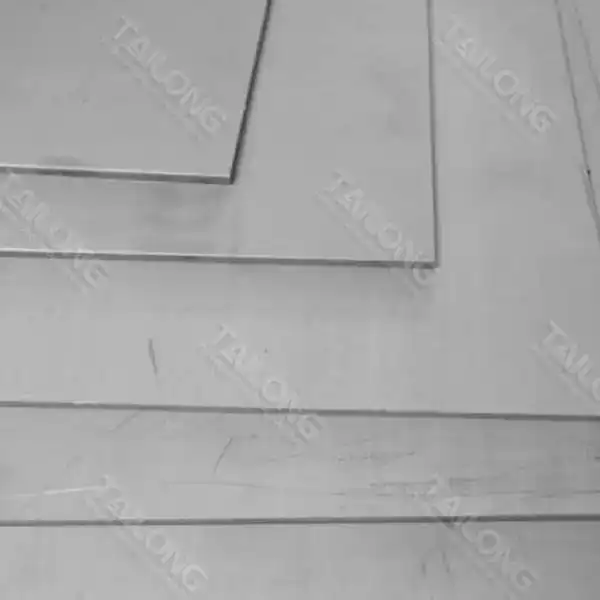
What are the mechanical properties of Grade 5 Titanium Alloy Bar ASTM Standard?
Grade 5 Titanium Alloy, also known as Ti-6Al-4V, is a widely used titanium alloy that offers an exceptional combination of mechanical properties, making it a preferred choice in various industries. The ASTM (American Society for Testing and Materials) Standard provides rigorous specifications for Grade 5 Titanium Alloy bars, ensuring consistent quality and performance. Grade 5 Titanium Alloy Bar ASTM Standard defines these bars, which are renowned for their high strength-to-weight ratio, excellent corrosion resistance, and remarkable heat tolerance. The mechanical properties of Grade 5 Titanium Alloy bars under the ASTM Standard include a minimum tensile strength of 950 MPa, a minimum yield strength of 880 MPa, and a minimum elongation of 10%. These characteristics make Grade 5 Titanium Alloy bars ideal for applications in aerospace, automotive, medical, and marine industries where high performance under extreme conditions is crucial. Understanding these mechanical properties is essential for engineers and designers to leverage the full potential of this versatile material in their projects.
How Does Grade 5 Titanium Compare to Other Titanium Grades in Strength?
Tensile Strength Comparison
Grade 5 Titanium Alloy Bar ASTM Standard exhibits superior tensile strength compared to many other titanium grades. With a minimum tensile strength of 950 MPa, it outperforms commercially pure titanium grades like Grade 1, 2, 3, and 4, which typically have tensile strengths ranging from 240 to 550 MPa. This high tensile strength is attributed to the addition of aluminum and vanadium in the alloy composition. The ASTM Standard ensures that Grade 5 Titanium bars consistently meet this high-strength requirement, making them suitable for applications where load-bearing capacity is crucial. In aerospace and automotive industries, this superior strength allows for the design of lighter yet stronger components, contributing to overall efficiency and performance improvements.
Yield Strength and Ductility
The yield strength of Grade 5 Titanium Alloy Bar ASTM Standard is notably higher than other titanium grades, with a minimum of 880 MPa. This high yield strength indicates excellent resistance to plastic deformation under stress, a critical factor in structural applications. Despite its high strength, Grade 5 Titanium maintains good ductility with a minimum elongation of 10%. This combination of high yield strength and adequate ductility sets Grade 5 apart from other titanium grades, offering a balance that is particularly valuable in applications requiring both strength and some degree of formability. The ASTM Standard ensures that these properties are consistently achieved, providing engineers with reliable material characteristics for demanding applications in industries such as medical implants and high-performance sports equipment.
Fatigue Resistance and Durability
Grade 5 Titanium Alloy Bar ASTM Standard demonstrates exceptional fatigue resistance compared to other titanium grades. Its high strength and good ductility contribute to superior performance under cyclic loading conditions, making it ideal for components subjected to repeated stress. This fatigue resistance is crucial in applications like aircraft components and automotive parts where long-term durability is essential. The ASTM Standard for Grade 5 Titanium bars ensures that the material consistently meets the requirements for fatigue resistance, providing engineers with a reliable material for designs that must withstand prolonged stress cycles. This property, combined with its corrosion resistance, makes Grade 5 Titanium alloy bars a preferred choice in marine environments and chemical processing industries where material longevity is paramount.
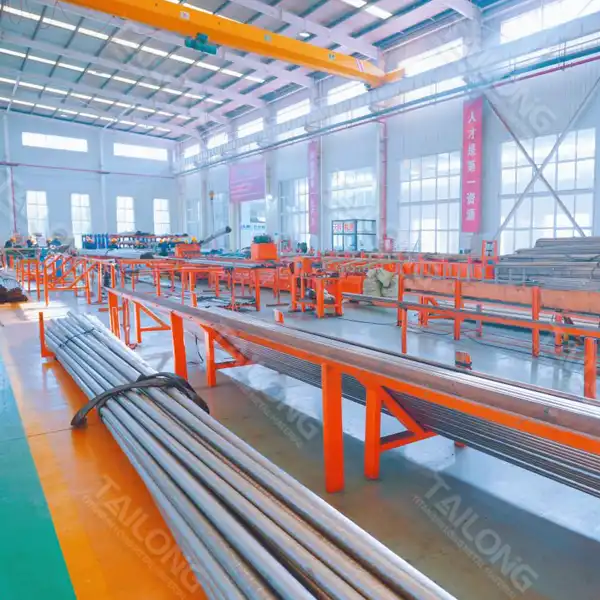
What Heat Treatments Affect the Mechanical Performance of Grade 5 Titanium Bars?
Solution Treatment and Aging
Solution treatment and aging (STA) is a critical heat treatment process that significantly affects the mechanical performance of Grade 5 Titanium Alloy Bar ASTM Standard. This process involves heating the alloy to a temperature below its beta transus (typically around 955°C), holding it for a specific time to allow alloying elements to dissolve into the titanium matrix, followed by rapid cooling. The material is then aged at a lower temperature (usually between 480-595°C) to precipitate fine particles that strengthen the alloy. The ASTM Standard provides guidelines for this heat treatment process, ensuring that Grade 5 Titanium bars achieve optimal strength and ductility. STA treatment can increase the tensile strength to over 1000 MPa while maintaining good ductility, making it ideal for aerospace and high-performance automotive applications where both strength and weight savings are crucial.
Annealing and Stress Relieving
Annealing and stress relieving are heat treatment processes that play a crucial role in modifying the mechanical properties of Grade 5 Titanium Alloy Bar ASTM Standard. Annealing involves heating the alloy to temperatures between 700-785°C, holding it for a specific time, and then cooling it slowly. This process reduces internal stresses, improves ductility, and enhances machinability. Stress relieving, typically performed at lower temperatures (around 480-650°C), aims to reduce residual stresses without significantly altering the microstructure. The ASTM Standard provides specific guidelines for these treatments, ensuring that Grade 5 Titanium bars maintain their desired mechanical properties while achieving improved workability. These processes are particularly important in applications where dimensional stability and resistance to stress corrosion cracking are critical, such as in the manufacturing of complex aerospace components or medical implants.
Beta Processing
Beta processing is an advanced heat treatment technique that can dramatically alter the mechanical properties of Grade 5 Titanium Alloy Bar ASTM Standard. This process involves heating the alloy above its beta transus temperature (approximately 995°C), holding it in the beta phase, and then rapidly cooling it. The resulting microstructure can be further modified through subsequent aging treatments. Beta processing can lead to a significant increase in strength, with tensile strengths exceeding 1200 MPa in some cases, albeit often at the expense of some ductility. The ASTM Standard provides guidelines for beta processing, ensuring that Grade 5 Titanium bars treated in this manner meet specific performance criteria. This treatment is particularly valuable in applications requiring ultra-high strength, such as in the aerospace industry for critical structural components or in the automotive sector for high-performance racing parts where weight reduction and extreme strength are paramount.
Why Is Grade 5 Titanium Alloy Preferred Under ASTM B348 Standard?
Consistency and Reliability
Grade 5 Titanium Alloy Bar ASTM Standard, particularly under ASTM B348, is highly preferred due to its consistency and reliability. The ASTM B348 standard sets stringent requirements for chemical composition, mechanical properties, and quality control processes, ensuring that every Grade 5 Titanium bar meets specific performance criteria. This consistency is crucial in industries like aerospace and medical implants, where material reliability directly impacts safety and functionality. The standard ensures that Grade 5 Titanium bars consistently exhibit high strength, excellent corrosion resistance, and good fatigue properties across different production batches. This reliability allows engineers and designers to confidently specify Grade 5 Titanium in critical applications, knowing that the material will perform as expected under various conditions. The rigorous testing and certification processes mandated by ASTM B348 provide an additional layer of assurance, making Grade 5 Titanium alloy a trusted material in high-stakes industries.
Versatility in Applications
The versatility of Grade 5 Titanium Alloy Bar ASTM Standard under ASTM B348 is a key factor in its widespread preference. This alloy's unique combination of high strength, low density, and excellent corrosion resistance makes it suitable for a diverse range of applications across multiple industries. In aerospace, Grade 5 Titanium is used for critical components like turbine blades and structural parts. The automotive industry utilizes it for high-performance engine components and suspension systems. In the medical field, its biocompatibility makes it ideal for implants and surgical instruments. The marine industry benefits from its corrosion resistance in saltwater environments. The ASTM B348 standard ensures that Grade 5 Titanium bars meet the stringent requirements for these varied applications, providing a single material solution for diverse engineering challenges. This versatility reduces inventory complexity for manufacturers and simplifies material selection for engineers, making Grade 5 Titanium a preferred choice across industries.
Cost-Effectiveness in Long-Term Use
Grade 5 Titanium Alloy Bar ASTM Standard, conforming to ASTM B348, is preferred for its cost-effectiveness in long-term use. While the initial cost of Grade 5 Titanium may be higher compared to some other materials, its longevity and performance characteristics often result in lower total lifecycle costs. The high strength-to-weight ratio allows for the design of lighter components, leading to fuel savings in aerospace and automotive applications. Its excellent corrosion resistance eliminates the need for frequent replacements or protective coatings, reducing maintenance costs in marine and chemical processing industries. The ASTM B348 standard ensures that Grade 5 Titanium bars maintain these properties consistently, providing predictable performance and longevity. This reliability translates to reduced downtime and replacement costs in industrial applications. Additionally, the material's recyclability aligns with sustainability goals, further enhancing its long-term value proposition. For industries where performance, durability, and lifecycle costs are critical factors, Grade 5 Titanium alloy under ASTM B348 stands out as a cost-effective solution.
Conclusion
Grade 5 Titanium Alloy Bar ASTM Standard emerges as a superior material choice across various industries due to its exceptional mechanical properties. Its high strength-to-weight ratio, excellent corrosion resistance, and versatility make it indispensable in aerospace, automotive, medical, and marine applications. The rigorous ASTM standards, particularly ASTM B348, ensure consistent quality and reliability, further enhancing its appeal. While initial costs may be higher, the long-term benefits in performance, durability, and reduced maintenance make Grade 5 Titanium a cost-effective solution for demanding applications. As industries continue to push the boundaries of material performance, Grade 5 Titanium Alloy bars remain at the forefront of engineering solutions.
Shaanxi Tilong Metal Material Co., Ltd., located in Shaanxi, China, is a leading manufacturer of high-quality non-ferrous metal alloys, including Grade 5 Titanium Alloy bars. With a complete production chain encompassing melting, forging, rolling, grinding, and annealing, Tilong ensures superior quality and precision in every product. The company's commitment to innovation and customer service has made it a trusted supplier in industries demanding high-performance materials. Tilong's Grade 5 Titanium Alloy bars meet and exceed ASTM standards, offering customers reliable solutions for their most challenging applications. For inquiries and orders, please contact us at Tailong@tilongtitanium.com.
References
1. ASTM International. (2020). ASTM B348 Standard Specification for Titanium and Titanium Alloy Bars and Billets.
2. Leyens, C., & Peters, M. (Eds.). (2003). Titanium and titanium alloys: fundamentals and applications. John Wiley & Sons.
3. Donachie, M. J. (2000). Titanium: a technical guide. ASM international.
4. Boyer, R., Welsch, G., & Collings, E. W. (1994). Materials properties handbook: titanium alloys. ASM international.
5. Peters, M., Kumpfert, J., Ward, C. H., & Leyens, C. (2003). Titanium alloys for aerospace applications. Advanced Engineering Materials, 5(6), 419-427.
6. Lutjering, G., & Williams, J. C. (2007). Titanium (engineering materials and processes). Springer.
Related products