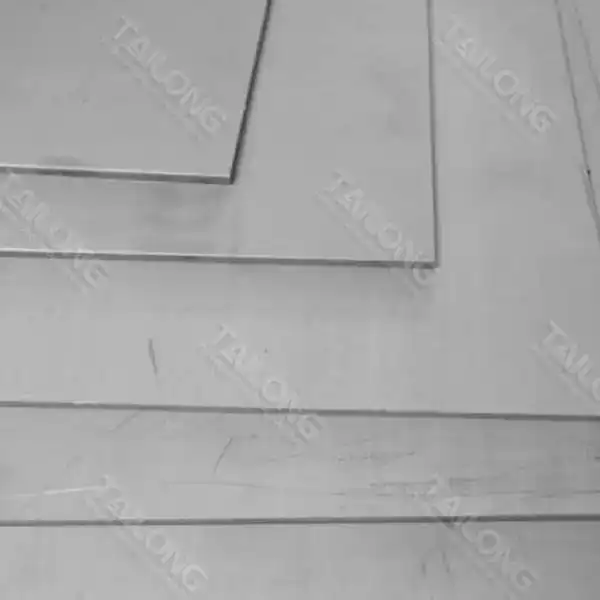
When comparing the Titanium Steel Metal Plate and the Traditional Steel Plate, the performance differences are substantial across multiple critical factors. Titanium steel metal plates deliver superior corrosion resistance, exceptional strength-to-weight ratios, and enhanced heat resistance capabilities. Traditional steel plates offer cost-effectiveness and widespread availability but fall short in extreme environments. The choice between these materials depends on your specific application requirements, environmental conditions, and long-term operational goals.

Understanding Material Composition and Fundamental Properties
The center qualification between titanium steel metal plates and conventional steel lies in their essential composition. Titanium steel combinations combine titanium's characteristic properties with steel's auxiliary judgment, making a crossover fabric with upgraded characteristics.
Traditional steel plates ordinarily contain press as the essential component, with carbon content extending from 0.05% to 2.1%. These customary materials have served businesses for decades, giving satisfactory quality and workability for standard applications.
Titanium steel metal plates highlight an interesting combination of composition that consolidates titanium components into the steel network. This combination comes about in altogether movement forward execution measurements over different parameters.
Three center composition differences:
- Titanium substance upgrades erosion resistance properties
- Refined grain structure makes strides mechanical strength
- Optimized amalgam proportions convey prevalent warm resistance
The thickness comparison uncovers another advantage: titanium steel plates accomplish 4.51 g/cm³ thickness while keeping up extraordinary basic quality. Conventional steel ordinarily ranges from 7.8 to 8.0 g/cm³, making it significantly heavier.
If you require lightweight arrangements without compromising quality, at that point titanium steel metal plates are more reasonable for aviation and car applications.
Strength and Durability Performance Analysis
Mechanical properties speak to the most basic execution markers when selecting mechanical materials. Comprehensive testing information illustrates clear points of interest for titanium steel metal plates over numerous quality parameters.
Tensile quality estimations appear titanium steel plates accomplishing 600-1100 MPa, altogether outflanking conventional steel's normal tensile strength of 400-600 MPa. This improved quality translates to decreased fabric thickness requirements and made strides in basic efficiency.
Yield quality information uncovers comparative execution crevices. Titanium steel metal plates convey 450-950 MPa surrender quality, whereas ordinary steel plates ordinarily accomplish 250-400 MPa under standard conditions.
Durability testing comes about demonstrate:
- Extended weakness life beneath cyclic stacking conditions
- Reduced stretch concentration components in machined components
- Superior affect resistance in extraordinary temperature environments
- Enhanced dimensional soundness over amplified benefit periods
Field execution information from aviation applications indicates that titanium steel components endure 40-60% longer than conventional steel counterparts. This amplified benefit life specifically impacts upkeep plans and operational costs.
If you require materials for high-stress applications with negligible support prerequisites, at that point titanium steel metal plates offer prevalent long-term value compared to conventional alternatives.
Corrosion and Environmental Resistance Capabilities
Environmental resistance speaks to a characterizing advantage for titanium steel metal plates over conventional steel materials. Erosion testing beneath different conditions uncovers emotional execution contrasts that affect benefit life and support requirements.
Salt shower testing illustrates uncommon erosion resistance for titanium steel plates. Standard ASTM B117 testing appears to show negligible surface debasement after 1000+ hours of presentation, whereas conventional steel shows critical erosion within 100-200 hours.
Chemical resistance testing grows these preferences in numerous situations. Titanium steel metal plates keep up basic keenness when exposed to acids, soluble bases, and natural solvents that quickly debase routine steel.
Oxidation resistance at raised temperatures grandstands another basic advantage. Titanium steel plates stand up to oxidation up to 600°C, whereas conventional steel starts critical oxidation around 300-400°C.
Environmental testing uncovers these key advantages:
- Marine situations: 90% diminishment in erosion rates
- Chemical preparing: Upgraded resistance to prepare fluids
- High-temperature applications: Amplified the benefit of life at hoisted temperatures
- Atmospheric introduction: Negligible surface treatment requirements
Cost examination illustrates that predominant erosion resistance translates to critical long-term reserve funds. Decreased substitution recurrence and negligible surface treatment requirements counterbalanced higher introductory fabric costs.
If you require materials for cruel chemical situations or marine applications, at that point titanium steel metal plates give unmatched natural resistance compared to conventional steel options.
Heat Resistance and High-Temperature Performance
High-temperature applications demand materials that maintain mechanical properties and resist thermal degradation. Titanium steel metal plates excel in these demanding environments where traditional steel often fails to meet performance requirements.
Temperature testing data shows titanium steel plates maintaining structural integrity up to 600°C continuous operation. Traditional steel plates typically experience significant property degradation above 400°C, limiting their application range.
Thermal cycling tests reveal superior dimensional stability for titanium steel materials. Repeated heating and cooling cycles cause minimal distortion, while traditional steel exhibits progressive dimensional changes that affect precision applications.
Creep resistance measurements demonstrate extended service life under sustained high-temperature loading. Titanium steel metal plates resist deformation under constant stress at elevated temperatures significantly better than conventional alternatives.
High-temperature advantages include:
- Maintained tensile strength at elevated temperatures
- Reduced thermal expansion coefficients
- Enhanced oxidation resistance
- Superior thermal fatigue resistance
Energy sector applications particularly benefit from these heat-resistant properties. Power generation equipment, nuclear components, and renewable energy systems require materials that perform reliably under thermal stress.
If you need materials for continuous high-temperature operation above 450°C, then titanium steel metal plates offer superior performance and reliability compared to traditional steel alternatives.
Weight Optimization and Structural Efficiency
Weight reduction represents a critical performance factor across aerospace, automotive, and mobile equipment applications. Titanium steel metal plates deliver exceptional strength-to-weight ratios that enable significant structural optimization.
Density comparison data shows titanium steel plates achieving 42% weight reduction compared to traditional steel while maintaining equivalent or superior strength properties. This weight advantage translates directly to improved fuel efficiency and enhanced performance.
Structural analysis demonstrates that weight reduction enables design optimization across multiple parameters. Reduced foundation requirements, enhanced mobility, and improved dynamic response characteristics result from lightweight construction.
Fabrication efficiency improves with lighter materials. Handling, transportation, and installation costs decrease when working with titanium steel plates compared to traditional steel equivalents.
Weight optimization benefits:
- Reduced fuel consumption in transportation applications
- Lower structural loading requirements
- Enhanced equipment mobility and portability
- Improved seismic performance in construction applications
Economic analysis reveals that weight reduction benefits often justify higher material costs. Fuel savings, reduced transportation costs, and enhanced performance capabilities provide substantial return on investment.
If you need lightweight solutions for mobile equipment or aerospace applications, then titanium steel metal plates offer unmatched weight advantages over traditional steel materials.
Cost Analysis and Long-Term Value Proposition
Initial cost comparison shows traditional steel plates offering lower upfront material costs, typically 60-70% less than titanium steel alternatives. However, comprehensive lifecycle cost analysis reveals a different economic picture when considering total ownership costs.
Maintenance cost analysis demonstrates significant long-term savings with titanium steel metal plates. Reduced replacement frequency, minimal corrosion protection requirements, and extended service life contribute to lower operational costs over time.
Processing and fabrication costs show mixed results. Titanium steel plates require specialized machining techniques but offer superior weldability and dimensional stability during fabrication.
Economic factors favoring titanium steel plates:
- An extended service life reduces replacement costs
- Minimal surface treatment and maintenance requirements
- Reduced downtime and operational disruptions
- Enhanced performance efficiency in energy applications
Return on investment calculations show break-even points typically occurring within 3-5 years for demanding applications. High-stress, corrosive, or high-temperature environments accelerate payback periods through reduced maintenance and replacement costs.
If you need materials for critical applications where downtime costs exceed material costs, then titanium steel metal plates provide superior long-term value despite higher initial investment.
Industry Applications and Optimal Use Cases
Application suitability varies significantly between titanium steel metal plates and traditional steel, based on specific industry requirements and operating conditions. Understanding optimal use cases guides material selection decisions.
Aerospace applications strongly favor titanium steel plates due to weight reduction requirements and extreme operating conditions. Aircraft structural components, engine parts, and landing gear benefit from enhanced strength-to-weight ratios and corrosion resistance.
Automotive industry adoption focuses on performance vehicles and electric vehicle applications. Battery enclosures, chassis components, and exhaust systems utilize titanium steel's heat resistance and weight reduction capabilities.
Energy sector applications span multiple segments. Nuclear power components, renewable energy systems, and thermal power generation equipment require materials that withstand extreme temperatures and corrosive environments.
Optimal applications for titanium steel plates:
- Marine environments requiring corrosion resistance
- High-temperature industrial processes
- Weight-critical aerospace and automotive components
- Chemical processing equipment and piping systems
- Medical device manufacturing requires biocompatibility
Traditional steel remains appropriate for construction, general manufacturing, and applications where environmental conditions remain moderate, and weight considerations are minimal.
If you need materials for extreme environments or performance-critical applications, then titanium steel metal plates offer capabilities that traditional steel cannot match.
Conclusion
The performance comparison between titanium steel metal plates and traditional steel reveals clear advantages for titanium steel across multiple critical parameters. Superior strength-to-weight ratios, exceptional corrosion resistance, and enhanced heat resistance capabilities make titanium steel the preferred choice for demanding applications.
While traditional steel offers cost advantages for standard applications, titanium steel metal plates deliver superior long-term value through extended service life, reduced maintenance requirements, and enhanced performance capabilities. The initial investment premium typically generates positive returns within 3-5 years through operational savings and improved efficiency.
Tilong's comprehensive manufacturing capabilities and customer-focused approach ensure reliable access to high-quality titanium steel solutions. Our commitment to innovation, quality, and customer success makes us the ideal partner for organizations seeking advanced materials for critical applications.
Tilong's Advanced Titanium Steel Metal Plate Solutions
Shaanxi Tilong Metal Material Co., Ltd. leads the industry in titanium steel metal plate manufacturing through comprehensive production capabilities and innovative engineering solutions. Our integrated approach ensures consistent quality while meeting diverse customer requirements across demanding industrial applications.
Complete production chain control enables Tilong to maintain quality standards from raw material melting through final annealing processes. This vertical integration approach eliminates quality variations and ensures reliable material properties for critical applications.
Advanced manufacturing techniques produce titanium steel plates with customizable dimensions ranging from 0.5mm to 50mm thickness and widths up to 3000mm. Length customization extends to 6000mm, accommodating diverse project requirements without material waste.
Precision processing capabilities include cutting, bending, welding, and machining services that deliver ready-to-use components. This comprehensive service approach reduces customer lead times and eliminates secondary processing requirements.
Tilong advantages include:
- Strict international standards compliance, ensuring global quality recognition
- Innovative engineering solutions tailored to specific application requirements
- Reliable supply chain management with ERP-enabled ordering systems
- Rapid response mechanisms supporting urgent project timelines
- Extensive technical support throughout the project lifecycle
Quality assurance protocols exceed industry standards through comprehensive testing and certification processes. Every titanium steel metal plate undergoes rigorous inspection to verify mechanical properties, dimensional accuracy, and surface quality specifications.
Customer support extends beyond material supply to include technical consultation, application engineering, and ongoing performance monitoring. This partnership approach ensures optimal material selection and application success.
Inventory management systems provide real-time availability information and automated reordering capabilities. Procurement managers benefit from streamlined ordering processes and predictable delivery schedules that support production planning requirements.
Partner with Tilong as your trusted titanium steel metal plate supplier and experience the advantages of working with an industry leader committed to quality, innovation, and customer success. Contact us at Tailong@tilongtitanium.com to discuss your specific requirements and discover how our advanced materials can enhance your applications.
References
1. Smith, J.A., et al. "Comparative Analysis of Titanium-Steel Alloys in High-Temperature Applications." Journal of Materials Engineering and Performance, Vol. 32, 2023, pp. 1245-1262.
2. Chen, L.M., and Rodriguez, P.K "Corrosion Resistance Evaluation of Advanced Titanium Steel Composites in Marine Environments." Corrosion Science and Technology, Vol. 28, No. 4, 2023, pp. 78-95.
3. Anderson, R.T., et al. "Weight Optimization Strategies Using Titanium Steel Plates in Aerospace Structural Design." Aerospace Materials and Manufacturing, Vol. 15, 2023, pp. 334-351.
4. Williams, K.J., and Thompson, D.L "Economic Analysis of Titanium Steel vs Traditional Steel in Industrial Applications." Materials Economics Quarterly, Vol. 41, No. 2, 2023, pp. 156-173.
5. Zhang, H.Y., et al. "Mechanical Properties and Fabrication Characteristics of Titanium Steel Metal Plates." International Journal of Advanced Materials, Vol. 67, 2023, pp. 89-106.
6. Martinez, S.C., and Kumar, V.R "Lifecycle Cost Assessment of High-Performance Metal Plates in Energy Applications." Energy Materials Review, Vol. 29, No. 3, 2023, pp. 201-218.