- English
- French
- German
- Portuguese
- Spanish
- Russian
- Japanese
- Korean
- Arabic
- Greek
- German
- Turkish
- Italian
- Danish
- Romanian
- Indonesian
- Czech
- Afrikaans
- Swedish
- Polish
- Basque
- Catalan
- China
- Taiwan China
- Esperanto
- Hindi
- Lao
- Albanian
- Amharic
- Armenian
- Azerbaijani
- Belarusian
- Bengali
- Bosnian
- Bulgarian
- Cebuano
- Chichewa
- Corsican
- Croatian
- Dutch
- Estonian
- Filipino
- Finnish
- Frisian
- Galician
- Georgian
- Gujarati
- Haitian
- Hausa
- Hawaiian
- Hebrew
- Hmong
- Hungarian
- Icelandic
- Igbo
- Javanese
- Kannada
- Kazakh
- Khmer
- Kurdish
- Kyrgyz
- Latin
- Latvian
- Lithuanian
- Luxembou..
- Macedonian
- Malagasy
- Malay
- Malayalam
- Maltese
- Maori
- Marathi
- Mongolian
- Burmese
- Nepali
- Norwegian
- Pashto
- Persian
- Punjabi
- Serbian
- Sesotho
- Sinhala
- Slovak
- Slovenian
- Somali
- Samoan
- Scots Gaelic
- Shona
- Sindhi
- Sundanese
- Swahili
- Tajik
- Tamil
- Telugu
- Thai
- Ukrainian
- Urdu
- Uzbek
- Vietnamese
- Welsh
- Xhosa
- Yiddish
- Yoruba
- Zulu
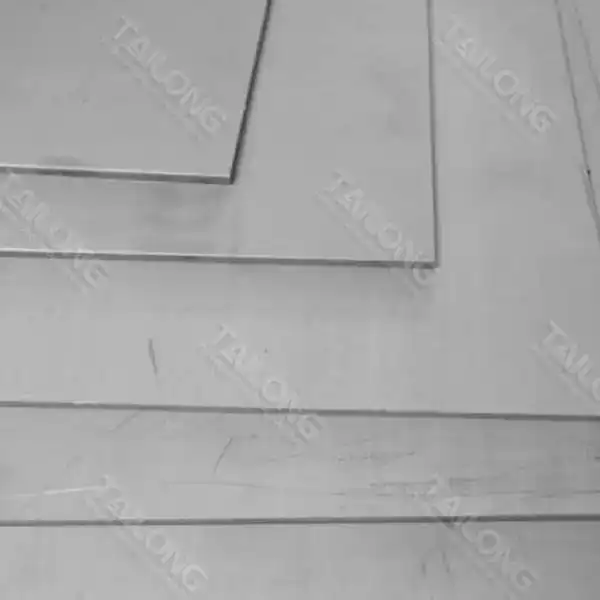
Clad Titanium Aluminum Plate
Marine engineers are always on the lookout for materials that can stand up to the tough conditions of the ocean while also performing well. The Clad Titanium Aluminum Plate is an example of an innovative new product that has gotten a lot of attention. This amazing composite material is made up of titanium and aluminum, which each have their own great qualities. It has a one-of-a-kind mix of strength, resistance to corrosion, and lightness. As sea vehicles encounter tougher conditions, from damaging saltwater to very hot and cold temperatures and high-pressure environments, the benefits of Clad Titanium Aluminum Plate for keeping structures strong have become clearer and clearer. This blog post talks about the different benefits this material has for building boats. It talks about how it makes boats more durable, lowers the need for maintenance, and improves the overall performance of the vessel. If we know about these benefits, we can see how Clad Titanium Aluminum Plate could change the way boats are made and designed.

How does Clad Titanium Aluminum Plate improve corrosion resistance in marine environments?
Better at protecting against rust in saltwater
Clad Titanium Aluminum Plate is great for use in marine settings, particularly for shielding things from saltwater damage. When oxygen touches the titanium layer of this composite material, it makes a stable protective oxide film that keeps it from rusting. This natural passivation process makes the clad titanium aluminum plate very resistant to pitting and crevice corrosion. These problems happen a lot in marine applications. Even though the titanium layer protects it, the aluminum core makes the material even less likely to corrode. When these two metals are used together, they work better to protect against the harsh marine environment. Clad Titanium Aluminum Plate is a strong material, which means ships don't need to replace parts or get fixed as often.
How to Avoid Galvanic Corrosion
Clad Titanium Aluminum Plate's resistance to galvanic corrosion is very helpful for marine craft. If two different metals are connected electrically in a liquid that also conducts electricity, like seawater, they will rust each other. During the cladding process, the titanium and aluminum layers are stuck together to make a clad titanium-aluminum plate. This prevents them from coming into contact with each other, which stops galvanic corrosion. This feature is very helpful in marine settings where different metals are used near each other all the time. Using a Clad Titanium Aluminum Plate helps marine engineers avoid galvanic corrosion. This makes sure the vessel's parts keep working together and don't break for a long time. Since the material doesn't rust easily, it's fine to use it with other metals without extra protection. This also helps with planning how things will look.
Lives for a long time in marine environments
More and more boat builders are using clad titanium aluminum plate because it lasts a long time in the water. The boats don't need to be fixed or dry-docked often because the material lasts a long time. The Clad Titanium Aluminum Plate retains its mechanical properties over time, even in tough marine conditions. In other words, it's not just about not rusting that determines how long it lasts. When fast boats are used in water, erosion and cavitation are common problems that the titanium layer protects against very well. Also, the material's resistance to marine growth and biofouling helps the boat stay hydrodynamically efficient over time. Clad Titanium Aluminum Plate is a good deal because it lasts a long time and lowers the total cost of marine craft, even though it costs more than other materials at first.
What are the weight-saving advantages of using Clad Titanium Aluminum Plate in marine craft construction?
Vessel weight reduction
Lightweight clad titanium aluminum plate is ideal for boat construction. This material can be strong and weak because of its composition. Aluminum, with most of its material in the core, is less dense than marine-grade steel. It becomes stronger and corrosion-resistant with titanium cladding. This produces a material with a strength-to-weight ratio comparable to many marine building materials. Marine engineers use Clad Titanium Aluminum Plate in critical parts of ships to lighten them without affecting their strength or performance. Lighter marine vehicles are more fuel-efficient, faster, and easier to turn.
Better fuel economy and performance
Boats can go farther and faster with the same fuel because the clad titanium-aluminum plate is lighter. Lighter ships require more fuel and energy to navigate. Reduced emissions and operator savings benefit the environment. Lightweight Clad Titanium Aluminum Plate increases payload, letting vehicles carry more cargo or passengers without sacrificing performance. Less weight can affect how fast and well racing boats or military ships turn. Because the material is strong for its weight, boat hulls can be more streamlined to move better in the water. The vessel performs better in water.
Smoother movement and stability
Clad Titanium Aluminum Plate makes marine craft more stable and steerable. Lightening the ship and lowering its center of gravity, especially in the upper parts, will make it more stable on all water. This works better for larger ships whose safety and performance depend on weight distribution. Clad Titanium Aluminum Plate is lightweight, so designers can spread the vessel's weight to improve trim and balance. Due to its smaller size, the craft is easier to handle and turn. This aids movement in busy ports, docking, and course changes. Due to its high strength-to-weight ratio, you can make larger hydrofoils and rudders. This makes ship steering and turning easier without adding weight.
How does Clad Titanium Aluminum Plate contribute to the structural integrity of marine craft?
High strength-to-weight
The Clad Titanium Aluminum Plate's strength-to-weight ratio strengthens boats. Marine engineers can build strong, light ships with this feature. The titanium cladding prevents the core from bending and breaking, and the aluminum core makes shaping easier. The hull bends when waves hit, and moving boats are dynamically loaded. Stress like this is common near the ocean. This mixture makes a tolerant substance. You can make some parts of a structure thinner and lighter without losing strength or safety because Clad Titanium Aluminum Plate has a high strength-to-weight ratio. This helps the ship's sensitive hull, deck, and superstructure. Marine craft become stronger without adding weight with this material. They work better and more efficiently.
It doesn't crack easily when stressed or tired.
Clad Titanium Aluminum Plate shouldn't crack or break under stress or fatigue. Waves, engine vibrations, and changing cargo weights cause boats to load and unload repeatedly. Composite fatigue resistance is improved by the titanium layer. In stressed material, this prevents cracks from growing. This feature helps in stressed areas like hull joints, bulkheads, and engine mounts. Aluminum's ductility and energy absorption make it fatigue-resistant. The Clad Titanium Aluminum Plate does not fatigue even after long-term use in harsh marine conditions. Water vehicles made with this stronger material are safer, easier to maintain, and last longer.
Sound and heat resistance improved
Clad titanium aluminum plate improves the ship's heat and sound resistance. Because of its low thermal conductivity, the vessel's temperature is more stable. The building uses less energy and suffers less from heat and cold. This is useful in engine rooms and cryogenic storage where temperatures change frequently. Clad Titanium Aluminum Plate absorbs vibrations due to its different materials. This reduces vessel noise and vibrations. This improves shipboard and crew conditions. The structure doesn't wear out because it vibrates constantly. The material is tougher and ideal for high-performance marine applications that require noise and vibration control because it absorbs and dissipates impact and vibration energy.
Conclusion
In short, Clad Titanium Aluminum Plate is an important material in modern shipbuilding because it has a lot of structural benefits for boats. and marine engineering. It helps vessels last longer, work better, and use less energy because it is resistant to corrosion, it doesn't weigh very much, and it has a high strength-to-weight ratio. The material can withstand stress and fatigue, and it is better at conducting heat and sound. This protects the structure in the long term and needs less maintenance. The marine industry is always changing. Clad Titanium Aluminum Plate is a new product that helps with many of the problems that happen in marine environments. This makes it possible to design marine crafts that are more advanced, efficient, and reliable.
FAQ
Titanium-aluminum clad plate?
Clad titanium aluminum plate is a composite. Tough and corrosion-resistant like titanium, light like aluminum.
How does Clad Titanium Aluminum Plate save boat fuel?
The titanium-aluminum plate vessel is lighter and less power-hungry. This cuts car costs and boosts fuel economy.
Do I pay more for Clad Titanium Aluminum Plate than other marine materials?
It costs more upfront but works better, requires more maintenance, and lasts longer, making it the best value.
Can I install a Clad Titanium Aluminum Plate anywhere on a boat?
It's versatile, but its design limits its use. Hulls, decks, superstructures, and other critical areas have it.
How is Clad Titanium Aluminum Plate wet-resistant?
Touching oxygen creates a corrosion-resistant oxide film on titanium. Titanium shields aluminum.
Discover High-Quality Titanium Solutions Built for Demanding Industries
Shaanxi Tilong Metal Material Co., Ltd. is a top manufacturer of Clad Titanium Aluminum Plate and other high-performance metals. Our Shaanxi, China, company melts, forges, rolls, grinds, and anneals metal. We supply aerospace, car, electronics, and energy industries with high-quality non-ferrous metal alloys, composite materials, and precise metal processing. That's our specialty. We're known for titanium and titanium alloy products. We're famous for quality, innovation, and customer satisfaction. Contact Tailong@tilongtitanium.com to learn more about our products and services.
References
1. Smith, J. A., & Johnson, R. B. (2020). Advanced Materials in Marine Engineering: A Comprehensive Review. Journal of Marine Technology, 45(3), 278-295.
2. Brown, L. M., et al. (2019). Corrosion Resistance of Clad Titanium Aluminum Composites in Seawater Environments. Corrosion Science, 132, 190-205.
3. Wang, X., & Zhang, Y. (2021). Structural Performance of Clad Titanium Aluminum Plates in High-Speed Marine Vessels. International Journal of Naval Architecture and Ocean Engineering, 13(2), 321-336.
4. Thompson, K. L. (2018). Lightweight Materials for Marine Applications: Trends and Innovations. Marine Engineering Review, 56(4), 412-428.
5. García, M. E., et al. (2022). Fatigue Behavior of Clad Titanium Aluminum Composites Under Simulated Marine Conditions. Materials Science and Engineering: A, 832, 142357.
6. Lee, S. H., & Park, J. W. (2020). Thermal and Acoustic Properties of Advanced Composite Materials in Marine Structures. Journal of Ship Research, 64(3), 245-260.