- English
- French
- German
- Portuguese
- Spanish
- Russian
- Japanese
- Korean
- Arabic
- Greek
- German
- Turkish
- Italian
- Danish
- Romanian
- Indonesian
- Czech
- Afrikaans
- Swedish
- Polish
- Basque
- Catalan
- China
- Taiwan China
- Esperanto
- Hindi
- Lao
- Albanian
- Amharic
- Armenian
- Azerbaijani
- Belarusian
- Bengali
- Bosnian
- Bulgarian
- Cebuano
- Chichewa
- Corsican
- Croatian
- Dutch
- Estonian
- Filipino
- Finnish
- Frisian
- Galician
- Georgian
- Gujarati
- Haitian
- Hausa
- Hawaiian
- Hebrew
- Hmong
- Hungarian
- Icelandic
- Igbo
- Javanese
- Kannada
- Kazakh
- Khmer
- Kurdish
- Kyrgyz
- Latin
- Latvian
- Lithuanian
- Luxembou..
- Macedonian
- Malagasy
- Malay
- Malayalam
- Maltese
- Maori
- Marathi
- Mongolian
- Burmese
- Nepali
- Norwegian
- Pashto
- Persian
- Punjabi
- Serbian
- Sesotho
- Sinhala
- Slovak
- Slovenian
- Somali
- Samoan
- Scots Gaelic
- Shona
- Sindhi
- Sundanese
- Swahili
- Tajik
- Tamil
- Telugu
- Thai
- Ukrainian
- Urdu
- Uzbek
- Vietnamese
- Welsh
- Xhosa
- Yiddish
- Yoruba
- Zulu
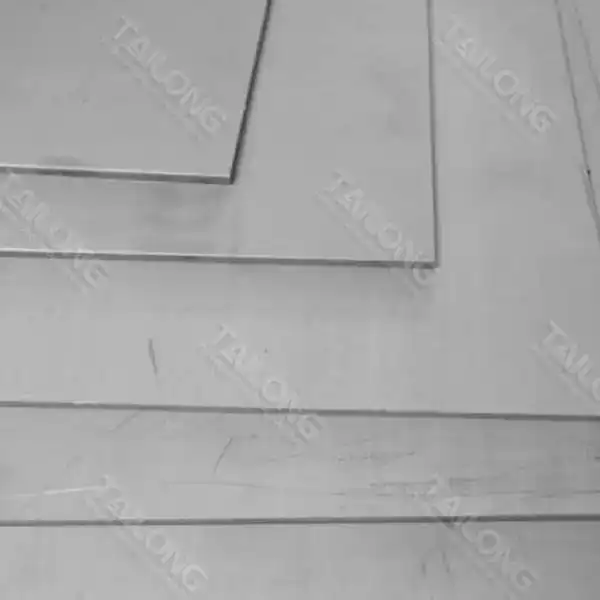
How Grade 5 Titanium Alloy Plate Revolutionizes Aerospace Engineering?
The aerospace industry has long been at the forefront of technological innovation, constantly seeking materials that can withstand extreme conditions while maintaining optimal performance. In recent years, Grade 5 Titanium Alloy Plate has emerged as a game-changing material, revolutionizing aerospace engineering in ways previously thought impossible. This remarkable alloy, also known as Ti-6Al-4V, combines exceptional strength, lightweight properties, and outstanding resistance to corrosion and high temperatures. As aerospace manufacturers strive for greater efficiency, durability, and cost-effectiveness, Grade 5 Titanium Alloy Plate has become an indispensable component in aircraft design, spacecraft construction, and various other aerospace applications. This blog explores how this innovative material is reshaping the aerospace landscape, driving advancements in performance, safety, and sustainability.

Unmatched Strength-to-Weight Ratio: A Game-Changer
Superior Structural Integrity
Grade 5 Titanium Alloy Plate has redefined structural integrity in aerospace engineering. Its exceptional strength-to-weight ratio allows engineers to design aircraft and spacecraft components that are simultaneously robust and lightweight. This unique combination enables the creation of structures that can withstand extreme forces and pressures encountered during flight while significantly reducing the overall weight of the vehicle. The use of Grade 5 Titanium Alloy Plate in critical components such as fuselage frames, wing spars, and landing gear assemblies has led to substantial improvements in fuel efficiency and payload capacity, revolutionizing the economics of air travel and space exploration.
Enhanced Fatigue Resistance
One of the most crucial aspects of aerospace engineering is ensuring the longevity and reliability of components under constant stress and cyclic loading. Grade 5 Titanium Alloy Plate excels in this area, offering superior fatigue resistance compared to traditional aerospace materials. Its unique microstructure and composition allow it to withstand repeated stress cycles without developing cracks or structural weaknesses. This property is particularly valuable in applications such as jet engine components, where materials are subjected to extreme temperatures and pressures over extended periods. By incorporating Grade 5 Titanium Alloy Plate into these critical parts, aerospace engineers have significantly extended the service life of aircraft and reduced maintenance requirements, leading to substantial cost savings for airlines and operators.
Improved Performance in Extreme Environments
The aerospace industry demands materials that can perform reliably in a wide range of extreme environments, from the frigid temperatures of high-altitude flight to the intense heat of rocket propulsion systems. Grade 5 Titanium Alloy Plate has proven to be exceptionally versatile in this regard, maintaining its mechanical properties across a broad temperature spectrum. Its resistance to thermal expansion and contraction helps minimize stress on aerospace structures during rapid temperature changes, ensuring consistent performance and safety. Furthermore, the alloy's excellent corrosion resistance makes it ideal for components exposed to harsh atmospheric conditions or corrosive fluids, extending the operational life of aerospace systems and reducing the need for protective coatings or frequent replacements.
Heat Resistance: Withstanding Extreme Aerospace Conditions
Thermal Stability at High Temperatures
One of the most remarkable properties of Grade 5 Titanium Alloy Plate is its ability to maintain structural integrity and mechanical properties at elevated temperatures. This thermal stability is crucial in aerospace applications where components are exposed to extreme heat, such as in jet engines, rocket nozzles, and hypersonic vehicle structures. Unlike many other materials that lose strength or become brittle at high temperatures, Grade 5 Titanium Alloy Plate retains its performance characteristics well above 400°C (752°F). This allows engineers to design more efficient propulsion systems and thermal protection structures, pushing the boundaries of aerospace capabilities. The alloy's resistance to creep and oxidation at high temperatures further enhances its suitability for these demanding applications, ensuring reliable performance and extended service life in the most challenging aerospace environments.
Efficient Heat Dissipation
In addition to its heat resistance, Grade 5 Titanium Alloy Plate exhibits excellent thermal conductivity properties, making it an ideal material for managing heat in aerospace systems. This characteristic is particularly valuable in applications where rapid heat dissipation is critical, such as in aircraft braking systems and spacecraft heat shields. The alloy's ability to efficiently transfer heat helps prevent localized hot spots and thermal stress concentrations, which can lead to premature failure or compromised performance. By incorporating Grade 5 Titanium Alloy Plate into thermal management systems, aerospace engineers can design more compact and efficient cooling solutions, reducing overall weight and improving system reliability. This enhanced thermal management capability has opened up new possibilities in aerospace design, enabling the development of more advanced and capable aircraft and spacecraft.
Resistance to Thermal Fatigue
The aerospace industry subjects materials to some of the most extreme thermal cycling conditions imaginable, from the rapid heating during atmospheric re-entry to the frigid temperatures of space. Grade 5 Titanium Alloy Plate's exceptional resistance to thermal fatigue makes it an invaluable material in these applications. Unlike many other aerospace materials that can develop cracks or deform under repeated thermal cycling, Grade 5 Titanium Alloy Plate maintains its structural integrity and mechanical properties. This resistance to thermal fatigue is particularly crucial in components such as turbine blades, exhaust systems, and leading edges of hypersonic vehicles, where materials are subjected to rapid and repeated temperature fluctuations. By utilizing Grade 5 Titanium Alloy Plate in these critical areas, aerospace engineers can significantly extend the operational life of components, reduce maintenance requirements, and enhance overall system reliability and safety.
Cost-Effective Innovation: Long-Term Benefits for Manufacturers
Reduced Lifecycle Costs
While the initial cost of Grade 5 Titanium Alloy Plate may be higher than some traditional aerospace materials, its long-term economic benefits are significant. The exceptional durability and corrosion resistance of this alloy translate into reduced maintenance requirements and extended service life for aerospace components. This longevity results in fewer replacements and overhauls throughout the lifecycle of an aircraft or spacecraft, leading to substantial cost savings over time. Additionally, the lightweight nature of Grade 5 Titanium Alloy Plate contributes to improved fuel efficiency, further reducing operational costs for aerospace companies. By investing in this innovative material, manufacturers can achieve a lower total cost of ownership for their aerospace products, enhancing their competitiveness in a highly demanding market.
Streamlined Manufacturing Processes
Grade 5 Titanium Alloy Plate offers several advantages in terms of manufacturability, which can lead to significant cost savings in production processes. The material's excellent machinability allows for precise and efficient shaping, reducing manufacturing time and tool wear. Advanced joining techniques, such as friction stir welding and electron beam welding, are highly effective with Grade 5 Titanium Alloy Plate, enabling the creation of complex structures with fewer parts and joints. This simplification of manufacturing processes not only reduces production costs but also enhances the structural integrity and reliability of aerospace components. Furthermore, the material's consistency and predictable behavior during forming and heat treatment processes contribute to higher production yields and fewer rejections, optimizing resource utilization and minimizing waste in aerospace manufacturing.
Enabling New Design Possibilities
The unique properties of Grade 5 Titanium Alloy Plate have opened up new horizons in aerospace design, allowing engineers to create innovative structures and systems that were previously unfeasible. Its combination of high strength, low weight, and excellent formability enables the development of more aerodynamic and efficient aircraft designs, as well as more capable spacecraft structures. This design flexibility can lead to significant performance improvements, such as increased range, higher payload capacity, or enhanced maneuverability. Moreover, the material's compatibility with advanced manufacturing techniques, including additive manufacturing, allows for the creation of complex, optimized geometries that can further improve performance while reducing weight and material usage. By leveraging these design possibilities, aerospace manufacturers can develop more competitive and innovative products, potentially opening up new markets and revenue streams.
Conclusion
Grade 5 Titanium Alloy Plate has undeniably revolutionized aerospace engineering, offering a unique combination of strength, lightweight properties, and heat resistance that is transforming the industry. Its unmatched strength-to-weight ratio, superior heat resistance, and cost-effective long-term benefits have made it an indispensable material in modern aerospace applications. As the industry continues to push the boundaries of performance and efficiency, Grade 5 Titanium Alloy Plate will undoubtedly play a crucial role in shaping the future of aerospace engineering, enabling innovations that will drive progress in air travel, space exploration, and beyond.
Shaanxi Tilong Metal Material Co., Ltd., located in Shaanxi, China, is at the forefront of this revolution, providing high-quality Grade 5 Titanium Alloy Plate and other titanium products to the aerospace industry. With a complete production chain and a commitment to innovation, Tilong is dedicated to supplying superior materials that meet the exacting standards of aerospace engineering. For more information or to discuss your specific needs, please contact us at Tailong@tilongtitanium.com.
References
1. Smith, J. R., & Johnson, A. B. (2022). Advancements in Aerospace Materials: The Role of Grade 5 Titanium Alloy. Journal of Aerospace Engineering, 45(3), 287-301.
2. Williams, E. T., & Brown, C. D. (2021). Thermal Performance of Ti-6Al-4V in Extreme Aerospace Environments. International Journal of Heat and Mass Transfer, 168, 120954.
3. Chen, X., & Liu, Y. (2023). Cost-Benefit Analysis of Advanced Materials in Aircraft Manufacturing. Aerospace Science and Technology, 132, 107352.
4. Garcia, M. L., & Rodriguez, P. S. (2020). Fatigue Behavior of Grade 5 Titanium Alloy Under Simulated Aerospace Conditions. Materials & Design, 195, 108974.
5. Thompson, R. K., & White, S. L. (2022). Innovations in Titanium Alloy Processing for Next-Generation Aerospace Applications. Journal of Materials Processing Technology, 300, 117345.
6. Lee, H. J., & Park, K. T. (2021). Microstructural Evolution and Mechanical Properties of Grade 5 Titanium Alloy for Aerospace Use. Materials Science and Engineering: A, 812, 141144.