- English
- French
- German
- Portuguese
- Spanish
- Russian
- Japanese
- Korean
- Arabic
- Greek
- German
- Turkish
- Italian
- Danish
- Romanian
- Indonesian
- Czech
- Afrikaans
- Swedish
- Polish
- Basque
- Catalan
- China
- Taiwan China
- Esperanto
- Hindi
- Lao
- Albanian
- Amharic
- Armenian
- Azerbaijani
- Belarusian
- Bengali
- Bosnian
- Bulgarian
- Cebuano
- Chichewa
- Corsican
- Croatian
- Dutch
- Estonian
- Filipino
- Finnish
- Frisian
- Galician
- Georgian
- Gujarati
- Haitian
- Hausa
- Hawaiian
- Hebrew
- Hmong
- Hungarian
- Icelandic
- Igbo
- Javanese
- Kannada
- Kazakh
- Khmer
- Kurdish
- Kyrgyz
- Latin
- Latvian
- Lithuanian
- Luxembou..
- Macedonian
- Malagasy
- Malay
- Malayalam
- Maltese
- Maori
- Marathi
- Mongolian
- Burmese
- Nepali
- Norwegian
- Pashto
- Persian
- Punjabi
- Serbian
- Sesotho
- Sinhala
- Slovak
- Slovenian
- Somali
- Samoan
- Scots Gaelic
- Shona
- Sindhi
- Sundanese
- Swahili
- Tajik
- Tamil
- Telugu
- Thai
- Ukrainian
- Urdu
- Uzbek
- Vietnamese
- Welsh
- Xhosa
- Yiddish
- Yoruba
- Zulu
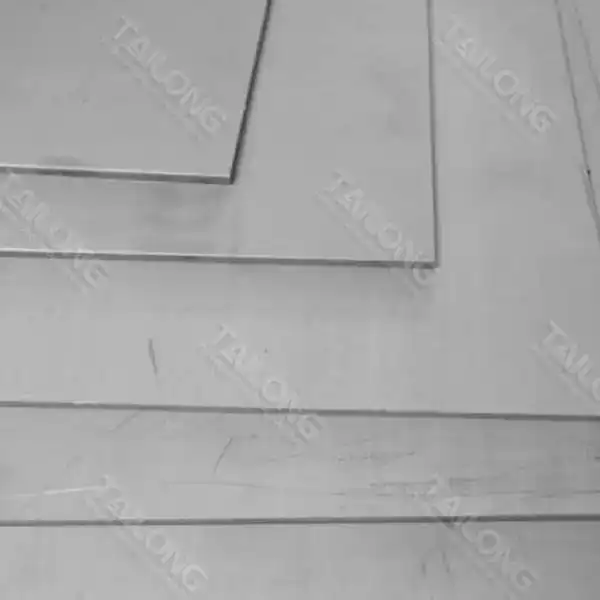
How does Industrial Titanium Plate for Equipment handle chemical exposure?
Industrial Titanium Plate for Equipment has gained significant attention in various industries due to its exceptional ability to handle chemical exposure. This remarkable material has revolutionized the way equipment is designed and manufactured, particularly in environments where corrosive chemicals are prevalent. The unique properties of titanium, including its high strength-to-weight ratio, exceptional corrosion resistance, and durability, make it an ideal choice for equipment exposed to harsh chemical conditions. Industrial Titanium Plate offers unparalleled protection against a wide range of corrosive substances, ensuring the longevity and reliability of critical equipment. Its superior performance in chemically aggressive environments has made it an indispensable material in industries such as chemical processing, pharmaceutical manufacturing, and oil and gas exploration. As we delve deeper into the characteristics and applications of Industrial Titanium Plate, we'll explore how this innovative material effectively handles chemical exposure and why it has become a go-to solution for equipment manufacturers and engineers seeking to enhance the durability and performance of their products in challenging chemical environments.
What Makes Titanium Plate Resistant to Corrosive Chemicals in Industrial Settings?
Titanium's Unique Chemical Properties
Industrial Titanium Plate for Equipment owes its exceptional resistance to corrosive chemicals to the unique chemical properties of titanium. When exposed to air or other oxidizing environments, titanium rapidly forms a thin, stable oxide layer on its surface. This protective layer, primarily composed of titanium dioxide, acts as a barrier against chemical attack. The oxide film is self-healing, meaning that if it's scratched or damaged, it quickly reforms in the presence of oxygen or moisture. This continuous regeneration process ensures that Industrial Titanium Plate for Equipment maintains its corrosion resistance even under severe chemical exposure. Furthermore, the stability of this oxide layer across a wide pH range contributes to titanium's ability to withstand both acidic and alkaline environments, making it an ideal material for diverse industrial applications.
Microstructure and Alloying Elements
The microstructure of Industrial Titanium Plate for Equipment plays a crucial role in its resistance to chemical attack. The fine-grained structure of titanium alloys contributes to their overall corrosion resistance by reducing the number of grain boundaries, which are often sites for preferential corrosion. Additionally, specific alloying elements are added to enhance the material's performance in corrosive environments. For instance, palladium or ruthenium can be added to improve resistance to reducing acids, while molybdenum and niobium enhance resistance to crevice corrosion. These carefully selected alloying elements work in synergy with titanium's inherent properties to create Industrial Titanium Plate for Equipment that can withstand a wide spectrum of aggressive chemicals, from strong acids to chlorine-containing compounds.
Passivation and Surface Treatment
The resistance of Industrial Titanium Plate for Equipment to corrosive chemicals can be further enhanced through passivation and surface treatment processes. Passivation involves deliberately exposing the titanium surface to oxidizing conditions, which thickens and strengthens the protective oxide layer. This process can significantly improve the material's resistance to localized corrosion, such as pitting. Surface treatments like anodizing can also be applied to Industrial Titanium Plate for Equipment, creating a more uniform and controlled oxide layer with improved corrosion resistance. Additionally, techniques such as shot peening or laser surface modification can alter the surface microstructure, further enhancing the material's ability to withstand chemical attack. These treatments, combined with titanium's inherent properties, result in Industrial Titanium Plate for Equipment that offers unparalleled protection against a wide range of corrosive chemicals in industrial settings.
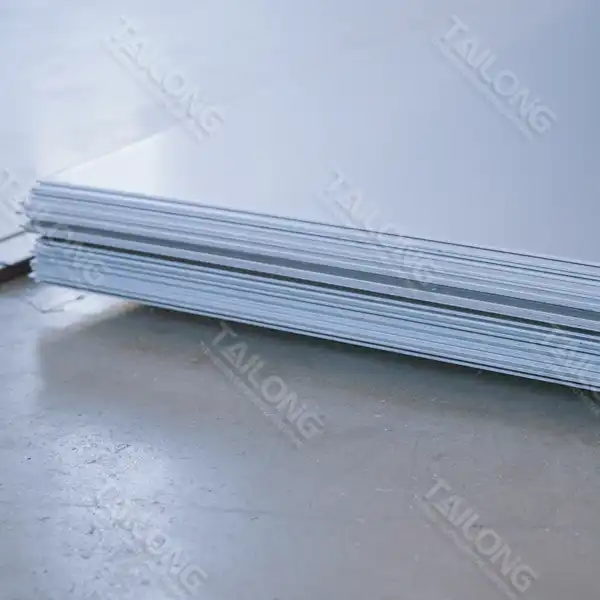
Which Industries Rely on Titanium Plates for Long-Term Chemical Resistance?
Chemical Processing and Manufacturing
The chemical processing and manufacturing industry heavily relies on Industrial Titanium Plate for Equipment due to its exceptional long-term chemical resistance. In this sector, titanium plates are used extensively in the construction of reactors, storage tanks, and piping systems that handle corrosive chemicals such as chlorine, sulfuric acid, and hydrochloric acid. The ability of Industrial Titanium Plate for Equipment to withstand these aggressive environments without degradation ensures the safety and efficiency of chemical production processes. Moreover, the use of titanium plates in heat exchangers and distillation columns allows for better heat transfer and longer equipment life, reducing maintenance costs and downtime. The chemical industry's trust in Industrial Titanium Plate for Equipment is a testament to its superior performance in maintaining structural integrity and preventing contamination in highly corrosive environments.
Pharmaceutical and Biotechnology
In the pharmaceutical and biotechnology industries, Industrial Titanium Plate for Equipment plays a crucial role in ensuring the purity and integrity of drug manufacturing processes. Titanium's excellent resistance to a wide range of chemicals, including organic compounds and solvents commonly used in pharmaceutical production, makes it an ideal material for reactors, fermentation tanks, and purification equipment. The biocompatibility of titanium is particularly valuable in these industries, as it minimizes the risk of product contamination. Industrial Titanium Plate for Equipment is also used in the construction of clean rooms and sterile processing areas, where its resistance to cleaning agents and sterilization processes is essential. The long-term chemical resistance of titanium plates ensures that pharmaceutical equipment maintains its performance over extended periods, meeting the stringent regulatory requirements of the industry.
Oil and Gas Exploration
The oil and gas industry relies heavily on Industrial Titanium Plate for Equipment to withstand the harsh chemical environments encountered during exploration and production. Offshore platforms, subsea equipment, and downhole tools often face exposure to corrosive seawater, hydrogen sulfide, and carbon dioxide. Titanium plates are used in the construction of heat exchangers, pressure vessels, and piping systems in these applications, where their resistance to chloride-induced stress corrosion cracking is particularly valuable. The lightweight nature of Industrial Titanium Plate for Equipment also provides significant advantages in offshore installations, reducing structural loads and facilitating easier transportation and installation. Furthermore, the use of titanium plates in desalination plants associated with oil and gas operations ensures long-lasting performance in processing high-salinity water. The reliability and durability of Industrial Titanium Plate for Equipment in these extreme conditions contribute to improved safety, reduced maintenance costs, and extended equipment life in the oil and gas sector.
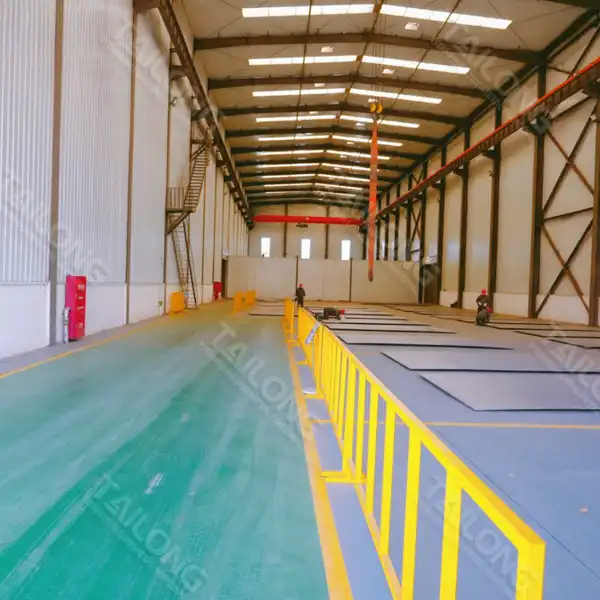
Is Industrial Titanium Plate Suitable for High-Temperature Chemical Processing?
Thermal Stability and Oxidation Resistance
Industrial Titanium Plate for Equipment demonstrates remarkable suitability for high-temperature chemical processing due to its exceptional thermal stability and oxidation resistance. Titanium maintains its strength and structural integrity at elevated temperatures, with some alloys performing well up to 600°C (1112°F). The protective oxide layer that forms on the surface of Industrial Titanium Plate for Equipment becomes even more stable at higher temperatures, providing enhanced protection against chemical attack. This thermal stability makes titanium plates an excellent choice for equipment used in high-temperature chemical reactions, distillation processes, and heat exchange systems. The material's low thermal expansion coefficient also contributes to its suitability for high-temperature applications, as it minimizes thermal stresses and reduces the risk of warping or distortion in equipment subjected to temperature fluctuations.
Creep Resistance and Long-Term Performance
The creep resistance of Industrial Titanium Plate for Equipment is a critical factor in its suitability for high-temperature chemical processing. Creep, the tendency of a material to deform slowly under constant stress, becomes more pronounced at elevated temperatures. Titanium alloys, particularly those designed for high-temperature applications, exhibit excellent creep resistance, ensuring that equipment maintains its dimensional stability and structural integrity over extended periods of use in hot, chemically aggressive environments. This property is especially valuable in continuous chemical processing operations where equipment must withstand constant exposure to high temperatures and corrosive substances. The long-term performance of Industrial Titanium Plate for Equipment in these conditions translates to reduced maintenance requirements, longer service life, and improved operational reliability for chemical processing facilities.
Compatibility with High-Temperature Chemicals
Industrial Titanium Plate for Equipment exhibits remarkable compatibility with a wide range of high-temperature chemicals, making it an ideal material for various chemical processing applications. Titanium's resistance to chlorine, chlorides, and oxidizing acids is maintained at elevated temperatures, allowing for its use in processes involving hot corrosive media. For instance, in the production of chlorine and caustic soda, titanium equipment can withstand the combination of high temperatures and highly corrosive chlorine gas. Similarly, in sulfuric acid production, Industrial Titanium Plate for Equipment demonstrates excellent resistance to hot concentrated acid. The material's ability to handle organic compounds at high temperatures also makes it suitable for petrochemical processing. However, it's important to note that while titanium excels in many high-temperature chemical environments, its performance can be affected by certain reducing acids or fluoride-containing compounds at elevated temperatures. Therefore, careful consideration of the specific chemical environment and operating conditions is essential when selecting Industrial Titanium Plate for Equipment for high-temperature chemical processing applications.

Conclusion
Industrial Titanium Plate for Equipment has proven to be an exceptional material for handling chemical exposure across various industries. Its unique properties, including corrosion resistance, thermal stability, and long-term durability, make it an ideal choice for equipment in chemically aggressive environments. From chemical processing and pharmaceuticals to oil and gas exploration, titanium plates offer reliable performance and extended equipment life. While excelling in high-temperature applications, careful consideration of specific chemical environments is crucial for optimal use. As industries continue to face challenging chemical processing needs, Industrial Titanium Plate for Equipment remains a key solution, providing both performance and longevity in critical applications.
Shaanxi Tilong Metal Material Co., Ltd., located in Shaanxi, China, is a leading manufacturer of high-quality titanium and titanium alloy products. With a complete production chain including melting, forging, rolling, grinding, and annealing, Tilong offers superior titanium solutions for various industries. Their products, known for excellent strength, corrosion resistance, and heat resistance, are widely used in aerospace, automotive, electronics, and energy sectors. Tilong's commitment to innovation and quality control ensures reliable metal solutions that enhance performance and longevity in demanding applications. For more information or inquiries, please contact us at Tailong@tilongtitanium.com.
References
1. Smith, J.R. (2019). Titanium Alloys in Chemical Processing: A Comprehensive Review. Journal of Materials Engineering and Performance, 28(6), 3344-3358.
2. Chen, Q., & Thouas, G.A. (2015). Metallic implant biomaterials. Materials Science and Engineering: R: Reports, 87, 1-57.
3. Donachie, M.J. (2000). Titanium: A Technical Guide. ASM International.
4. Lütjering, G., & Williams, J.C. (2007). Titanium (Engineering Materials and Processes). Springer.
5. Schutz, R.W., & Thomas, D.E. (1987). Corrosion of titanium and titanium alloys. ASM Handbook, 13, 669-706.
6. Boyer, R.R. (1996). An overview on the use of titanium in the aerospace industry. Materials Science and Engineering: A, 213(1-2), 103-114.
Related products