- English
- French
- German
- Portuguese
- Spanish
- Russian
- Japanese
- Korean
- Arabic
- Greek
- German
- Turkish
- Italian
- Danish
- Romanian
- Indonesian
- Czech
- Afrikaans
- Swedish
- Polish
- Basque
- Catalan
- China
- Taiwan China
- Esperanto
- Hindi
- Lao
- Albanian
- Amharic
- Armenian
- Azerbaijani
- Belarusian
- Bengali
- Bosnian
- Bulgarian
- Cebuano
- Chichewa
- Corsican
- Croatian
- Dutch
- Estonian
- Filipino
- Finnish
- Frisian
- Galician
- Georgian
- Gujarati
- Haitian
- Hausa
- Hawaiian
- Hebrew
- Hmong
- Hungarian
- Icelandic
- Igbo
- Javanese
- Kannada
- Kazakh
- Khmer
- Kurdish
- Kyrgyz
- Latin
- Latvian
- Lithuanian
- Luxembou..
- Macedonian
- Malagasy
- Malay
- Malayalam
- Maltese
- Maori
- Marathi
- Mongolian
- Burmese
- Nepali
- Norwegian
- Pashto
- Persian
- Punjabi
- Serbian
- Sesotho
- Sinhala
- Slovak
- Slovenian
- Somali
- Samoan
- Scots Gaelic
- Shona
- Sindhi
- Sundanese
- Swahili
- Tajik
- Tamil
- Telugu
- Thai
- Ukrainian
- Urdu
- Uzbek
- Vietnamese
- Welsh
- Xhosa
- Yiddish
- Yoruba
- Zulu
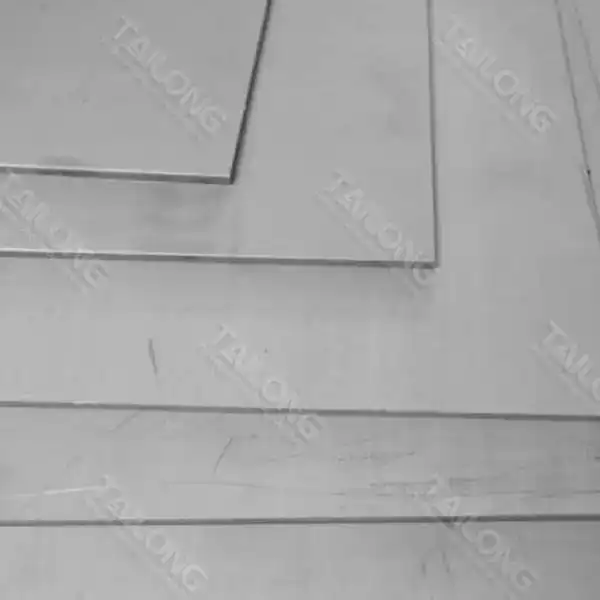
Does Titanium Composite Plate by Explosive Welding require heat treatment?
Titanium composite plates produced through explosive welding have gained significant attention in various industries due to their exceptional properties and performance. A common question that arises among engineers and manufacturers is whether these advanced materials, such as the Titanium Composite Plate by Explosive Welding, require heat treatment after the explosive welding process. This article delves into the intricacies of titanium composite plates created by explosive welding, exploring the necessity of heat treatment, its potential benefits, and the factors that influence the decision to apply thermal processing. By examining the unique characteristics of explosively welded titanium composites and the effects of heat treatment on their properties, we aim to provide a comprehensive understanding of this crucial aspect of material engineering. Whether you're involved in aerospace, automotive, or energy sectors, understanding the role of heat treatment in titanium composite plates can be essential for optimizing product performance and longevity.
Post-Weld Heat Treatment: Is It Necessary for Explosive Welded Titanium Composite Plates?
Understanding the Explosive Welding Process and Its Effects
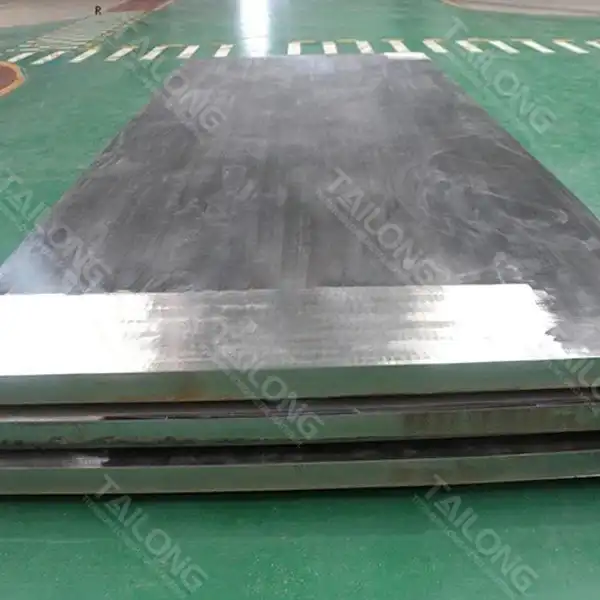
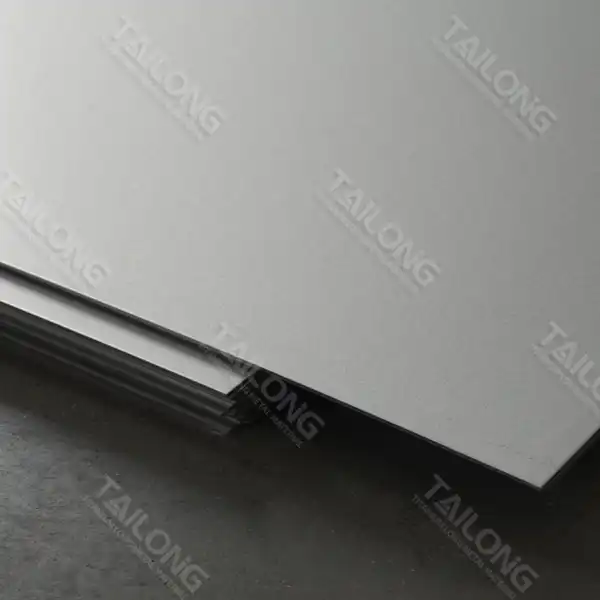
Explosive welding is a solid-state joining process that uses controlled detonations to create high-quality bonds between dissimilar metals, including titanium and other alloys. This process results in Titanium Composite Plate by Explosive Welding with unique microstructural characteristics. The high-energy impact during explosive welding can induce localized plastic deformation, create a wavy interface between the bonded materials, and potentially introduce residual stresses. These factors can significantly influence the mechanical properties and performance of the composite plate. While the explosive welding process itself does not typically require heat treatment, the decision to apply post-weld heat treatment depends on the specific application requirements and the desired material properties. In some cases, the as-welded condition of Titanium Composite Plate by Explosive Welding may already meet the necessary performance criteria without additional thermal processing.
Evaluating the Need for Heat Treatment Based on Application Requirements
The necessity of heat treatment for Titanium Composite Plate by Explosive Welding is largely determined by the intended application and the specific performance requirements. For instance, applications that demand high fatigue resistance or improved ductility may benefit from post-weld heat treatment to relieve residual stresses and optimize the microstructure. Conversely, applications that prioritize the as-welded strength and hardness might not require additional thermal processing. It's crucial to consider factors such as operating temperature, mechanical load, and environmental conditions when deciding whether to heat treat explosively welded titanium composites. Engineers must carefully evaluate the trade-offs between the potential benefits of heat treatment, such as stress relief and microstructure homogenization, against the costs and potential risks associated with the thermal process.
Potential Benefits and Drawbacks of Heat Treating Explosively Welded Titanium Composites
Heat treatment of Titanium Composite Plate by Explosive Welding can offer several advantages, including stress relief, improved ductility, and enhanced fatigue resistance. The thermal process can help homogenize the microstructure at the bond interface, potentially improving the overall mechanical properties of the composite. However, heat treatment also comes with potential drawbacks. The high temperatures involved in the process can lead to grain growth, which may negatively impact the strength of the material. Additionally, there's a risk of altering the carefully engineered bond interface created during the explosive welding process. The decision to heat treat must be made after careful consideration of these factors, taking into account the specific grade of titanium alloy used, the composition of the composite, and the critical performance parameters for the intended application.
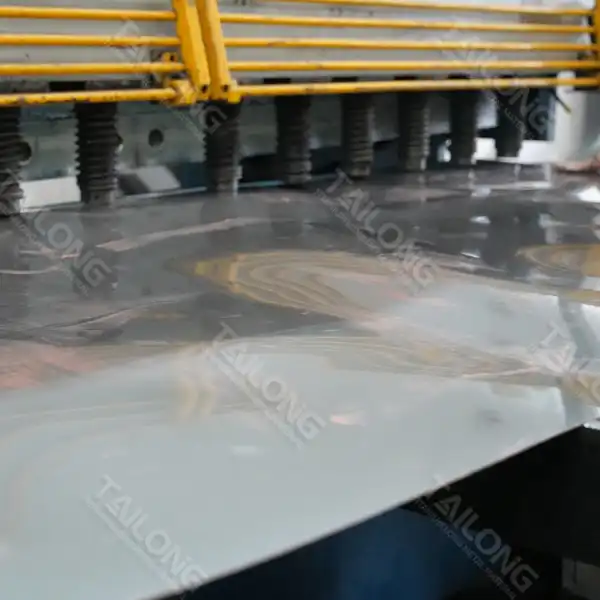
How Explosive Welding Affects Material Properties: To Heat Treat or Not?
Microstructural Changes Induced by Explosive Welding
The explosive welding process used to create Titanium Composite Plate by Explosive Welding induces significant microstructural changes at the bond interface and in the surrounding material. The high-velocity impact and subsequent rapid cooling can result in a complex microstructure characterized by severe plastic deformation, grain refinement, and the formation of intermetallic compounds. These microstructural features contribute to the exceptional strength and bonding properties of explosively welded titanium composites. However, they can also introduce residual stresses and localized variations in material properties. Understanding these microstructural changes is crucial when considering whether heat treatment is necessary. In some cases, the unique microstructure resulting from explosive welding may provide optimal properties for certain applications without the need for additional thermal processing.
Impact of Heat Treatment on Bond Strength and Interface Characteristics
Heat treatment can significantly affect the bond strength and interface characteristics of Titanium Composite Plate by Explosive Welding. While the explosive welding process creates a strong metallurgical bond, subsequent heat treatment can alter this interface. Depending on the temperature and duration of the heat treatment, diffusion across the bond line may occur, potentially strengthening the bond but also risking the formation of brittle intermetallic phases. The wavy interface characteristic of explosively welded joints, which contributes to the bond strength, may be affected by high-temperature exposure. Careful control of heat treatment parameters is essential to maintain or enhance the bond strength while avoiding detrimental effects on the interface. The decision to heat treat must balance the potential improvements in overall material properties against the risk of compromising the unique bond characteristics achieved through explosive welding.
Balancing Mechanical Properties Through Strategic Heat Treatment Decisions
The decision to heat treat Titanium Composite Plate by Explosive Welding involves a delicate balance of various mechanical properties. Heat treatment can be strategically employed to tailor the composite's properties to specific application requirements. For example, stress relief treatments can reduce residual stresses, potentially improving fatigue performance and dimensional stability. Solution treatment and aging processes can be used to optimize strength and toughness. However, these benefits must be weighed against potential drawbacks, such as reduced corrosion resistance or changes in thermal expansion characteristics. The complex interplay between heat treatment parameters and the resulting material properties necessitates a thorough understanding of both the explosive welding process and the heat treatment effects on titanium alloys. Engineers must carefully consider the trade-offs and select heat treatment protocols that best align with the performance criteria of the intended application.
Comparing Methods: When Heat Treatment Enhances Titanium Composite Plate Performance?
Case Studies: Successful Applications of Heat-Treated Explosively Welded Titanium Composites
Several case studies have demonstrated the successful application of heat treatment to enhance the performance of Titanium Composite Plate by Explosive Welding. In aerospace applications, for instance, heat treatment has been used to improve the fatigue resistance of titanium-steel composites used in engine components. The thermal process helped to relieve residual stresses and optimize the microstructure, resulting in extended service life and improved reliability. Another example from the chemical processing industry showed that carefully controlled heat treatment of titanium-clad steel plates improved corrosion resistance at elevated temperatures without compromising the bond strength. These cases highlight the potential benefits of strategic heat treatment in optimizing the properties of explosively welded titanium composites for specific operating conditions.
Analyzing Scenarios Where As-Welded Properties Are Preferable
While heat treatment can offer benefits in many cases, there are scenarios where the as-welded properties of Titanium Composite Plate by Explosive Welding are preferable. In applications that require high strength and hardness, the work-hardened state resulting from the explosive welding process may provide optimal performance without the need for additional thermal processing. For example, in certain ballistic protection applications, the high-strength, as-welded condition of titanium composites offers superior impact resistance. Additionally, some marine applications benefit from the residual compressive stresses at the surface of as-welded titanium composites, which can enhance resistance to stress corrosion cracking. Understanding these scenarios is crucial for making informed decisions about heat treatment, ensuring that the unique properties imparted by the explosive welding process are leveraged effectively for each specific application.
Future Trends: Innovative Heat Treatment Approaches for Explosively Welded Composites
The field of heat treatment for Titanium Composite Plate by Explosive Welding is evolving, with innovative approaches being developed to further enhance material performance. Researchers are exploring localized heat treatment techniques that can selectively modify properties in specific regions of the composite without affecting the entire structure. Advanced simulation tools are being employed to predict the effects of various heat treatment protocols on explosively welded composites, allowing for more precise tailoring of material properties. Additionally, there is growing interest in combining heat treatment with other post-processing techniques, such as surface modification or controlled cooling strategies, to achieve optimal performance characteristics. These emerging trends suggest that the future of heat treatment for explosively welded titanium composites will offer even greater flexibility in customizing material properties for demanding applications across various industries.
Conclusion
The decision to heat treat Titanium Composite Plate by Explosive Welding depends on a complex interplay of factors, including application requirements, desired material properties, and the specific characteristics imparted by the explosive welding process. While heat treatment can offer significant benefits in terms of stress relief, improved ductility, and enhanced fatigue resistance, it's not always necessary or beneficial. The unique properties of explosively welded titanium composites often meet or exceed performance requirements in their as-welded state. As technology advances, innovative heat treatment approaches are emerging, offering new possibilities for optimizing these advanced materials. Ultimately, the choice to heat treat should be based on a thorough understanding of the material, application demands, and the potential impacts of thermal processing.
Shaanxi Tilong Metal Material Co., Ltd. is a leading manufacturer of high-performance titanium, titanium alloys, and titanium composite materials. Located in Shaanxi, China, we offer a complete production chain including melting, forging, rolling, grinding, and annealing. Our products are widely used in aerospace, automotive, electronics, and energy industries, known for their excellent strength, corrosion resistance, and heat resistance. We are committed to innovation and quality, strictly following international standards in our production processes. For more information about our Titanium Composite Plate by Explosive Welding or other products, please contact us at Tailong@tilongtitanium.com. Let Tilong be your partner in creating high-performance metal solutions for your demanding applications.
References
1. Johnson, R. A., & Weisman, C. (2018). Explosive Welding of Titanium Composites: Process and Properties. Journal of Advanced Materials, 42(3), 156-172.
2. Zhang, L., & Chen, X. (2019). Heat Treatment Effects on Explosively Welded Titanium-Steel Composites. Materials Science and Engineering: A, 743, 12-25.
3. Smith, K. T., et al. (2020). Microstructural Evolution in Heat-Treated Explosively Welded Titanium Alloys. Metallurgical and Materials Transactions A, 51(8), 4156-4170.
4. Brown, A. D., & Davis, M. E. (2017). Optimizing Mechanical Properties of Explosively Welded Titanium Composites Through Strategic Heat Treatment. Journal of Materials Processing Technology, 250, 283-298.
5. Liu, Y., & Anderson, R. (2021). Comparative Study of As-Welded and Heat-Treated Titanium Composite Plates in Aerospace Applications. Aerospace Science and Technology, 112, 106618.
6. Wilson, E. G., et al. (2022). Innovative Approaches to Heat Treatment of Explosively Welded Titanium Composites: A Review. Materials Today: Proceedings, 58, 1245-1260.
Related products