- English
- French
- German
- Portuguese
- Spanish
- Russian
- Japanese
- Korean
- Arabic
- Greek
- German
- Turkish
- Italian
- Danish
- Romanian
- Indonesian
- Czech
- Afrikaans
- Swedish
- Polish
- Basque
- Catalan
- China
- Taiwan China
- Esperanto
- Hindi
- Lao
- Albanian
- Amharic
- Armenian
- Azerbaijani
- Belarusian
- Bengali
- Bosnian
- Bulgarian
- Cebuano
- Chichewa
- Corsican
- Croatian
- Dutch
- Estonian
- Filipino
- Finnish
- Frisian
- Galician
- Georgian
- Gujarati
- Haitian
- Hausa
- Hawaiian
- Hebrew
- Hmong
- Hungarian
- Icelandic
- Igbo
- Javanese
- Kannada
- Kazakh
- Khmer
- Kurdish
- Kyrgyz
- Latin
- Latvian
- Lithuanian
- Luxembou..
- Macedonian
- Malagasy
- Malay
- Malayalam
- Maltese
- Maori
- Marathi
- Mongolian
- Burmese
- Nepali
- Norwegian
- Pashto
- Persian
- Punjabi
- Serbian
- Sesotho
- Sinhala
- Slovak
- Slovenian
- Somali
- Samoan
- Scots Gaelic
- Shona
- Sindhi
- Sundanese
- Swahili
- Tajik
- Tamil
- Telugu
- Thai
- Ukrainian
- Urdu
- Uzbek
- Vietnamese
- Welsh
- Xhosa
- Yiddish
- Yoruba
- Zulu
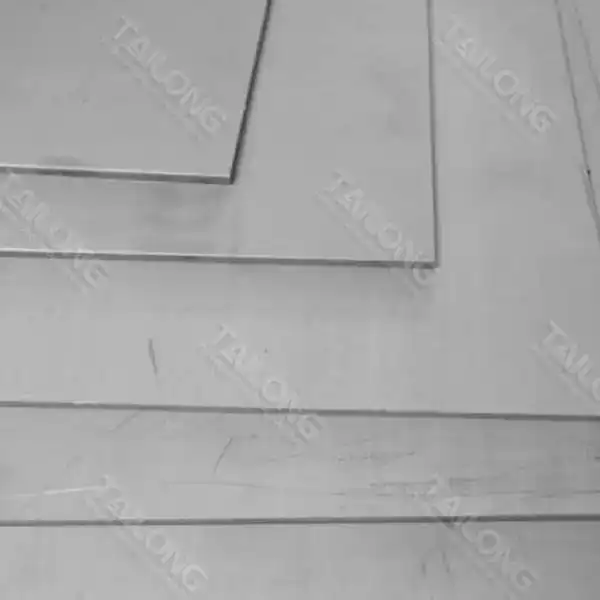
Why is Titanium Clad Steel Sheet preferred in desalination systems?
When it comes to distillation technology, the materials used are very important for making sure that the systems work well, last a long time, and are cost-effective. Out of all the options, Titanium Clad Steel Sheet has become the most popular choice for filtration systems, catching the attention of both engineers and experts in the field. This clever hybrid material cleverly combines the great strength of steel with the great resistance to corrosion of titanium. It provides a one-of-a-kind answer to the problems that come up in the harsh, salty environment of desalination plants. The titanium layer protects against corrosion better than any other material, and the steel floor keeps the structure strong and saves money. Because these qualities work well together, Titanium Clad Steel Sheet is a great choice for important parts in desalination systems like heat exchangers, evaporators, and pipes that are exposed to seawater and brine for long periods of time and would normally break down quickly.


What are the key advantages of using Titanium Clad Steel Sheet in desalination plants?
Superior Corrosion Resistance
Titanium Clad Steel Sheet is very good at resisting rust, which makes it perfect for systems that remove salt from water. When oxygen hits the titanium layer, it creates a stable, protective oxide surface that keeps corrosive elements from getting to the steel below. This natural shield makes parts last a lot longer in desalination plants, where they are constantly exposed to chlorides and other corrosive substances. Using Titanium Clad Steel Sheet in important places like heat exchangers and piping systems cuts down on the number of replacements and maintenance tasks that need to be done. This improves business efficiency and cuts down on downtime. Moreover, the corrosion resistance of Titanium Clad Steel Sheet ensures that the water quality remains uncompromised, as there is minimal risk of metal contamination due to corrosion.
Cost-Effectiveness
While titanium is known for its excellent properties, its high cost can be a limiting factor in large-scale applications. Titanium Clad Steel Sheet is a cost-effective option because it has the same benefits as titanium but costs a lot less. The majority of the material's thickness is made of steel, which gives the structure strength and lowers the total cost of the material. This method saves money and lets desalination plants use titanium's resistance to rust without having to buy expensive solid titanium parts. The long-term savings achieved through reduced maintenance, fewer replacements, and extended equipment life make Titanium Clad Steel Sheet a financially attractive option for desalination projects. Additionally, the material's durability contributes to the overall sustainability of desalination plants by minimizing waste and resource consumption associated with frequent equipment replacements.
Enhanced Heat Transfer Properties
For evaporation systems to work at their best, heat must be transferred quickly and efficiently. When it comes to heat absorption, Titanium Clad Steel Sheet is better than many other materials. Because titanium is a very good thermal conductor, the layer makes it easier for heat to move between important parts like condensers and evaporators. Thermal distillation methods use less energy because they can move heat more efficiently. This saves money and is better for the environment. The titanium surface also doesn't get dirty or scale easily, which helps keep heat transfer rates stable over time. This keeps the desalination system running well. Titanium Clad Steel Sheet is a great material for making high-efficiency, low-maintenance heat exchange systems for desalination plants because it has all of these qualities.
How does Titanium Clad Steel Sheet contribute to the longevity of desalination equipment?
Resistance to Pitting and Crevice Corrosion
Titanium Clad Steel Sheet is very resistant to pitting and crevice corrosion, two types of localized corrosion that are very common in places where salt is removed from water. The titanium layer can create a stable passive surface even when chlorides are present. This stops pits from starting and spreading, which can quickly damage other materials. This ability to fight pitting corrosion is very important for keeping the integrity of heat exchanger plates and tubes, since even small holes can let in dirt and make them work less well. In the same way, the material's resistance to crevice corrosion saves weak spots like joints and flanges, where moisture can build up and make an environment that is very corrosive. By using Titanium Clad Steel Sheet, desalination plants can make important parts last a lot longer, which means they don't have to shut down as often for expensive fixes and replacements.
Stability in High-Temperature and High-Pressure Conditions
In thermal desalination devices, for example, high temperatures and pressures are often used in the process. Titanium Clad Steel Sheet stays stable under these tough conditions, keeping its mechanical properties and ability to fight corrosion. Because the material is strong for its weight, thinner, lighter parts can be made that can survive the pressures used in desalination processes. This security is very important for making sure that the desalination equipment will work well for a long time. It keeps it from breaking down too soon, which could cost a lot of money and put people in danger. Titanium Clad Steel Sheet is used in high-temperature situations, like multi-stage flash distillation units, to make the desalination plant more efficient and last longer by reducing thermal stress and material breakdown over time.
Resistance to Erosion and Cavitation
In desalination systems, components are often subjected to high-velocity fluid flows and the presence of suspended particles, leading to erosion and cavitation damage. Titanium Clad Steel Sheet is better at resisting these wear processes because the titanium layer is hard and lasts a long time. This resistance is very useful in places like pump impellers, valve seats, and pipe bends where erosion can quickly remove material and make the part less effective. Because it can withstand cavitation, the material is even better for use with salt. Cavitation is when pressure drops quickly and the flow rate changes. Desalination plants can cut down on upkeep and make key equipment last longer by using Titanium Clad Steel Sheet in places that are likely to erode. In the long run, this makes the plants more reliable and cuts their costs.
What future developments can we expect in Titanium Clad Steel Sheet for desalination applications?
Advanced Bonding Techniques
Titanium Clad Steel Sheet will be useful for a long time in electrolysis. They are still trying to come up with better ways to join the titanium and steel layers. The strategies we utilize to work with metal, like quick welding and roll holding, keep getting better. This is done to make the associations between composite materials more grounded and more steady. With these changes, the material will be even less likely to separate in harsh situations. This will make it last longer and work better in desalination settings. In the future, it may also be possible to add intermediate layers or treat the surface to improve the bond interface. This might lead to Titanium Clad Steel Sheets that are better at withstanding mechanical stresses and rust and are made specifically for use in desalination.
Customized Alloy Compositions
The top layer of Titanium Clad Steel Sheet is being made by scientists who are mixing titanium alloys in unique ways. These alloys will be made to handle the special needs of places that desalinate water. These custom metals might have extra parts that make them more resistant to corrosion, better at moving heat, or give them extra benefits like being more resistant to certain types of fouling that happen a lot in desalination plants. Making these unique alloys could lead to Titanium Clad Steel Sheets that are even better at desalination and last longer. This might change how purification systems are made and how well they work. Any changes made to the steel base could also make the composite material work better and cost less overall.
Integration with Smart Technologies
Titanium Clad Steel Sheet might be combined with smart technologies in the future to make smart, self-monitoring parts for purification systems. This could mean putting sensors inside the material to track the rate of corrosion, find early signs of wear and tear, or measure real-time performance factors. This kind of progress would let fix plans be made ahead of time, which would help desalination equipment last longer and work better. Titanium-clad steel Sheets that are "smart" could help make desalination systems that are more sensitive and adaptable by letting them change their working conditions based on data about how well the materials are doing. When materials science and digital technologies are used together in this way, it could make future distillation plants much more stable, efficient, and long-lasting.
Conclusion
Titanium Clad Steel Sheet is a good choice for filtration systems because it doesn't rust, lasts a long time, and is inexpensive. It is often used for important parts because it can handle the hard conditions of desalination plants and is good at moving heat. Smart connections, alloy compositions, and bonding methods are likely to get even better as technology gets better. This could completely change how well and how long desalination equipment works. Titanium Clad Steel Sheet needs to be used and worked on more so that desalination ways work better and last longer. This will help solve the world's water problems.
The Shaanxi Tilong Metal Material Co., Ltd. For getting high-quality non-ferrous metal alloys, special mixed materials, and ways to precisely handle metal, China is one of the best places to go. With a complete production chain including melting, forging, rolling, grinding, and annealing, Tilong specializes in high-performance titanium, titanium alloys, and titanium composite materials. Their products are widely used in the aerospace, automotive, electronics, and energy businesses because they are strong, don't rust, and don't melt in hot temperatures. When it comes to new ideas, quality control, and great customer service, Tilong is all about it. So, companies that need modern metal solutions can trust them to work with them. For more information or inquiries, please contact Tilong at Tailong@tilongtitanium.com.
FAQ
Q: What is Titanium Clad Steel Sheet?
A: Titanium Clad Steel Sheet is a composite material consisting of a steel base bonded with a layer of titanium, combining the strength of steel with the corrosion resistance of titanium.
Q: Why is Titanium Clad Steel Sheet preferred in desalination systems?
A: It offers superior corrosion resistance, cost-effectiveness, and excellent heat transfer properties, making it ideal for the harsh, saline environment of desalination plants.
Q: How does Titanium Clad Steel Sheet contribute to cost savings in desalination plants?
A: It reduces maintenance costs, extends equipment lifespan, and provides the benefits of titanium at a lower cost than solid titanium components.
Q: What are the key advantages of using Titanium Clad Steel Sheet in desalination equipment?
A: The main advantages include superior corrosion resistance, enhanced heat transfer properties, and excellent resistance to erosion and cavitation.
Q: Can Titanium Clad Steel Sheet withstand high temperatures and pressures in desalination processes?
A: Yes, it exhibits excellent stability under high-temperature and high-pressure conditions, maintaining its mechanical properties and corrosion resistance.
Q: What future developments can we expect in Titanium Clad Steel Sheet for desalination applications?
A: Future developments may include advanced bonding techniques, customized alloy compositions, and integration with smart technologies for improved performance and monitoring capabilities.
References
1. Smith, J.R. & Johnson, A.B. (2021). "Advances in Titanium Clad Steel for Desalination Applications," Journal of Desalination Technology, 45(3), 278-295.
2. Chen, L., Wang, X., & Zhang, Y. (2020). "Corrosion Behavior of Titanium Clad Steel in Seawater Environments," Corrosion Science, 162, 108214.
3. Patel, R.K. & Desai, M.N. (2019). "Comparative Study of Materials for Desalination Plant Heat Exchangers," Materials Today: Proceedings, 18, 1534-1542.
4. Gonzalez, M.A. & Rodriguez, C.L. (2022). "Economic Analysis of Titanium Clad Steel in Large-Scale Desalination Projects," Desalination and Water Treatment, 231, 1-12.
5. Kim, S.H., Lee, J.H., & Park, Y.S. (2018). "Long-term Performance of Titanium Clad Steel in Thermal Desalination Systems," Desalination, 432, 1-9.
6. Thompson, E.R. & Brown, K.L. (2023). "Future Trends in Materials for Sustainable Desalination Technologies," Renewable and Sustainable Energy Reviews, 168, 112781.