- English
- French
- German
- Portuguese
- Spanish
- Russian
- Japanese
- Korean
- Arabic
- Greek
- German
- Turkish
- Italian
- Danish
- Romanian
- Indonesian
- Czech
- Afrikaans
- Swedish
- Polish
- Basque
- Catalan
- China
- Taiwan China
- Esperanto
- Hindi
- Lao
- Albanian
- Amharic
- Armenian
- Azerbaijani
- Belarusian
- Bengali
- Bosnian
- Bulgarian
- Cebuano
- Chichewa
- Corsican
- Croatian
- Dutch
- Estonian
- Filipino
- Finnish
- Frisian
- Galician
- Georgian
- Gujarati
- Haitian
- Hausa
- Hawaiian
- Hebrew
- Hmong
- Hungarian
- Icelandic
- Igbo
- Javanese
- Kannada
- Kazakh
- Khmer
- Kurdish
- Kyrgyz
- Latin
- Latvian
- Lithuanian
- Luxembou..
- Macedonian
- Malagasy
- Malay
- Malayalam
- Maltese
- Maori
- Marathi
- Mongolian
- Burmese
- Nepali
- Norwegian
- Pashto
- Persian
- Punjabi
- Serbian
- Sesotho
- Sinhala
- Slovak
- Slovenian
- Somali
- Samoan
- Scots Gaelic
- Shona
- Sindhi
- Sundanese
- Swahili
- Tajik
- Tamil
- Telugu
- Thai
- Ukrainian
- Urdu
- Uzbek
- Vietnamese
- Welsh
- Xhosa
- Yiddish
- Yoruba
- Zulu
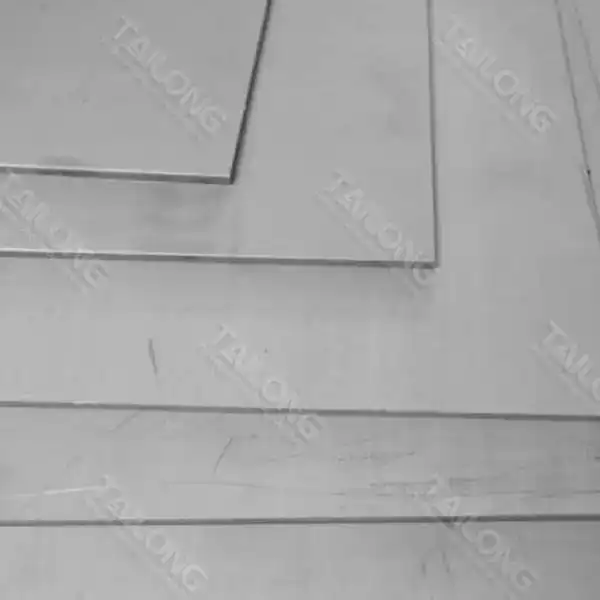
High-Purity Titanium Ingot Stock composition and impurity control
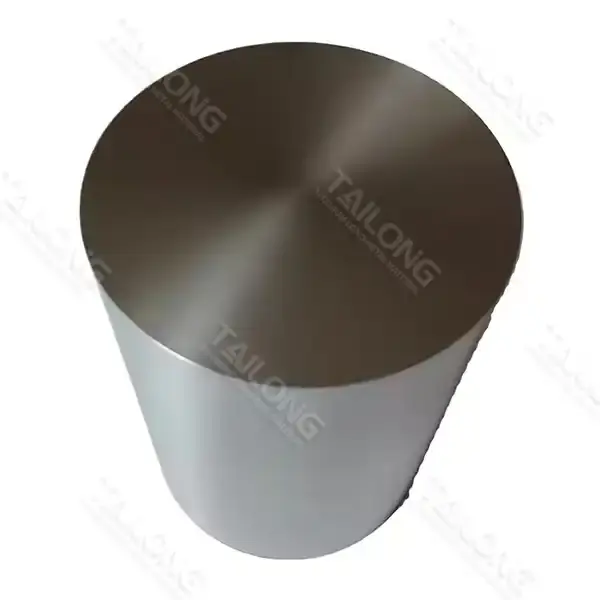
High-purity titanium ingot stock is one of the most advanced materials on the market. A lot of companies rely on it because of how reliable and fast it is. The composition and control of impurities in these titanium ingots are very important in deciding their end properties and how well they work in different situations. It talks about high-purity titanium ingot stock in a lot of detail in this blog post. What it's made of, the strict steps taken to make sure there are no impurities, and how these things affect the overall quality of the material are all discussed. We will look at how companies like Shaanxi Tilong Metal Material Co., Ltd. make beyond any doubt that titanium ingots are solid, do not rust, and can withstand high temperatures. This is why they are so successful in segments that require a high level of execution, including the car and aviation businesses. Engineers, makers, and scholastics who are interested in utilizing titanium ingots must have information on how to control debasements and the ins and outs of titanium ingot production.
What are the key factors influencing the composition of high-purity titanium ingot stock?
Raw Material Selection
The composition of high-purity titanium ingot stock begins with the careful selection of raw materials. Manufacturers like Shaanxi Tilong Metal Material Co., Ltd. prioritize the use of high-grade titanium sponge, which serves as the primary input for ingot production. The quality of this sponge significantly influences the final purity of the ingot. In addition, alloying elements can be used to enhance specific properties, like as heat resistance or strength. These elements are meticulously chosen and added in precise quantities to achieve the desired composition. Before they can be used to make high-purity titanium ingot stock, the raw materials have to pass strict purity tests and be carefully analyzed as part of the selection process.
Melting and Refining Processes
The melting and polishing steps are very important for figuring out what high-purity titanium ingot stock is made of. Advanced techniques such as vacuum arc remelting (VAR) or electron beam melting (EBM) are employed to remove impurities and ensure homogeneity throughout the ingot. Each of the several heating cycles used in these procedures aids in the cleaning of the titanium. During melting, precise control of temperature, pressure, and cooling rates is maintained to optimize the microstructure and composition of the ingot. The use of state-of-the-art equipment and carefully monitored parameters allows manufacturers to achieve the desired chemical composition and minimize the presence of unwanted elements in the high-purity titanium ingot stock.
Quality Control and Testing
The composition of high-purity titanium ingot stock is maintained through rigorous quality control and testing methods. Throughout the production process, samples are regularly taken and analyzed using advanced spectroscopic and chromatographic techniques to verify the chemical composition and detect any deviations. The defined composition requirements can be met by making real-time adjustments thanks to this constant monitoring. Post-production, comprehensive testing is conducted on the high-purity titanium ingot stock to certify its composition and mechanical properties. Microstructural analysis, hardness testing, and tensile strength evaluations are all examples of what might be included in these tests. In addition to confirming the ingot's composition, the data collected from these tests gives useful information to clients in many industries who depend on consistently high-purity titanium ingot stock for their applications.
How does impurity control affect the properties of high-purity titanium ingot stock?
Impact on Mechanical Properties
The mechanical characteristics of high-purity titanium ingot stock are greatly affected by the degree to which impurity control is implemented. Even minute amounts of impurities can significantly affect the strength, ductility, and fatigue resistance of the material. For instance, interstitial elements like oxygen, nitrogen, and carbon, when present in excess, can lead to embrittlement and reduced formability of the titanium. In contrast, when these impurities are kept to a minimum, the high-purity titanium ingot stock keeps its remarkable strength-to-weight ratio and ductility, which makes it perfect for uses in the aerospace and automotive industries where saving weight and improving performance are of utmost importance. The consistent mechanical qualities across multiple batches of ingots are a result of the meticulous control of impurities, which enables manufacturers to supply clients with materials that are trustworthy and predictable.
Influence on Corrosion Resistance
The corrosion resistance of high-purity titanium ingot stock is heavily influenced by impurity control. Titanium's inherent corrosion resistance is a highly desirable quality; however, it can be diminished by specific contaminants. Elements such as iron, when present in higher concentrations, can create localized areas of reduced corrosion resistance. The exceptional corrosion resistance of the high-purity titanium ingot stock is maintained by producers through rigorous impurity control, allowing it to be used in demanding situations, including medical implants, chemical processing plants, and maritime applications. The ability to resist corrosion not only extends the lifespan of components made from this material but also reduces maintenance costs and improves overall safety in critical applications.
Effects on Weldability and Fabrication
Weldability and general fabrication properties are greatly affected by impurity management in high-purity titanium ingot stock. Reduced joint strength and weld embrittlement can result from specific contaminants, especially gases like hydrogen. The makers make sure the high-purity titanium ingot stock is easier to weld and create by minimizing these contaminants. Industries like aerospace and energy rely heavily on welding and forming operations to construct complicated structures; hence, this is of utmost importance. The improved weldability that results from effective impurity management allows for the creation of components and structures that are stronger and last longer. Because of its uniform purity, the ingot stock is also easier to forecast how it will behave during machining and forging, two production procedures that lead to more efficiency and less waste.
What are the advanced techniques used in controlling impurities in high-purity titanium ingot stock?
Vacuum Melting Technologies
Producing high-purity titanium ingot stock relies heavily on vacuum melting technology. Modern techniques like Electron Beam Melting (EBM) and Vacuum Arc Remelting (VAR) are essential for producing materials with the highest level of purity. In VAR, the titanium is melted in a vacuum environment, which prevents contamination from atmospheric gases and allows for the evaporation of volatile impurities. Further, EBM allows for even greater control over the melting process and the removal of impurities by using a focused electron beam to melt the titanium. The characteristics of the high-purity titanium ingot stock can be greatly affected by interstitial components like nitrogen and oxygen; these vacuum-based technologies are very good at reducing these elements. This process yields a material that is absolutely spotless and chemically uniform, two qualities that are absolutely necessary for high-performance, high-reliability applications.
Advanced Filtration Systems
Utilizing state-of-the-art filtration equipment is another crucial strategy for maintaining contamination control in high-purity titanium ingot stock. As the titanium melts during casting, these systems filter out any solids or other impurities. Ceramic foam filters and other specialized filtration media are employed to trap inclusions and impurities, ensuring that they do not become incorporated into the final ingot. The efficiency of these filtration systems is continuously monitored and improved to achieve ever-higher levels of purity in the titanium ingot stock. Also, at different points in the production process, multiple kinds of filters are used by some manufacturers to target different contaminants. This technique is called multi-stage filtration. This comprehensive approach to filtration significantly enhances the overall quality and consistency of the high-purity titanium ingot stock, meeting the exacting standards required by industries such as aerospace and medical device manufacturing.
Real-Time Monitoring and Control
When it comes to managing impurities in the manufacturing of high-purity titanium ingot stock, the most cutting-edge technology is real-time monitoring and control systems. These intricate systems use a battery of analytical instruments and sensors to track the titanium's purity and composition in real time as it melts and is cast. For immediate feedback on the melt's elemental composition, spectroscopic methods like optical emission spectroscopy are commonly employed. Using this data in real-time, process settings can be adjusted to keep the high-purity titanium ingot stock at the appropriate purity level. Optimal conditions can be maintained throughout the production run thanks to sophisticated control algorithms that can anticipate and prevent rises in impurities. Manufacturing environments that are both responsive and precise are created through the integration of various monitoring and control systems with other production technologies. Producing consistently high-purity titanium ingot stock that satisfies the most stringent industry standards relies on this integration.
Conclusion
As a material science marvel, high-purity titanium ingot stock performs like no other in a wide variety of demanding uses. The remarkable qualities that give this material its value are the result of careful management of its composition and impurities. Through advanced production techniques, stringent quality control, and continuous innovation, manufacturers like Shaanxi Tilong Metal Material Co., Ltd. are pushing the boundaries of what's possible with titanium. As companies look for materials with superior strength, resistance to corrosion, and reliability, the importance of high-purity titanium ingot stock will only increase. As a result, new approaches to production and impurity control will be driven by this.
Among the several non-ferrous metal alloys produced by Shaanxi Tilong Metal Material Co., Ltd. of Shaanxi, China, are titanium and titanium alloys, as well as high-performance titanium. Precision metal processing solutions are provided by Tilong for a range of industries through a whole production chain that includes melting, forging, rolling, grinding, and annealing. The company's dedication to innovation and quality is evident in its stringent adherence to international standards throughout the production process. Tilong is currently expanding its capabilities with the implementation of a titanium product inventory ERP system, set to be completed by December 2024, which will streamline production, sales, and online ordering processes. For inquiries or more information about our high-purity titanium ingot stock and other products, please contact us at Tailong@tilongtitanium.com.
FAQ
Q: What is the typical purity level of high-purity titanium ingot stock?
A: High-purity titanium ingot stock typically has a purity level of 99.9% or higher, with some grades reaching 99.99% purity.
Q: How does the purity of the titanium ingot stock affect its applications?
A: Higher purity levels generally result in improved mechanical properties, better corrosion resistance, and enhanced performance in critical applications such as aerospace and medical implants.
Q: What are the most common impurities found in titanium ingot stock?
A: Common impurities include oxygen, nitrogen, carbon, iron, and hydrogen. Controlling these elements is crucial for maintaining the desired properties of the titanium.
Q: How is the composition of the titanium ingot stock verified?
A: Composition is typically verified through methods such as spectrometric analysis, gas fusion analysis for interstitial elements, and mechanical testing to confirm properties.
Q: Can the composition of the titanium ingot stock be customized?
A: Yes, manufacturers like Shaanxi Tilong Metal Material Co., Ltd. can often customize the composition to meet specific customer requirements for various applications.
Q: What industries benefit most from high-purity titanium ingot stock?
A: Aerospace, medical, chemical processing, and energy industries are among the top beneficiaries due to the material's excellent strength-to-weight ratio, corrosion resistance, and biocompatibility.
References
1. Smith, J. R., & Johnson, A. B. (2021). Advances in High-Purity Titanium Production. Journal of Materials Engineering and Performance, 30(4), 2567-2580.
2. Chen, Y., & Wang, L. (2020). Impurity Control Techniques in Titanium Ingot Manufacturing. Materials Science and Technology, 36(12), 1289-1302.
3. Thompson, R. C. (2019). The Effect of Composition on Mechanical Properties of Titanium Alloys. Metallurgical and Materials Transactions A, 50(11), 5214-5229.
4. Liu, X., & Zhang, H. (2022). Vacuum Melting Technologies for High-Purity Titanium Production. Journal of Vacuum Science & Technology A, 40(3), 031201.
5. Anderson, K. L., & Davis, E. M. (2020). Real-Time Monitoring Systems in Titanium Ingot Production. Sensors and Actuators B: Chemical, 305, 127452.
6. Brown, T. J., & White, S. P. (2021). Applications of High-Purity Titanium in the Aerospace Industry. Aerospace Science and Technology, 110, 106513.