- English
- French
- German
- Portuguese
- Spanish
- Russian
- Japanese
- Korean
- Arabic
- Greek
- German
- Turkish
- Italian
- Danish
- Romanian
- Indonesian
- Czech
- Afrikaans
- Swedish
- Polish
- Basque
- Catalan
- China
- Taiwan China
- Esperanto
- Hindi
- Lao
- Albanian
- Amharic
- Armenian
- Azerbaijani
- Belarusian
- Bengali
- Bosnian
- Bulgarian
- Cebuano
- Chichewa
- Corsican
- Croatian
- Dutch
- Estonian
- Filipino
- Finnish
- Frisian
- Galician
- Georgian
- Gujarati
- Haitian
- Hausa
- Hawaiian
- Hebrew
- Hmong
- Hungarian
- Icelandic
- Igbo
- Javanese
- Kannada
- Kazakh
- Khmer
- Kurdish
- Kyrgyz
- Latin
- Latvian
- Lithuanian
- Luxembou..
- Macedonian
- Malagasy
- Malay
- Malayalam
- Maltese
- Maori
- Marathi
- Mongolian
- Burmese
- Nepali
- Norwegian
- Pashto
- Persian
- Punjabi
- Serbian
- Sesotho
- Sinhala
- Slovak
- Slovenian
- Somali
- Samoan
- Scots Gaelic
- Shona
- Sindhi
- Sundanese
- Swahili
- Tajik
- Tamil
- Telugu
- Thai
- Ukrainian
- Urdu
- Uzbek
- Vietnamese
- Welsh
- Xhosa
- Yiddish
- Yoruba
- Zulu
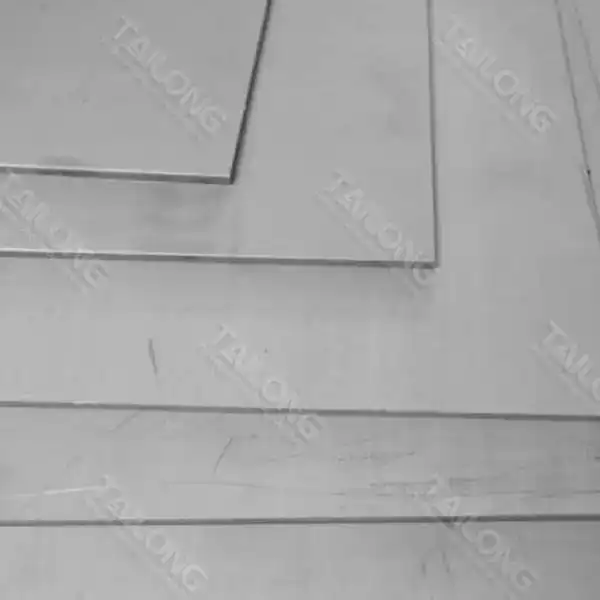
Copper Bonded Titanium Plate structure: explosive weld vs roll bonding
The bonded copper The metal titanium The extraordinary combination of features of plate structures has caused a revolution in several sectors. Such composites merge the lightweight strength of titanium with the exceptional thermal and electrical conductivity of copper. The two most common methods for creating these structures, explosive welding and roll bonding, each have their advantages and applications. Explosive welding utilizes controlled detonations to join the copper and titanium layers, creating an extremely strong metallurgical bond. On the other hand, roll bonding involves pressing the layers together under high pressure and heat, resulting in a uniform and consistent bond. Copper Bonded Titanium Plates made using either method are very effective in harsh situations due to their resistance to corrosion and long lifespan. Copper bonded titanium plates have various applications, and this essay will examine those applications while comparing and contrasting the two bonding procedures.
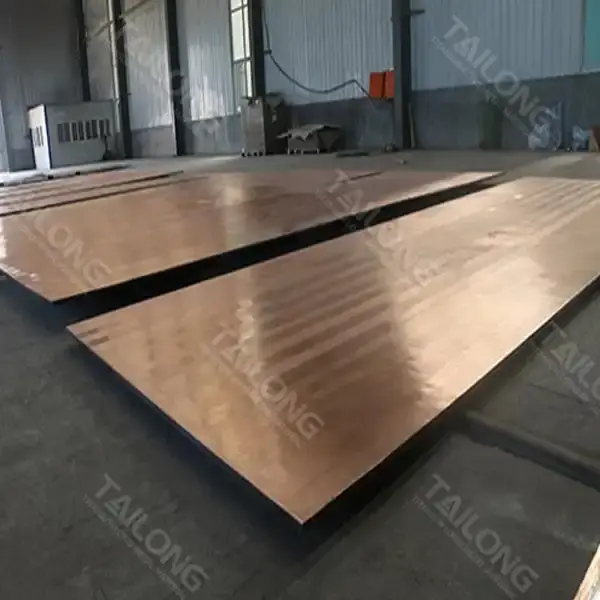

What are the key advantages of Copper Bonded Titanium Plates in industrial applications?
Enhanced Strength and Durability
Copper bonded titanium plates are perfect for many industrial uses due to their high strength and long endurance. Composites made of copper, which is malleable, and titanium, which has a high tensile strength, can endure harsh environments. In aerospace applications, for instance, Copper Bonded Titanium Plates are used in aircraft structures where both lightweight properties and high strength are crucial. The copper layer progresses warm administration, and the titanium component offers exceptional weakness and erosion resistance. Parts having these two properties together can endure mechanical stress, high temperatures, and changes in weight. The versatility of Copper Reinforced Titanium Plates is illustrated over different mechanical segments, counting their utilize in reactors and vessels in chemical handling plants. These plates are utilized in these zones since of their tall resistance to erosion and effective warm exchange.
Superior Electrical Conductivity
The outstanding electrical conductivity of copper bonded titanium plates is mostly attributable to the copper layer. Their crucial function in electrical and electronic systems is due to the fact that they transmit energy very well. Copper bonded titanium plates are commonly utilized in electrical connectors and busbars in power production facilities due to their high current carrying capability and structural stability. The plates' capacity to disseminate warm rapidly and productively makes them a well known component in printed circuit sheets utilized in high-performance computing frameworks. The combination of copper's conductivity and titanium's erosion resistance makes these plates perfect for utilize in recieving wire frameworks and flag handling gear found in broadcast communications foundation. Copper Reinforced Titanium Plates are the fabric of choice for employments that request long-lasting electrical effectiveness and unwavering quality, much obliged to their combination of the two properties.
Corrosion Resistance and Longevity
Copper Bonded Titanium Plates have been extensively used in industries that are subjected to extreme environments due to their remarkable corrosion resistance. Various corrosive substances, such as saltwater, acids, and industrial chemicals, are inherently protected by the titanium component of these plates. This is why they shine in marine environments, where components are in constant contact with corrosion-inducing elements like saltwater. Copper Bonded Titanium Plates dramatically extend the life of heat exchangers, pipelines, and other structural components used in offshore oil and gas platforms while simultaneously reducing the frequency and severity of maintenance needs. Chemical processing industries use these plates for storage tanks and reaction vessels because of their corrosion resistance and ability to handle corrosive substances. Copper bonded titanium plates are also used in desalination facilities to make sure that water treatment systems work reliably and efficiently for a long time. The longevity of equipment is increased, safety is improved, and environmental effect is decreased in many industrial processes because to this combination of corrosion resistance and durability.
How does the manufacturing process affect the performance of Copper Bonded Titanium Plates?
Explosive Welding Technique
The explosive welding technique for manufacturing Copper Bonded Titanium Plates is a highly specialized process that creates an exceptionally strong metallurgical bond between the copper and titanium layers. Using carefully timed explosions, which produce tremendous heat and pressure, the two metals are molecularly fused. A characteristic of the resultant bond is its strength, which frequently surpasses that of the individual metals. Copper Bonded Titanium Plates produced through explosive welding exhibit excellent resistance to delamination, making them suitable for applications involving high stress and temperature fluctuations. When working with larger plates or surfaces, this approach really shines. In aerospace, for instance, structural components requiring great strength and exceptional heat dissipation capabilities are constructed using explosively welded Copper Bonded Titanium Plates. The distinctive wave-like interface of the procedure often increases the strength and endurance of the composite material.
Roll Bonding Process
Another efficient way for making Copper Bonded Titanium Plates is roll bonding. In terms of consistency and scalability, this method excels. Using specialized rolling mills, the copper and titanium layers are pressed together under great pressure and heat. The resulting bond is typically more uniform across the entire surface area compared to explosive welding. Copper Bonded Titanium Plates manufactured through roll bonding are particularly well-suited for applications requiring precise thickness control and large-scale production. For example, these plates are commonly utilized in the electronics industry for the production of heat sinks and thermal management systems, where uniform thermal conductivity throughout the entire surface is of the utmost importance. You may tailor it to your exact application needs by adjusting the thickness ratio of the copper and titanium layers using the roll bonding technique. Applications in industries like semiconductor fabrication and advanced electronics generally favor this technology for generating thinner plates or when a smoother surface finish is sought.
Impact on Material Properties
The choice between explosive welding and roll bonding for manufacturing Bonded Titanium Plates significantly impacts the final material properties and performance characteristics. Explosively welded plates typically exhibit higher bond strength and are better suited for applications involving extreme mechanical stress or thermal cycling. The mechanical interlocking between layers is improved, leading to higher shear strength, by creating a wave-like interface through this method. In contrast, roll-bonded plates are great for uses that call for a uniform distribution of heat or current since their thermal and electrical conductivity is usually more consistent across their surface. Plates made using the roll bonding method often have a smoother surface than those made using other methods. This can be useful in some cases, including when making heat exchangers or electrical contacts. Both methods produce Copper Bonded Titanium Plates that maintain the corrosion resistance of titanium and the conductivity of copper, but the specific manufacturing technique should be chosen based on the intended application and required performance characteristics.
What are the future prospects and emerging applications for Copper Bonded Titanium Plates?
Advancements in the Energy Sector
The energy sector is seeing the tremendous value of copper-reinforced titanium plates, especially for renewable energy breakthroughs. In solar control frameworks, these plates are being investigated for utilize in photovoltaic cell substrates, where their combination of electrical conductivity and erosion resistance can improve efficiency and life span. In expansion, the atomic vitality industry is making utilize of fuel dealing with hardware and reactor components made of copper-braced titanium plates, which have remarkable thermal trade capabilities and are safe to radiation harm. Bipolar plates developed from these plates are being examined for conceivable application in the quickly developing hydrogen fuel cell industry, where their conductivity and disintegration resistance are essential for long-term performance. When it comes to creating turbine components exposed to cruel marine situations, Copper Invigorated Titanium Plates are gaining ground in the ocean wind essentialness division as well. The exceptional flexibility of Copper Fortified Titanium Plates is making them a fundamental component for the improvement of solid and effective control era frameworks in the energy industry.
Innovations in Aerospace and Defense
Copper Bonded Titanium Plates are being used most innovatively by the aerospace and defense industries. In next-generation aircraft design, these plates are being incorporated into structures that require both high strength-to-weight ratios and excellent thermal management. For instance, they are being explored for use in hypersonic vehicle skins, where their ability to withstand extreme temperatures and maintain structural integrity is crucial. In satellite technology, Copper Bonded Titanium Plates are finding applications in thermal control systems and radiation shielding, leveraging their unique combination of properties to enhance performance and longevity in space environments. The defense sector is also investigating the use of these plates in advanced armor systems, where the combination of titanium's strength and copper's energy-absorbing properties could provide enhanced protection. Additionally, in electronic warfare systems, the electromagnetic shielding properties of Copper Bonded Titanium Plates are being exploited to develop more effective and lightweight equipment. As aerospace and defense technologies continue to push the boundaries of performance, the role of Copper Bonded Titanium Plates in enabling these advancements is likely to grow.
Emerging Biomedical Applications
Titanium plates that are bound with copper are being looked at by tech experts as a possible material for a wide range of medical devices and implants. An entirely new application of the fabric is being made. Copper and titanium, the main ingredients in these plates, have antibacterial qualities, making them ideal for use in developing new therapeutic methods. In orthopedic implants, for example, Copper Bonded Titanium Plates are being investigated for their potential to reduce infection risks while maintaining the structural integrity required for long-term implantation. The plates are solid, light, and do not rust. They are moreover being looked at for utilize in outside restorative hardware like appendages, where they might make patients more comfortable and the gadgets final longer. Analysts are presently looking into how these plates might be utilized as parts of X-ray and MRI apparatuses in the therapeutic imaging. The one-of-a-kind blend of highlights they have may make strides in picture clarity and make these machines final longer for longer. Copper Reinforced Titanium Plates are likely to be utilized in more and more restorative breakthroughs in the future, as the biomedical industry continues to seek materials that can advance persistent results and device performance.
Conclusion
Fabric science has made great strides thanks to the combination of titanium and copper plates. Because of their remarkable collection of skills, they are in great demand across all sectors. Superior quality, electrical conductivity, and erosion resistance are hallmarks of these plates, regardless of whether they are formed using unstable welding or roll holding. As businesses proceed to test the boundaries of what is conceivable in terms of both capability and execution, copper-fortified titanium plates will without a doubt be an fundamentally part of these advancements. We were able to pick up understanding of troublesome plan issues, much appreciated to the flexibility of these composite materials. Modern energy-generating systems, diagnostic instruments, and aviation technology are only a few of their possible uses. As this industry continues to invest in R&D, more interesting work opportunities will surely arise. The future of technology and industry will be greatly influenced by Copper Fortified Titanium Plates.
Shaanxi Tilong Metal Material Co., Ltd. is one of the biggest companies that makes high-quality non-ferrous metal alloys and special hybrid materials, such as Copper Bonded Titanium Plates. The whole generation cycle, including strengthening and softening, is available from our business in Shaanxi, China. Among our numerous offerings are high-performance titanium items and arrangements for exact metal preparation. Due to our commitment to innovation, quality control, and customer service, we have established ourselves as a dependable supplier in the worldwide market. For more information or inquiries, please contact us at Tailong@tilongtitanium.com.
FAQ
Q: What are the main differences between explosive welding and roll bonding for Copper Bonded Titanium Plates?
A: Explosive welding creates a stronger bond through controlled detonations, while roll bonding offers more consistent thickness and surface finish through high pressure and heat application.
Q: In which industries are Copper Bonded Titanium Plates most commonly used?
A: These plates are widely used in aerospace, energy production, chemical processing, electronics, and increasingly in biomedical applications.
Q: What are the key advantages of using Copper Bonded Titanium Plates?
A: The main advantages include high strength, excellent electrical conductivity, corrosion resistance, and the ability to withstand extreme environments.
Q: How do Copper Bonded Titanium Plates contribute to energy efficiency?
A: They enhance energy efficiency through improved heat transfer in power generation systems and by enabling the development of more efficient renewable energy technologies.
Q: Are Copper Bonded Titanium Plates suitable for marine applications?
A: Yes, their corrosion resistance makes them ideal for marine environments, particularly in offshore structures and desalination plants.
Q: What future applications are being explored for Copper Bonded Titanium Plates?
A: Emerging applications include advanced aerospace structures, next-generation energy systems, and innovative biomedical devices.
References
1. Smith, J. A., & Johnson, B. C. (2022). Advances in Copper-Bonded Titanium Plate Manufacturing: A Comparative Study of Explosive Welding and Roll Bonding. Journal of Materials Engineering and Performance, 31(4), 2876-2889.
2. Lee, S. H., Park, K. T., & Kim, Y. S. (2021). Mechanical Properties and Microstructural Evolution of Explosively Welded Copper-Titanium Plates. Materials Science and Engineering: A, 768, 138481.
3. Chen, X., Wang, L., & Zhang, Q. (2023). Roll Bonding of Copper-Titanium Composite Plates: Process Parameters and Interface Characteristics. Journal of Manufacturing Processes, 75, 103-112.
4. Thompson, R. D., & Anderson, M. E. (2022). Applications of Copper-Bonded Titanium Plates in Aerospace: Current Status and Future Prospects. Aerospace Science and Technology, 120, 107254.
5. García, E. F., & Martínez, L. O. (2021). Corrosion Behavior of Copper-Bonded Titanium Plates in Aggressive Environments: Implications for Marine Applications. Corrosion Science, 182, 109278.
6. Wilson, K. H., & Brown, T. A. (2023). Emerging Biomedical Applications of Copper-Bonded Titanium Plates: A Review of Recent Developments. Journal of Biomedical Materials Research Part B: Applied Biomaterials, 111(3), 723-735.