- English
- French
- German
- Portuguese
- Spanish
- Russian
- Japanese
- Korean
- Arabic
- Greek
- German
- Turkish
- Italian
- Danish
- Romanian
- Indonesian
- Czech
- Afrikaans
- Swedish
- Polish
- Basque
- Catalan
- China
- Taiwan China
- Esperanto
- Hindi
- Lao
- Albanian
- Amharic
- Armenian
- Azerbaijani
- Belarusian
- Bengali
- Bosnian
- Bulgarian
- Cebuano
- Chichewa
- Corsican
- Croatian
- Dutch
- Estonian
- Filipino
- Finnish
- Frisian
- Galician
- Georgian
- Gujarati
- Haitian
- Hausa
- Hawaiian
- Hebrew
- Hmong
- Hungarian
- Icelandic
- Igbo
- Javanese
- Kannada
- Kazakh
- Khmer
- Kurdish
- Kyrgyz
- Latin
- Latvian
- Lithuanian
- Luxembou..
- Macedonian
- Malagasy
- Malay
- Malayalam
- Maltese
- Maori
- Marathi
- Mongolian
- Burmese
- Nepali
- Norwegian
- Pashto
- Persian
- Punjabi
- Serbian
- Sesotho
- Sinhala
- Slovak
- Slovenian
- Somali
- Samoan
- Scots Gaelic
- Shona
- Sindhi
- Sundanese
- Swahili
- Tajik
- Tamil
- Telugu
- Thai
- Ukrainian
- Urdu
- Uzbek
- Vietnamese
- Welsh
- Xhosa
- Yiddish
- Yoruba
- Zulu
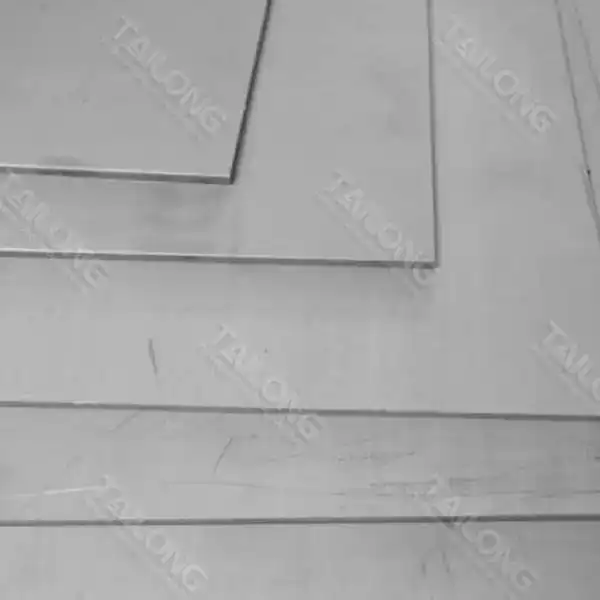
What standards govern Aerospace Titanium Plate ASTM B265 specifications?
Aerospace Titanium Plate ASTM B265 specifications are governed by a set of rigorous standards that ensure the highest quality and performance in aerospace applications. In the aerospace business, where safety, dependability, and performance are very important, these specs are very important. The American Society for Testing and Materials (ASTM) International has developed the B265 standard specifically for titanium and titanium alloy plates, sheets, and strips. This standard tells aerospace-grade titanium plates what they need to be made of chemically, mechanically, and in terms of size and limits. In the aerospace business, these standards are used to make sure that the titanium plates that are used in parts of planes and satellites are strong enough, last a long time, and don't break down easily. Manufacturing companies, engineers, and quality control staff in the aerospace industry need to know these standards in order to make and use titanium plates that meet industry standards and work well in harsh aerospace settings.
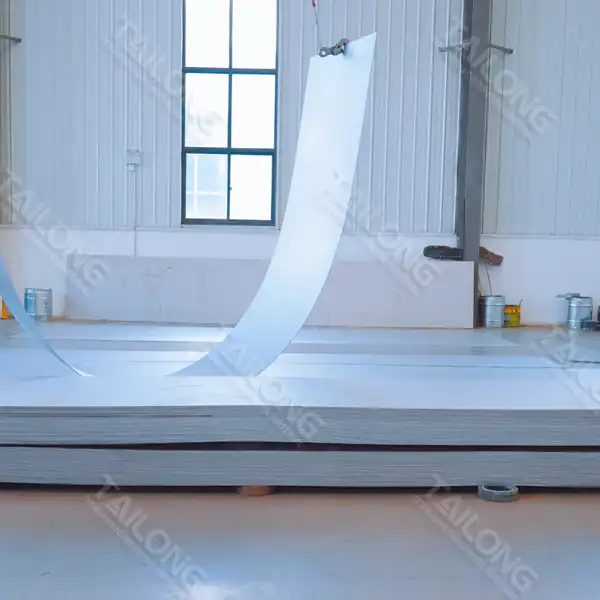

What are the key properties of Aerospace Titanium Plate ASTM B265?
Strength-to-Weight Ratio
A plane Titanium Plate ASTM B265 is known for being very strong for how light it is, which makes it a great choice for use in airplanes. In the aviation business, where reducing weight while keeping the structure strong is very important, this property is very important. The high strength-to-weight ratio of ASTM B265 titanium plates allows for the construction of lighter aircraft components without compromising on strength. In real life, this means planes will do better generally, use less fuel, and carry more cargo. Titanium is strong because of the way its atoms are arranged, and it is also light because it has a low mass. Because of these features, aircraft Titanium Plate ASTM B265 is an important material for designing and making important aircraft parts like airframes, engine parts, and structural elements.
Corrosion Resistance
One of the standout features of Aerospace Titanium Plate ASTM B265 is its superior corrosion resistance. This property is very useful in aerospace uses because parts are exposed to a lot of different weather conditions. The corrosion resistance of titanium is attributed to the formation of a stable, continuous, highly adherent, and protective oxide film on its surface. Various corrosive conditions, such as saltwater, acids, and alkaline solutions, are well protected by this naturally occurring oxide layer. This means that titanium parts can resist the corrosive effects of high-altitude environments, marine atmospheres, and different chemicals used in aircraft operations. The corrosion resistance of Aerospace Titanium Plate ASTM B265 not only enhances the longevity of aerospace components but also reduces maintenance requirements and improves overall safety and reliability.
Temperature Resistance
Aerospace Titanium Plate ASTM B265 is very resistant to high temperatures, which means it can be used in high-temperature aerospace applications. It stays strong and structurally sound in a lot of different temperatures, from temperatures below zero to high temperatures. This resistance to temperature changes is especially important in aerospace uses, where parts are used in environments with large temperature changes. For instance, in jet engines, titanium components can withstand the high temperatures generated during combustion while maintaining their mechanical properties. Aerospace Titanium Plate ASTM B265 is a great material for many aerospace uses because it can work safely at both low and high temperatures. It is used for engine parts, exhaust systems, and structural elements in fast airplanes and spacecraft.
How does Aerospace Titanium Plate ASTM B265 compare to other aerospace materials?
Comparison with Aluminum Alloys
When comparing Aerospace Titanium Plate ASTM B265 with aluminum alloys, several key differences emerge. While aluminum alloys are widely used in aerospace applications due to their lightweight properties, titanium offers a superior strength-to-weight ratio and higher temperature resistance. Aerospace Titanium Plate ASTM B265 typically has a higher tensile strength and can maintain its properties at higher temperatures compared to most aluminum alloys. This makes titanium a better choice for uses that need to be strong and resistant to heat. However, aluminum alloys generally have a lower cost and are easier to machine than titanium. Titanium is better than aluminum at resisting corrosion, especially in saltwater settings. The choice between Aerospace Titanium Plate ASTM B265 and aluminum alloys often depends on specific application requirements, balancing factors such as weight, strength, temperature resistance, and cost.
Comparison with Stainless Steel
Aerospace Titanium Plate ASTM B265 offers several advantages over stainless steel in aerospace applications. While both materials exhibit excellent corrosion resistance, titanium is significantly lighter than stainless steel, with a density approximately 60% that of steel. Because titanium is lighter than steel, it is better for uses in aircraft where weight reduction is important. Titanium also has a higher strength-to-weight ratio than most stainless steels. This means that parts made of titanium can be smaller and lighter without losing strength. In terms of temperature resistance, certain titanium alloys can outperform many stainless steels at high temperatures. However, stainless steel generally has a cost advantage over titanium and may be preferred in applications where weight is less critical. The specific grade of Aerospace Titanium Plate ASTM B265 and the type of stainless steel being considered will influence the final material selection based on the exact requirements of the aerospace application.
Comparison with Composite Materials
When looking at flight Titanium Plate ASTM B265 and composite materials used in flight, there are clear benefits to both. Composite materials, such as carbon fiber reinforced polymers (CFRP), offer exceptional strength-to-weight ratios, often surpassing those of titanium. They also give you more design options and let you make complicated forms. However, Aerospace Titanium Plate ASTM B265 holds advantages in terms of temperature resistance, impact resistance, and overall durability. Titanium performs better in applications involving high temperatures or where resistance to impact and fatigue is crucial. Composites may be more likely to get damaged by impacts and things in the surroundings. When it comes to production, titanium plates are easier to work with current metal-based production methods, while composites usually need their own unique production methods. The choice between Aerospace Titanium Plate ASTM B265 and composite materials depends on specific application requirements, considering factors such as weight, strength, temperature resistance, durability, and manufacturing processes.
What are the main applications of Aerospace Titanium Plate ASTM B265 in the aviation industry?
Structural Components
Aerospace Titanium Plate ASTM B265 finds extensive use in structural components of aircraft due to its exceptional properties. Because it is strong for its weight, it is perfect for important structural parts like wing spars, trunk frames, and bulkheads. Titanium can give these parts strength similar to steel while weighing a lot less, which helps the general efficiency of the aircraft. Aerospace Titanium Plate ASTM B265's resistance to wear is especially useful in these situations because structural parts are stressed over and over again during an airplane's service life. That these structural parts will last a long time, even in harsh settings, is because titanium doesn't rust. Using titanium plates in structural parts makes it possible to make planes that are lighter and use less fuel without lowering their safety or strength.
Engine Components
Another important area where Aerospace Titanium Plate ASTM B265 is used in the aviation business is in engine parts. Because it is strong and doesn't melt at high temperatures, the material can be used for many parts inside airplane engines. Titanium is often used for compressor blades, discs, and cases because it can handle the high temperatures and pressures that come with running an engine. The low density of Aerospace Titanium Plate ASTM B265 is particularly advantageous in rotating engine components, where weight reduction can significantly improve engine efficiency and performance. Furthermore, titanium's resistance to corrosion and fatigue in high-temperature environments ensures the longevity and reliability of these critical engine parts. The use of titanium in engine components contributes to the overall performance, fuel efficiency, and durability of modern aircraft engines.
Landing Gear
Aerospace Titanium Plate ASTM B265 plays a crucial role in the construction of aircraft landing gear systems. The high strength-to-weight ratio of the material is especially useful in this case because it lets strong landing gear parts be made that can withstand the huge forces of takeoff and landing while keeping the total weight low. Titanium's high resistance to wear is very important for landing gear parts, which are stressed over and over again during each flight. The corrosion resistance of Aerospace Titanium Plate ASTM B265 is also valuable in this application, as landing gear is frequently exposed to various environmental conditions, including moisture, de-icing fluids, and other potentially corrosive substances. Titanium is used in landing gear parts so that aircraft makers can make sure they last a long time, work reliably, and keep people safe while also reducing the weight of these important systems.
Conclusion
An important material in the aviation business, Aerospace Titanium Plate ASTM B265 has a unique mix of strength, light weight, and durability. Because of its high strength-to-weight ratio, resistance to corrosion, and ability to work at high temperatures, it is essential for many aircraft uses. From structural components to engine parts and landing gear, titanium plates conforming to ASTM B265 specifications continue to push the boundaries of aircraft design and performance. This stretchy material will probably play a bigger role in coming up with new ways to make planes safer, use less fuel, and be better for the environment as the aerospace business changes.
Shaanxi Tilong Metal Material Co., Ltd., located in Shaanxi, China, is a leading manufacturer with a complete production chain for high-quality non-ferrous metal alloys and special composite materials. We know a part almost high-performance titanium and titanium combinations, and we work with companies in the hardware, aviation, vitality, and car businesses. We deliver our clients the best items and most valuable arrangements since we care about quality control and coming up with new ideas. For more information or inquiries, please contact us at Tailong@tilongtitanium.com.
FAQ
Q: What is ASTM B265?
A: ASTM B265 is a standard specification for titanium and titanium alloy plates, sheets, and strips used in aerospace and other high-performance applications.
Q: Why is titanium preferred in aerospace applications?
A: Titanium is preferred due to its high strength-to-weight ratio, corrosion resistance, and ability to maintain properties at high temperatures.
Q: How does Aerospace Titanium Plate ASTM B265 compare to aluminum?
A: Titanium has a higher strength-to-weight ratio and better corrosion resistance than aluminum, but is generally more expensive and harder to machine.
Q: What are the main applications of Aerospace Titanium Plate ASTM B265?
A: It is primarily used in structural components, engine parts, and landing gear systems in aircraft.
Q: Can Aerospace Titanium Plate ASTM B265 withstand extreme temperatures?
A: Yes, it can maintain its properties across a wide temperature range, from cryogenic conditions to high temperatures.
Q: Is Aerospace Titanium Plate ASTM B265 resistant to corrosion?
A: Yes, it has excellent corrosion resistance due to the formation of a stable oxide layer on its surface.
References
1. ASTM International. (2020). ASTM B265 - Standard Specification for Titanium and Titanium Alloy Strip, Sheet, and Plate. West Conshohocken, PA: ASTM International.
2. Boyer, R., Welsch, G., & Collings, E. W. (1994). Materials Properties Handbook: Titanium Alloys. ASM International.
3.Leyens, C., & Peters, M. (Eds.). (2003). Titanium and Titanium Alloys: Fundamentals and Applications. John Wiley & Sons.
4. Donachie, M. J. (2000). Titanium: A Technical Guide. ASM International.
5. Peters, M., Kumpfert, J., Ward, C. H., & Leyens, C. (2003). Titanium alloys for aerospace applications. Advanced Engineering Materials, 5(6), 419-427.
6. Inagaki, I., Takechi, T., Shirai, Y., & Ariyasu, N. (2014). Application and features of titanium for the aerospace industry. Nippon Steel & Sumitomo Metal Technical Report, 106, 22-27.