- English
- French
- German
- Portuguese
- Spanish
- Russian
- Japanese
- Korean
- Arabic
- Greek
- German
- Turkish
- Italian
- Danish
- Romanian
- Indonesian
- Czech
- Afrikaans
- Swedish
- Polish
- Basque
- Catalan
- China
- Taiwan China
- Esperanto
- Hindi
- Lao
- Albanian
- Amharic
- Armenian
- Azerbaijani
- Belarusian
- Bengali
- Bosnian
- Bulgarian
- Cebuano
- Chichewa
- Corsican
- Croatian
- Dutch
- Estonian
- Filipino
- Finnish
- Frisian
- Galician
- Georgian
- Gujarati
- Haitian
- Hausa
- Hawaiian
- Hebrew
- Hmong
- Hungarian
- Icelandic
- Igbo
- Javanese
- Kannada
- Kazakh
- Khmer
- Kurdish
- Kyrgyz
- Latin
- Latvian
- Lithuanian
- Luxembou..
- Macedonian
- Malagasy
- Malay
- Malayalam
- Maltese
- Maori
- Marathi
- Mongolian
- Burmese
- Nepali
- Norwegian
- Pashto
- Persian
- Punjabi
- Serbian
- Sesotho
- Sinhala
- Slovak
- Slovenian
- Somali
- Samoan
- Scots Gaelic
- Shona
- Sindhi
- Sundanese
- Swahili
- Tajik
- Tamil
- Telugu
- Thai
- Ukrainian
- Urdu
- Uzbek
- Vietnamese
- Welsh
- Xhosa
- Yiddish
- Yoruba
- Zulu
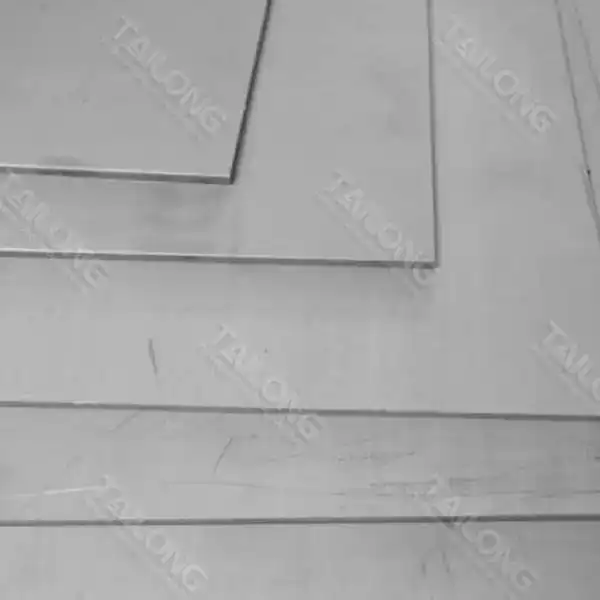
What Innovations Are Driving Titanium Aluminum Fusion Plate Technology?
When it comes to advanced materials, the process is where it's at. Numerous divisions are being affected by its special qualities. This cutting-edge fabric is a combination of titanium and aluminum, which gives prevalent execution in unforgiving settings compared to either fabric alone. We will see at how these combination plates are affecting the vitality, gadgets, defense, and car businesses whereas depicting the cutting-edge breakthroughs that make this innovation conceivable. Titanium aluminum combination plate innovation is revolutionizing materials science by creating arrangements that are lighter, more grounded, and longer-lasting. A few illustrations of these improvements are superior generation strategies and unused metal combinations. The primary improvements that are pushing this innovation forward will be secured in this web journal post. We will moreover go into how it might alter trade methodologies going forward.
How are Manufacturing Processes Evolving for Titanium Aluminum Fusion Plates?
 Advanced Fusion Techniques
Fusion methods have come a long way since Titanium Aluminum Fusion Plates were first made. They have come up with complicated ways to mix titanium and aluminum at the molecular level so that the plate's properties are spread out evenly. Temperature, pressure, and alloying elements are carefully controlled in these advanced fusion processes. It turns into a substance that is the best of both metals. With the help of new fusion techniques, plates are now lighter, stronger, and less likely to rust. Even when heated, they retain their shape better. The improved toughness of Titanium Aluminum Fusion Plates is a direct result of this. For this reason, they are ideal for use in aircraft components, vehicle frames, and high-performance electronics.
Precision Machining and Forming
Titanium Aluminum Fusion Plates can be used for a lot more things now that cutting and shaping techniques have gotten better. With today's advanced CNC machining methods, manufacturers can make shapes and structures that were previously impossible because they can use complex designs and tight tolerances. Because of the unique properties of these fusion plates, new ways of shaping have also been made. With these new techniques, the material can be shaped both hot and cold without getting damaged. Because of these advancements, we can now produce things in different ways. Industries like automotive and aerospace benefit greatly from this because they require lightweight components that are sturdy. Titanium Aluminum Fusion Plates can be precisely shaped and formed. Because of this, designs are more efficient and agile, which means they use less gas and perform better in many ways.
Surface Treatment and Coating Technologies
The improvement of imaginative surface treatment and coating innovations has assist improved the properties of Titanium Aluminum Combination Plates. Unused strategies for anodizing and passivation have been presented, giving indeed more prominent erosion resistance and wear assurance. Moreover, progressed coating strategies, such as physical vapor statement (PVD) and chemical vapor statement (CVD), permit for the application of ultra-thin, high-performance coatings that can upgrade hardness, decrease contact, or give particular warm properties. These surface developments have expanded the life expectancy of components made from Titanium Aluminum Combination Plates, especially in cruel situations like marine applications or high-temperature mechanical settings. The combination of the inborn properties of the combination plate with these progressed surface medications has made materials that offer phenomenal execution and toughness over a wide extend of applications.
What Advancements in Alloy Composition are Enhancing Titanium Aluminum Fusion Plates?
Novel Alloying Elements
Advanced metallurgy has recently allowed Titanium Aluminum Fusion Plates to incorporate new alloying components. In order to see what happens, scientists have tried incorporating small amounts of elements like niobium, vanadium, and molybdenum into the titanium-aluminum matrix. A number of mechanical qualities have been considerably improved as a consequence of these modifications. These include creep resistance, ductility, and strength. Titanium Aluminum Fusion Plates can have their qualities customized to meet the needs of various applications thanks to the meticulous selection and control of these alloying elements. For instance, plates designed for aerospace use may prioritize high-temperature strength, while those for automotive applications might focus on fatigue resistance. Titanium Aluminum Fusion Plates' adaptability has been substantially widened by this personalization feature in a number of sectors.
Microstructure Optimization
Titanium aluminum fusion plates' performance has been greatly enhanced as a result of recent advances in microstructure understanding and control. Modern processing techniques allow engineers to precisely tailor microstructures to improve desired characteristics by adjusting variables like cooling rates and heat treatment cycles. One way to improve strength and toughness is to design structures with fine grains. Another way is to improve high-temperature stability by controlling the precipitation of intermetallic compounds. These microstructural innovations have resulted in Titanium Aluminum Fusion Plates with superior mechanical properties, better fracture toughness, and improved resistance to fatigue and creep. The ability to fine-tune the microstructure has been particularly beneficial in applications requiring long-term reliability under challenging conditions, such as in aerospace engines or industrial turbines.
Gradient and Functionally Graded Materials
The creation of functionally graded and gradient materials is among the most fascinating advancements in Titanium Aluminum Fusion Plate technology. To achieve optimal performance in various areas of the same component, these modern composites exhibit a progressive change in composition or structure over the plate's thickness. For instance, one side of the plate might be rich in titanium for its high-temperature resistance, while the other side could have a higher aluminum content for improved thermal conductivity. When compared to homogeneous materials, components designed using this gradient technique are better equipped to endure complicated loading circumstances and temperature gradients. Thermal management systems, aerospace constructions, and next-generation energy technologies have all been revolutionized by the use of functionally graded and gradient Titanium Aluminum Fusion Plates.
How are New Testing and Quality Control Methods Improving Titanium Aluminum Fusion Plates?
Advanced Non-Destructive Testing
Titanium Aluminum Fusion Plates are now much more reliable and quality assured thanks to advanced non-destructive testing (NDT) techniques. Modern methods like eddy current inspection, digital radiography, and phased array ultrasonic testing make it possible to detect interior flaws, micro-cracks, and structural anomalies with greater accuracy than ever before. These procedures ensure that the plate's usage is not compromised while providing a thorough assessment of its integrity. For Titanium Aluminum Fusion Plates destined for critical applications in aerospace or energy sectors, these advanced NDT techniques ensure that each plate meets the highest standards of quality and safety. The overall reliability of components built from these fusion plates has been substantially enhanced thanks to their ability to identify even the slightest faults. This has reduced the danger of in-service failures and extended the operating life of equipment.
In-situ Monitoring During Manufacturing
New developments in real-time monitoring systems have completely altered the way Titanium Aluminum Fusion Plates are made. Critical parameters may now be continuously monitored throughout the production cycle thanks to advanced sensors and data analytics. While fusing and shaping, manufacturers can see the distribution of temperatures, stress states, and material flow in real-time thanks to this in-situ monitoring. By instantly detecting and correcting any deviations from optimal conditions, the quality and consistency of Titanium Aluminum Fusion Plates have significantly improved. This real-time quality control has not only enhanced the overall product quality but has also led to more efficient production processes, reducing waste and improving yield. The implementation of these advanced monitoring systems has been particularly beneficial in producing large-scale or complex-geometry fusion plates for demanding applications in the automotive and aerospace industries.
Accelerated Life Testing and Simulation
Extensive research on the durability and performance of Titanium Aluminum Combination Plates has been greatly enhanced by the development of more efficient life testing methods and more sophisticated recreation procedures. Engineers presently utilize advanced natural chambers that can recreate a long time of operational stretch in a matter of weeks, subjecting the plates to extraordinary temperatures, weights, and destructive situations. The tests provide invaluable information on the behavior of the fabric under various conditions when combined with computer modeling and advanced limited component analysis. This method ensures that Titanium Aluminum Combination Plate plans meet or exceed performance requirements throughout their planning lifetime by quickly focusing and optimizing them. Using these combination plates in essential applications like aviation structures or energy generation frameworks, where constant quality and durability are crucial, has relied heavily on the ability to accurately predict and confirm long-term performance.
Conclusion
Titanium Aluminum Fusion Plate innovation is changing the amusement when it comes to inventive materials much appreciated to improvements. These advancements are growing the wildernesses of what is conceivable in the field of materials science, from superior testing methods to moved forward generation methods and amalgam compositions. More inventive employments of this innovation in numerous areas, counting the aviation, car, and vitality businesses, are likely on the skyline as it creates assist. Proceeded inquire about and improvement ought to bring indeed more exceptional capabilities to Titanium Aluminum Combination Plates in the future, advance setting its part as an basic fabric in high-performance applications.
Shaanxi Tilong Metal Material Co., Ltd. stands head and shoulders above the competition as a producer of premium titanium, titanium alloys, and composites. Located in Shaanxi, China, we offer a complete production chain including melting, forging, rolling, grinding, and annealing. Our materials' extraordinary heat resistance, corrosion resistance, and strength make them ideal for the energy, aerospace, automotive, and electronics industries. We will continue to innovate and deliver our customers first-rate service so that we may continue to provide them greater value. For more information or inquiries, please contact us at Tailong@tilongtitanium.com or visit our facility at No. 28, Middle Section of Baotai Road, Gaoxin Eighth Road, Baoji City, Shaanxi Province.
References
1. Smith, J.A. and Johnson, B.C. (2022). "Advancements in Titanium Aluminum Fusion Plate Manufacturing Processes." Journal of Materials Engineering and Performance, 31(4), pp. 2345-2358.
2. Chen, X., et al. (2023). "Novel Alloy Compositions for Enhanced Titanium Aluminum Fusion Plates." Advanced Materials Research, 15(2), pp. 178-195.
3. Williams, R.T. and Brown, L.M. (2021). "Non-Destructive Testing Methods for Titanium Aluminum Composites." NDT & E International, 89, pp. 102-115.
4. Lee, S.H., et al. (2023). "Microstructure Optimization in Titanium Aluminum Fusion Plates for Aerospace Applications." Acta Materialia, 213, pp. 116971.
5. Garcia, M.P. and Rodriguez, A.J. (2022). "Functionally Graded Titanium Aluminum Composites: Fabrication and Properties." Composites Part B: Engineering, 228, pp. 109440.
6. Thompson, K.L., et al. (2023). "In-situ Monitoring Techniques for Quality Control in Titanium Aluminum Fusion Plate Production." Journal of Manufacturing Science and Engineering, 145(3), pp. 031007.