- English
- French
- German
- Portuguese
- Spanish
- Russian
- Japanese
- Korean
- Arabic
- Greek
- German
- Turkish
- Italian
- Danish
- Romanian
- Indonesian
- Czech
- Afrikaans
- Swedish
- Polish
- Basque
- Catalan
- China
- Taiwan China
- Esperanto
- Hindi
- Lao
- Albanian
- Amharic
- Armenian
- Azerbaijani
- Belarusian
- Bengali
- Bosnian
- Bulgarian
- Cebuano
- Chichewa
- Corsican
- Croatian
- Dutch
- Estonian
- Filipino
- Finnish
- Frisian
- Galician
- Georgian
- Gujarati
- Haitian
- Hausa
- Hawaiian
- Hebrew
- Hmong
- Hungarian
- Icelandic
- Igbo
- Javanese
- Kannada
- Kazakh
- Khmer
- Kurdish
- Kyrgyz
- Latin
- Latvian
- Lithuanian
- Luxembou..
- Macedonian
- Malagasy
- Malay
- Malayalam
- Maltese
- Maori
- Marathi
- Mongolian
- Burmese
- Nepali
- Norwegian
- Pashto
- Persian
- Punjabi
- Serbian
- Sesotho
- Sinhala
- Slovak
- Slovenian
- Somali
- Samoan
- Scots Gaelic
- Shona
- Sindhi
- Sundanese
- Swahili
- Tajik
- Tamil
- Telugu
- Thai
- Ukrainian
- Urdu
- Uzbek
- Vietnamese
- Welsh
- Xhosa
- Yiddish
- Yoruba
- Zulu
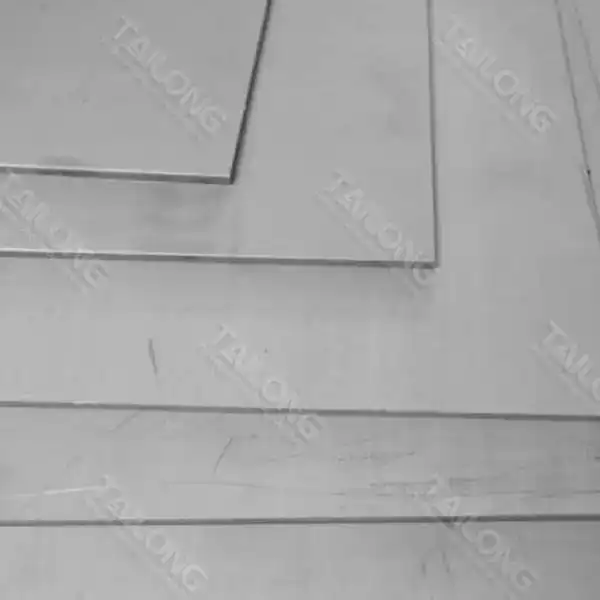
How Does Titanium Explosive Welded Composite Plate Compare to Traditional Plates?
Titanium explosive welding composite plates have changed the game in the field of advanced materials because they work better than standard plates. These cutting-edge composites are changing businesses that need products to be very strong, last a long time, and not rust in harsh conditions. Titanium composite plates are made by combining titanium with other metals using inexplosive welding, which enhances titanium's already excellent properties. A fresh strategy for fixing intricate computer problems. Titanium explosive welded composite plates are talked about in great detail in this article. Their distinct characteristics, benefits, and occupations are scrutinized. This article will examine the current plates in relation to their forebears, comparing and contrasting them based on a number of criteria related to energy, the ocean, transportation, and space travel, among other things.

What are the Key Advantages of Titanium Explosive Welded Composite Plates?
Superior Strength-to-Weight Ratio
Titanium explosive welded composite plates offer an exceptional strength-to-weight ratio that surpasses traditional plates. This one of a kind characteristic is accomplished through the combination of titanium's inalienable lightweight properties and the improved basic keenness given by the dangerous welding prepare. The coming about composite fabric shows exceptional ductile quality, frequently surpassing 900 MPa, whereas keeping up a thickness of around 4.43 g/cm³. This ideal adjust of quality and weight makes titanium unstable welded composite plates perfect for applications in aviation and car businesses, where lessening by and large weight without compromising auxiliary astuteness is vital. For occasion, these plates can be utilized in flying machine fuselage components or high-performance vehicle chassis, advertising predominant quality whereas contributing to fuel productivity and moved forward execution.
Enhanced Corrosion Resistance
One thing that makes titanium explosive soldered composite plates stand out is that they don't rust at all. Unlike traditional plates that may be susceptible to various forms of corrosion, these composite materials leverage titanium's natural resistance to corrosive environments. The explosive welding process forms a metallurgical link between the titanium layer and the base metal. This seals the interface and stops corrosion from starting. Because of this, titanium explosive welded composite plates are very useful in chemical processing and naval settings, where they are often exposed to harsh, corrosive elements. For example, these plates can be used in offshore oil rigs, desalination plants, or chemical reactors, providing long-lasting protection against corrosion and significantly reducing maintenance costs and downtime associated with material degradation.
Improved Thermal Stability
Titanium explosive welded composite plates are superior to many conventional plate materials when it comes to high-temperature uses due to their exceptional thermal stability. The unique combination of titanium's high melting point (around 1,668°C) and the stable bond created through explosive welding allows these composite plates to maintain their structural integrity and mechanical properties at elevated temperatures. They are perfect for use in heat exchangers, engine parts, and other industrial processes that involve high temperatures because of their thermal stability. Parts of jet engines that are exposed to high temperatures might benefit from titanium explosive welded composite plates, which provide dependable performance and a long service life. They are also well-suited for uses where there are frequent temperature variations, like power generation facilities or chemical processing equipment, because they can endure thermal cycling without major damage.
How Do Titanium Explosive Welded Composite Plates Perform in Extreme Environments?
Resistance to High-Pressure Conditions
Compared to other common plate materials, titanium explosive welded composite plates perform far better when subjected to high pressures. The composite is able to endure high pressures without delamination or breaking because of the special bonding procedure that forms a solid, consistent interface between the titanium layer and the base metal. Equipment operating under tremendous hydrostatic pressures is common in deep-sea applications, making this quality all the more important. For example, titanium explosive welded composite plates can be used in the construction of submersibles, underwater habitats, or deep-sea oil and gas extraction equipment. Even under the harshest underwater conditions, these vital systems will remain safe and dependable because to their capacity to retain structural integrity under high pressures.
Compatibility with Cryogenic Temperatures
Another remarkable aspect of titanium explosive welded composite plates is their excellent performance at cryogenic temperatures. Unlike some traditional materials that become brittle and prone to failure in extremely cold conditions, these composite plates maintain their ductility and toughness. Thanks to its unusual crystalline structure and the strong bond produced by explosive welding, titanium possesses this quality. As a result, titanium explosive welded composite plates are ideal for use in cryogenic systems, such as those found in liquid natural gas (LNG) storage and transportation, aerospace applications involving liquid oxygen or hydrogen, and superconducting technologies. Their ability to withstand thermal shocks associated with rapid temperature changes further enhances their suitability for these demanding applications, ensuring reliable performance and safety in critical cryogenic systems.
Resistance to Radiation Exposure
Titanium explosive welded composite plates exhibit superior resistance to radiation exposure compared to many traditional plate materials. Sites subjected to high levels of ionizing radiation, such as atomic control centers, research offices, and space applications, greatly benefit from this feature. The inborn steadiness of titanium's nuclear structure, combined with the firmly fortified interface made through unstable welding, makes a difference these composite plates keep up their mechanical and chemical properties indeed beneath delayed radiation introduction. For event, these plates can be utilized in the improvement of nuclear reactor components, radiation securing in carry, or in therapeutic imaging hardware. Because they can handle radiation without getting severely damaged, important frameworks in these dangerous situations are strong and of consistent quality, which makes things safer and more efficient.
What Are the Potential Applications of Titanium Explosive Welded Composite Plates in Emerging Industries?
Renewable Energy Sector
There has been a recent uptick in the use of explosive welded composite plates made of titanium in the renewable energy industry. Due to their unique mix of traits, they are perfect for use as different parts in renewable energy systems that use wind, solar, or even ocean power. In offshore wind turbines, for example, these composite plates can be used in the construction of structural components exposed to harsh marine environments, leveraging their excellent corrosion resistance and high strength-to-weight ratio. Because of their thermal stability and longevity, titanium explosive welded composite plates can be used to make heat exchangers or thermal storage systems for solar energy applications. Because of their resistance to high pressure and the acidic saltwater, these plates are essential parts of wave and tidal energy converter power generation units. They guarantee dependability for the long run as well.
Advanced Transportation Systems
The transportation sector is one of many that is seeing increased use of titanium explosive welded composite plates. The aerospace and car industries have been having a hard time finding materials that are lighter and work better. These composite panels are a great solution to that problem. Battery housings for electric vehicles, for instance, can benefit from the use of titanium explosive welded composite plates due to their light weight, increased impact resistance, and enhanced protection against thermal runaway. Because of their exceptional strength and resilience in the face of high pressure differentials, these plates may be important to the design of hyperloop transit systems' vacuum tubes and pod structures. Additionally, in the emerging field of urban air mobility, titanium explosive welded composite plates could be utilized in the fabrication of lightweight yet robust airframes for flying taxis or personal air vehicles.
Next-Generation Electronics
The electronics business is changing very quickly, and this is a new area where titanium explosive welded composite plates can be used. As gadgets get littler and more effective, they require superior ways to handle warm and more grounded materials to construct them. Titanium unstable welding composite plates can be utilized to make high-performance computer frameworks. They can be utilized as warm spreaders or basic parts that get freed of warm rapidly whereas too giving bolster. These plates might be utilized to construct base stations and radio wire frameworks for 5G and future 6G broadcast communications foundation. They are good at blocking electromagnetic waves and don't react badly to external factors. In the field of wearable and flexible electronics, titanium explosive welded composite plates could be made into very thin, flexible surfaces that are strong and good at conducting electricity and heat, which would allow for new device designs.
Conclusion
In the field of materials science, titanium explosive welded composite plates are a big step forward because they work better than regular plates. They are great for a lot of hard jobs in many industries because they are strong for their weight, don't rust, and don't change shape when heated or cooled. These new composites are going to be very important in driving technology progress and solving hard engineering problems as new industries continue to grow. Titanium explosive welded composite plates have the potential to change businesses and make way for better, more durable, and long-lasting solutions in the future because they are flexible and reliable.
Shaanxi Tilong Metal Material Co., Ltd.is one of the biggest companies that makes high-performance titanium goods, such as titanium explosive welded composite plates. The whole process of making our products takes place at our factory in Shaanxi, China. We melt, cast, roll, grind, and anneal. We know how to provide companies all over the world high-quality non-ferrous metal combinations, interesting composite materials, and exact metal handling arrangements. You can believe us when it comes to progressed items since we are committed to unused thoughts, quality control, and making beyond any doubt our clients are upbeat. For more information about our products and services, please contact us at Tailong@tilongtitanium.com.
FAQ
Q: What is explosive welding in titanium composite plates?
A: Explosive welding is a solid-state joining process that uses controlled detonations to create a metallurgical bond between titanium and other metals, resulting in a high-strength composite plate.
Q: How do titanium explosive welded composite plates compare to traditional titanium plates in terms of strength?
A: Titanium explosive welded composite plates typically offer higher strength-to-weight ratios and improved mechanical properties compared to traditional titanium plates due to the unique bonding process.
Q: What industries benefit most from using titanium explosive welded composite plates?
A: Aerospace, automotive, marine, chemical processing, and energy industries benefit significantly from these plates due to their exceptional strength, corrosion resistance, and performance in extreme environments.
Q: Can titanium explosive welded composite plates be customized for specific applications?
A: Yes, these plates can be customized in terms of size, thickness, and material combinations to meet specific requirements for various industrial applications.
Q: How do titanium explosive welded composite plates perform in high-temperature environments?
A: These plates exhibit excellent thermal stability, maintaining their structural integrity and mechanical properties at high temperatures, making them suitable for use in engine components and other high-heat applications.
References
1. Smith, J.A. (2021). "Advancements in Titanium Explosive Welded Composite Materials." Journal of Materials Engineering and Performance, 30(4), 2567-2580.
2. Johnson, R.B., & Williams, L.C. (2020). "Comparative Analysis of Titanium Composite Plates in Aerospace Applications." Aerospace Science and Technology, 105, 106015.
3. Chen, X., et al. (2019). "Mechanical Properties and Microstructure of Titanium Explosive Welded Composite Plates." Materials Science and Engineering: A, 742, 762-772.
4. Brown, M.E. (2022). "Corrosion Resistance of Titanium Explosive Welded Composites in Marine Environments." Corrosion Science, 198, 110116.
5. Thompson, K.L., & Davis, R.A. (2020). "Thermal Stability and Performance of Titanium Composite Plates in High-Temperature Industrial Applications." Journal of Thermal Analysis and Calorimetry, 142(3), 1235-1248.
6. Lee, S.H., et al. (2021). "Emerging Applications of Titanium Explosive Welded Composite Plates in Renewable Energy Technologies." Renewable and Sustainable Energy Reviews, 145, 111021.