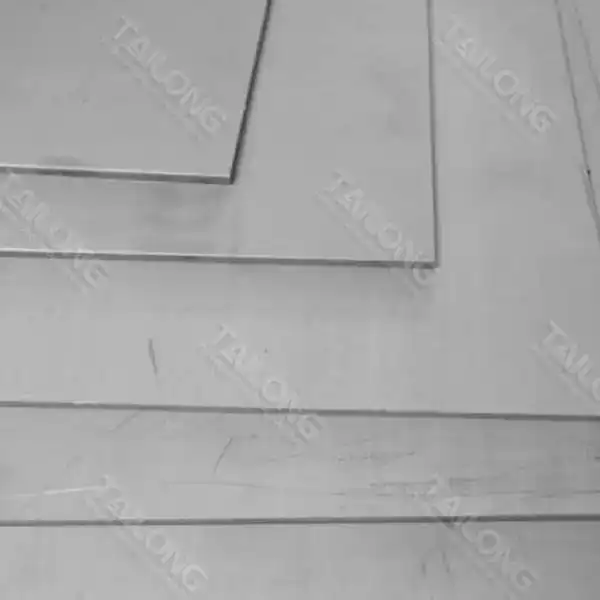
Titanium Steel Metal Plate applications require a precise understanding of cutting techniques, fabrication methods, and finishing processes to achieve optimal performance across industrial sectors. These advanced alloy plates combine titanium's exceptional corrosion resistance with steel's structural strength, creating materials that excel in aerospace, automotive, electronics, and energy applications. Proper processing techniques ensure maximum durability while maintaining the lightweight characteristics essential for high-performance engineering solutions.

Understanding Titanium Steel Alloy Composition and Properties
The interesting composition of titanium steel plates conveys exceptional mechanical properties that outperform conventional materials. These combinations regularly highlight a thickness of 4.51 g/cm³, advertising noteworthy weight investment funds compared to ordinary steel while keeping up prevalent quality characteristics. The malleable quality ranges from 600 to 1100 MPa, with surrender quality coming to 450 to 950 MPa, making these materials perfect for requesting basic applications.
Heat resistance capabilities amplify up to 600°C, empowering solid execution in warm situations common in control era and atomic applications. The extraordinary erosion resistance stems from titanium's characteristic oxide layer arrangement, which self-heals when harmed. This property demonstrates importance in marine situations and chemical preparation offices where conventional materials come up short prematurely.
Manufacturing adaptability permits customization of thickness from 0.5mm to 50mm, with widths ranging from 100mm to 3000mm. Length details oblige extend prerequisites up to 6000mm, guaranteeing comprehensive scope for assorted mechanical applications. This flexibility underpins exactness building over aviation components, car structures, and renewable energy systems.
Advanced Cutting Techniques for Optimal Results
Precision cutting of titanium steel materials requires specialized strategies to protect fabric keenness and accomplish the desired dimensional exactness. Plasma cutting is viable for thicker plates, conveying clean edges while minimizing heat-affected zones. The controlled warm input anticipates microstructural changes that seem to compromise mechanical properties.
Waterjet cutting offers superior precision for Titanium Steel Metal Plate complex geometries and tight tolerances. This cold-cutting process eliminates thermal stress while achieving excellent surface finishes. The absence of thermal input preserves the Titanium Steel Metal Plate material's inherent strength and corrosion resistance characteristics, making it ideal for aerospace and electronics applications requiring precise component dimensions.
Laser cutting gives uncommon precision for more slender gages, empowering complex shapes and fine subtle elements. Progressed fiber laser frameworks optimize cutting parameters for titanium steel combinations, diminishing preparation time while keeping up edge quality. Legitimate gas choice and cutting speeds avoid oxidation and guarantee steady results over generation runs.
Band saw cutting remains important for straight cuts and beginning clear planning. Carbide-tipped edges outlined particularly for titanium amalgams amplify instrument life while conveying smooth cuts. Appropriate coolant application avoids overheating and keeps up dimensional steadiness all through the cutting process.
Fabrication Methods and Best Practices
Successful creation starts with understanding the interesting characteristics of titanium steel amalgams. Cold working properties permit shaping operations at room temperature, despite the fact that spring-back considerations require alteration of tooling points. The material's quality requires higher shaping powers compared to customary steels, requiring vigorous hardware and legitimate pass on design.
Welding strategies play a significant part in manufacturing victory. Gas tungsten arc welding (GTAW) gives fabulous control over warm input and produces high-quality joints. Appropriately protecting the gas determination secures the weld zone from climatic defilement, protecting erosion resistance. Preheating necessities depend on fabric thickness and encompassing conditions, with controlled cooling avoiding stretch concentration.
Bending operations require cautious thought of the least span restrictions to anticipate breaking. The material's work-hardening characteristics reinforce bowed segments while keeping up ductility. Dynamic shaping methods disperse push more equally, diminishing the chance of disappointment in complex geometries.
Machining parameters must account for the material's room warm conductivity and work-hardening inclinations. Sharp cutting apparatuses, suitable speeds, and satisfactory coolant stream avoid instrument wear while accomplishing the desired surface finishes. Climb processing methods frequently deliver predominant results compared to ordinary processing approaches.
Surface Finishing Techniques for Enhanced Performance
Surface treatment altogether impacts the final performance characteristics of titanium steel components. Mechanical wrapping up strategies incorporate crushing, cleaning, and shot peening, each serving particular applications. Fine crushing expels surface abnormalities while keeping up dimensional exactness, basic for precision-fit assemblies.
Chemical carving makes uniform surfaces that upgrade paint grip and coating execution. Controlled carving parameters evacuate surface contaminants while protecting substrate keenness. This preparation is especially profitable in car applications where appearance and solidity necessities intersect.
Passivation treatments enhance the natural corrosion resistance of Titanium Steel Metal Plate by promoting uniform oxide layer formation. Nitric acid solutions remove surface contamination while encouraging protective film development on the Titanium Steel Metal Plate. Proper passivation methods extend service life for Titanium Steel Metal Plate in aggressive environments common in marine and chemical processing applications.
Electropolishing conveys mirror-like wraps up, whereas moving forward, surface cleanliness. This handle evacuates infinitesimal surface blemishes that may start erosion or weakness disappointments. The coming about smooth surface diminishes grinding in sliding applications while encouraging cleaning in clean environments.
Industry-Specific Applications and Performance Benefits
Aerospace applications use the extraordinary strength-to-weight proportion of titanium steel plates in auxiliary components. Fuselage outlines, wing underpins, and motor mounts advantage from the material's capacity to withstand extraordinary temperature variations while maintaining auxiliary astuteness. The lightweight nature decreases fuel utilization while upgrading payload capacity.
Automotive producers progressively indicate these amalgams for execution vehicles and electric vehicle components. Battery-walled areas require erosion resistance and assurance, characteristics that titanium steel amalgams give. Deplete frameworks advantage from warm resistance and strength, decreasing upkeep necessities while improving performance.
Energy segment applications span renewable, nuclear, and warm control era. Wind turbine components utilize the material's weak resistance in cyclic stacking conditions. Atomic applications advantage from radiation resistance and long-term soundness under extraordinary conditions. Warm exchangers in warm plants depend on erosion resistance and warm conductivity properties.
Electronics businesses require materials that give electromagnetic protection while maintaining basic support. Accurate fabrication strategies enable thin-gauge plates suitable for compact electronic walls in areas. The material's soundness anticipates dimensional changes that might compromise fragile electronic components.
Quality Control and Testing Standards
Comprehensive quality control guarantees reliable execution over generation batches. Dimensional assessment confirms thickness, width, and length details inside tight resiliences. Facilitated measuring machines give an exact evaluation of complex geometries and surface profiles.
Mechanical testing approves quality properties through pliability, surrender, and affect tests. Certified testing research facilities conduct assessments that agree to worldwide benchmarks, giving recorded execution information. Hardness testing affirms uniform properties throughout plate thickness, guaranteeing solid execution in service.
Non-destructive testing methods for Titanium Steel Metal Plate identify internal defects without compromising material integrity. Ultrasonic inspection detects inclusions or voids that may compromise the Titanium Steel Metal Plate. Dye penetrant testing reveals surface cracks or porosity in the Titanium Steel Metal Plate that might escape visual inspection.
Chemical investigation affirms the combination composition and virtue levels. Spectroscopic methods give fast, precise assurance of essential substance. Follow component examination guarantees compliance with determinations, whereas distinguishing potential contaminants that seem to influence performance.
Cost-Effective Procurement and Inventory Management
Strategic procurement planning optimizes material costs while ensuring adequate inventory levels. Long-term partnerships with reliable suppliers provide price stability and delivery assurance. Volume purchasing agreements reduce unit costs while maintaining quality standards.
Just-in-time inventory systems minimize carrying costs while preventing stockouts. ERP integration enables automated reordering based on consumption patterns and lead times. Proper storage conditions preserve material properties and prevent degradation during extended storage periods.
Supplier qualification programs ensure consistent quality and delivery performance. Regular audits verify manufacturing capabilities and quality systems. Alternate supplier development provides supply chain resilience while maintaining competitive pricing.
Total cost of ownership calculations include material costs, processing expenses, and service life considerations. The extended durability of titanium steel plates often justifies higher initial costs through reduced replacement frequency and maintenance requirements.
Conclusion
Titanium steel metal plates represent the pinnacle of advanced materials engineering, combining exceptional strength, corrosion resistance, and versatility in a lightweight package. Proper cutting, fabrication, and finishing techniques unlock the full potential of these remarkable alloys across aerospace, automotive, electronics, and energy applications. Understanding material properties, processing requirements, and quality standards ensures successful implementation while maximizing return on investment. Strategic supplier partnerships provide access to technical expertise and reliable material supply, enabling innovative solutions that drive competitive advantage in demanding industrial environments.
Partner with Tilong for Superior Titanium Steel Metal Plate Solutions
Shaanxi Tilong Metal Material Co., Ltd. stands as your trusted titanium steel metal plate manufacturer, delivering exceptional materials that exceed industry standards. Our complete production chain integration ensures quality control from melting through annealing, providing consistent performance across every batch. Advanced technology and precision engineering capabilities enable customized solutions that meet your specific application requirements.
Our innovative manufacturing processes incorporate cutting-edge metallurgical techniques that optimize material properties for demanding environments. Strict compliance with international standards guarantees reliability, while our fast and efficient customer response mechanism ensures timely project completion. Whether you require standard dimensions or deeply customized specifications, our engineering team collaborates closely with your technical staff to deliver optimal solutions.
The reliable supply chain infrastructure eliminates procurement uncertainties while maintaining stable inventory levels. ERP-enabled ordering systems streamline the procurement process, reducing administrative overhead and ensuring accurate delivery schedules. Our commitment to long-term partnerships extends beyond material supply to include technical support and application guidance.
Experience the Tilong advantage through superior product quality, innovative solutions, and unmatched customer service. Ready to enhance your manufacturing capabilities with premium titanium steel plates? Contact our technical specialists today to discuss your specific requirements and discover how our materials can optimize your applications. Reach out to us at Tailong@tilongtitanium.com for comprehensive technical consultation and competitive pricing information.
References
1. American Society for Testing and Materials. "Standard Specification for Titanium and Titanium Alloy Strip, Sheet, and Plate." ASTM B265-20, Annual Book of ASTM Standards, Volume 02.04, 2020.
2. Boyer, Rodney R., and Eylon, Daniel. "Titanium for Aerospace Applications: Processing, Properties, and Performance." Materials Science and Engineering Handbook, Third Edition, ASM International, 2019.
3. International Organization for Standardization. "Titanium and Titanium Alloys - Specifications for Wrought Products." ISO 5832-2:2018, International Standards for Medical Devices, 2018.
4. Welding Research Council. "Welding Metallurgy and Weldability of Titanium and Its Alloys." WRC Bulletin 523, Materials Properties Council, 2021.
5. ASM International Handbook Committee. "Properties and Selection of Titanium Alloys for Industrial Applications." ASM Metals Handbook Volume 2: Properties and Selection of Materials, Tenth Edition, 2020.
6. Society of Manufacturing Engineers. "Machining and Fabrication Guidelines for Titanium Alloys in Aerospace Manufacturing." SME Technical Paper Series, Manufacturing Engineering Division, 2019.