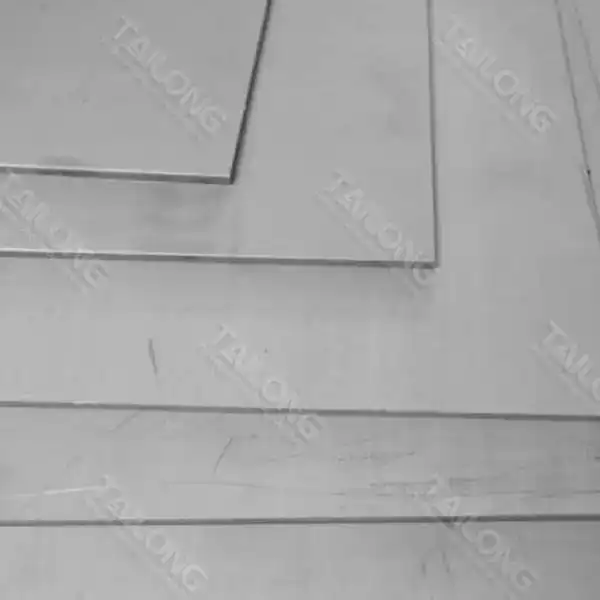
The best OEM partnerships for titanium steel metal plate manufacturing combine advanced metallurgical expertise with reliable supply chain capabilities. Leading manufacturers like Shaanxi Tilong Metal Material Co., Ltd. demonstrate excellence through complete production chain integration, from melting to annealing processes. These partnerships prioritize quality control, international standards compliance, and customized solutions. Successful Titanium Steel Metal Plate partnerships feature innovative technology, precision engineering, and responsive customer service mechanisms that ensure timely delivery across aerospace, automotive, electronics, and energy sectors worldwide.

Why Focus on Premium Titanium Steel Metal Plate Solutions?
Modern businesses request materials that withstand extraordinary conditions while keeping up auxiliary keenness. The aviation division requires components that can withstand temperature fluctuations surpassing 600°C amid flight operations. Car producers look for lightweight yet tough materials to improve fuel efficiency without compromising security benchmarks. Gadget companies require corrosion-resistant combinations for components exposed to unforgiving chemical environments.
Titanium steel composite plates speak to the apex of metallurgical building. These materials combine titanium's uncommon erosion resistance with steel's demonstrated quality characteristics. The coming about combination conveys pliable quality extending from 600 to 1100 MPa while keeping up a thickness of fair 4.51 g/cm³. This interesting combination makes these plates vital for high-performance applications across numerous industries.
Energy division applications especially advantage from titanium steel plates' warm resistance capabilities. Atomic control plants utilize these materials in reactor components where conventional steel would come up short under extraordinary thermal stress. Renewable vitality frameworks, including wind turbines and sun oriented board systems, depend on the predominant strength these combinations give against natural degradation.
Selection Criteria for Outstanding OEM Partners
Evaluating potential OEM associations requires a comprehensive evaluation of different execution pointers. Generation capability stands as the essential thought, including both manufacturing capacity and innovative advancement. Driving accomplices illustrate total vertical integration, controlling each arrange from crude material handling to last item delivery.
Quality certification compliance speaks to another basic calculation. Universal guidelines such as ISO 9001, AS9100 for aviation applications, and IATF 16949 for car segments guarantee reliable item quality. Accomplices must give comprehensive fabric certifications, including chemical composition investigation, mechanical property testing, and dimensional precision verification.
Supply chain unwavering quality decides association supportability. Viable accomplices keep up key stock levels, implement ERP-enabled ordering systems, and set up contingency plans for supply disruptions. Geographic vicinity to major mechanical centers decreases transportation costs and conveyance timeframes, improving by and large extend efficiency.
Customization capabilities separate remarkable accomplices from standard providers. The capacity to adjust combination compositions, alter mechanical properties, and suit interesting dimensional necessities empowers producers to optimize item execution for particular applications.
Top 7 Titanium Steel Metal Plate Solutions
Aerospace-Grade High-Temperature Alloy Plates
Aerospace applications request materials capable of withstanding extraordinary thermal cycling while keeping up auxiliary judgment. These specialized plates include upgraded warm resistance up to 650°C, surpassing standard details by 50°C. The amalgam composition consolidates exact titanium-to-steel proportions optimized for aviation environments.
Key advantages include superior fatigue resistance under recurrent loading conditions common in aircraft operations. The material's low thermal expansion coefficient avoids dimensional distortion during temperature fluctuations. Advanced surface treatments enhance the oxidation resistance of Titanium Steel Metal Plate, extending component life expectancy in high-altitude conditions.
Manufacturing forms include vacuum dissolving procedures that dispose of pollutants influencing fabric execution. Controlled cooling rates amid toughening optimize grain structure for the greatest strength-to-weight proportions. Quality control incorporates ultrasonic testing to distinguish inside blemishes that may compromise security in basic applications.
These plates suit complex creation necessities, including accuracy machining, shaping, and welding operations. The material's fabulous weldability empowers consistent integration into existing fabricating forms without requiring specialized gear modifications.
Automotive Lightweight Structural Components
Automotive producers progressively prioritize weight lessening to meet exacting fuel efficiency controls. These titanium steel plates convey 40% weight reserve funds compared to conventional steel while keeping up identical auxiliary quality. The optimized combination composition equalizations mechanical properties with fabrication taken a toll consideration.
Corrosion resistance is especially important in car applications where exposure to street salt and natural contaminants shortens component life span. The material's characteristic passivation layer anticipates rust formation without requiring extra defensive coatings. This characteristic diminishes upkeep necessities and amplifies vehicle benefit life.
Processing flexibility empowers integration into existing car fabricating lines. The fabric reacts well to stamping, profound drawing, and hydroforming operations commonly utilized in body board production. Warm treatment alternatives permit producers to alter hardness levels for particular application requirements.
Cost-effectiveness develops through decreased fabric utilization and rearranged assembly forms. The predominant quality characteristics empower more slender cross-sections while keeping up basic execution guidelines. This decrease in fabric volume specifically translates to lower transportation costs and improved fuel economy.
Electronics Industry Precision Sheets
Electronic component fabrication requires materials with uncommon dimensional stability and electrical properties. These precision-rolled sheets keep up thickness resiliences inside ±0.02mm over the whole surface zone. The controlled microstructure guarantees steady electrical conductivity and warm administration characteristics.
Chemical resistance secures against forceful cleaning solvents and carving arrangements utilized in gadgets. The material's non-magnetic properties avoid obstructions with touchy electronic circuits. Surface wrap-up quality meets semiconductor industry measures for cleanliness and defilement control.
Thermal conductivity characteristics empower viable thermal dissipation in high-power electronic applications. The material's moo coefficient of warm extension matches semiconductor substrates, anticipating stress-induced disappointments amid warm cycling. These properties make the sheets perfect for warm sink applications and warm interface components.
Fabrication capabilities incorporate laser cutting, exactness stamping, and photo-chemical carving. The material's fine-grain structure empowers sharp edge definition and tight dimensional control. These characteristics support miniaturization patterns in advanced gadgets.
Nuclear Energy Reactor Components
Nuclear applications require materials able to withstand strong radiation introduction while keeping up basic keenness. These specialized plates highlight improved radiation resistance through controlled combination composition and progressed metallurgical preparation. The fabric keeps up its mechanical properties under neutron assault conditions, surpassing 10²² neutrons/cm².
Corrosion resistance in high-temperature water situations guarantees long-term component unwavering quality. The material's resistance to stretch erosion splitting anticipates disastrous disappointments in pressurized reactor frameworks. Progressed surface medicines encourage upgraded erosion security in forceful coolant environments.
Weldability characteristics empower field repairs and upkeep operations. The fabric produces clean, defect-free welds utilizing standard welding methods. Post-weld warm treatment reestablishes ideal mechanical properties without compromising radiation resistance.
Quality confirmation incorporates comprehensive testing conventions surpassing standard mechanical necessities. Each plate experiences radiographic assessment, ultrasonic testing, and mechanical property confirmation. Documentation bundles incorporate fabric traceability records and certification compliance statements required for atomic applications.
Renewable Energy Wind Turbine Blades
Wind energy applications require materials combining high strength with excellent fatigue resistance under cyclical loading conditions. These plates withstand millions of load cycles while maintaining structural performance. The optimized microstructure prevents crack initiation and propagation under variable wind loads.
The environmental resistance of Titanium Steel Metal Plate protects against atmospheric corrosion in marine and industrial environments. The material's resistance to salt spray and acid rain ensures decades of reliable service without protective coatings. This characteristic reduces maintenance costs and extends turbine operational life for the Titanium Steel Metal Plate.
Lightweight characteristics enable larger blade designs without exceeding tower load limits. The superior strength-to-weight ratio allows engineers to optimize aerodynamic profiles for maximum energy capture. Reduced blade weight also simplifies transportation and installation procedures.
Manufacturing processes accommodate large-scale production requirements. The material's formability enables complex blade geometries through standard metalworking techniques. Quality control procedures ensure consistent mechanical properties across production batches.
Marine Shipbuilding Structural Plates
Marine environments present unique challenges requiring exceptional corrosion resistance and structural durability. These plates resist seawater corrosion without cathodic protection systems. The material's resistance to pitting and crevice corrosion ensures structural integrity in critical hull applications.
Impact resistance protects against collision damage and wave loading forces. The material's high energy absorption capacity prevents crack propagation during impact events. This characteristic enhances vessel safety and reduces repair requirements following minor collisions.
Welding characteristics support efficient shipyard construction processes. The material produces high-quality welds using conventional marine welding procedures. Post-weld properties match base material performance without requiring special heat treatment.
Regulatory compliance includes classification society approvals from major maritime authorities. Material certifications meet requirements for commercial vessels, offshore platforms, and naval applications. Documentation packages support vessel classification and insurance requirements.
Power Generation Turbine Components
Power generation turbines operate under extreme temperature and pressure conditions, requiring materials with exceptional creep resistance. These plates maintain dimensional stability under sustained high-temperature loading. The material's microstructure remains stable at operating temperatures exceeding 550°C for extended periods.
Thermal shock resistance protects against rapid temperature changes during startup and shutdown cycles. The material's thermal conductivity enables uniform temperature distribution, preventing localized stress concentrations. This characteristic extends component life and reduces maintenance requirements.
Oxidation resistance eliminates the need for protective coatings in high-temperature applications. The material forms a stable oxide layer that prevents further oxidation progression. This self-protecting characteristic maintains surface integrity throughout the component's service life.
Machining characteristics enable precision manufacturing of complex turbine geometries. The material maintains consistent cutting forces and surface finish quality throughout machining operations. This predictability enables optimized manufacturing processes and consistent component quality.
Global Market Characteristics and Regional Preferences
The worldwide titanium steel metal plate market exhibits distinct regional characteristics shaped by local industrial priorities and regulatory frameworks. North American markets emphasize aerospace and defense applications, driving demand for high-performance alloys meeting stringent military specifications. European markets focus on automotive lightweighting initiatives and renewable energy infrastructure development.
Asian markets demonstrate strong growth in electronics manufacturing and nuclear energy expansion. China's industrial modernization programs create substantial demand for advanced materials across multiple sectors. Japan's precision manufacturing culture values dimensional accuracy and surface quality characteristics.
Regulatory environments vary significantly across regions, influencing material selection criteria. European REACH regulations affect alloy compositions and surface treatment options. North American ITAR restrictions impact international supply chain arrangements for defense-related applications.
Cultural preferences influence purchasing decisions beyond technical specifications. European customers prioritize environmental sustainability and lifecycle considerations. Asian markets emphasize cost-effectiveness and delivery reliability. Understanding these preferences enables more effective partnership development.
Purchasing Recommendations and Key Considerations
Successful procurement requires a comprehensive evaluation beyond initial material costs. Total cost of ownership includes processing expenses, inventory carrying costs, and quality-related risks. Establishing long-term partnerships often provides better value than spot market purchasing.
Technical support capabilities significantly impact project success. Partners should provide metallurgical consultation, application engineering support, and troubleshooting assistance. This expertise proves particularly valuable during new product development phases.
Supply chain risk management requires diversified sourcing strategies. Relying on single suppliers creates vulnerability to production disruptions. Establishing relationships with multiple qualified suppliers ensures continuity during peak demand periods or supply chain disruptions.
Quality assurance protocols must align with industry requirements and internal standards. Partners should demonstrate statistical process control capabilities and continuous improvement initiatives. Regular quality audits and performance reviews maintain partnership effectiveness.
Industry Trends and Market Summary
The titanium steel metal plate industry continues evolving toward higher-performance alloys and sustainable manufacturing processes. Advanced melting technologies enable precise composition control and reduced environmental impact. Digital transformation initiatives improve supply chain visibility and customer responsiveness. Additive manufacturing applications create new opportunities for complex geometries and rapid prototyping. These trends position qualified OEM partners for continued growth in demanding industrial applications worldwide.
Conclusion
Selecting the right OEM partnership for titanium steel metal plate manufacturing requires careful evaluation of technical capabilities, quality systems, and supply chain reliability. The seven solutions presented demonstrate the versatility and performance advantages these advanced materials offer across diverse industrial applications. Understanding global market characteristics and regional preferences enables more effective partnership development and procurement strategies.
Success depends on establishing relationships with partners who combine metallurgical expertise with responsive customer service. The investment in premium titanium steel plates delivers long-term value through enhanced product performance, reduced maintenance costs, and improved operational efficiency. As industries continue demanding higher-performance materials, qualified OEM partnerships become increasingly valuable for maintaining competitive advantages in global markets.
FAQ
Q: What makes titanium steel metal plates superior to conventional steel?
A: Titanium steel plates combine titanium's exceptional corrosion resistance with steel's proven strength characteristics. This results in materials offering 40% weight reduction while maintaining equivalent structural performance. The superior heat resistance up to 600°C and excellent fatigue properties make them ideal for demanding aerospace, automotive, and energy applications where conventional steel would fail.
Q: How do I determine the right titanium steel plate specifications for my application?
A: Specification selection depends on your specific operating conditions including temperature range, corrosive environment exposure, mechanical loading requirements, and dimensional constraints. Our technical team analyzes your application parameters to recommend optimal alloy composition, thickness, and surface treatment options. We provide comprehensive material property data and application engineering support to ensure optimal performance.
Q: What quality certifications and testing do you provide with titanium steel plates?
A: All our titanium steel plates include comprehensive material certifications covering chemical composition analysis, mechanical property testing, and dimensional accuracy verification. We maintain ISO 9001 quality management certification and provide industry-specific certifications such as AS9100 for aerospace and IATF 16949 for automotive applications. Each shipment includes material traceability documentation and test certificates meeting international standards.
Partner with Tilong for Superior Titanium Steel Metal Plate Solutions
Shaanxi Tilong Metal Material Co., Ltd. stands as your trusted titanium steel metal plate supplier, delivering unmatched quality and reliability across global markets. Our complete production chain integration ensures superior quality control from melting through final annealing processes. Advanced technology capabilities enable precise customization for aerospace, automotive, electronics, and energy applications.
Our commitment to innovation drives continuous improvement in metallurgical processes and customer service excellence. Strict international standards compliance guarantees products meet global quality and safety regulations. Our reliable supply chain management ensures timely delivery and stable inventory availability for your critical projects.
Experience the Tilong difference through our comprehensive technical support and responsive customer service. Our engineering team provides expert consultation for material selection and application optimization. Ready to enhance your manufacturing capabilities with premium titanium steel solutions? Contact us at Tailong@tilongtitanium.com to discuss your specific requirements and discover how our advanced materials can improve your product performance and operational efficiency.