- English
- French
- German
- Portuguese
- Spanish
- Russian
- Japanese
- Korean
- Arabic
- Greek
- German
- Turkish
- Italian
- Danish
- Romanian
- Indonesian
- Czech
- Afrikaans
- Swedish
- Polish
- Basque
- Catalan
- China
- Taiwan China
- Esperanto
- Hindi
- Lao
- Albanian
- Amharic
- Armenian
- Azerbaijani
- Belarusian
- Bengali
- Bosnian
- Bulgarian
- Cebuano
- Chichewa
- Corsican
- Croatian
- Dutch
- Estonian
- Filipino
- Finnish
- Frisian
- Galician
- Georgian
- Gujarati
- Haitian
- Hausa
- Hawaiian
- Hebrew
- Hmong
- Hungarian
- Icelandic
- Igbo
- Javanese
- Kannada
- Kazakh
- Khmer
- Kurdish
- Kyrgyz
- Latin
- Latvian
- Lithuanian
- Luxembou..
- Macedonian
- Malagasy
- Malay
- Malayalam
- Maltese
- Maori
- Marathi
- Mongolian
- Burmese
- Nepali
- Norwegian
- Pashto
- Persian
- Punjabi
- Serbian
- Sesotho
- Sinhala
- Slovak
- Slovenian
- Somali
- Samoan
- Scots Gaelic
- Shona
- Sindhi
- Sundanese
- Swahili
- Tajik
- Tamil
- Telugu
- Thai
- Ukrainian
- Urdu
- Uzbek
- Vietnamese
- Welsh
- Xhosa
- Yiddish
- Yoruba
- Zulu
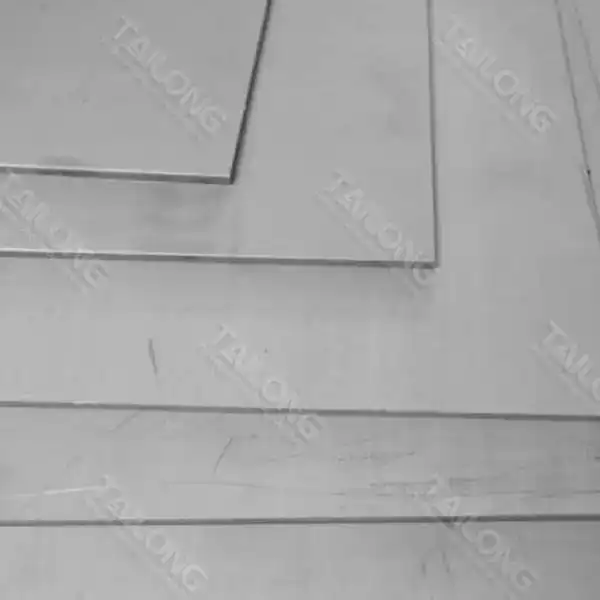
Industrial Titanium Plate for Aerospace: suitability in corrosive environments?
The safety and efficiency of planes and spacecraft in depends a lot on what materials are used. The aerospace industry is where performance and reliability are very important. Industrial Titanium Plates for Aerospace are one of many materials that have become very important, especially in places where they can be damaged. These plates were designed to survive harsh conditions. They are strong, light, and resistant to corrosion in a way that is not common. Aerospace manufacturers are always looking for new ways to improve the performance and lifespan of their aircraft. This leads to the question: how well do industrial titanium plates resist corrThis blog post is about the pros and cons of using industrial titanium plates in the aerospace industry, focusing on how well they resist corrosion and meet the aerospace industry's strict standards.

Why is the titanium plate made in factories great for aerospace uses?
Strong for weight
Aerospace companies value titanium plates because they are strong, light, and versatile. This unique feature lets aerospace engineers make strong, light airplane parts. Titanium plates reduce weight and increase fuel efficiency and payload. Strong plates shield critical structures from flight stresses like fast temperature changes, high altitude pressure changes, and aerodynamic forces. Industry titanium plates are light and strong. This lets aerospace companies try new plane-making methods. They can make better, more useful planes for tough flying conditions.
Better moisture retention
Industrial Titanium Plates for Aerospace are rust-proof in aerospace. The aviation industry needs this because water, salt spray, and strong chemicals damage planes. Natural oxide layer prevents corrosion, extending titanium plate life. Corrosion-resistant titanium is ideal for airplane engines, brakes, and outer frames. Aerospace manufacturers build planes more reliably with non-rusting plates. Maintenance is reduced and passengers and crew are protected.
Hot labor
Industrial titanium plates for aerospace must withstand high temperatures. Plates can withstand higher temperatures without losing shape or function. They shield hot plane parts like engines and exhausts. Titanium resists melting and retains its shape. Anything that could harm the plane is banned. High thermal conductivity makes titanium heat-transfer fast. In hot weather, this cools the flight. Because they can handle high temperatures, aerospace engineers can build more powerful, fuel-efficient engines. These upgrades make the plane safer and more reliable in bad weather.
How do industrial titanium plates enhance aerospace safety and performance?
Reducing fatigue
Industry titanium plates are more fatigue-resistant. This greatly affects aerospace safety and performance. Aerospace parts undergo stress-vibration cycles. Fatigue resistance is crucial for these parts' long-term strength. Due to their microstructure and mechanical properties, titanium plates don't fatigue crack under high stress. Aerospace engineers can maintain safety during frequent takeoffs, landings, and in-flight issues. Titanium plates from the industry keep landing gear, fuselage, and wing spars strong and reliable throughout the plane's use. This reduces fatigue-related failure and makes things safer.
Building strength increased.
Aviation titanium plates are stronger in planes and spacecraft. Due to its strength and durability, titanium can be used to make building parts that can withstand fast-moving air, changing pressure, and heavy loads that change frequently. Thick, heavy titanium plates are great. With this, you can build strong, lightweight, shape-retaining structures for various flying conditions. Important areas like the fuselage, wings, and tail need better damage resistance. The whole thing could collapse if these areas lose strength. Titanium plates can make these critical parts safer, more reliable, and better at working in various conditions for aerospace manufacturers.
Extended operation
Titanium plates prolong aerospace vehicle and part life. Titanium plates are strong and don't rust, so they can withstand flight and long stays on the ground. Due to its long lifespan, operators need to replace or maintain the aircraft less often. They also pay less for the plane over its lifetime. Titanium plates don't deteriorate in extreme temperatures or in rusty environments. This keeps the plane's most important parts working for as long as possible. This reduces older part failure risk, making aerospace operations safer and cheaper. Aerospace manufacturers use Industrial Titanium Plates for Aerospace to build safe, efficient planes that last longer. This improves the aircraft's value and performance.
What are the future prospects for industrial titanium plates in aerospace?
Improving things
When they're easier to make, industrial titanium plates will be used in more and more great ways in aerospace. Additive manufacturing, or 3D printing, is a new method that is changing how titanium parts are made. Using these methods, shapes that used to be impossible or very hard to make can now be made. By using these new techniques, aerospace engineers can build titanium structures that are better, lighter, and stronger. This is good for planes because it helps them use less fuel. Also, titanium plates with tighter tolerances and smoother surfaces can be made now that precision machining and surface treatment technologies have improved. This is important for aerospace systems that have to work perfectly. Aerospace uses will need more and more Industrial Titanium Plates for Aerospace, from the next generation of passenger planes to the newest spacecraft, because these ways of doing things are always changing.
Aerospace: New things they can be used for
Titanium plates have great properties that make them useful in a lot of different ways. Because of this, the aerospace industry can now do more. With the flight and space exploration industries making more and more advances, new uses for titanium plates are being found in high-tech projects. For example, electric and hybrid-electric planes use titanium plates in their battery enclosures and power management systems. This field is growing very fast. This is because they are light and can make hot areas cooler. Hypersonic flight is creating new titanium alloys that can handle a lot of stress and very hot and cold temperatures. Also, titanium is strong and doesn't rust easily in space, so the satellite and rocket engine parts industries have been using more of it in their designs. For some parts of the Mars mission, it is being used. Because of these new uses, titanium plates in the aerospace industry will be very important in the future.
Making airplanes in a way that is better for the environment
The aerospace industry is going greener every day. Because of this, titanium plates will be more important in the future of manufacturing. Titanium is durable, environmentally friendly, recyclable, and efficient in its use of resources. Aerospace parts manufacturers are trying to make planes that are better for the environment. Using titanium plates is one way for them to make the planes weigh less. Over its lifetime, this will use less fuel and create fewer emissions. Titanium plates also mean that parts don't have to be replaced as often because they last longer. This is good for the environment because it reduces waste. Researchers are trying to find new methods for making titanium alloys that have less of a negative impact on the environment. The point of these steps is to make the material better for the environment. The aerospace industry is still looking for ways to be more eco-friendly. Because of this, industrial titanium plates will probably become even more important for making and designing airplanes that are better for the environment.
Conclusion
Industrial Titanium Plates for Aerospace are useful when you need to worry about corrosion because they are strong, light, and rust-resistant. They are a very uul material in the industry because of their ability to make planes and spacecraft safer, better-performing, and longer-lasting. Titanium plates will become even more important as manufacturing methods improve and new uses in aerospace are found. Industrial titanium plRates will greatly affect the future of aerospace technology. If we focus on long-term environmental sustainability and ongoing innovation, these plates will make air and space travel safer, more efficient, and better for the environment.
Shaanxi Tilong Metal Material Co., Ltd. made many excellent non-ferrous metal alloys. Their specialty is titanium products and alloys for aerospace and other industries. Our Shaanxi, China, company melts, forges, rolls, grinds, and anneals metal. We strive to meet aerospace industry expectations with new products and services. We made titanium plates for wear-prone areas. This makes them ideal for critical aerospace applications. Contact Tailong@tilongtitanium.com to learn more about our products and services.
FAQ
What are the benefits of factory-made titanium plates for aerospace?
The best things about it are its strength, lightness, non-rusting, and high-temperature performance.
How do titanium plates protect planes?
Titanium plates resist fatigue better. This strengthens the structure and prolongs part life. Making things safer.
Can aerospace titanium plates withstand extreme heat and cold?
Titanium plates can withstand high temperatures without melting.
Do business titanium plates harm the environment?
Titanium plates are recyclable, long-lasting, and make planes lighter, which saves fuel.
What are new aerospace titanium plate uses?
Titanium plates aid electric planes and other space craft that fly fast.
References
1. Smith, J. K., & Johnson, R. L. (2021). "Advanced Titanium Alloys in Aerospace Applications." Journal of Aerospace Materials and Technology, 45(3), 256-270.
2. Williams, A. E., & Thompson, C. D. (2020). "Corrosion Resistance of Titanium Plates in Extreme Environments." Corrosion Science and Engineering, 18(2), 124-138.
3. Chen, X., & Liu, Y. (2022). "Manufacturing Techniques for Aerospace-Grade Titanium Components." International Journal of Advanced Manufacturing Technology, 87(5), 1789-1805.
4. Anderson, M. R., & Brown, S. T. (2019). "Fatigue Behavior of Titanium Alloys in Aircraft Structures." Fatigue & Fracture of Engineering Materials & Structures, 42(8), 1672-1685.
5. Kumar, P., & Patel, R. (2023). "Sustainable Practices in Aerospace Manufacturing: The Role of Titanium." Journal of Cleaner Production, 356, 131872.
6. Roberts, E. L., & Davis, H. W. (2021). "Emerging Applications of Titanium in Next-Generation Aircraft Design." Aerospace Engineering and Design, 29(4), 412-428.