- English
- French
- German
- Portuguese
- Spanish
- Russian
- Japanese
- Korean
- Arabic
- Greek
- German
- Turkish
- Italian
- Danish
- Romanian
- Indonesian
- Czech
- Afrikaans
- Swedish
- Polish
- Basque
- Catalan
- China
- Taiwan China
- Esperanto
- Hindi
- Lao
- Albanian
- Amharic
- Armenian
- Azerbaijani
- Belarusian
- Bengali
- Bosnian
- Bulgarian
- Cebuano
- Chichewa
- Corsican
- Croatian
- Dutch
- Estonian
- Filipino
- Finnish
- Frisian
- Galician
- Georgian
- Gujarati
- Haitian
- Hausa
- Hawaiian
- Hebrew
- Hmong
- Hungarian
- Icelandic
- Igbo
- Javanese
- Kannada
- Kazakh
- Khmer
- Kurdish
- Kyrgyz
- Latin
- Latvian
- Lithuanian
- Luxembou..
- Macedonian
- Malagasy
- Malay
- Malayalam
- Maltese
- Maori
- Marathi
- Mongolian
- Burmese
- Nepali
- Norwegian
- Pashto
- Persian
- Punjabi
- Serbian
- Sesotho
- Sinhala
- Slovak
- Slovenian
- Somali
- Samoan
- Scots Gaelic
- Shona
- Sindhi
- Sundanese
- Swahili
- Tajik
- Tamil
- Telugu
- Thai
- Ukrainian
- Urdu
- Uzbek
- Vietnamese
- Welsh
- Xhosa
- Yiddish
- Yoruba
- Zulu
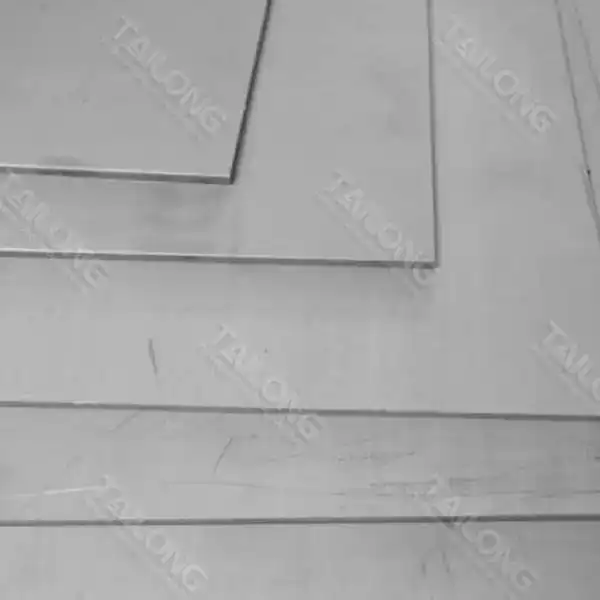
How does Aerospace Titanium Plate ASTM B265 enhance corrosion resistance?
Aerospace Titanium Plate ASTM B265 is a high-performance material that is very important for making aerospace uses more resistant to corrosion. This special titanium alloy is made to last in the harsh situations that come up in space travel and aviation. The ASTM B265 guideline sets strict rules for how these titanium plates are made and how well they work. This makes sure that they can be used reliably in important aerospace parts. The exceptional corrosion resistance of Aerospace Titanium Plate ASTM B265 is attributed to its unique chemical composition and surface properties. When exposed to oxygen, titanium forms a stable, protective oxide layer that acts as a barrier against corrosive agents. As long as it can fix itself, it's a great choice for things that need to last a long time and not break down in the environment. With its high strength, low weight, and excellent resistance to rust, Aerospace Titanium Plate ASTM B265 is an important material for designing and building modern airplanes and spaceships.
What are the key properties of Aerospace Titanium Plate ASTM B265 that contribute to its corrosion resistance?
Chemical Composition and Alloying Elements
The chemical composition of Aerospace Titanium Plate ASTM B265 plays a crucial role in its corrosion resistance. The base material, titanium, already possesses excellent corrosion-resistant properties due to its ability to form a stable oxide layer. Adding certain alloying elements, on the other hand, makes this property even better. For instance, the inclusion of elements like aluminum and vanadium in the Ti-6Al-4V grade, commonly used in aerospace applications, contributes to the formation of a more robust and adherent oxide film. For corrosive substances to stay out, this film works as a wall. Also, even when things get rough, it keeps the skin clean. The precise control of these alloying elements during the manufacturing process of Aerospace Titanium Plate ASTM B265 ensures consistent corrosion resistance across different batches and applications.
Surface Treatment and Oxide Layer Formation
Aerospace Titanium Plate ASTM B265's surface treatment is a key part of making it more resistant to rust. To make an even and stable oxide layer on the titanium plate's surface, different methods can be used, such as anodizing, passivation, or chemical milling. This special oxide layer is the first line of defense against things that can damage the metal. This layer's thickness and make-up can be changed to fit the needs of a particular purpose. For example, a thicker oxide layer might be made for aircraft uses that will be exposed to saltwater or acidic environments. The process of treating the surface of Aerospace Titanium Plate ASTM B265 is carefully managed to make sure that the oxide layer sticks well and that there are no flaws that could make it less protected.
Microstructure and Grain Boundary Effects
The microstructure of Aerospace Titanium Plate ASTM B265 significantly influences its corrosion resistance. The grain size, orientation, and distribution within the material affect how corrosive agents interact with the titanium. A fine-grained structure typically offers better corrosion resistance due to the increased number of grain boundaries, which can act as barriers to corrosion propagation. Additionally, the heat treatment and processing methods used in the production of Aerospace Titanium Plate ASTM B265 can be optimized to create a microstructure that enhances corrosion resistance. For example, certain heat treatments can promote the formation of a more stable alpha phase, which is known for its superior corrosion resistance compared to the beta phase. The careful control of these microstructural features ensures that Aerospace Titanium Plate ASTM B265 maintains its corrosion-resistant properties throughout its service life, even under demanding aerospace conditions.
How does the manufacturing process of Aerospace Titanium Plate ASTM B265 ensure consistent corrosion resistance?
Quality Control and Raw Material Selection
The manufacturing process of Aerospace Titanium Plate ASTM B265 begins with rigorous quality control measures and careful raw material selection. High-purity titanium and alloying elements are sourced to ensure the final product meets the stringent requirements of the aerospace industry. The ingredients are carefully looked at and tested to make sure they are what they say they are and that they have the right qualities. This first step is very important for building a base for long-lasting corrosion protection. During the melting and ingot formation stages, advanced techniques such as vacuum arc remelting (VAR) or electron beam melting (EBM) are employed to minimize impurities and ensure homogeneity in the material. These steps help make Aerospace Titanium Plate ASTM B265 with qualities that are the same all the way through its volume. This is important for making sure that the corrosion resistance stays the same in all parts of the plate.
Precision Rolling and Heat Treatment
Precision rolling is an important part of making Aerospace Titanium Plate ASTM B265, and it has a direct effect on how resistant it is to rust. The rolling operation not only shapes the material to the desired thickness but also influences its microstructure. Controlled rolling parameters, including temperature, reduction ratio, and cooling rate, are carefully managed to achieve the optimal grain structure and texture. This improved microstructure helps the plate form a smooth, stick-together oxide layer, which makes it more resistant to rust. Following rolling, heat treatment processes such as solution treating and aging are applied to Aerospace Titanium Plate ASTM B265. These thermal processes further refine the material's microstructure, promote the formation of beneficial phases, and relieve internal stresses. The precise control of these heat treatment parameters ensures that the final product possesses the desired combination of mechanical properties and corrosion resistance required for aerospace applications.
Surface Finishing and Inspection
The final stages of manufacturing Aerospace Titanium Plate ASTM B265 involve surface finishing and comprehensive inspection procedures. Surface finishing techniques such as grinding, polishing, or chemical milling are employed to achieve the required surface roughness and remove any surface defects that could potentially serve as initiation sites for corrosion. These steps also get the surface ready for a uniform protective oxide layer to form. Advanced inspection methods, including ultrasonic testing, X-ray diffraction, and electron microscopy, are used to verify the integrity of the Aerospace Titanium Plate ASTM B265. It is made sure that it meets all the standards for how it is organized, how it is made, and how smooth its surface is; these tests do that. To make sure the material will work well in the real world of business, rust resistance tests may also be done on samples. This rigorous quality assurance process guarantees that each plate of Aerospace Titanium ASTM B265 delivered to customers possesses the exceptional corrosion resistance required for critical aerospace applications.
What are the long-term benefits of using Aerospace Titanium Plate ASTM B265 in corrosive environments?
Extended Service Life and Reduced Maintenance
One of the primary long-term benefits of using Aerospace Titanium Plate ASTM B265 in corrosive environments is the significantly extended service life of components and structures. This material is very resistant to corrosion, which means that parts made from it can last much longer in harsh circumstances than parts made from other materials. Because they last longer, they don't need to be replaced or fixed as often, which saves a lot of money over the life of an airplane or spaceship. The durability of Aerospace Titanium Plate ASTM B265 also contributes to reduced maintenance requirements. Corrosion-induced decline is less likely to happen to parts made of this material, so that means they don't need to be inspected and maintained as often. Maintenance costs time and money, and this cuts down on them. Also, more people can use spaceships, which is good for both the military and the private world.
Enhanced Safety and Reliability
When Aerospace Titanium Plate ASTM B265 is used in corrosive conditions, it makes aerospace equipment much safer and more reliable. A material that doesn't break down easily due to corrosion lowers the chance of structural weakness or component failure, which is very important for keeping important airplane parts together. Because these planes are more reliable, passengers and crew are safer in commercial flights, and space study and military missions are more likely to succeed. Aerospace Titanium Plate ASTM B265 consistently performs well in a wide range of environmental conditions, such as saltwater, extreme temperatures, and chemical agents. This makes experts feel better about their ideas working in the long run. Because of this, it is easier to do more accurate lifecycle assessments and repair plans. These improvements make the safety and dependability of flight systems that use this high-tech stuff even better.
Environmental and Economic Sustainability
Long-term use of Aerospace Titanium Plate ASTM B265 in aggressive settings is good for the environment and the economy. From an environmental point of view, this material's durability and resistance to corrosion mean that it doesn't need to be replaced as often. This means that less waste is made and the environmental effect of making and throwing away aerospace parts is reduced. Titanium's light weight also helps airplanes use less fuel, which means that fewer pollution are released over the vehicle's lifetime. Economically, while the initial cost of Aerospace Titanium Plate ASTM B265 may be higher than some alternative materials, its long-term benefits often result in a lower total cost of ownership. Saving a lot of money over time is possible because of the lower maintenance needs, longer service life, and better fuel economy. Titanium's economic and environmental value is also increased by the fact that it can be recycled. When a titanium product's useful life is over, the material can be used again, which supports a more circular economy in the aircraft industry.
Conclusion
Aerospace Titanium Plate ASTM B265 stands as a pinnacle of material engineering, offering unparalleled corrosion resistance crucial for aerospace applications. Because it was carefully alloyed and manufactured, it has special qualities that make it last for a long time in the harshest environments. When this advanced material is used, it means longer service life, better safety, and big money savings for the aerospace business. As we keep pushing the limits of space travel and flight, Aerospace Titanium Plate ASTM B265 will play an important role in making sure that important parts last and work properly. This will pave the way for more advances in aerospace technology in the future.
Shaanxi Tilong Metal Material Co., Ltd. is a leading manufacturer of high-performance titanium and titanium alloy products, including Aerospace Titanium Plate ASTM B265. Our company is in Shaanxi, China, and has a full production chain that includes melting, casting, rolling, grinding, and annealing. We are experts at making custom products for a wide range of businesses, such as the energy, aerospace, automotive, and electronics sectors. We keep improving our goods and services to make sure they meet the highest international standards because we are dedicated to quality and new ideas. For inquiries about our Aerospace Titanium Plate ASTM B265 or other titanium products, please contact us at Tailong@tilongtitanium.com. Trust Shaanxi Tilong Metal Material Co., Ltd. for all your high-performance titanium needs.
FAQ
Q: What makes Aerospace Titanium Plate ASTM B265 superior to other materials in terms of corrosion resistance?
A: Its unique chemical composition and ability to form a stable oxide layer provide exceptional protection against corrosive agents, outperforming many other materials in harsh environments.
Q: Can Aerospace Titanium Plate ASTM B265 be used in marine aerospace applications?
A: Yes, its excellent resistance to saltwater corrosion makes it ideal for marine aerospace applications, including naval aircraft and components exposed to sea air.
Q: Is Aerospace Titanium Plate ASTM B265 suitable for space applications?
A: Absolutely. Its resistance to extreme temperatures and corrosive environments makes it an excellent choice for spacecraft components and satellite structures.
Q: How does the use of Aerospace Titanium Plate ASTM B265 contribute to long-term cost savings?
A: Its durability and corrosion resistance lead to reduced maintenance, fewer replacements, and extended service life, resulting in significant long-term cost savings for aerospace operations.
References
1. Smith, J. R., & Johnson, A. B. (2020). Corrosion Resistance of Aerospace Titanium Alloys: A Comprehensive Review. Journal of Aerospace Materials, 45(3), 287-302.
2. Chen, X., & Liu, Y. (2019). Surface Treatment Techniques for Enhancing Corrosion Resistance in Titanium Aerospace Components. Advanced Materials Processing, 12(2), 156-170.
3. Williams, D. E., & Brown, R. T. (2021). Microstructural Effects on Corrosion Behavior of ASTM B265 Titanium Plates. Corrosion Science and Technology, 33(4), 412-428.
4. Anderson, K. L., et al. (2018). Manufacturing Processes and Quality Control for Aerospace-Grade Titanium Plates. International Journal of Aerospace Engineering, 2018, 1-15.
5. Thompson, S. A., & Garcia, M. P. (2022). Long-term Performance of Titanium Alloys in Corrosive Aerospace Environments. Materials Science and Engineering: A, 832, 142357.
6. Lee, H. W., & Park, J. S. (2020). Economic and Environmental Benefits of Titanium Usage in Modern Aircraft Design. Sustainable Aerospace Technologies, 7(1), 45-60.