- English
- French
- German
- Portuguese
- Spanish
- Russian
- Japanese
- Korean
- Arabic
- Greek
- German
- Turkish
- Italian
- Danish
- Romanian
- Indonesian
- Czech
- Afrikaans
- Swedish
- Polish
- Basque
- Catalan
- China
- Taiwan China
- Esperanto
- Hindi
- Lao
- Albanian
- Amharic
- Armenian
- Azerbaijani
- Belarusian
- Bengali
- Bosnian
- Bulgarian
- Cebuano
- Chichewa
- Corsican
- Croatian
- Dutch
- Estonian
- Filipino
- Finnish
- Frisian
- Galician
- Georgian
- Gujarati
- Haitian
- Hausa
- Hawaiian
- Hebrew
- Hmong
- Hungarian
- Icelandic
- Igbo
- Javanese
- Kannada
- Kazakh
- Khmer
- Kurdish
- Kyrgyz
- Latin
- Latvian
- Lithuanian
- Luxembou..
- Macedonian
- Malagasy
- Malay
- Malayalam
- Maltese
- Maori
- Marathi
- Mongolian
- Burmese
- Nepali
- Norwegian
- Pashto
- Persian
- Punjabi
- Serbian
- Sesotho
- Sinhala
- Slovak
- Slovenian
- Somali
- Samoan
- Scots Gaelic
- Shona
- Sindhi
- Sundanese
- Swahili
- Tajik
- Tamil
- Telugu
- Thai
- Ukrainian
- Urdu
- Uzbek
- Vietnamese
- Welsh
- Xhosa
- Yiddish
- Yoruba
- Zulu
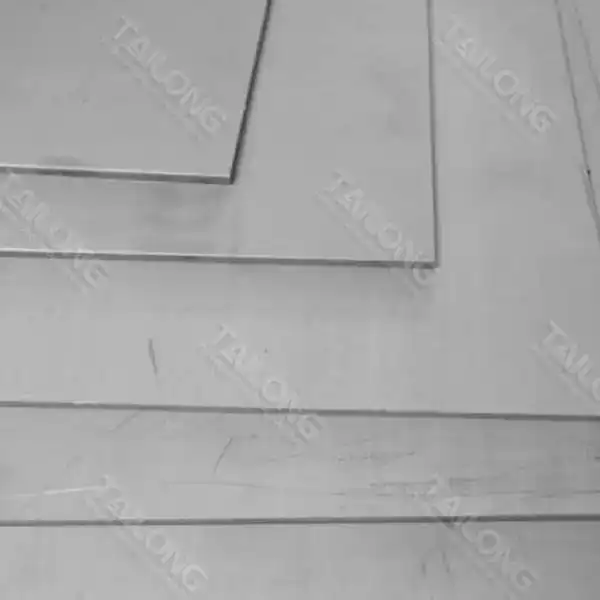
How do explosive bonding and rolling produce Clad Titanium Aluminum Plate?
Thanks to cutting-edge production techniques, the high-performance Clad Titanium Aluminum Plate combines the best qualities of both titanium and aluminum. Explosive bonding and rolling are the two main processes used to make these plates. One method of solid-state welding, explosive bonding, employs controlled explosions to forge a metallurgical connection between metals that are chemically incompatible with one another. By using this method, the distinct properties of titanium and aluminum can be preserved while the two metals fuse together in layers without melting. To get the material to the right thickness and finish after explosive bonding, it's rolled. The composite material that comes from combining these two processes is extremely strong and resistant to corrosion, similar to titanium, yet it is much lighter and more flexible than aluminum. The end product, Clad Titanium Aluminum Plate, is highly effective in a range of demanding industries, including chemical processing, aerospace, and marine.

What are the key advantages of Clad Titanium Aluminum Plate?
Superior Strength-to-Weight Ratio
Because of its remarkable strength-to-weight ratio, Clad Titanium Aluminum Plate is perfect for uses that require a combination of low weight and great strength. While the aluminum core helps keep the weight down, the titanium layer gives it great tensile strength and longevity. Because it allows the creation of strong, lightweight structures, this special blend is very useful in the aerospace and automotive industries. For instance, airplanes built with Clad Titanium Aluminum Plate have a far lower curb weight without sacrificing structural strength, which means better performance and fuel economy. Critical components that need to be reliable over the long term can benefit from this material's high strength, which also makes it appropriate for use in conditions with a lot of stress.
Enhanced Corrosion Resistance
One of the standout features of Clad Titanium Aluminum Plate is its superior corrosion resistance. When it comes to protecting against salinity, acids, and industrial chemicals, the titanium layer is second to none. Marine uses, chemical facilities, and offshore oil and gas installations all benefit greatly from this property of the material. Clad Titanium Aluminum Plates' resistance to corrosion minimizes maintenance expenses and downtime by greatly increasing the lifetime of components and structures. In marine environments, for example, this material can withstand the harsh effects of saltwater and marine organisms, maintaining its structural integrity and appearance over extended periods. This durability translates to lower lifecycle costs and improved safety in critical applications where material failure could have severe consequences.
Thermal and Electrical Properties
The electrical and thermal properties of clad titanium aluminum plate are unique and make it ideal for specific applications; for example, the material's strength and structural integrity can be maintained at high temperatures thanks to the titanium layer, which is especially useful in aerospace and industrial settings where components are subjected to high-temperature environments; and for heat exchange applications, the core's good thermal conductivity can be a benefit. In terms of electrical properties, the composite nature of Clad Titanium Aluminum Plate allows for tailored conductivity based on the specific requirements of the application. Because of its adaptability, it is a good fit for fields like energy and electronics, where exact regulation of electrical and thermal characteristics is key to high efficiency and performance.
How is Clad Titanium Aluminum Plate manufactured?
Explosive Bonding Process
An essential part of making Clad Titanium Aluminum Plate is the explosive bonding process. The controlled detonation of explosives causes the titanium and aluminum layers to collide at high speeds in this method. First, with a little space between them, the titanium and aluminum plates are carefully positioned. An explosive charge is then detonated on the surface of one plate, typically the titanium layer. The resulting shock wave propels the titanium at high velocity towards the aluminum, creating intense pressure at the interface. This pressure is sufficient to cause plastic deformation of the metal surfaces, breaking through oxide layers and allowing for direct metal-to-metal contact. The rapid and intense nature of this process results in a solid-state weld, forming a strong metallurgical bond between the titanium and aluminum without melting either material.
Rolling and Heat Treatment
Following the explosive bonding process, the Clad Titanium Aluminum Plate undergoes rolling and heat treatment to achieve the desired final properties and dimensions. The bound plate is subjected to intense pressure as it is rolled through a succession of rollers. The plate's thickness is reduced to meet the criteria, the surface finish is improved, and the mechanical qualities of the material are enhanced during this phase. Any residual tensions created during explosive bonding can be distributed more easily by rolling the material. Heat treatment is then applied to the rolled plate to further optimize its mechanical properties. This may involve annealing or aging processes, depending on the specific grade of titanium and aluminum used and the intended application of the final product. The heat treatment helps to relieve internal stresses, improve ductility, and ensure uniform properties throughout the plate.
Quality Control and Testing
Producing Clad Titanium Aluminum Plate to the exacting standards needed for mission-critical applications necessitates extensive testing and quality control processes. Several inspection procedures are used throughout production to ensure the titanium and aluminum layers are properly bonded. These may include ultrasonic testing to detect any delamination or voids within the material, as well as shear strength tests to assess the quality of the bond. In addition, mechanical testing is used to assess qualities including elongation, yield strength, and tensile strength. To further guarantee the material satisfies the performance requirements, corrosion resistance tests are also carried out. For every plate, we examine its dimensions to make sure it's within the specified thickness and flatness ranges. Every single Clad Titanium Aluminum Plate that is manufactured goes through this rigorous quality control procedure to make sure it is up to par.
What are the applications of Clad Titanium Aluminum Plate?
Aerospace Industry
When it comes to aircraft construction, Clad Titanium Aluminum Plate is commonly used for structural components that need a high strength-to-weight ratio, like wing skins, fuselage panels, and engine components. It doesn't rust, is lightweight, and can handle high temperatures. These qualities make it idealize for fly motor parts, where it can keep its shape indeed in unforgiving conditions. The fabric is too extraordinary for parts that are exposed to terrible climate, whereas in flight, since it doesn't wear down or rust. Airships that utilize Clad Titanium Aluminum Plate have a lighter by and large design, which improves performance and fuel economy and ensures the material's security and toughness over time.
Marine and Offshore Applications
Marine and offshore applications benefit greatly from Clad Titanium Aluminum Plate's exceptional corrosion resistance. This material is commonly utilized in shipbuilding for components that are continually exposed to saltwater, such as hull plating and superstructures. Thanks to the titanium layer's superior corrosion protection and the aluminum core's weight reduction capabilities, the vessel's performance and fuel efficiency are both enhanced. In offshore oil and gas platforms, Clad Titanium Aluminum Plate is used for structural components, piping systems, and heat exchangers that must withstand the corrosive effects of saltwater and harsh chemicals. Because the material lasts a long time in these conditions, it doesn't need as much maintenance and lasts longer. This makes it a cost-effective choice for maritime and offshore installations that will be around for a long time.
Chemical Processing and Energy Sector
The chemical processing industry and energy sector benefit greatly from the unique properties of Clad Titanium Aluminum Plate. Chemical handling plants use this material to make reactor vessels, storage tanks, and piping systems that can handle dangerous chemicals. The titanium layer is very resistant to many acids, bases, and other harsh chemicals. The aluminum core is also very good at conducting heat, which is useful for heat transfer applications. As an example, Clad Titanium Aluminum Plate is used in many parts of power plants, like the blades of turbines, the heat exchanges, and the condensers. This material is useful for geothermal power plants and desalination plants since it can endure high temperatures and harsh environments. In the nuclear power industry, Clad Titanium Aluminum Plate is also utilized for parts that need to be strong and resistant to corrosion in radioactive settings.
Conclusion
The Clad Titanium Aluminum Plate is a big step forward in the world of materials. Because it has certain traits, it can be useful in many cases. It works very well because the rapid bonding and rolling processes used to make it give it the best qualities of both titanium and aluminum. It is still important to use Clad Titanium Aluminum Plate in harsh environments, like in the aerospace and maritime industries, to handle chemicals, and to generate energy. As companies work to make things do more and more, this new mix is likely to become more important in the future of technology.
Shaanxi Tilong Metal Material Co., Ltd. makes high-performance metal materials like Clad Titanium Aluminum Plate. It's one of the best in the showcase. Our commerce is found in Shaanxi, China, and it has a full fabricating chain that incorporates dissolving, producing, rolling, pounding, and strengthening. Our team is skilled at creating top-notch non-ferrous metal alloys, amazing composite materials, and precise metal working plans that can be used in a lot of different ways. Individuals all over the world believe us to make titanium and titanium amalgam things since we care approximately quality and modern thoughts. For inquiries about our Clad Titanium Aluminum Plate or other products, please contact us at Tailong@tilongtitanium.com or call 86-917-3816016. Our address is No. 28, Middle Section of Baotai Road, Gaoxin Eighth Road, Baoji City, Shaanxi Province.
FAQ
Q: What is the main advantage of Clad Titanium Aluminum Plate over traditional materials?
A: The main advantage is its combination of high strength, lightweight properties, and excellent corrosion resistance, making it ideal for demanding applications in various industries.
Q: How does the explosive bonding process work in creating Clad Titanium Aluminum Plate?
A: Explosive bonding uses controlled detonations to create a high-velocity collision between titanium and aluminum layers, resulting in a solid-state weld without melting the materials.
Q: What industries benefit most from using Clad Titanium Aluminum Plate?
A: Aerospace, marine, chemical processing, and energy sectors benefit significantly due to the material's unique properties and performance in harsh environments.
Q: How does Clad Titanium Aluminum Plate contribute to fuel efficiency in aerospace applications?
A: Its high strength-to-weight ratio allows for the construction of lighter aircraft components, leading to reduced overall weight and improved fuel efficiency.
Q: What makes Clad Titanium Aluminum Plate suitable for chemical processing applications?
A: Its excellent corrosion resistance to a wide range of chemicals, combined with good thermal conductivity, makes it ideal for reactor vessels and piping systems in chemical plants.
Q: How is the quality of Clad Titanium Aluminum Plate ensured during production?
A: Rigorous quality control measures, including ultrasonic testing, shear strength tests, and corrosion resistance evaluations, are conducted throughout the manufacturing process.
References
1. Johnson, R. A., & Wronski, Z. S. (2015). Explosive welding, forming, and compaction. Springer Science & Business Media.
2. Findik, F. (2011). Recent developments in explosive welding. Materials & Design, 32(3), 1081-1093.
3. Bataev, I. A., Bataev, A. A., Mali, V. I., & Pavliukova, D. V. (2012). Structural and mechanical properties of metallic-intermetallic laminate composites produced by explosive welding and annealing. Materials & Design, 35, 225-234.
4. Acarer, M., Gülenç, B., & Findik, F. (2003). Investigation of explosive welding parameters and their effects on microhardness and shear strength. Materials & Design, 24(8), 659-664.
5. Zhang, Y., Shen, Z., Ni, X., & Lu, J. (2014). Clad plate production usingthe explosive welding technique and its applications. Metallurgical and Materials Transactions A, 45(4), 2490-2500.
6. Durgutlu, A., Gülenç, B., & Findik, F. (2005). Examination of copper/stainless steel joints formed by explosive welding. Materials & Design, 26(6), 497-507.