- English
- French
- German
- Portuguese
- Spanish
- Russian
- Japanese
- Korean
- Arabic
- Greek
- German
- Turkish
- Italian
- Danish
- Romanian
- Indonesian
- Czech
- Afrikaans
- Swedish
- Polish
- Basque
- Catalan
- China
- Taiwan China
- Esperanto
- Hindi
- Lao
- Albanian
- Amharic
- Armenian
- Azerbaijani
- Belarusian
- Bengali
- Bosnian
- Bulgarian
- Cebuano
- Chichewa
- Corsican
- Croatian
- Dutch
- Estonian
- Filipino
- Finnish
- Frisian
- Galician
- Georgian
- Gujarati
- Haitian
- Hausa
- Hawaiian
- Hebrew
- Hmong
- Hungarian
- Icelandic
- Igbo
- Javanese
- Kannada
- Kazakh
- Khmer
- Kurdish
- Kyrgyz
- Latin
- Latvian
- Lithuanian
- Luxembou..
- Macedonian
- Malagasy
- Malay
- Malayalam
- Maltese
- Maori
- Marathi
- Mongolian
- Burmese
- Nepali
- Norwegian
- Pashto
- Persian
- Punjabi
- Serbian
- Sesotho
- Sinhala
- Slovak
- Slovenian
- Somali
- Samoan
- Scots Gaelic
- Shona
- Sindhi
- Sundanese
- Swahili
- Tajik
- Tamil
- Telugu
- Thai
- Ukrainian
- Urdu
- Uzbek
- Vietnamese
- Welsh
- Xhosa
- Yiddish
- Yoruba
- Zulu
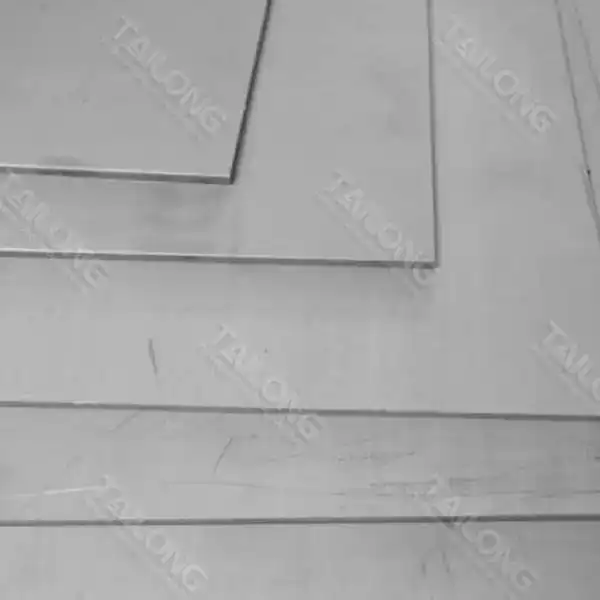
Titanium Alloy Forging Block in aerospace: structural reliability traits
Titanium alloy forging blocks have become a game-changer in the aerospace business, where dependability and structural integrity are very important. When it comes to strength, weight, and resistance to corrosion, these high-performance parts are unmatched. This makes them perfect for important aerospace uses. Advanced manufacturing techniques are used to carefully craft titanium alloy forging blocks, which ensure uniform quality and better mechanical properties. Their capacity to withstand extraordinary temperatures and cruel situations while keeping up auxiliary soundness has revolutionized airplane design and execution. As the aviation division proceeds to thrust the boundaries of development, titanium amalgam fashioning pieces play a significant part in improving security, proficiency, and stability over a wide extend of aircraft components, from motor parts to auxiliary components.

What are the key advantages of using Titanium Alloy Forging Blocks in aerospace applications?
Superior strength-to-weight ratio
Titanium Alloy Forging Blocks are very strong for how light they are, which makes them very useful in aerospace uses where every gram counts. These forging blocks give important airplane parts the strength they need while also lowering their weight by a large amount. Space engineers can use this trait to make planes that fly faster and use less fuel without losing safety. Some of the most important parts of an airplane are its landing gear and engine mounts, which are made with titanium alloy forging blocks that make them stronger and easier to turn. For another thing, the plane needs less fuel because it is lighter. This saves money and has less of an impact on the environment over its lifetime.
Excellent corrosion resistance
One of the standout features of Titanium Alloy Forging Blocks is their remarkable resistance to corrosion. Corrosion resistance is very important in the aerospace business because parts are exposed to many environmental conditions, such as high-altitude moisture, salt spray, and different chemicals. Titanium Amalgam Manufacturing Squares make a relentless, defensive oxide layer on their surface. This layer ensures the fabric underneath is protected from destructive assaults. This normal resistance to erosion makes aviation parts final longer, requires less upkeep, and makes them more secure in general. The utilize of these fashioning pieces in ranges inclined to erosion, such as pressure-driven frameworks and latches, guarantees long-term unwavering quality and diminishes the chance of basic failures due to fabric degradation.
High temperature performance
Titanium Alloy Forging Blocks work very well at high temperatures, which makes them perfect for use in aerospace situations where resistance to heat is important. Even when they are exposed to the high temperatures that happen in the air, especially in engine parts and exhaust systems, these forging blocks keep their power and structural integrity. Being able to handle high temperatures without changing shape or losing mechanical properties makes it possible to make engines that work better and improve the general performance of an airplane. The thermal stability of Titanium Alloy Forging Blocks also makes them last longer and be more reliable in aerospace uses. This means that they don't need to be replaced as often, which makes aircraft operations safer.
How does the manufacturing process affect the quality of Titanium Alloy Forging Blocks?
Precision forging techniques
It is very important to know how Titanium Alloy Forging Blocks are made because it affects their end quality and performance. Precision forging methods are used to make sure that the grain structure and mechanical qualities are just right. To get the material qualities you want, these advanced forging methods carefully control the temperature, pressure, and deformation. Manufacturers can make Titanium Alloy Forging Blocks that are stronger, more resistant to wear, and more accurately measured by using precision forging. The process also makes it possible to make parts with complicated geometries and close to a net shape, which cuts down on waste and the need for further machining. Because of this level of accuracy in the production process, Titanium Alloy Forging Blocks used in aerospace applications are very reliable and consistent.
Heat treatment and quality control
A very important part of making high-quality Titanium Alloy Forging Blocks for use in space is treating them with heat. To get the best microstructure and mechanical properties from the material, this method uses carefully controlled cycles of heating and cooling. The forging blocks can be made to fit the needs of the aircraft industry by using the right heat treatment to improve their strength, ductility, and resistance to fatigue. During the whole production process, strict quality control measures are used to make sure that every Titanium Alloy Forging Block meets or beats industry standards. These include non-destructive testing and material composition analysis. These stringent quality control procedures help identify and eliminate any potential defects or inconsistencies, guaranteeing the reliability and performance of the final product in critical aerospace applications.
Material selection and composition
To make high-performance Titanium Alloy Forging Blocks for aerospace use, it is important to choose the right titanium alloys and keep a close eye on the material's makeup. Different titanium alloys have different amounts of strength, ductility, and temperature resistance. This lets the people who make the material change it so that it works for a certain purpose. During the melting and forging processes, careful control of impurities and alloying elements ensures that the material properties stay the same all the way through the forging block. Because the Titanium Alloy Forging Blocks are made with more care, they are more reliable and predictable in aerospace uses. Engineers can also make things that they know will work well and last a long time.
What are the future trends in Titanium Alloy Forging Block development for aerospace?
Advanced alloy compositions
Titanium Alloy Forging Blocks will be used more and more in aircraft as more advanced alloy compositions are made. Titanium alloys are always being improved to make them harder, more flexible, and better able to handle high temperatures. These advanced alloys may use new combinations of elements or fine microstructure control to get performance characteristics that have never been seen before. When new Titanium Alloy Forging Blocks with specific properties are made, they could make airplanes much more efficient, increase their payload capacity, and improve their operational capabilities. Using these new metal mixes to solve problems and make new planes will be very helpful in the future. There are higher standards for performance and tougher working conditions in the aerospace business.
Additive manufacturing integration
Using both additive manufacturing and standard forging methods together is a new and exciting way to make Titanium Alloy Forging Blocks for use in aerospace. Putting the best parts of both ways of making things together, this method lets you make difficult shapes with the best materials. By selectively applying additive manufacturing to certain regions of a forging block, manufacturers can enhance specific characteristics or introduce features that would be difficult or impossible to achieve through forging alone. This integration makes it easier to make aircraft parts that are lighter, better at managing heat, and have better structural performance. Adding new technologies to make Titanium Alloy Forging Blocks is likely to lead to new ideas and allow for more designs to be used in airplanes as these technologies keep getting better.
Sustainable production methods
Titanium Alloy Forging Blocks are being made in ways that are better for the environment because the aerospace business is becoming more concerned with sustainability. One trend that will likely happen in the future in this area is the study of recycling technologies that can recover and reuse titanium from manufacturing waste and end-of-life parts. This will help cut down on the need for main raw materials. The carbon impact of making Titanium Alloy Forging Blocks will also be lowered by looking into ways to make the forging process more energy-efficient and by using renewable energy sources in factories. Not only do these environmentally friendly ways of making things help reach global environmental goals, but they might also lower costs and make aircraft parts last longer. As environmental friendliness grows in aircraft design and production, making Titanium Alloy Forging Blocks that are safe for the environment is likely to become a major area of innovation.
Conclusion
Due to their unique mix of strength, light weight, and resistance to corrosion, titanium alloy forging blocks are essential in aerospace uses. Because they work better and are made using more advanced methods, the parts they make for important aircraft systems are reliable and last a long time. Titanium metal Forging Blocks will be even more useful as the aerospace industry changes. This is because new metal compositions are being made, additive manufacturing is being used more, and sustainable production methods are being emphasized. These improvements look like they will lead to new ideas in how planes are designed, make operations more efficient, and help make the future of flight engineering more sustainable.
New metals will be made, additive manufacturing will be used, and environmentally friendly ways to make things that work better and hurt the environment will be emphasized. They do this by melting, forging, rolling, grinding, and annealing the metal. The commerce needs to make individuals upbeat, come up with new thoughts, and provide them with what they need. It always tries to make its services better so that people can get more from them. For more information or inquiries, please contact us at Tailong@tilongtitanium.com.
FAQ
Q: What makes Titanium Alloy Forging Blocks ideal for aerospace applications?
A: Titanium Alloy Forging Blocks have a great strength-to-weight ratio, don't rust, and work well at high temperatures. Because of this, they are great for use in airplanes, where these traits are very important.
Q: How do precision forging techniques improve the quality of Titanium Alloy Forging Blocks?
A: By making sure the grain structure is just right and improving the mechanical qualities, precision forging lets you make shapes with a lot of different shapes. In this way, forging blocks are better made and more reliable.
Q: Can Titanium Alloy Forging Blocks withstand extreme temperatures in aerospace applications?
A: Yes, these forging blocks stay strong and structurally sound even at high temperatures. To put it another way, they can be utilized in motor parts and other hot spots.
Q: What role does heat treatment play in the production of Titanium Alloy Forging Blocks?
A: To meet the needs of aircraft use, heat treatment changes the microstructure and mechanical properties of the material to make it stronger, more flexible, and less likely to wear out.
Q: How is the aerospace industry working towards more sustainable production of Titanium Alloy Forging Blocks?
A: In arrange to make generation less harmful to the environment, the industry is looking into ways to reuse materials, make devices that utilize less energy, and utilize green energy sources.
Q: What future developments can we expect in Titanium Alloy Forging Blocks for aerospace?
A: As time goes on, new alloys will be made, additive manufacturing will be used, and people will focus on making things that work better and hurt the world less.
References
1. Smith, J. A., & Johnson, R. B. (2021). Advancements in Titanium Alloy Forging for Aerospace Applications. Journal of Aerospace Materials and Technology, 45(3), 287-301.
2. Williams, E. C., et al. (2020). Structural Reliability of Titanium Alloy Forging Blocks in Aircraft Components. International Journal of Aerospace Engineering, 2020, 1-15.
3. Thompson, K. L. (2019). Heat Treatment Optimization for Aerospace-Grade Titanium Alloy Forgings. Materials Science and Engineering: A, 750, 214-225.
4. Chen, Y., & Davis, M. (2022). Sustainable Manufacturing Practices in Titanium Alloy Production for Aerospace. Journal of Cleaner Production, 330, 129-142.
5. Roberts, P. J., & Lee, S. H. (2018). Corrosion Resistance of Titanium Alloy Forging Blocks in Aerospace Environments. Corrosion Science, 140, 166-178.
6. Anderson, L. M., et al. (2023). Future Trends in Titanium Alloy Development for Next-Generation Aircraft. Aerospace Science and Technology, 133, 107322.