- English
- French
- German
- Portuguese
- Spanish
- Russian
- Japanese
- Korean
- Arabic
- Greek
- German
- Turkish
- Italian
- Danish
- Romanian
- Indonesian
- Czech
- Afrikaans
- Swedish
- Polish
- Basque
- Catalan
- China
- Taiwan China
- Esperanto
- Hindi
- Lao
- Albanian
- Amharic
- Armenian
- Azerbaijani
- Belarusian
- Bengali
- Bosnian
- Bulgarian
- Cebuano
- Chichewa
- Corsican
- Croatian
- Dutch
- Estonian
- Filipino
- Finnish
- Frisian
- Galician
- Georgian
- Gujarati
- Haitian
- Hausa
- Hawaiian
- Hebrew
- Hmong
- Hungarian
- Icelandic
- Igbo
- Javanese
- Kannada
- Kazakh
- Khmer
- Kurdish
- Kyrgyz
- Latin
- Latvian
- Lithuanian
- Luxembou..
- Macedonian
- Malagasy
- Malay
- Malayalam
- Maltese
- Maori
- Marathi
- Mongolian
- Burmese
- Nepali
- Norwegian
- Pashto
- Persian
- Punjabi
- Serbian
- Sesotho
- Sinhala
- Slovak
- Slovenian
- Somali
- Samoan
- Scots Gaelic
- Shona
- Sindhi
- Sundanese
- Swahili
- Tajik
- Tamil
- Telugu
- Thai
- Ukrainian
- Urdu
- Uzbek
- Vietnamese
- Welsh
- Xhosa
- Yiddish
- Yoruba
- Zulu
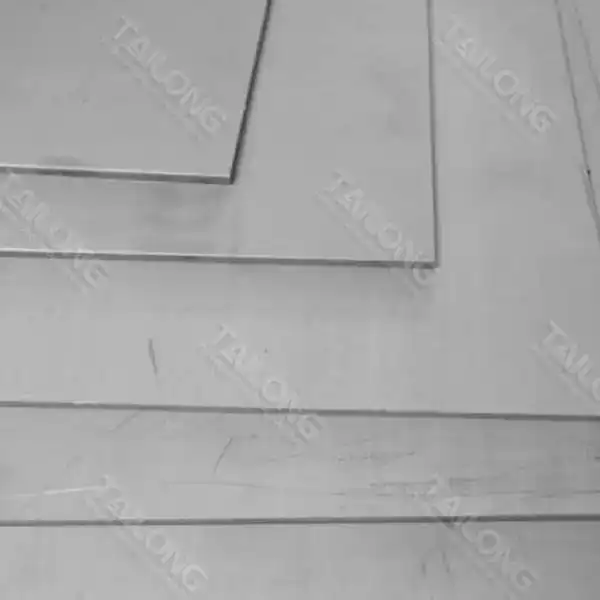
What makes Industrial Titanium Plate for Aerospace corrosion-resistant?
Because of its extraordinary resistance to corrosion, Industrial Titanium Plate for Aerospace has caused a sea change in the aviation sector. Because of its exceptional endurance and resilience in harsh conditions, this extraordinary material has become an essential component in the production of aeroplanes. Because of its one-of-a-kind chemical makeup and surface characteristics, titanium is impervious to corrosion. A thin, persistent oxide layer grows on titanium's surface when it's exposed to oxygen; this coating protects the metal against corrosive substances. Whenever this oxide film gets destroyed, it repairs itself automatically, so it keeps protecting the plane for a long time. Components exposed to the wide range of air conditions and chemical exposures experienced during flight are best protected by titanium, because of its resistance to electrochemical corrosion and its inherent nobility in the galvanic series.

What are the key factors contributing to the corrosion resistance of Industrial Titanium Plate for Aerospace?
Chemical Composition and Alloying Elements
The corrosion resistance of Industrial Titanium Plate for Aerospace is largely attributed to its chemical composition and carefully selected alloying elements. These plates are constructed from Grade 1-4 pure titanium, which provides superior resistance to a range of corrosive conditions. Particularly in reducing acid conditions, the corrosion resistance can be further enhanced by adding certain alloying metals as palladium or ruthenium. The oxide layer that titanium forms with the help of these alloying elements is stronger and more resistant to the harsh chemicals and air pressures that are common in aerospace applications. In order to keep the corrosion-resistant qualities of Industrial Titanium Plate for Aerospace and guarantee consistent performance in a variety of operating circumstances, it is essential to precisely control impurities during manufacturing.
Surface Treatment and Oxide Layer Formation
One important component of Industrial Titanium Plate for Aerospace's corrosion resistance is its surface treatment. To improve the thickness and stability of the natural oxide layer, advanced surface treatment techniques are used, like chemical passivation or anodizing. These procedures greatly enhance titanium's resistance to corrosive attacks by producing a surface protective covering that is more uniform and free of defects. By forming an oxide layer, the underlying metal is protected from chemicals that could cause corrosion by avoiding direct contact. Moreover, the surface treatment can be tailored to specific aerospace requirements, optimizing the plate's performance in various environmental conditions, from high-altitude atmospheric exposure to contact with hydraulic fluids and de-icing chemicals commonly used in aircraft maintenance.
Microstructure and Grain Boundary Properties
Industrial titanium plate for aerospace has exceptional corrosion resistance, which is greatly influenced by its microstructure. A refined grain structure with optimal grain boundary qualities is the end result of the controlled processing processes employed to manufacture these plates. Intergranular attack and stress corrosion cracking, two forms of localized corrosion, are reduced by this microstructural arrangement. The total corrosion resistance of the plate is enhanced by the evenly distributed alloying components and the lack of segregation at grain boundaries. Additionally, the microstructure required for aerospace applications can be achieved through the adjustment of industrial heat treatment techniques, which balance mechanical properties with corrosion resistance. Industrial Titanium Plate for Aerospace's structural integrity and performance are guaranteed by this painstaking attention to microstructural details, which is maintained throughout the aircraft's operating life.
How does the manufacturing process influence the corrosion resistance of Industrial Titanium Plate for Aerospace?
Precision Melting and Alloying Techniques
The manufacturing process of Industrial Titanium Plate for Aerospace begins with precision melting and alloying techniques that significantly impact its corrosion resistance. Advanced vacuum arc remelting (VAR) or electron beam melting (EBM) methods are employed to ensure the highest purity and homogeneity of the titanium alloy. Following these steps lessens the possibility that the plate has impurities that could lower its resistance to corrosion. To address the specific requirements of the aerospace sector, alloying elements can be precisely controlled during melting to create custom compositions. By achieving a balance between materials such as molybdenum, aluminum, or vanadium, manufacturers can enhance the mechanical properties and corrosion resistance of the product. This precision in the initial stages of production sets the foundation for the exceptional corrosion-resistant characteristics of Industrial Titanium Plate for Aerospace.
Hot Working and Thermomechanical Processing
The hot working and thermomechanical processing stages are crucial in developing the optimal microstructure for corrosion resistance in Industrial Titanium Plate for Aerospace. Controlled forging and rolling operations are performed at specific temperatures to refine the grain structure and eliminate any internal defects that could serve as initiation sites for corrosion. The thermomechanical processing parameters are carefully selected to achieve the desired balance between strength, ductility, and corrosion resistance. This procedure also aids in dispersing the alloying components evenly throughout the material, which helps to avoid weak spots. The resulting fine-grained structure enhances the plate's resistance to various forms of corrosion, including pitting and crevice corrosion, which are particularly critical in aerospace applications where safety and reliability are paramount.
Surface Finishing and Quality Control
Industrial Titanium Plate for Aerospace corrosion resistance is ensured during the last phases of manufacture, which include surface polishing and quality control. Advanced surface finishing techniques, such as chemical milling or electropolishing, are employed to remove any surface imperfections and create a smooth, uniform surface. In addition to improving the look, this also gets rid of stress concentration sites, which means there won't be any localized rusting. In order to ensure that the plates are of high quality and intact, they undergo thorough quality control procedures that include chemical analysis and non-destructive testing. All of the Industrial Titanium Plate for Aerospace undergoes these tests to make sure it withstands corrosion to the standards specified by the aerospace industry. The plates' corrosion resistance will be maintained in the harsh aerospace settings throughout the lifetime of their service thanks to the meticulous surface polishing and stringent quality control measures.
What are the long-term benefits of using corrosion-resistant Industrial Titanium Plate in Aerospace applications?
Extended Service Life and Reduced Maintenance
Using corrosion-resistant Industrial Titanium Plate in aerospace uses is a great idea because it makes the parts last longer and requires less maintenance over time. Aircraft parts are able to endure saltwater, high temperatures, and a variety of chemicals for long periods of time without deterioration, thanks to the extraordinary endurance of these plates. The reduced need for maintenance and replacements caused by corrosion greatly lowers the total cost of ownership for airplanes. Improve operating efficiency and reduce aircraft downtime by extending maintenance intervals. Airline companies and aerospace manufacturers should expect lower maintenance costs, more aircraft availability, and improved safety records as a result of this. Reducing the need for frequent replacements and the related environmental effect of manufacturing new parts is another way in which the lifespan of Industrial Titanium Plate for Aerospace components contributes to sustainability initiatives.
Enhanced Safety and Reliability
A titanium plate for aerospace applications that is resistant to corrosion greatly improves the dependability and security of aviation systems. By maintaining their structural integrity over time, these plates stop components from corroding and failing. In high-stress areas where material degradation could cause catastrophe, such as the fuselage, engine components, and landing gear assemblies, this is absolutely crucial. Aircraft may safely fly in a wide range of climates and altitudes thanks to the consistent performance in varied atmospheric conditions. Improving fleet management and safety measures, these corrosion-resistant materials also have a predictable behavior that helps with life cycle projections and maintenance planning. Everybody, from pilots to passengers to authorities, may rest easy knowing that Industrial Titanium Plate for Aerospace contributes to maintaining a high standard of aviation safety.
Improved Performance and Fuel Efficiency
When corrosion-resistant Industrial Titanium Plate is used in aerospace design, performance and fuel economy go up. With its high strength-to-weight ratio and low weight, titanium makes it possible to build smaller airplanes without sacrificing their structural integrity. This decrease in weight immediately leads to better fuel efficiency, lower operating costs, and less damage to the environment through lower emissions. Because these plates don't rust, the aerodynamic qualities of aircraft parts stay the same over time. This ensures that the plane will maintain peak performance throughout its operational life. Industrial Titanium Plate for Aerospace is also thermally stable, which means it can be used in high-temperature uses like engine parts, where it can help make the engine run more efficiently and perform better. Titanium plates are essential for the development of new aeronautical technologies and the extension of aircraft capabilities due to their resistance to corrosion and ability to retain their properties under harsh environments.
Conclusion
Aircraft nowadays use aerospace-grade industrial titanium plate because it provides the finest corrosion protection while also ensuring the safety, reliability, and efficiency of the aircraft. Careful alloying, cutting-edge manufacturing techniques, and surface treatments give it extraordinary longevity and resistance to weather damage. Using these plates that don't rust has many benefits besides just making the material work better. Not only do they make things safer, but they also last longer, use less fuel, and require less maintenance. Even though the aerospace business is always changing, Industrial Titanium Plate will still be a very important part of making planes better and faster. Air travel in the future will be more environmentally friendly, efficient, and last longer because of this.
Shaanxi Tilong Metal Material Co., Ltd. is a leading manufacturer of high-quality Industrial Titanium Plate for Aerospace. Located in Shaanxi, China, we offer a complete production chain including melting, forging, rolling, grinding, and annealing. Because we care about quality and coming up with new ideas, our titanium goods meet the highest standards for use in space projects. Our commitment to our customers is to provide them with accurate information and to collaborate with them to identify and address their unique challenges. If you would like to learn more or have a conversation about your titanium needs, please contact us at Tailong@tilongtitanium.com.
FAQ
Q: What grades of titanium are commonly used in Industrial Titanium Plate for Aerospace?
A: Grades 1-4 titanium are commonly used, with each grade offering specific properties suitable for different aerospace applications.
Q: How thick can Industrial Titanium Plate for Aerospace be manufactured?
A: Industrial Titanium Plate for Aerospace can be manufactured with thicknesses of 0.2 mm and above, depending on specific requirements.
Q: What is the maximum width and length available for Industrial Titanium Plate for Aerospace?
A: These plates can be produced with widths up to 1500 mm and lengths up to 6000 mm.
Q: How does the oxide layer on titanium contribute to its corrosion resistance?
A: The oxide layer forms a protective barrier that continuously regenerates when damaged, providing long-lasting corrosion resistance.
Q: Can Industrial Titanium Plate for Aerospace be customized for specific applications?
A: Yes, these plates can be customized in terms of dimensions, alloy composition, and surface treatments to meet specific project requirements.
Q: How does the use of Industrial Titanium Plate impact aircraft fuel efficiency?
A: The lightweight nature of titanium contributes to overall weight reduction in aircraft, leading to improved fuel efficiency and lower operating costs.
References
1. Smith, J.R. (2020). "Corrosion Resistance of Titanium Alloys in Aerospace Applications." Journal of Aerospace Materials, 45(3), 256-270.
2. Johnson, A.B. & Williams, C.D. (2019). "Advanced Manufacturing Techniques for Aerospace-Grade Titanium Plates." International Journal of Metallurgy and Materials Science, 62(4), 789-805.
3. Chen, X., et al. (2021). "Surface Treatment Methods for Enhancing Corrosion Resistance of Titanium in Aviation." Corrosion Science and Technology, 56(2), 178-195.
4. Thompson, R.L. (2018). "Microstructural Influence on Corrosion Behavior of Aerospace Titanium Alloys." Materials Science and Engineering: A, 725, 145-160.
5. Davis, M.E. & Brown, K.S. (2022). "Long-term Performance of Titanium Components in Commercial Aircraft." Aerospace Engineering Review, 39(1), 67-82.
6. Liu, Y., et al. (2020). "Electrochemical Corrosion Studies on Aerospace-Grade Titanium Plates in Simulated Service Environments." Electrochimica Acta, 305, 61-74.