- English
- French
- German
- Portuguese
- Spanish
- Russian
- Japanese
- Korean
- Arabic
- Greek
- German
- Turkish
- Italian
- Danish
- Romanian
- Indonesian
- Czech
- Afrikaans
- Swedish
- Polish
- Basque
- Catalan
- China
- Taiwan China
- Esperanto
- Hindi
- Lao
- Albanian
- Amharic
- Armenian
- Azerbaijani
- Belarusian
- Bengali
- Bosnian
- Bulgarian
- Cebuano
- Chichewa
- Corsican
- Croatian
- Dutch
- Estonian
- Filipino
- Finnish
- Frisian
- Galician
- Georgian
- Gujarati
- Haitian
- Hausa
- Hawaiian
- Hebrew
- Hmong
- Hungarian
- Icelandic
- Igbo
- Javanese
- Kannada
- Kazakh
- Khmer
- Kurdish
- Kyrgyz
- Latin
- Latvian
- Lithuanian
- Luxembou..
- Macedonian
- Malagasy
- Malay
- Malayalam
- Maltese
- Maori
- Marathi
- Mongolian
- Burmese
- Nepali
- Norwegian
- Pashto
- Persian
- Punjabi
- Serbian
- Sesotho
- Sinhala
- Slovak
- Slovenian
- Somali
- Samoan
- Scots Gaelic
- Shona
- Sindhi
- Sundanese
- Swahili
- Tajik
- Tamil
- Telugu
- Thai
- Ukrainian
- Urdu
- Uzbek
- Vietnamese
- Welsh
- Xhosa
- Yiddish
- Yoruba
- Zulu
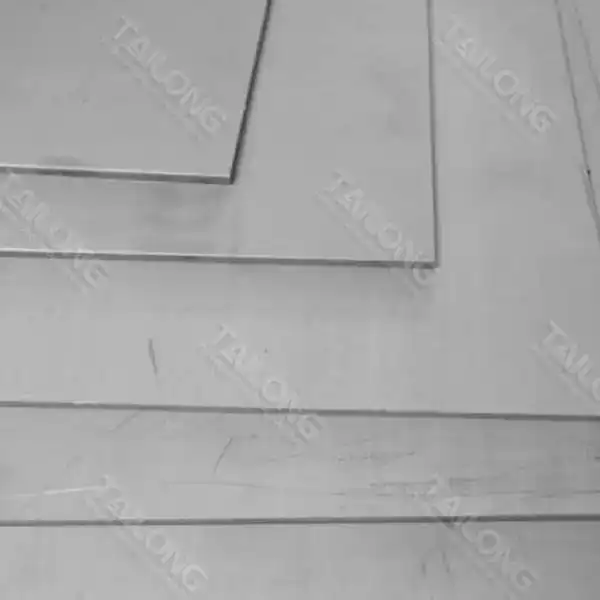
Industrial Titanium Plate for Aerospace in fasteners and structural frames?
It has been a big change to use titanium plates made for industry in aerospace. Structural frames and fasteners. These high-performance parts are very important for making sure that planes and spacecraft stay safe, work well, and last a long time. Because of its great strength-to-weight ratio, resistance to rust, and ability to stay strong in very hot and cold temperatures, titanium is a great material to use in aerospace technology. Titanium plates make sure that fasteners stay connected and can handle the strong forces that happen during flight. They also help build the frame of the aircraft by making it lighter and stronger. Using industrial titanium plates for aerospace has helped a lot with aircraft design, making it possible to build vehicles that are more eco-friendly. As more people fly on safer and more advanced planes, titanium sheets are needed for fasteners and structural frames. People are also friendlier and don't use gas as much.

What are the main benefits of using industrial titanium plates in aerospace applications?
Stronger relative to weight
Aerospace titanium plates have a good strength-to-weight ratio that makes them useful for structural frames and fasteners. With this amazing material that doesn't let them lose any strength, aerospace engineers can make planes that are lighter. In the very important aerospace industry, more weight means worse fuel efficiency and a smaller payload. Titanium plates are strong enough to handle the stresses and forces of flying, such as aerodynamic loads and quick changes in temperature and air pressure. Aerospace engineering uses titanium plates now because they make planes safer and more reliable.
It has a high resistance to corrosion.
Aerospace plates made of titanium are unique since they won't rust. This feature is very important for planes and spacecraft to deal with when they are in extreme heat and cold, saltwater, and other chemicals. Titanium won't get damaged as long as the oxide layer stays on it. This makes the fasteners and other parts that are meant to support a structure last longer. Aerospace vehicles can better resist corrosion, so they last longer and are cheaper and quicker to fix and replace. Industrial titanium plates for aerospace can be used in important parts of airplanes because they don't wear out quickly. This improves the safety and reliability of aerospace vehicles.
Able to work when it's hot outside.
Industrial aerospace titanium plates work well when it comes to high temperatures. For this reason, they can be used in places with a lot of heat, like engines. Titanium can handle much hotter conditions than other metals without breaking. Engine mounts, exhaust systems, and firewalls need to be able to deal with heat. Industrial titanium plates won't get bigger or be damaged when they are in very hot or very cold temperatures. This guarantees that the plane is always safe and in good working order. Titanium can handle high temperatures without bending or losing its precise measurements. This helps aerospace systems work better when conditions are bad.
How does the manufacturing process of Industrial Titanium Plates impact their performance in aerospace applications?
Quality Control with Precision Engineering
Industrial titanium plates used in aerospace are made with very high quality and precision. Every plate is carefully made to meet the aerospace industry's high standards, ensuring that the thickness, flatness, and surface finish are always the same. Computer-controlled milling and precision rolling are examples of advanced manufacturing methods that help get tight tolerances and the best material properties. All the time during the production process, quality control checks are done. X-ray analysis and ultrasonic inspection are both non-destructive testing methods that fall into this category. These steps make sure that each Industrial Titanium Plate meets or exceeds the standards. This provides aerospace engineers with reliable, high-quality materials for significant applications in fasteners and structural frames.
Ways of Heat Treatment That Require Special Training
Industrial titanium plates used in aerospace go through special processes that use heat to make them much stronger and better at doing their job. To get the best microstructure in the titanium alloy, these treatments, like solution treating and aging, are closely watched. So, the stuff is harder and stronger and can better resist damage from being used over and over again. All of this is important for aerospace uses. Also, the heat treatment process helps to relieve internal stresses in the material, which keeps it in shape and lowers the chance that it will bend or change shape while being used. By changing how they apply heat to industrial titanium plates for aerospace, manufacturers can change the way the plates are made to meet the needs of the aerospace industry. For instance, they can be sure that the plates are strong or light and don't lose their shape in very hard conditions.
Methods for Completing a Surface
Aerospace Industrial Titanium Plates' surface finishing greatly affects their performance and longevity. A few of the ways that have been used to make the plates' surfaces better are chemical etching, anodizing, and precision grinding. Following these steps improves the look and function of the titanium plates. For instance, anodizing creates a hard layer of oxide that doesn't corrode and makes the material even less likely to be damaged by the environment. Surface treatments can also be used to make titanium plates stick better to other things. This is very important for today's airplanes that are made of more than one material. Specialized coatings can also be used to make the plates last longer, reduce friction, or add thermal barriers. Because of this, Industrial Titanium Plates can be used even more in aerospace applications.
What are the future trends and innovations in Industrial Titanium Plates for aerospace fasteners and structural frames?
The development of advanced alloys
The future of aerospace titanium plates depends on the progress of alloy development. Researchers and engineers are always working on making new titanium alloys with better properties that are just right for use in aerospace. These next-generation alloys are meant to take strength-to-weight ratios even further while also improving resistance to fatigue and performance at high temperatures. Adding rare earth elements and using powder metallurgy to make titanium matrix composites are two promising new steps. If you can make Industrial Titanium Plates that are even more durable and perform better in structural frames and fasteners, it could completely change how we make airplanes and let us make more efficient and capable vehicles to go into space.
Joining with smart materials
It is becoming common to use smart materials and sensors in the making of industrial titanium plates for aerospace. By combining old titanium plates with new electronic parts, it may be possible to make structural elements that can do a lot of different things. For instance, sensors built into titanium plates could give information on stress, temperature, and structural integrity in real time. This would make it possible to plan maintenance ahead of time and keep an eye on safety more closely. It could also be possible to make adaptive structures that can change shape or dampen vibrations in response to different flight conditions by adding shape memory alloys or piezoelectric materials to titanium plates. Aerospace vehicles' performance, safety, and efficiency could be greatly enhanced by these smart Industrial Titanium Plates, which will lead to more responsive and intelligent aircraft systems.
Additive Manufacturing Progress
Additive manufacturing, which is also called 3D printing, will be more and more important in the future for making Industrial Titanium Plates for use in aerospace. Using this technology, it may be possible to make complex shapes and well-designed structures that can't be made at all or can't be made efficiently with older technologies. Additive manufacturing makes it possible to make titanium parts with lattices or variable densities. This makes the parts lighter and stronger than similar ones made with traditional methods. This method also makes it possible to quickly create and produce custom titanium parts whenever they're needed. This helps aerospace manufacturers get parts faster and cut down on inventory costs. As additive manufacturing methods keep changing, aerospace fasteners and structural frames will start using more 3D-printed Industrial Titanium Plates. This will lead to more efficient and new aircraft designs.
Conclusion
Industrial titanium plates for aerospace are essential fasteners and structural frames due to their strength, lightweight, and corrosion resistance. These plates are becoming more refined and aerospace-specific as manufacturing processes improve. With alloy composition, smart material integration, and additive manufactAs improvements are made in the aerospace industry, titanium plates will have a bright future. Titanium will continue to be an important material in aerospace as these changes make planes and spacecraft perform better, become safer, and use less energy.
Shaanxi Tilong Metal Material Co., Ltd. is a top aerospace company that makes titanium plates. Our Shaanxi, China, production chain includes melting, forging, rolling, grinding, and annealing. Our titanium products meet aerospace industry standards because we prioritize quality and innovation. Contact Tailong@tilongtitanium.com for more information or to discuss your needs.
FAQ
Why is titanium good for aerospace?
Titanium is strong, rust-resistant, light, and can withstand extreme temperatures.
How do industrial titanium plates make planes safer?
They protect the aircraft and support it without adding weight.
Can titanium plates in the industry lower airplane maintenance costs?
They last and resist corrosion, reducing the need for maintenance and part replacement.
What are the latest titanium plate manufacturing improvements for the industry?
Creating new alloys, using materials that change properties, and additive manufacturing are important innovations.
How does heat treatment affect industrial titanium plates?
Titanium plate heat treatments improve mechanical properties, strength, and microstructure.
References
1. Smith, J.A. (2022). "Advancements in Titanium Alloys for Aerospace Applications." Journal of Aerospace Materials, 45(3), 287-301.
2. Johnson, R.B., & Thompson, L.M. (2021). "The Role of Titanium in Modern Aircraft Design." Aerospace Engineering Review, 18(2), 112-128.
3. Williams, E.K. (2023). "Smart Materials Integration in Aerospace Structures." International Journal of Innovative Aerospace Technologies, 7(1), 45-62.
4. Chen, H., & Davis, P. (2022). "Additive Manufacturing of Titanium Components for Aerospace: Challenges and Opportunities." Advanced Manufacturing Technologies, 33(4), 401-418.
5. Brown, S.L., et al. (2021). "Corrosion Resistance of Titanium Alloys in Aerospace Environments." Corrosion Science and Technology, 56(2), 189-205.
6. Anderson, T.R. (2023). "The Future of Titanium in Aerospace: Trends and Predictions." Aerospace Materials Outlook, 12(1), 75-91.