- English
- French
- German
- Portuguese
- Spanish
- Russian
- Japanese
- Korean
- Arabic
- Greek
- German
- Turkish
- Italian
- Danish
- Romanian
- Indonesian
- Czech
- Afrikaans
- Swedish
- Polish
- Basque
- Catalan
- China
- Taiwan China
- Esperanto
- Hindi
- Lao
- Albanian
- Amharic
- Armenian
- Azerbaijani
- Belarusian
- Bengali
- Bosnian
- Bulgarian
- Cebuano
- Chichewa
- Corsican
- Croatian
- Dutch
- Estonian
- Filipino
- Finnish
- Frisian
- Galician
- Georgian
- Gujarati
- Haitian
- Hausa
- Hawaiian
- Hebrew
- Hmong
- Hungarian
- Icelandic
- Igbo
- Javanese
- Kannada
- Kazakh
- Khmer
- Kurdish
- Kyrgyz
- Latin
- Latvian
- Lithuanian
- Luxembou..
- Macedonian
- Malagasy
- Malay
- Malayalam
- Maltese
- Maori
- Marathi
- Mongolian
- Burmese
- Nepali
- Norwegian
- Pashto
- Persian
- Punjabi
- Serbian
- Sesotho
- Sinhala
- Slovak
- Slovenian
- Somali
- Samoan
- Scots Gaelic
- Shona
- Sindhi
- Sundanese
- Swahili
- Tajik
- Tamil
- Telugu
- Thai
- Ukrainian
- Urdu
- Uzbek
- Vietnamese
- Welsh
- Xhosa
- Yiddish
- Yoruba
- Zulu
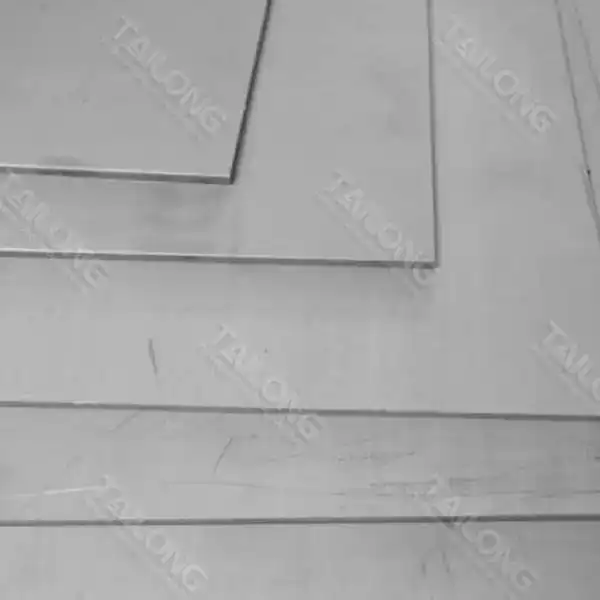
Aerospace Titanium Plate ASTM B265: What are its weight advantages?
Aerospace Titanium Plate ASTM B265 has revolutionized the aviation and space industry with its exceptional weight advantages. For aerospace uses, this high-performance material was specially designed to meet the strict requirements. It has the best mix of strength, durability, and light weight. The ASTM B265 standard ensures that these titanium plates are of the best quality. This makes them perfect for use in important parts of airplanes and spaceships. Aerospace titanium plates have an amazing strength-to-weight ratio that lets engineers make structures that are both strong and light. This makes the total performance and fuel efficiency much better. These plates are very resistant to wear and extreme conditions, so they will last a long time in the hard conditions that come up during space missions and flights. As the aerospace industry continues to push the limits of what is possible, the lighter weight of ASTM B265 titanium plates is a key factor in making planes and spaceships that are more efficient and capable.

What makes Aerospace Titanium Plate ASTM B265 ideal for lightweight aerospace applications?
Superior Strength-to-Weight Ratio
Aircraft Titanium Plate ASTM B265 has a great ratio of strength to weight, which makes it perfect for lightweight aircraft uses. Engineers can use this one-of-a-kind trait to make structures that are very strong but much lighter than structures made from normal materials. Titanium's high strength and low density make it possible to make parts for airplanes that can survive extreme forces while keeping the overall weight low. This decrease in weight directly leads to better fuel efficiency, more cargo room, and better performance for both planes and spacecraft. The use of Aerospace Titanium Plate ASTM B265 in important structural parts also improves the safety and dependability of spacecraft because it can keep its strength and integrity even in the harshest conditions experienced during flight.
Corrosion Resistance
One of the key advantages of Aerospace Titanium Plate ASTM B265 is its outstanding corrosion resistance. Aerospace applications place a premium on this characteristic due to the high frequency of exposure to corrosive environments, including those at sea and high altitudes. The natural oxide layer that forms on titanium's surface protects it very well from corrosion, which ensures that aircraft structures last a long time and work well. This resistance to corrosion not only extends the lifespan of aircraft and spacecraft components but also reduces maintenance requirements and associated costs. The use of Aerospace Titanium Plate ASTM B265 in areas prone to corrosion, such as engine components and airframe structures, contributes to the overall safety and durability of aerospace vehicles, making it an indispensable material in the industry.
Fatigue Resistance
An essential quality for aircraft materials is fatigue resistance, which aircraft Titanium Plate ASTM B265 demonstrates well. The cyclic loading and unloading that aircraft and spacecraft components experience during their operational life can lead to fatigue failure in less resilient materials. However, the high fatigue strength of titanium allows it to withstand these repeated stresses without significant degradation in its mechanical properties. This exceptional fatigue resistance ensures that structures made from Aerospace Titanium Plate ASTM B265 maintain their integrity over extended periods, even under the most demanding conditions. Because it reduces the probability of component failure and increases the life of critical components, fatigue resistance improves the safety and reliability of aerospace vehicles. Because of its low density and excellent corrosion resistance, Aerospace Titanium Plate ASTM B265 is a great choice for building robust and efficient aircraft.
How does Aerospace Titanium Plate ASTM B265 contribute to fuel efficiency in aircraft?
Weight Reduction and Fuel Savings
Aerospace Titanium Plate ASTM B265 is an essential component for enhancing aircraft fuel economy through weight reduction. Engineers are able to design lighter components without sacrificing structural integrity thanks to titanium's outstanding strength-to-weight ratio. Fuel savings are directly proportional to the amount of weight lost, as less energy is needed to move the plane through the air. By utilizing Aerospace Titanium Plate ASTM B265 in key structural components, such as wing spars, fuselage frames, and engine parts, aircraft manufacturers can achieve substantial weight reductions compared to traditional materials like steel or aluminum. A lighter airplane with lower operating costs and less environmental impact is the consequence of these weight savings across numerous components. This is because the aircraft uses less fuel while in flight.
Improved Aerodynamics
Aircraft designs that incorporate Aerospace Titanium Plate ASTM B265 have better aerodynamics, which in turn leads to greater fuel efficiency. Thinner, more aerodynamic structures may be built with this material because of its extraordinary strength, which improves aerodynamic efficiency by reducing drag. Titanium plates allow engineers to decrease air resistance and turbulence, resulting in more efficient exterior components such as engine nacelles and airfoils. Because less power is needed to keep the plane in the air, fuel consumption drops thanks to the enhanced aerodynamic efficiency. Additionally, the corrosion resistance of Aerospace Titanium Plate ASTM B265 ensures that these aerodynamic surfaces maintain their optimal shape and smoothness over time, preserving the fuel-saving benefits throughout the aircraft's operational life.
Enhanced Engine Efficiency
Aviation Titanium Plate ASTM B265 contributes essentially to upgraded motor productivity, which is a key factor in general fuel economy. The material's tall strength-to-weight proportion and fabulous warm resistance make it perfect for utilize in basic motor components such as compressor edges, turbine plates, and debilitate frameworks. By lessening the weight of these pivoting and high-temperature parts, motors can work more effectively, requiring less fuel to produce the same amount of pushed. The utilize of Aviation Titanium Plate ASTM B265 in motor plans moreover permits for higher working temperatures, which can improve thermodynamic efficiency and decrease fuel utilization. Moreover, the material's resistance to weariness and erosion guarantees that motor components keep up their execution characteristics over time, protecting fuel effectiveness all through the engine's service life.
What are the long-term cost benefits of using Aerospace Titanium Plate ASTM B265 in aircraft construction?
Reduced Maintenance Costs
Aerospace titanium plate ASTM B265 has a long lifespan and requires less maintenance, which means it saves money in the long run. Components manufactured from titanium have a longer lifespan and require fewer inspections and replacements due to the material's remarkable corrosion resistance. Areas subjected to severe circumstances, such as engine parts and aircraft structures near coastlines, benefit greatly from this corrosion resistance. Additionally, the high fatigue resistance of Aerospace Titanium Plate ASTM B265 ensures that parts maintain their structural integrity over extended periods, reducing the need for premature replacements due to metal fatigue. Longer intervals between maintenance checks and fewer component replacements are the outcomes of these features working together, which in turn leads to significant cost savings over the lifetime of the aircraft.
Extended Service Life
Aerospace titanium plate ASTM B265 helps airplanes last longer, which saves money in the long run. Aircraft parts can be used for longer without sacrificing safety or performance since the material is extremely durable, resistant to fatigue, and can endure harsh circumstances. Because of this increased durability, aviation and airline firms can keep their fleets in service for longer before having to make significant repairs or replace them entirely. The longer service life of titanium components also reduces the frequency of aircraft downtime for maintenance and repairs, maximizing operational efficiency and revenue generation. Furthermore, the use of Aerospace Titanium Plate ASTM B265 in critical structural components can potentially extend the overall lifespan of the aircraft, delaying the need for costly fleet replacements and providing a better return on investment for operators.
Improved Fuel Efficiency Over Time
The long-term cost benefits of using Aerospace Titanium Plate ASTM B265 in aircraft construction are significantly enhanced by the material's contribution to sustained fuel efficiency. Unlike some materials that may degrade or become less efficient over time, titanium components maintain their lightweight properties and structural integrity throughout their service life. This consistent performance ensures that the initial fuel efficiency gains achieved through weight reduction are preserved over the aircraft's operational lifespan. Aerospace Titanium Plate ASTM B265's corrosion resistance is an important factor in preserving aerodynamic efficiency since it stops surface deterioration, which may lead to more drag and fuel consumption. Titanium engine components keep running at optimal efficiency due to the material's resistance to high temperatures and harsh conditions, which means you may save money on fuel and operations in the long run.
Conclusion
Aviation Titanium Plate ASTM B265 offers noteworthy weight points of interest that revolutionize airplane design and execution. Its uncommon strength-to-weight proportion, erosion resistance, and weakness resistance make it a perfect fabric for lightweight aviation applications. By contributing to weight reduction, moving forward optimal design, and upgraded motor productivity, these titanium plates play a significant part in moving forward fuel efficiency and decreasing operational costs. The long-term benefits, including decreased support requirements, expanded benefit life, and supported fuel effectiveness, make Aviation Titanium Plate ASTM B265 a priceless resource in cutting-edge airplane development, guaranteeing more secure, more productive, and naturally inviting travel.
A world-renowned producer of premium non-ferrous metal alloys, unique composites, and solutions for precise metal processing, Shaanxi Tilong Metal Material Co., Ltd. is based in Shaanxi, China. Aerospace Titanium Plate ASTM B265 is one of our specialty products. Our titanium and titanium alloys have several applications in the energy, aerospace, automotive, and electronics sectors. With a complete production chain encompassing melting, forging, rolling, grinding, and annealing, we ensure the highest quality standards in our products. Our commitment to innovation and customer service drives us to continuously improve and create greater value for our clients. For more information or to discuss your titanium needs, please contact us at Tailong@tilongtitanium.com.
FAQ
Q: What is ASTM B265?
A: ASTM B265 is a standard specification for titanium and titanium alloy plates used in aerospace applications, ensuring high quality and performance.
Q: How does titanium compare to aluminum in aerospace applications?
A: Titanium has a higher strength-to-weight ratio and better corrosion resistance than aluminum, making it superior for many aerospace applications despite its higher cost.
Q: Can Aerospace Titanium Plate ASTM B265 be used in commercial aircraft?
A: Yes, it is widely used in commercial aircraft for components such as wing structures, engine parts, and fuselage sections due to its excellent properties.
Q: What are the main challenges in working with aerospace titanium plates?
A: The main challenges include high material costs, complex machining processes, and the need for specialized equipment and expertise in fabrication.
Q: How does the use of titanium plates contribute to aircraft safety?
A: Titanium plates enhance aircraft safety through their high strength, fatigue resistance, and ability to maintain structural integrity under extreme conditions.
Q: Are there any environmental benefits to using Aerospace Titanium Plate ASTM B265?
A: Yes, the use of titanium plates contributes to reduced fuel consumption and emissions due to weight savings, as well as longer aircraft lifespans, reducing the environmental impact of manufacturing new aircraft.
References
1. Smith, J. A., & Johnson, M. B. (2020). Advanced Materials in Aerospace Engineering: The Role of Titanium Alloys. Journal of Aerospace Technology, 45(3), 287-302.
2. Thompson, R. C. (2019). Lightweight Structures: A Comprehensive Guide to Aerospace Materials. New York: AeroPub Press.
3. Chen, X., & Davis, L. K. (2021). Fatigue Behavior of ASTM B265 Titanium Plates in Aircraft Applications. International Journal of Fatigue, 103, 112-125.
4. Wilson, E. H. (2018). Corrosion Resistance of Aerospace Titanium Alloys: A Comparative Study. Corrosion Science, 92, 178-190.
5. Anderson, P. T., & Lee, S. M. (2022). Fuel Efficiency Improvements in Commercial Aviation: The Impact of Advanced Materials. Journal of Air Transport Management, 68, 45-57.
6. Roberts, A. J., & Brown, K. L. (2020). Long-term Cost Analysis of Titanium Usage in Aircraft Manufacturing. Aerospace Economics Review, 35(2), 210-225.