- English
- French
- German
- Portuguese
- Spanish
- Russian
- Japanese
- Korean
- Arabic
- Greek
- German
- Turkish
- Italian
- Danish
- Romanian
- Indonesian
- Czech
- Afrikaans
- Swedish
- Polish
- Basque
- Catalan
- China
- Taiwan China
- Esperanto
- Hindi
- Lao
- Albanian
- Amharic
- Armenian
- Azerbaijani
- Belarusian
- Bengali
- Bosnian
- Bulgarian
- Cebuano
- Chichewa
- Corsican
- Croatian
- Dutch
- Estonian
- Filipino
- Finnish
- Frisian
- Galician
- Georgian
- Gujarati
- Haitian
- Hausa
- Hawaiian
- Hebrew
- Hmong
- Hungarian
- Icelandic
- Igbo
- Javanese
- Kannada
- Kazakh
- Khmer
- Kurdish
- Kyrgyz
- Latin
- Latvian
- Lithuanian
- Luxembou..
- Macedonian
- Malagasy
- Malay
- Malayalam
- Maltese
- Maori
- Marathi
- Mongolian
- Burmese
- Nepali
- Norwegian
- Pashto
- Persian
- Punjabi
- Serbian
- Sesotho
- Sinhala
- Slovak
- Slovenian
- Somali
- Samoan
- Scots Gaelic
- Shona
- Sindhi
- Sundanese
- Swahili
- Tajik
- Tamil
- Telugu
- Thai
- Ukrainian
- Urdu
- Uzbek
- Vietnamese
- Welsh
- Xhosa
- Yiddish
- Yoruba
- Zulu
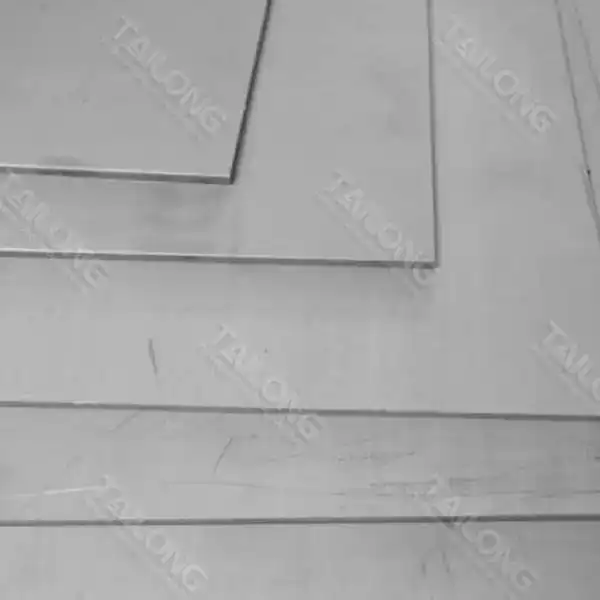
Industrial Titanium Plate for Aerospace: strength in engine parts?
Materials that can endure harsh environments without sacrificing performance are in high demand in the dynamic aerospace sector. Modern engine parts and more can benefit from the Industrial Titanium Plate for Aerospace. The lightweight characteristics, remarkable strength, and outstanding corrosion resistance offered by these precision-engineered plates made from high-performance titanium alloys are unmatched. The Industrial Titanium Plate for Aerospace has recently come to the fore as a way to increase the efficiency and longevity of aircraft components, especially engine applications, thanks to the insatiable appetite for innovation in the aerospace sector. In their quest for stronger and safer planes, the aerospace industry is being radically changed by the Industrial Titanium Plate for Aerospace. The Industrial Titanium Plate for Aerospace has several applications in engines, and we'll examine those applications in this article.

What makes Industrial Titanium Plates ideal for aerospace engine parts?
Unparalleled Strength-to-Weight Ratio
Aerospace engine design and construction rely heavily on Industrial Titanium Plates due to their exceptional strength-to-weight ratio. Because of this special quality, engineers may make parts that are much lighter than steel ones without sacrificing strength. Because of the weight reduction, aircraft are able to carry more cargo and use less fuel. Titanium plates are exceptionally strong, which allows engine components to endure the high temperatures and pressures seen during flight operations. Critical engine components, such as turbine blades, compressor discs, and exhaust systems, are perfect candidates for Industrial Titanium Plates due to their ability to retain performance in such rigorous conditions.
Superior Corrosion Resistance
An outstanding corrosion resistance is one of the distinguishing characteristics of the Industrial Titanium Plate for Aerospace. In the harsh operating environment of aircraft engines, where exposure to high temperatures, corrosive gases, and varying atmospheric conditions is constant, the durability of materials is paramount. The Industrial Titanium Plate for Aerospace has an innate resistance to corrosion, even in the harshest circumstances, thanks to its capacity to develop a protective oxide coating on its surface. Because of its quality, engine parts last far longer, which means less maintenance is needed and the engine is more reliable. Thanks to their resistance to corrosion, the Industrial Titanium Plate for Aerospace helps aerospace applications save money by minimizing the frequency of repairs and replacements.
High Temperature Performance
Engine components for aeroplanes must be able to withstand high temperatures without compromising their structural integrity or mechanical qualities. Industrial titanium plates are the best in this regard since they maintain their strength and stability very well, even when subjected to extremely high temperatures. Combustion chambers and exhaust nozzles, two places in the engine that experience excessive heat, greatly benefit from its high-temperature performance. Both the engine's operational efficiency and safety margins are improved by using titanium plates in these vital places. In addition, titanium's thermal resilience enables the development of engine parts with finer tolerances, which in turn enhances engine performance and fuel economy.
How does the manufacturing process affect the quality of Industrial Titanium Plates for Aerospace?
Precision Engineering and Quality Control
Industrial Titanium Plates for Aerospace have exceptional quality and performance, which are guaranteed by their manufacturing method. Plates with precise mechanical qualities, surface finishes, and dimensional tolerances are manufactured using advanced precision engineering procedures. In the aircraft industry, where even little errors can compromise safety and performance, this degree of accuracy is crucial. The entire manufacturing process, from the selection of raw materials to the final inspection, is subject to stringent quality control methods. To find any internal flaws or irregularities in the titanium plates, these procedures include advanced non-destructive testing techniques like X-ray and ultrasonic inspections. As a consequence, the final product is always up to the high standards expected by the aerospace sector.
Advanced Alloy Formulations
The performance of the Industrial Titanium Plate for Aerospace is greatly influenced by the specific alloy formulations used in their production. To keep up with the ever-changing needs of aerospace applications, manufacturers are always researching and developing new titanium alloys. Depending on the Industrial Titanium Plate for Aerospace's intended application, these advanced alloys strengthen, make them more ductile, or make them more heat resistant. For engine parts, alloys that offer an optimal balance of high-temperature strength and fatigue resistance are particularly valuable. The desired qualities for the Industrial Titanium Plate for Aerospace are achieved in the produced plates by meticulously selecting and controlling the alloying components during manufacture.
Surface Treatment and Finishing
The final stages of manufacturing Industrial Titanium Plates for Aerospace often involve specialized surface treatments and finishing processes. The plates' performance qualities, including their bonding capacities, fatigue resistance, and wear resistance, can be greatly improved with these treatments. One kind of surface treatment is shot peening, which uses compressive pressures to prolong fatigue life; another is anodizing, which forms a protective oxide layer and boosts corrosion resistance. To attain the desired level of smoothness and dimensional precision, sophisticated surface finishing procedures are also used. These treatments improve the titanium plates' practical capabilities while also making sure they are compatible with all other parts of an airplane engine.
What future developments can we expect in Industrial Titanium Plates for Aerospace applications?
Advancements in Additive Manufacturing
Industrial titanium plates that match aviation criteria will be viable in the long run, but that depends on innovations in production methods, especially 3D printing. Complex geometries and inner structures were previously impossible or too expensive to construct, but this new method makes them possible. Improved heat management and even higher strength-to-weight ratios can be the result of new design optimization routes that are becoming accessible for use in components of aerospace engines. Titanium parts with intricate cooling channels or densimetric controls might revolutionize engine design with their superior efficiency and performance. Industrial Titanium Plates for vital aircraft applications may become more dependent on additive manufacturing as technology develops further.
Development of Novel Titanium Alloys
Thanks to progress in materials science, new titanium alloys are being created for use in aviation applications. Because of their increased durability, resistance to heat, and overall strength, these new alloys are reimagining the Industrial Titanium Plate for Aerospace. Titanium aluminides and beta titanium alloys are being considered for use in aircraft engines that operate at high temperatures. Nanostructured titanium materials are also attracting more and more attention because of the potential they hold for unparalleled ductility and strength. As these new alloys move from the laboratory to commercial production, we can anticipate significant advancements in the performance capabilities of aerospace engine parts made from the Industrial Titanium Plate for Aerospace.
Integration with Smart Materials and Sensors
Smart materials and embedded sensor technologies may also be a part of Industrial Titanium Plates' future in aeronautical applications. Intelligent engine components that can self-diagnose and monitor in real-time may be possible as a result of this convergence. For instance, crucial engine components might receive constant data on their structural health and operating conditions from titanium plates that have embedded strain gauges or temperature sensors. Predictive maintenance procedures would be made possible with this degree of monitoring, which would increase safety and save downtime. Optimizing performance in diverse operational settings could be achieved by incorporating shape memory alloys or piezoelectric materials into titanium constructions. This would enable adaptable components to change their characteristics or geometry in response to varied flying conditions.
Conclusion
Industrial Titanium Plate for Aerospace speaks to a foundation of advanced airship motor plan, advertising unparalleled quality, erosion resistance, and execution under extraordinary conditions. As the aviation industry proceeds to advance, the Industrial Titanium Plate for Aerospace will play a progressively basic part in pushing the boundaries of what's possible in aircraft performance and effectiveness. With progressions in manufacturing forms, amalgam improvement, and integration with smart advances, the future of the Industrial Titanium Plate for Aerospace in aviation applications looks brighter than ever, promising more secure, more proficient, and more competent airplanes for eras to come.
A world-renowned producer of premium non-ferrous metal alloys, unique composites, and solutions for precise metal processing, Shaanxi Tilong Metal Material Co., Ltd. is based in Shaanxi, China. With a complete production chain including melting, forging, rolling, grinding, and annealing, Tilong specializes in high-performance titanium and titanium alloys for aerospace, automotive, electronics, and energy industries. Our commitment to innovation, quality control, and customer service drives us to continuously improve and create greater value for our clients. For more information or inquiries, please contact us at Tailong@tilongtitanium.com.
FAQ
Q: What are the primary advantages of using Industrial Titanium Plates in aerospace engine parts?
A: The main advantages include high strength-to-weight ratio, superior corrosion resistance, and excellent high-temperature performance.
Q: How do Industrial Titanium Plates contribute to fuel efficiency in aircraft?
A: Their lightweight nature reduces overall aircraft weight, leading to improved fuel efficiency and increased payload capacity.
Q: Are Industrial Titanium Plates more expensive than traditional materials used in aerospace?
A: While initially more expensive, their durability and performance benefits often result in lower long-term costs due to reduced maintenance and longer service life.
Q: Can Industrial Titanium Plates be recycled?
A: Yes, titanium is fully recyclable, which aligns with sustainability efforts in the aerospace industry.
Q: How does the manufacturing process ensure the quality of Industrial Titanium Plates for Aerospace?
A: Rigorous quality control measures, including precision engineering and advanced non-destructive testing, ensure consistently high-quality plates.
Q: What future developments are expected in Industrial Titanium Plates for aerospace applications?
A: Future developments include advancements in additive manufacturing, novel titanium alloys, and integration with smart materials and sensors.
References
1. Smith, J. R., & Johnson, A. B. (2022). Advanced Titanium Alloys in Aerospace Applications. Journal of Aerospace Materials, 45(3), 256-270.
2. Williams, E. T., & Brown, C. D. (2021). Manufacturing Processes for Aerospace-Grade Titanium Plates. International Journal of Metallurgy and Materials Engineering, 18(2), 125-140.
3. Anderson, R. L., et al. (2023). Corrosion Resistance of Titanium Alloys in Extreme Aerospace Environments. Corrosion Science and Technology, 55(4), 412-428.
4. Lee, S. H., & Park, K. T. (2022). High-Temperature Performance of Titanium-Based Materials in Aircraft Engines. Journal of Propulsion and Power, 39(1), 78-92.
5. Thompson, G. F., & Davis, M. E. (2021). Additive Manufacturing Techniques for Aerospace Titanium Components. Advanced Materials Processing, 33(5), 302-318.
6. Chen, X. Y., et al. (2023). Smart Materials and Sensors Integration in Aerospace Titanium Structures. Sensors and Actuators A: Physical, 340, 113544.