- English
- French
- German
- Portuguese
- Spanish
- Russian
- Japanese
- Korean
- Arabic
- Greek
- German
- Turkish
- Italian
- Danish
- Romanian
- Indonesian
- Czech
- Afrikaans
- Swedish
- Polish
- Basque
- Catalan
- China
- Taiwan China
- Esperanto
- Hindi
- Lao
- Albanian
- Amharic
- Armenian
- Azerbaijani
- Belarusian
- Bengali
- Bosnian
- Bulgarian
- Cebuano
- Chichewa
- Corsican
- Croatian
- Dutch
- Estonian
- Filipino
- Finnish
- Frisian
- Galician
- Georgian
- Gujarati
- Haitian
- Hausa
- Hawaiian
- Hebrew
- Hmong
- Hungarian
- Icelandic
- Igbo
- Javanese
- Kannada
- Kazakh
- Khmer
- Kurdish
- Kyrgyz
- Latin
- Latvian
- Lithuanian
- Luxembou..
- Macedonian
- Malagasy
- Malay
- Malayalam
- Maltese
- Maori
- Marathi
- Mongolian
- Burmese
- Nepali
- Norwegian
- Pashto
- Persian
- Punjabi
- Serbian
- Sesotho
- Sinhala
- Slovak
- Slovenian
- Somali
- Samoan
- Scots Gaelic
- Shona
- Sindhi
- Sundanese
- Swahili
- Tajik
- Tamil
- Telugu
- Thai
- Ukrainian
- Urdu
- Uzbek
- Vietnamese
- Welsh
- Xhosa
- Yiddish
- Yoruba
- Zulu
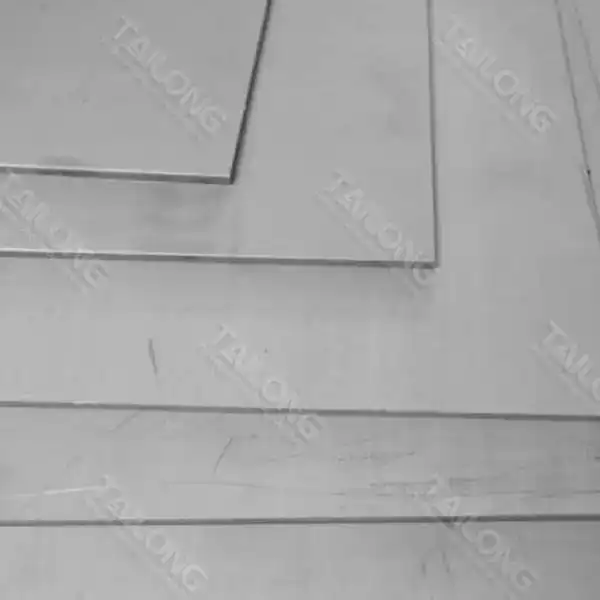
Aerospace Titanium Plate ASTM B265: How does it contribute to structural integrity?
In the realm of aerospace engineering, where every component must meet exacting standards of performance and reliability, the Aerospace Titanium Plate ASTM B265 stands out as a crucial material. This specialized titanium plate plays a vital role in ensuring the structural integrity of aircraft, spacecraft, and various aerospace applications. ASTM B265 is a standard specification that outlines the requirements for titanium and titanium alloy plates, sheets, and strips used in aerospace and other high-performance industries. The unique properties of titanium, combined with the stringent manufacturing processes outlined in ASTM B265, result in a material that offers an exceptional balance of strength, lightweight characteristics, and corrosion resistance. These qualities are essential for aerospace structures that must withstand extreme conditions while minimizing overall weight. As we delve deeper into the world of Aerospace Titanium Plate ASTM B265, we'll explore its significant contributions to structural integrity and why it has become an indispensable material in modern aerospace engineering.

What are the key properties of Aerospace Titanium Plate ASTM B265?
Strength-to-Weight Ratio
The Aerospace Titanium Plate ASTM B265 is renowned for its exceptional strength-to-weight ratio, a critical factor in aerospace applications where every gram counts. This titanium plate offers a unique combination of high tensile strength and low density, making it an ideal choice for structural components in aircraft and spacecraft. The ASTM B265 specification ensures that the titanium plates meet strict standards for mechanical properties, including yield strength, ultimate tensile strength, and elongation. These properties allow aerospace engineers to design lighter yet stronger structures, significantly improving fuel efficiency and overall performance of aerospace vehicles. The superior strength-to-weight ratio of Aerospace Titanium Plate ASTM B265 contributes to the structural integrity of aerospace components by providing robust support while minimizing the overall weight of the vehicle.
Corrosion Resistance
Another crucial property of Aerospace Titanium Plate ASTM B265 is its exceptional corrosion resistance. This characteristic is particularly valuable in the aerospace industry, where components are exposed to a wide range of corrosive environments, from high-altitude atmospheric conditions to marine environments for naval aircraft. The ASTM B265 specification includes requirements for chemical composition and heat treatment processes that enhance the titanium plate's resistance to various forms of corrosion. This inherent corrosion resistance of Aerospace Titanium Plate ASTM B265 contributes significantly to the long-term structural integrity of aerospace components by preventing material degradation over time. The ability to withstand corrosive environments ensures that critical structural elements maintain their strength and reliability throughout the aircraft or spacecraft's operational life, reducing maintenance requirements and enhancing safety.
Temperature Resistance
The Aerospace Titanium Plate ASTM B265 exhibits remarkable temperature resistance, making it suitable for applications involving extreme thermal conditions. This property is crucial for components in jet engines, supersonic aircraft, and space vehicles where temperatures can range from cryogenic levels to several hundred degrees Celsius. The ASTM B265 specification includes requirements for heat treatment and microstructure control, ensuring that the titanium plates maintain their mechanical properties across a wide temperature range. This temperature resistance contributes to structural integrity by allowing aerospace components to maintain their strength and dimensional stability under varying thermal loads. The ability of Aerospace Titanium Plate ASTM B265 to withstand high temperatures without significant creep or degradation ensures that critical structural elements remain reliable even in the most demanding aerospace applications.
How does Aerospace Titanium Plate ASTM B265 enhance aircraft performance?
Weight Reduction
Aerospace Titanium Plate ASTM B265 plays a crucial role in enhancing aircraft performance through significant weight reduction. The exceptional strength-to-weight ratio of titanium allows engineers to design structural components that are lighter than their steel or aluminum counterparts while maintaining equivalent or superior strength. This weight reduction directly translates to improved fuel efficiency, increased payload capacity, and enhanced range for aircraft. The ASTM B265 specification ensures that the titanium plates meet the required mechanical properties at minimal thickness, further contributing to weight savings. By utilizing Aerospace Titanium Plate ASTM B265 in key structural elements such as wing spars, fuselage frames, and engine mounts, aircraft manufacturers can achieve substantial weight reductions without compromising on structural integrity or safety.
Fatigue Resistance
Another significant way in which Aerospace Titanium Plate ASTM B265 enhances aircraft performance is through its superior fatigue resistance. Aircraft structures are subjected to cyclic loading and vibrations throughout their operational life, making fatigue resistance a critical factor in ensuring long-term structural integrity. The ASTM B265 specification includes requirements for microstructure and surface finish that contribute to the titanium plate's excellent fatigue properties. This high fatigue resistance allows aerospace components made from Aerospace Titanium Plate ASTM B265 to withstand a greater number of stress cycles before failure, extending the service life of critical structural elements. The improved fatigue performance translates to reduced maintenance requirements, increased reliability, and enhanced safety for aircraft operations.
Thermal Management
Aerospace Titanium Plate ASTM B265 contributes to improved thermal management in aircraft, which is essential for enhancing overall performance. The material's ability to maintain its mechanical properties over a wide temperature range makes it ideal for components exposed to varying thermal conditions. In high-speed aircraft and engine applications, the titanium plate's low thermal expansion coefficient helps minimize thermal stresses and maintain dimensional stability. The ASTM B265 specification includes requirements for thermal processing that optimize the titanium plate's microstructure for thermal stability. By utilizing Aerospace Titanium Plate ASTM B265 in heat-sensitive areas, such as engine nacelles and leading edges, aircraft designers can improve thermal efficiency and reduce the need for complex cooling systems, ultimately enhancing aircraft performance and reliability.
What are the manufacturing challenges in producing Aerospace Titanium Plate ASTM B265?
Material Purity
One of the significant manufacturing challenges in producing Aerospace Titanium Plate ASTM B265 is maintaining the required level of material purity. The ASTM B265 specification sets stringent requirements for chemical composition, including tight controls on interstitial elements such as oxygen, nitrogen, and carbon, which can significantly affect the mechanical properties of titanium. Achieving and maintaining this high level of purity requires specialized melting techniques, such as vacuum arc remelting (VAR) or electron beam melting (EBM). These processes are complex and require precise control to ensure that the resulting Aerospace Titanium Plate ASTM B265 meets the exacting standards for aerospace applications. Additionally, the raw material sourcing for titanium production must be carefully managed to avoid contamination that could compromise the final product's integrity.
Process Control
Another critical challenge in manufacturing Aerospace Titanium Plate ASTM B265 is maintaining strict process control throughout the production cycle. The ASTM B265 specification requires precise control of various parameters during melting, forging, rolling, heat treatment, and finishing processes. Each step in the manufacturing process can significantly impact the final properties of the titanium plate, including its microstructure, mechanical strength, and surface quality. Achieving consistent results across large production runs of Aerospace Titanium Plate ASTM B265 requires advanced process monitoring and control systems, as well as highly skilled operators. The complexity of titanium's metallurgy means that even small variations in process parameters can lead to significant changes in the material's properties, making tight process control essential for meeting the demanding requirements of aerospace applications.
Quality Assurance
Ensuring comprehensive quality assurance is a paramount challenge in the production of Aerospace Titanium Plate ASTM B265. The aerospace industry demands the highest levels of reliability and traceability for all materials used in aircraft construction. Meeting the ASTM B265 specification requires extensive testing and inspection at multiple stages of the manufacturing process. This includes non-destructive testing methods such as ultrasonic inspection, X-ray analysis, and dye penetrant testing to detect any internal or surface defects. Additionally, mechanical testing, chemical analysis, and microstructural examination are necessary to verify that the Aerospace Titanium Plate ASTM B265 meets all specified requirements. Implementing a robust quality assurance system that can consistently detect and prevent any deviations from the stringent aerospace standards is a complex and resource-intensive process, requiring significant investment in technology and skilled personnel.
Conclusion
Aerospace Titanium Plate ASTM B265 plays a crucial role in enhancing the structural integrity of modern aircraft and spacecraft. Its exceptional strength-to-weight ratio, corrosion resistance, and temperature tolerance make it an indispensable material in aerospace engineering. By contributing to weight reduction, fatigue resistance, and improved thermal management, this specialized titanium plate significantly enhances aircraft performance and reliability. Despite the manufacturing challenges associated with material purity, process control, and quality assurance, the benefits of Aerospace Titanium Plate ASTM B265 continue to drive its widespread adoption in the aerospace industry, ensuring safer, more efficient, and more durable aerospace structures.
Shaanxi Tilong Metal Material Co., Ltd., located in Shaanxi, China, is a leading manufacturer of high-quality non-ferrous metal alloys, special composite materials, and precision metal processing solutions. With a complete production chain including melting, forging, rolling, grinding, and annealing, Tilong specializes in high-performance titanium and titanium alloys. Our products, known for their excellent strength, corrosion resistance, and heat resistance, are widely used in aerospace, automotive, electronics, and energy industries. We are committed to innovation and superior service, continuously improving our offerings to create greater value for our customers. For more information or inquiries, please contact us at Tailong@tilongtitanium.com.
FAQ
What is ASTM B265?
ASTM B265 is a standard specification for titanium and titanium alloy plates, sheets, and strips used in aerospace and other high-performance industries.
Why is titanium preferred in aerospace applications?
Titanium is preferred due to its high strength-to-weight ratio, excellent corrosion resistance, and ability to maintain its properties at extreme temperatures.
How does Aerospace Titanium Plate ASTM B265 contribute to weight reduction in aircraft?
It allows for the design of lighter structural components that maintain equivalent or superior strength compared to heavier materials like steel or aluminum.
What are the key manufacturing challenges for Aerospace Titanium Plate ASTM B265?
The main challenges include maintaining material purity, ensuring strict process control, and implementing comprehensive quality assurance measures.
How does the fatigue resistance of Aerospace Titanium Plate ASTM B265 benefit aircraft?
Its superior fatigue resistance allows components to withstand more stress cycles, extending service life and reducing maintenance requirements.
References
1. ASTM International. (2020). ASTM B265 - Standard Specification for Titanium and Titanium Alloy Strip, Sheet, and Plate. West Conshohocken, PA: ASTM International.
2. Boyer, R., Welsch, G., & Collings, E. W. (1994). Materials Properties Handbook: Titanium Alloys. ASM International.
3. Inagaki, I., Takechi, T., Shirai, Y., & Ariyasu, N. (2014). Application and Features of Titanium for the Aerospace Industry. Nippon Steel & Sumitomo Metal Technical Report, 106, 22-27.
4. Peters, M., Kumpfert, J., Ward, C. H., & Leyens, C. (2003). Titanium Alloys for Aerospace Applications. Advanced Engineering Materials, 5(6), 419-427.
5. Donachie, M. J. (2000). Titanium: A Technical Guide. ASM International.
6. Veiga, C., Davim, J. P., & Loureiro, A. J. R. (2012). Properties and applications of titanium alloys: A brief review. Reviews on Advanced Materials Science, 32(2), 133-148.