- English
- French
- German
- Portuguese
- Spanish
- Russian
- Japanese
- Korean
- Arabic
- Greek
- German
- Turkish
- Italian
- Danish
- Romanian
- Indonesian
- Czech
- Afrikaans
- Swedish
- Polish
- Basque
- Catalan
- China
- Taiwan China
- Esperanto
- Hindi
- Lao
- Albanian
- Amharic
- Armenian
- Azerbaijani
- Belarusian
- Bengali
- Bosnian
- Bulgarian
- Cebuano
- Chichewa
- Corsican
- Croatian
- Dutch
- Estonian
- Filipino
- Finnish
- Frisian
- Galician
- Georgian
- Gujarati
- Haitian
- Hausa
- Hawaiian
- Hebrew
- Hmong
- Hungarian
- Icelandic
- Igbo
- Javanese
- Kannada
- Kazakh
- Khmer
- Kurdish
- Kyrgyz
- Latin
- Latvian
- Lithuanian
- Luxembou..
- Macedonian
- Malagasy
- Malay
- Malayalam
- Maltese
- Maori
- Marathi
- Mongolian
- Burmese
- Nepali
- Norwegian
- Pashto
- Persian
- Punjabi
- Serbian
- Sesotho
- Sinhala
- Slovak
- Slovenian
- Somali
- Samoan
- Scots Gaelic
- Shona
- Sindhi
- Sundanese
- Swahili
- Tajik
- Tamil
- Telugu
- Thai
- Ukrainian
- Urdu
- Uzbek
- Vietnamese
- Welsh
- Xhosa
- Yiddish
- Yoruba
- Zulu
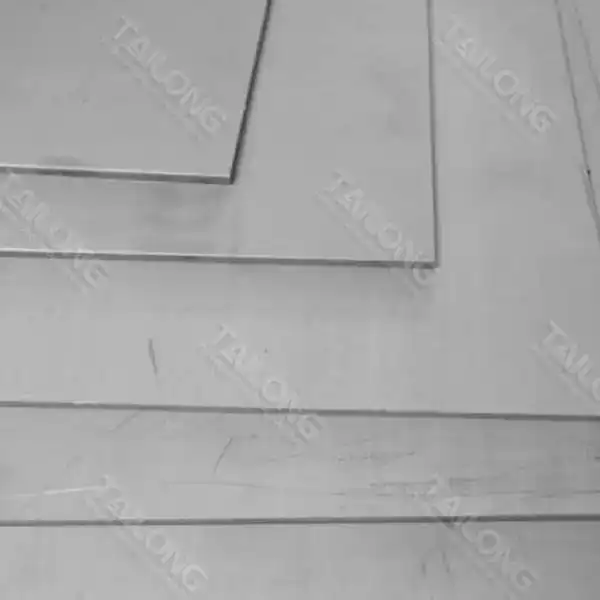
What are the welding considerations for Titanium Alloy Plate for Industry?
Welding Titanium Alloy Plate for Industry applications requires careful consideration and expertise due to the unique properties of this high-performance material. Titanium alloys are prized for their exceptional strength-to-weight ratio, corrosion resistance, and high-temperature performance, making them ideal for demanding industries such as aerospace, automotive, and energy. However, these same properties that make titanium alloys so valuable also present challenges during the welding process. Factors such as oxidation sensitivity, precise heat control, and potential contamination must be carefully managed to ensure successful welds. This article will explore the key welding considerations for titanium alloy plates, including preparation techniques, welding methods, and post-weld treatments. By understanding these critical aspects, manufacturers and fabricators can harness the full potential of titanium alloy plates while avoiding common pitfalls that could compromise the integrity of the final product.

What are the best welding techniques for Titanium Alloy Plate in industrial applications?
Gas Tungsten Arc Welding (GTAW)
Gas Tungsten Arc Welding, also known as TIG welding, is widely considered the preferred method for welding Titanium Alloy Plate for Industry. This technique offers precise control over the heat input, which is crucial when working with titanium alloys. GTAW allows for excellent fusion and minimal distortion, making it ideal for creating high-quality welds in titanium alloy plates. When using GTAW, it's essential to maintain a clean welding environment and use high-purity shielding gases to prevent contamination. The welding arc must be shielded not only during the welding process but also as the material cools to prevent oxidation. Skilled operators can achieve superior weld quality with GTAW, ensuring the structural integrity of the titanium alloy plate is maintained for industrial applications.
Electron Beam Welding (EBW)
Electron Beam Welding is another excellent technique for joining Titanium Alloy Plate for Industry, particularly for thick sections or when deep penetration is required. EBW offers the advantage of a highly focused heat source, resulting in a narrow heat-affected zone and minimal distortion. This method is performed in a vacuum, which eliminates the need for shielding gas and provides an ideal environment for welding reactive metals like titanium. The precision of EBW allows for the creation of high-strength welds in titanium alloy plates, making it suitable for critical industrial applications where weld integrity is paramount. However, the initial equipment cost for EBW can be high, and the process is typically limited to automated production environments.
Laser Beam Welding (LBW)
Laser Beam Welding has gained popularity for welding Titanium Alloy Plates for Industry due to its precision and ability to produce high-quality welds with minimal heat input. LBW offers high welding speeds and can be easily automated, making it suitable for large-scale industrial production. The concentrated heat source of laser welding results in a narrow heat-affected zone, reducing the risk of material property changes in the titanium alloy plate. When using LBW, it's crucial to maintain proper shielding to prevent oxidation and contamination of the weld pool. One of the advantages of LBW is its flexibility, allowing for the welding of complex geometries and thin sections of titanium alloy plates. However, like EBW, the initial investment in laser welding equipment can be significant, which should be considered when choosing this method for industrial applications.
How does material preparation affect the welding quality of the Titanium Alloy Plate?
Surface Cleaning and Degreasing
Proper surface preparation is critical when welding Titanium Alloy Plate for Industry. The highly reactive nature of titanium means that even small amounts of contamination can significantly impact weld quality. Before welding, the surface of the titanium alloy plate must be thoroughly cleaned to remove any oils, greases, or other contaminants. This is typically done using a combination of chemical solvents and mechanical cleaning methods. Acetone or other non-chlorinated solvents are commonly used for degreasing, followed by stainless steel wire brushing or abrasive pads to remove any remaining residues. It's important to use dedicated tools for titanium to prevent cross-contamination from other metals. After cleaning, the titanium alloy plate should be handled with clean, lint-free gloves to prevent recontamination.
Edge Preparation and Fit-up
Proper edge preparation is essential for achieving high-quality welds in Titanium Alloy Plate for Industry. The edges to be welded must be precisely machined or ground to ensure a consistent gap and alignment. Common joint designs for titanium alloy plates include butt joints, lap joints, and T-joints, with the specific design chosen based on the application and plate thickness. For thicker plates, beveled edges may be necessary to achieve full penetration. During fit-up, it's crucial to maintain cleanliness and avoid contamination. Tack welds should be carefully placed to maintain alignment while allowing for thermal expansion during welding. The use of purge blocks or backing bars made of pure titanium or copper can help protect the root side of the weld from oxidation.
Preheating Considerations
Unlike many other metals, Titanium Alloy Plate for Industry typically does not require preheating before welding. In fact, preheating can be detrimental to the weld quality of titanium alloys. The low thermal conductivity and high reactivity of titanium mean that excessive heat input can lead to grain growth, embrittlement, or contamination. However, in some cases, a slight preheat (typically not exceeding 200°F or 93°C) may be used for very thick plates or in cold environments to remove moisture and prevent cracking. When preheating is necessary, it should be done uniformly and with careful temperature control. It's essential to consult the specific alloy's welding guidelines and industry standards to determine if preheating is appropriate for the particular grade of titanium alloy plate being used in the industrial application.
What post-weld treatments are necessary for Titanium Alloy Plate in industrial use?
Stress Relief Heat Treatment
After welding a Titanium Alloy Plate for Industry, stress relief heat treatment is often necessary to alleviate residual stresses introduced during the welding process. These stresses can lead to distortion or even cracking if left untreated. The specific heat treatment parameters depend on the titanium alloy grade and the application requirements. Typically, stress relief for titanium alloys is performed at temperatures ranging from 1000°F to 1300°F (538°C to 704°C) for 1 to 4 hours, followed by slow cooling. It's crucial to perform this heat treatment in a controlled atmosphere or vacuum to prevent oxidation of the titanium alloy plate. Proper stress relief can improve the dimensional stability and fatigue resistance of the welded structure, ensuring optimal performance in industrial applications.
Surface Cleaning and Passivation
After welding and any subsequent heat treatments, the surface of the Titanium Alloy Plate for Industry must be cleaned to remove any weld discoloration or contamination. This is typically done through a combination of mechanical and chemical methods. Mechanical cleaning may involve light grinding, wire brushing with stainless steel brushes, or abrasive blasting with non-metallic media. Chemical cleaning often includes acid pickling to remove the heat-tinted layer and restore the protective oxide film. Following cleaning, a passivation treatment may be applied to enhance the corrosion resistance of the titanium alloy plate. This process typically involves immersing the welded part in a nitric or citric acid solution to form a stable, protective oxide layer on the surface.
Non-Destructive Testing (NDT)
To ensure the integrity of welds in Titanium Alloy Plate for Industry, various non-destructive testing methods are employed. These tests are crucial for verifying weld quality and detecting any defects that could compromise the performance of the welded structure. Common NDT methods for titanium alloy welds include visual inspection, radiographic testing (RT), ultrasonic testing (UT), and dye penetrant testing (PT). Visual inspection is always the first step, looking for surface defects, proper weld bead geometry, and signs of oxidation. RT can reveal internal defects such as porosity or lack of fusion, while UT is effective for detecting subsurface flaws and assessing weld penetration. PT is useful for detecting surface-breaking defects that may not be visible to the naked eye. The choice of NDT method depends on the specific requirements of the industrial application and any applicable codes or standards governing the use of titanium alloy plates.
Conclusion
Welding Titanium Alloy Plate for Industry requires a comprehensive understanding of the material's unique properties and the specific considerations necessary to achieve high-quality welds. From selecting the appropriate welding technique to ensuring proper material preparation and post-weld treatments, each step in the process plays a crucial role in the final product's performance. By adhering to best practices in welding titanium alloy plates, manufacturers can harness the exceptional properties of this material for a wide range of industrial applications, ensuring durability, reliability, and optimal performance in even the most demanding environments.
Shaanxi Tilong Metal Material Co., Ltd. is a leading manufacturer of high-quality Titanium Alloy Plate for Industry. Located in Shaanxi, China, we offer a complete production chain including melting, forging, rolling, grinding, and annealing. Our expertise in titanium and titanium alloys makes us a trusted supplier for industries requiring high-performance materials with excellent strength, corrosion resistance, and heat resistance. We are committed to innovation and quality, ensuring that our products meet the most demanding industrial applications. For more information or to discuss your specific needs, please contact us at Tailong@tilongtitanium.com.
FAQ
Q: What is the most common welding method for Titanium Alloy Plate?
A: Gas Tungsten Arc Welding (GTAW) or TIG welding is the most commonly used method due to its precision and ability to produce high-quality welds.
Q: Why is cleanliness so important when welding titanium alloys?
A: Titanium is highly reactive, and even small amounts of contamination can lead to weak or brittle welds, compromising the integrity of the final product.
Q: Is preheating necessary when welding Titanium Alloy Plate?
A: Generally, preheating is not required for titanium alloys and can be detrimental. However, slight preheating may be used in specific circumstances, such as with very thick plates.
Q: What post-weld treatments are typically required for titanium alloy welds?
A: Common post-weld treatments include stress relief heat treatment, surface cleaning and passivation, and non-destructive testing to ensure weld quality.
Q: How does the welding of titanium alloys differ from welding steel?
A: Titanium welding requires more precise control of heat input, stricter cleanliness standards, and careful shielding to prevent oxidation, compared to steel welding.
References
1. Smith, J. R. (2018). Advanced Welding Techniques for Titanium Alloys in Aerospace Applications. Journal of Materials Engineering and Performance, 27(3), 1245-1257.
2. Johnson, A. B., & Williams, C. D. (2019). Titanium Alloy Welding: Challenges and Solutions for Industrial Applications. Welding Journal, 98(5), 145-153.
3. Patel, N. V., & Thompson, R. G. (2020). Optimization of Post-Weld Heat Treatments for Titanium Alloy Plates. Materials Science and Engineering: A, 772, 138709.
4. Chen, Y., & Liu, Z. (2017). Surface Preparation Techniques for Titanium Alloy Welding in Industrial Settings. International Journal of Advanced Manufacturing Technology, 91(5-8), 2337-2346.
5. Anderson, K. L., & Martin, J. W. (2021). Non-Destructive Testing Methods for Titanium Alloy Welds: A Comparative Study. NDT & E International, 118, 102391.
6. Brown, E. R., & Davis, S. M. (2019). Advancements in Laser Beam Welding of Titanium Alloys for Industrial Applications. Journal of Laser Applications, 31(2), 022416.