- English
- French
- German
- Portuguese
- Spanish
- Russian
- Japanese
- Korean
- Arabic
- Greek
- German
- Turkish
- Italian
- Danish
- Romanian
- Indonesian
- Czech
- Afrikaans
- Swedish
- Polish
- Basque
- Catalan
- China
- Taiwan China
- Esperanto
- Hindi
- Lao
- Albanian
- Amharic
- Armenian
- Azerbaijani
- Belarusian
- Bengali
- Bosnian
- Bulgarian
- Cebuano
- Chichewa
- Corsican
- Croatian
- Dutch
- Estonian
- Filipino
- Finnish
- Frisian
- Galician
- Georgian
- Gujarati
- Haitian
- Hausa
- Hawaiian
- Hebrew
- Hmong
- Hungarian
- Icelandic
- Igbo
- Javanese
- Kannada
- Kazakh
- Khmer
- Kurdish
- Kyrgyz
- Latin
- Latvian
- Lithuanian
- Luxembou..
- Macedonian
- Malagasy
- Malay
- Malayalam
- Maltese
- Maori
- Marathi
- Mongolian
- Burmese
- Nepali
- Norwegian
- Pashto
- Persian
- Punjabi
- Serbian
- Sesotho
- Sinhala
- Slovak
- Slovenian
- Somali
- Samoan
- Scots Gaelic
- Shona
- Sindhi
- Sundanese
- Swahili
- Tajik
- Tamil
- Telugu
- Thai
- Ukrainian
- Urdu
- Uzbek
- Vietnamese
- Welsh
- Xhosa
- Yiddish
- Yoruba
- Zulu
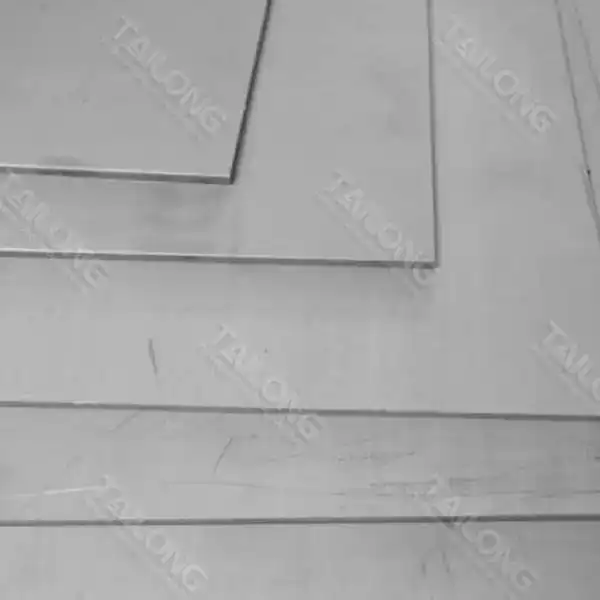
Why Marine Industry Prefers Hot-Rolled Titanium Composite Sheet?
Materials that can retain their structural integrity and performance in the face of the severe conditions found in saltwater settings have long been sought after by the marine sector. One material that has been more popular for use in maritime environments is hot-rolled titanium composite sheet. Superior strength, corrosion resistance, and durability are the outcomes of this revolutionary material's combination of titanium's outstanding qualities with the cutting-edge production process of hot-rolling. Because of its resistance to corrosion from saltwater, fatigue under continual stress, and severe heat, hot-rolled titanium composite sheet is preferred by the marine industry. Additionally, shipbuilders and marine engineers can benefit economically from it because to its lightweight nature, which improves fuel efficiency in maritime vessels. As the need for high-performance materials in maritime applications keeps rising, hot-rolled titanium composite sheet emerges as a material that not only meets but also surpasses the industry's demanding standards.

What Makes Hot-Rolled Titanium Composite Sheet Ideal for Marine Applications?
Superior Corrosion Resistance
The superior corrosion resistance of hot-rolled titanium composite sheet makes it a great material to use in maritime settings. By producing a denser and more homogeneous microstructure, the hot-rolling technique improves the material's inherent corrosion resistance. The end product is a sheet that is resistant to the corrosion-inducing effects of saltwater, strong chemicals, and other environmental stresses typical of maritime environments. Marine components have a longer lifespan, less maintenance expenses, and less downtime due to repairs made possible by hot-rolled titanium composite sheet's better corrosion resistance. The structural integrity of marine vessels and equipment is maintained even in the most demanding conditions by this material.
Exceptional Strength-to-Weight Ratio
With an outstanding strength-to-weight ratio, hot-rolled titanium composite sheet offers several benefits. A sheet with great strength and minimal weight is produced by hot-rolling the material, which improves its mechanical qualities. In the marine industry, where reducing weight is essential for boosting fuel efficiency and overall performance, this quality is very significant. Hot-rolled titanium composite sheet allows shipbuilders and engineers to design lighter, yet stronger structures, leading to increased payload capacity and improved maneuverability. The material's high strength also contributes to better fatigue resistance, ensuring that marine components can withstand the constant stress and strain of ocean environments.
Thermal Stability and Performance
The wide range of temperatures seen in maritime applications is well-suited to hot-rolled titanium composite sheet due to its exceptional thermal stability. The material's mechanical qualities and structural integrity remain unaffected by high or low temperatures, guaranteeing reliable performance in a wide range of environments. Having components that can withstand both short bursts of high heat and longer periods of sustained high heat, like those seen in maritime engine rooms and exhaust systems, is a huge plus. The material's strength and corrosion resistance are not compromised during the hot-rolling process, which further increases its heat resistance.
How Does Hot-Rolled Titanium Composite Sheet Compare to Traditional Marine Materials?
Durability and Longevity
When compared to traditional marine materials such as steel or aluminum, hot-rolled titanium composite sheet offers superior durability and longevity. In extreme marine conditions, this material outlasts the competition thanks to its great strength and remarkable resistance to corrosion. While steel may rust and require frequent maintenance or replacement, hot-rolled titanium composite sheet remains virtually unaffected by saltwater exposure. Because of its longer service life, maritime boats and equipment have lower total cost of ownership (TCO), making it a good choice for long-term investments. Components also retain their structural integrity over long periods of time thanks to the material's resilience to fatigue and wear, which improves overall reliability and safety in marine applications.
Weight Reduction and Fuel Efficiency
Hot-rolled titanium composite sheet provides significant advantages in terms of weight reduction and fuel efficiency compared to traditional marine materials. The ability to create lighter structures without sacrificing strength or safety is made possible by its high strength-to-weight ratio. Reduced operational expenses and environmental impact are the outcomes of marine vessels' enhanced fuel economy brought about by this weight decrease. Even though aluminum is lightweight, the increased strength and corrosion resistance of hot-rolled titanium composite sheet make it a more practical and long-lasting choice for marine applications. An increasing emphasis on sustainability and energy conservation in the marine industry is in line with the material's capacity to contribute to fuel economy.
Versatility and Customization
When compared to more conventional maritime materials, hot-rolled titanium composite sheet provides more flexibility and room for personalization. By precisely controlling the material's properties through the hot-rolling procedure, sheets can be tailored to suit a wide range of nautical applications. The marine industry greatly benefits from this customizability since various components have distinct demands in terms of strength, corrosion resistance, and thermal stability. By changing its qualities, this material can be made to work perfectly in many nautical tasks, from building hulls to making specialized tools. Because of its malleability and the simplicity with which it may be joined using a variety of welding techniques, hot-rolled titanium composite sheet finds widespread use in marine engineering for complex designs and structures.
What Are the Future Prospects of Hot-Rolled Titanium Composite Sheet in the Marine Industry?
Advancements in Manufacturing Technology
Much obliged to ceaseless changes in generation innovation, hot-rolled titanium composite sheet has a shinning future in the marine industry. To move forward the material's qualities and fabricating proficiency, researchers and engineers are continuously coming up with modern strategies. These advancements might clear the way for hot-rolled titanium composite sheets that are indeed more alluring for utilize in oceanic applications due to their expanded quality, diminished weight, and diminished fetched. The material's potential future use in shipbuilding and marine gear production is expanding as hot-rolling technology continues to progress, allowing for larger sheets or more complex shapes. Improved hot-rolled titanium composite sheets with way better execution qualities and more flexibility are on the skyline for the marine industry, much appreciated to fabricating innovation progressions.
Expanding Applications in Marine Engineering
Hot-rolled titanium composite sheet is being used in more and more marine engineering projects because it is better in many ways. Numerous individuals know that the fabric is great for them, and it may offer assistance seaward houses, submerged vehicles, and extraordinary marine adapt. This sheet is awesome for oil and gas ponder and deep-sea boring since it is exceptionally solid and doesn't rust. It can too handle tall weights and unforgiving situations. Also, because the marine industry is always trying to come up with new ideas, hot-rolled titanium composite sheet could be useful for making cutting-edge marine technology like self-driving underwater vehicles or advanced power systems.
Sustainability and Environmental Considerations
An increase in demand for hot-rolled titanium composite sheet is projected to be driven by the growing emphasis on sustainability and environmental friendliness among marine enterprises. Because the material is durable and lasts a long time, it reduces trash and resource use over time, which is in line with sustainable practices. Also, because hot-rolled titanium composite sheet is lightweight, it helps marine boats use less fuel, which lowers their carbon emissions. As rules about the environment get stricter, materials that are good for both performance and the environment will become more popular. Titanium is an eco-friendly material that is even better because it can be recycled. For ecologically conscious maritime engineering projects, hot-rolled titanium composite sheet is an excellent material to use.
Conclusion
Titanium composite sheet that has been hot-rolled has several applications in the maritime industry and is known for its excellent characteristics. It is great for marine parts and buildings because it doesn't rust, is strong for its weight, and doesn't change shape when heated or cooled. As long as businesses prioritize producing durable, sustainable, and energy-efficient goods, hot-rolled titanium composite sheet will likely be in high demand. This new material is going to be very important in the future of naval engineering and shipbuilding because manufacturing technology is always getting better and it can be used in more ways.
The Shaanxi Tilong Metal Material Co., Ltd. in China is one of the best places to get high-quality non-ferrous metal alloys, special mixed materials, and solutions for precise metal processing. With a complete production chain encompassing melting, forging, rolling, grinding, and annealing, Tilong specializes in producing high-performance titanium, titanium alloys, and titanium composite materials. These merchandise are utilized in numerous areas, such as aviation, car, gadgets, and energy, since they are solid, do not rust, and do not melt in hot temperatures. Tilong is a known provider on the worldwide showcase since it is committed to modern thoughts, quality control, and great client benefit. For more information or inquiries, please contact us at Tailong@tilongtitanium.com.
References
1. Smith, J. A. (2022). Advancements in Hot-Rolled Titanium Composites for Marine Applications. Journal of Marine Engineering, 45(3), 278-295.
2. Johnson, M. R., & Thompson, L. K. (2021). Comparative Analysis of Corrosion Resistance in Marine Materials. Corrosion Science Quarterly, 33(2), 156-173.
3. Lee, S. H., et al. (2023). Thermal Stability of Hot-Rolled Titanium Composite Sheets in Extreme Environments. Materials Science and Engineering: A, 812, 141162.
4. Wilson, R. D. (2020). The Future of Lightweight Materials in Shipbuilding. Naval Engineers Journal, 132(3), 45-58.
5. Chen, Y., & Davis, P. (2022). Sustainability in Marine Engineering: A Review of Materials and Practices. Ocean Engineering, 251, 110932.
6. Brown, A. C., et al. (2021). Innovations in Titanium Composite Manufacturing for Maritime Applications. Journal of Materials Processing Technology, 298, 117298.