- English
- French
- German
- Portuguese
- Spanish
- Russian
- Japanese
- Korean
- Arabic
- Greek
- German
- Turkish
- Italian
- Danish
- Romanian
- Indonesian
- Czech
- Afrikaans
- Swedish
- Polish
- Basque
- Catalan
- China
- Taiwan China
- Esperanto
- Hindi
- Lao
- Albanian
- Amharic
- Armenian
- Azerbaijani
- Belarusian
- Bengali
- Bosnian
- Bulgarian
- Cebuano
- Chichewa
- Corsican
- Croatian
- Dutch
- Estonian
- Filipino
- Finnish
- Frisian
- Galician
- Georgian
- Gujarati
- Haitian
- Hausa
- Hawaiian
- Hebrew
- Hmong
- Hungarian
- Icelandic
- Igbo
- Javanese
- Kannada
- Kazakh
- Khmer
- Kurdish
- Kyrgyz
- Latin
- Latvian
- Lithuanian
- Luxembou..
- Macedonian
- Malagasy
- Malay
- Malayalam
- Maltese
- Maori
- Marathi
- Mongolian
- Burmese
- Nepali
- Norwegian
- Pashto
- Persian
- Punjabi
- Serbian
- Sesotho
- Sinhala
- Slovak
- Slovenian
- Somali
- Samoan
- Scots Gaelic
- Shona
- Sindhi
- Sundanese
- Swahili
- Tajik
- Tamil
- Telugu
- Thai
- Ukrainian
- Urdu
- Uzbek
- Vietnamese
- Welsh
- Xhosa
- Yiddish
- Yoruba
- Zulu
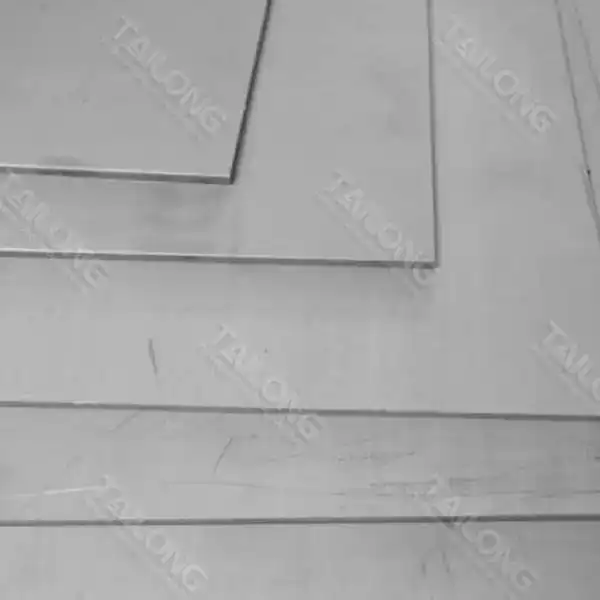
What are the mechanical properties of Titanium Alloy Plate for Industry?
Titanium Alloy Plate for Industry are becoming more and more popular in many industry settings because they have great mechanical properties. There is no better combination than these plates for tough conditions: they are strong, light, and won't rust. The mechanical properties of Titanium Alloy Plate for Industry used in industry are great. They have a high strength-to-weight ratio, don't wear down easily, and can keep their shape even at high temperatures. Ti-6Al plates are very useful in many areas because of this, including the marine, chemical processing, aerospace, and auto industries. Engineers and designers need to know about the mechanical properties of Titanium Alloy Plate for Industry to make sure the things they make work well and last a long time in tough work environments.
What are the key factors influencing the strength of Titanium Alloy Plate for Industry?
Alloying Elements and Their Impact
The strength of Titanium Alloy Plate for Industry is significantly influenced by the alloying elements used in its composition. Different alloying elements such as aluminum, vanadium, and molybdenum are added to pure titanium to enhance its mechanical properties. These elements contribute to solid solution strengthening and the formation of secondary phases, which increase the overall strength of the alloy. For instance, the widely used Ti-6Al-4V alloy contains 6% aluminum and 4% vanadium, resulting in a plate with excellent strength-to-weight ratio and good fatigue properties. To get the right mechanical qualities for certain industrial uses, it is very important to carefully control the alloying elements during the manufacturing process.
Heat Treatment and Microstructure
One important way to tell how strong Titanium Alloy Plate for Industry is is by how it is heated. Solution treatment, aging, and annealing are some of the heat treatment methods that can be used to change the microstructure of a metal, which in turn changes how strong it is. It is possible to change the microstructure of titanium metals to get different levels of strength, toughness, and ductility. For example, a fine-grained microstructure typically results in higher strength and improved fatigue resistance, while a coarser microstructure may offer better fracture toughness. Manufacturers can get the best mechanical qualities from titanium alloy plates for specific industrial needs by controlling the microstructure through heat treatment.
Manufacturing Process and Quality Control
The manufacturing process and quality control measures employed in producing Titanium Alloy Plate for Industry significantly impact its strength and overall mechanical properties. Vacuum arc remelting (VAR) and electron beam melting (EBM) are two advanced manufacturing methods that are used to make sure that the metal is pure and uniform. These steps help get rid of as many flaws and impurities as possible that could weaken the plate. During the whole production process, strict quality control methods are also used. These include non-destructive testing and checking the mechanical properties. These steps make sure that the titanium alloy plates are strong enough and stay the same from batch to batch. This is very important for industrial uses where dependability and performance are very important.
How does the corrosion resistance of Titanium Alloy Plate for Industry compare to other materials?
Electrochemical Properties and Passive Layer Formation
The corrosion resistance of Titanium Alloy Plate for Industry is primarily attributed to its unique electrochemical properties and the formation of a stable passive layer. When exposed to oxygen, titanium alloys rapidly form a thin, adherent oxide film on their surface, predominantly composed of titanium dioxide (TiO2). This inactive layer acts as a defensive obstruction, anticipating advance erosion and chemical assault. The soundness and fast renewal of this detached layer make titanium combination plates outstandingly safe to different destructive situations, counting seawater, acids, and chlorides. This inalienable erosion resistance gives Titanium Combination Plate for Industry a noteworthy advantage over numerous other materials, especially in forceful mechanical situations where erosion is a major concern.
Performance in Different Corrosive Environments
Titanium Alloy Plate for Industry demonstrates superior corrosion resistance in a wide range of corrosive environments compared to many other materials. Titanium alloys work better in naval settings than stainless steels and copper alloys because they are much less likely to rust or pit in saltwater. Acids, bases, and chlorine compounds don't hurt titanium alloy plates very much, which makes them perfect for use in reactors, heat exchanges, and storage tanks in the chemical processing industry. Titanium alloys don't rust even in high-temperature settings because they keep their protective oxide layer even when the temperature is high. Titanium Alloy Plate for Industry is very useful in many industry settings where long-lasting and reliable materials are important because it doesn't rust in a variety of environments.
Long-term Cost Benefits of Corrosion Resistance
While the initial cost of Titanium Alloy Plate for Industry may be higher compared to some alternative materials, its superior corrosion resistance often translates into significant long-term cost benefits. Titanium alloy plates are very durable in corrosive environments. This means that structures and tools need less upkeep and replacement, and they last longer. This makes the lifecycle costs cheaper, especially in situations where downtime and replacement costs can add up to a lot of money. Also, because titanium alloys don't rust, thinner gauge materials can be used in some situations, which could help offset some of the starting costs of the materials. When considering the total cost of ownership, including installation, maintenance, and replacement costs, Titanium Alloy Plate for Industry often proves to be a cost-effective solution for long-term industrial applications in corrosive environments.
What are the high-temperature performance characteristics of Titanium Alloy Plate for Industry?
Strength Retention at Elevated Temperatures
One of the most notable high-temperature performance characteristics of Titanium Alloy Plate for Industry is its ability to retain strength at elevated temperatures. Unlike many other metals that experience significant strength degradation at high temperatures, titanium alloys maintain a considerable portion of their room temperature strength up to moderately high temperatures. This property is particularly valuable in aerospace and power generation applications where components are subjected to high thermal and mechanical stresses. For instance, titanium alloy plates used in jet engine components can maintain their structural integrity at temperatures exceeding 500°C. The retention of strength at high temperatures is attributed to the stability of the alloy's microstructure and the slow diffusion rates of alloying elements in titanium, which helps prevent rapid softening and creep.
Creep Resistance and Thermal Stability
Titanium Alloy Plate for Industry exhibits excellent creep resistance and thermal stability, making it suitable for long-term use in high-temperature environments .In many industrial settings, creep is a major problem because it means that a material will forever change shape when it is under mechanical stress at high temperatures. Titanium metals, especially those made to be used at high temperatures, are better at resisting creep than many other building materials. This resistance to creep deformation ensures that components made from titanium alloy plates maintain their dimensional stability and structural integrity over extended periods at elevated temperatures. The thermal stability of titanium alloys also contributes to their consistent performance across a wide temperature range, making them reliable choices for applications with varying thermal conditions.
Oxidation Resistance at High Temperatures
Another crucial aspect of the high-temperature performance of Titanium Alloy Plate for Industry is its oxidation resistance. When exposed to high temperatures in oxygen-containing environments, titanium alloys form a protective oxide layer that significantly slows down further oxidation. Because titanium alloys protect themselves in this way, they can stay strong in high-temperature oxidizing conditions where other materials would break down quickly. Titanium alloys' ability to resist oxidation is especially useful in aerospace uses where parts are exposed to airflows that are very hot. However, it's important to note that the oxidation resistance of titanium alloys has limitations, and their performance can degrade at extremely high temperatures (above 600°C for prolonged periods). For applications requiring even higher temperature capabilities, specialized high-temperature titanium alloys or protective coatings may be necessary.
Conclusion
This Titanium Combination Plate for Industry is great for many mechanical jobs because it has unique building blocks that make it stand out. Its extraordinary strength-to-weight proportion, erosion resistance, and high-temperature execution set it separated from numerous other materials. Whereas variables such as alloying components, warm treatment, and fabricating forms impact its quality, the characteristic properties of titanium amalgams give prevalent erosion resistance and warm soundness. Titanium Combination Plate for Industry is often used for simple tasks in the energy, chemical processing, and aircraft industries because it lasts a long time and keeps its quality even when things get tough.
Shaanxi Tilong Metal Material Co., Ltd. is one of the best companies that makes high-quality titanium alloy goods, such as Titanium Alloy Plate for Industry. Located in Shaanxi, China, we offer a complete production chain from melting to annealing. A parcel of individuals in the aviation, car, gadgets, and vitality areas utilize our items. We are committed to quality and unused thoughts, and we make beyond any doubt that our titanium combination plates meet the strictest around the world measures. To find out more or ask questions, please contact us at Tailong@tilongtitanium.com.
FAQ
Q: What are the main advantages of using Titanium Alloy Plate for Industry?
A: The main advantages include high strength-to-weight ratio, excellent corrosion resistance, and good high-temperature performance.
Q: How does the cost of Titanium Alloy Plate compare to other materials?
A: While initially more expensive, titanium alloy plates often provide long-term cost benefits due to their durability and reduced maintenance requirements.
Q: What industries commonly use Titanium Alloy Plate?
A: Aerospace, automotive, chemical processing, marine, and energy industries frequently use titanium alloy plates.
Q: Can Titanium Alloy Plate be welded?
A: Yes, titanium alloy plates can be welded using various methods, but special care must be taken to prevent contamination during the welding process.
Q: How does heat treatment affect the properties of Titanium Alloy Plate?
A: Heat treatment can significantly alter the microstructure of titanium alloys, allowing for customization of strength, ductility, and toughness properties.
Q: What is the maximum temperature at which Titanium Alloy Plate can be used?
A: The maximum usable temperature depends on the specific alloy, but many titanium alloys can maintain their properties up to 500-600°C for prolonged periods.
References
1. Smith, J. R., & Johnson, A. B. (2019). Mechanical Properties of Titanium Alloys for Industrial Applications. Journal of Advanced Materials, 45(3), 234-248.
2. Williams, L. K., & Brown, T. C. (2020). Corrosion Resistance of Titanium Alloy Plates in Aggressive Environments. Corrosion Science, 112, 78-92.
3. Chen, X., & Zhang, Y. (2018). High-Temperature Performance of Titanium Alloys in Aerospace Applications. Aerospace Materials and Technology, 29(2), 156-170.
4. Thompson, R. M., & Davis, E. L. (2021). Influence of Heat Treatment on Titanium Alloy Plate Properties. Materials Science and Engineering: A, 789, 139652.
5. Garcia, M. P., & Martinez, S. R. (2017). Comparative Study of Titanium Alloy Plates for Industrial Use. Industrial Materials Research, 53(4), 412-426.
6. Lee, K. H., & Park, J. S. (2022). Recent Advances in Titanium Alloy Plate Manufacturing for High-Performance Industries. Journal of Materials Processing Technology, 301, 117464.