
Titanium round tube is a foundation fabric in restorative inserts and surgical hardware due to its special mix of lightweight and high-strength properties. Its great erosion resistance bolsters life span inside the unforgiving organic environment, whereas wonderful warm resistance empowers sterilization without compromising auxiliary astuteness. Producers depend on these tubes for accuracy machining into inserts that meet thorough biocompatibility and toughness guidelines. This flexibility makes titanium tubing vital in progressing restorative technology.
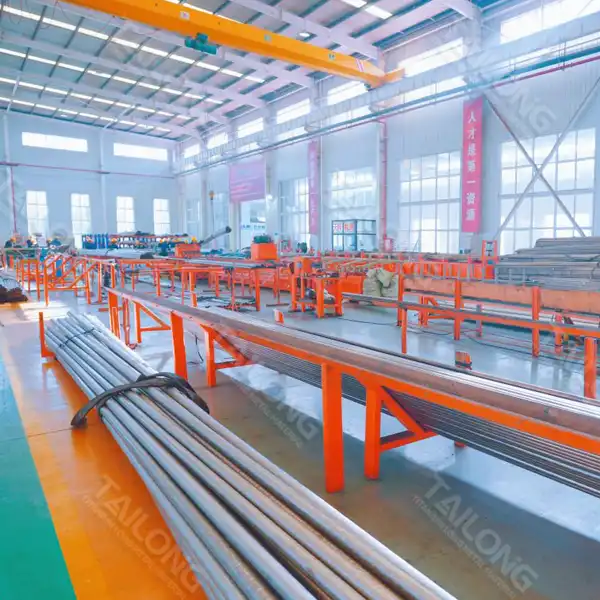
Full Industry Chain Integration Advantages
Direct control over the whole generation process—from titanium ingots to wrapped up circular tubes—ensures quality and unwavering quality. Coordinates operations minimize supply chain disturbances, pivotal for healthcare applications where fabric consistency can influence understanding results. The titanium tubing experiences exacting testing and standardized manufacture, empowering tried and true conveyance of components that meet exacting therapeutic determinations. Being able to customize combination compositions and tube measurements inside a completely coordinates chain cultivates responsiveness to advancing therapeutic gadget demands.
Leading Technological Innovation Advantages
Advancements in consistent tubing creation provide predominant surface wraps up and auxiliary consistency basic for surgical exactness. Cutting-edge amalgam improvement centers on improving weariness resistance and biocompatibility, assembly the demanding needs of inserts such as joint substitutions and spinal poles. Accuracy machining capabilities permit the creation of complex shapes utilized in negligibly obtrusive surgical apparatuses. This advancement pipeline drives ceaseless changes in persistent security and gadget usefulness utilizing titanium round tubes designed for restorative contexts.
Product Quality and Performance Advantages
The material’s moo thickness combined with a tall strength-to-weight proportion diminishes embed weight, moving forward understanding consolation and versatility. Exceptional erosion resistance anticipates antagonistic responses and draws out embed life expectancy in the body’s sodden and saline environment. Warm solidness shields mechanical properties amid sterilization forms. Its solidness guarantees solid mechanical execution beneath rehashed physiological stresses. These qualities confirm titanium tubing as the favored review for biodegradable inserts, orthopedic screws, and cardiovascular stents, each subjected to strongly wear and corrosion.
Deeply Customized Service Capabilities
Tailored Titanium Round Tube arrangements address differing therapeutic application prerequisites, from small-diameter tubing for cardiovascular catheters to thick-walled auxiliary poles utilized in orthopedic surgery. Custom combination mixes and warm medications optimize biocompatibility and mechanical characteristics. Collaboration with R&D groups speeds up plan alterations and prototyping. Personalized stock administration combined with ERP-enabled requesting frameworks streamlines obtainment, permitting therapeutic gadget producers to meet strict generation plans whereas lessening overabundance inventory.
Fast and Efficient Customer Response Mechanism
Prompt specialized back and interview assist problem-solving amid both plan and generation stages. Client benefit groups are prepared to handle point by point request almost fabric grades, resiliences, and manufacture procedures. Quick turnaround times on orders and quick conveyance empower clients to decrease lead times in competitive therapeutic markets. Continuous after-sales benefit builds believe and long-term associations, emphasizing commitment to quality and execution in basic healthcare environments.
Core Uses of Titanium Round Tube in Medical Implants and Surgical Equipment
- Orthopedic Implants: Titanium tubing forms the structural basis for joint replacements, spinal rods, and bone screws. Its high strength and durability withstand cyclic body stresses while maintaining lightweight comfort, addressing challenges in mobility and implant longevity.
- Cardiovascular Stents and Catheters: Small-diameter seamless tubing enables the fabrication of stents and catheter shafts that require flexibility, corrosion resistance, and biocompatibility. This ensures sustained functionality within dynamic vascular systems without inflammatory reactions.
- Dental Implants: Machined titanium tubes support crown and bridge structures, where corrosion resistance and osseointegration promote successful permanent implantation and minimize tissue rejection.
- Surgical Instrumentation: Precision tubular components constitute handles and shafts for endoscopic and laparoscopic surgical tools. Their heat resistance facilitates repeated sterilization, and rigidity provides necessary mechanical control.
- Craniofacial Reconstruction: Titanium tubing enables lightweight and custom-shaped implants to repair complex bone structures, offering mechanical stability while reducing patient discomfort during recovery.
- Prosthetic Components: Durable yet lightweight tubular frameworks improve prosthetics’ endurance and user comfort. The corrosion resistance also permits prolonged exposure to environmental moisture without degradation.
- Implantable Drug Delivery Devices: Tubular structures house sensitive mechanisms inside drug pumps and ports, where robust corrosion resistance and structural integrity ensure reliable med-device performance.
Application Scenarios and Examples
In an orthopedic surgery setting, titanium bars created from Titanium Round Tube consistent tubing are embedded to stabilize broken long bones, moving forward mending times due to titanium’s biocompatibility and weariness resistance. In the mean time, custom-machined dental inserts depend on corrosion-resistant tubing to keep up verbal wellbeing over decades. Surgical apparatus producers plan endoscopes with titanium tubular components that persevere forceful sterilization cycles without corruption. Each utilize case highlights the need for tubes advertising exactness creation, quality, and reliability.
Conclusion
Titanium round tube stands as a pivotal material in medical implants and surgical equipment due to its unmatched strength, corrosion resistance, and adaptability. Its engineering benefits translate directly into enhanced patient outcomes through lightweight, durable, and biocompatible solutions. Manufacturers involved in designing cutting-edge medical devices find titanium tubing indispensable, enabling innovative treatments across orthopedic, cardiovascular, dental, and surgical fields. Choosing expertise-backed suppliers guarantees consistent quality and responsive service, fostering trust critical in life-saving applications.
If you seek reliable suppliers of high-grade titanium round tube for medical and surgical uses, offers extensive experience and integrated manufacturing capabilities. Our inventory system ensures efficient order handling, while customized alloy solutions fit diverse medical engineering requirements. Contact us at Tailong@tilongtitanium.com to discuss your project needs. For details, please refer to the website: tilongtitanium.com.
FAQ
Why is titanium preferred over other metals in medical implants?
Titanium uniquely combines biocompatibility, corrosion resistance, and a high strength-to-weight ratio. These properties minimize body's rejection risk and promote durability under physiological conditions.
Can titanium round tubes be customized for specific surgical applications?
Yes, they can be tailored by adjusting alloy composition, tube diameter, wall thickness, and machining processes to meet precise surgical needs.
How does titanium tubing withstand sterilization?
The metal’s superior thermal stability ensures mechanical properties remain intact after repeated exposure to high-temperature sterilization methods.
Are titanium implants safe for long-term use?
Extensive clinical data confirms titanium implants provide long-lasting functionality with minimal adverse reactions, ensuring patient safety.
What are the challenges in fabricating titanium tubing for medical use?
Achieving seamless, defect-free tubes with exact dimensional tolerances demands advanced manufacturing techniques and rigorous quality control.
References
1. Boyd, S. et al., "Titanium and Titanium Alloys in Medical Applications", Journal of Biomedical Materials Research, 2019.
2. Wang, J. & Smith, P., "Corrosion Resistance of Titanium in Biological Environments", Materials Science & Engineering C, 2020.
3. Lee, K. et al., "Fabrication Techniques for Seamless Titanium Tubing in Medical Devices", Precision Engineering, 2021.
4. Nguyen, T.H., "Biocompatibility and Surface Treatment of Titanium Implants", Clinical Oral Implants Research, 2018.
5. Garcia, F., "Thermal Stability of Titanium Alloys for Surgical Instrumentation", Journal of Medical Engineering & Technology, 2022.
6. Zhao, L. & Jackson, M., "Design Considerations for Titanium in Orthopedic Applications", Biomedical Engineering Letters, 2019.