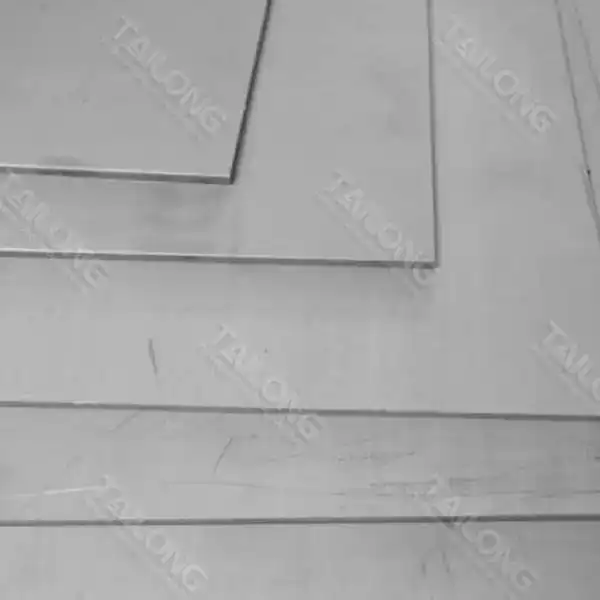
When selecting titanium materials for industrial applications, understanding the distinction between Pure Titanium Plate ASTM B265 and Titanium Alloy Plates becomes crucial for optimal performance. Pure titanium plates offer exceptional corrosion resistance and biocompatibility, making them ideal for chemical processing and medical applications. Titanium Alloy Plates, conversely, provide enhanced strength-to-weight ratios and elevated temperature performance, particularly suited for aerospace and automotive sectors. The primary differences lie in mechanical properties, chemical composition, cost considerations, and specific application requirements across various industrial environments.
Understanding Pure Titanium Plate ASTM B265 Specifications
Pure Titanium Plate ASTM B265 includes four particular grades, each advertising interesting characteristics for particular applications. Review 1 titanium gives the most elevated erosion resistance with amazing formability, containing 99.5% unadulterated titanium metal. Review 2 titanium speaks to the most commonly utilized variation, adjusting quality and ductility whereas keeping up prevalent erosion safe titanium properties.
Grade 3 titanium conveys expanded quality compared to lower grades, making it reasonable for weight vessel applications. Review 4 titanium offers the most noteworthy quality among unadulterated grades, drawing closer a few titanium combination plate execution levels. These titanium sheet materials regularly include a thickness of 4.51 g/cm³ over all grades.
The ASTM guidelines characterize particular chemical composition prerequisites for each review. Review 2 titanium, broadly utilized in titanium creation, contains greatest levels of oxygen (0.25%), nitrogen (0.03%), and press (0.30%). This controlled composition guarantees steady titanium mechanical properties over distinctive generation batches.
If you require most extreme erosion resistance for chemical handling situations, at that point Review 1 or Review 2 unadulterated titanium plates demonstrate more appropriate than higher-grade alternatives.
Titanium Alloy Plate Composition and Characteristics
Titanium amalgam plates consolidate extra components like aluminum, vanadium, molybdenum, or nickel to improve particular properties. The most predominant aviation titanium amalgam, Ti-6Al-4V, contains 6% aluminum and 4% vanadium, essentially making strides quality and high-temperature execution compared to unadulterated grades.
Alpha amalgams keep up great erosion resistance whereas advertising direct quality increments. Beta combinations give extraordinary quality and warm treatment capabilities, making them profitable for basic applications. Alpha-beta combinations combine benefits from both categories, conveying adjusted execution over different parameters.
These titanium basic materials show predominant weakness resistance and lifted temperature quality maintenance. Restorative review titanium amalgams, such as Ti-6Al-7Nb, dispose of vanadium substance to guarantee biocompatibility whereas keeping up mechanical preferences over unadulterated titanium alternatives.
The titanium chemical composition specifically impacts welding characteristics, with a few amalgams requiring specialized titanium welding strategies and post-weld warm treatment forms to keep up ideal properties.
If you require high-strength applications surpassing 550 MPa ductile quality, at that point titanium combination plates gotten to be more appropriate than immaculate titanium alternatives.
Mechanical Property Comparisons and Performance Data
Mechanical testing uncovers critical execution contrasts between immaculate and alloyed titanium materials. Review 2 unadulterated titanium ordinarily demonstrates:
- Tensile quality: 345-450 MPa
- Yield quality: 275-380 MPa
- Elongation: 20-25%
- Elastic modulus: 103 GPa
Ti-6Al-4V titanium combination plate shows improved mechanical properties:
- Tensile quality: 895-930 MPa
- Yield quality: 825-869 MPa
- Elongation: 10-15%
- Elastic modulus: 114 GPa
These titanium plate thickness details stay steady over different measurements, from 0.8mm titanium thwart applications to 100mm auxiliary components. The titanium surface wrap up essentially impacts weariness execution, with cleaned surfaces appearing 15-20% enhancement in weakness life compared to as-rolled conditions.
Temperature execution changes impressively between fabric sorts. Unadulterated titanium keeps up properties up to 300°C, whereas specialized combinations perform successfully at temperatures surpassing 600°C in aviation applications.
If you require applications requiring prolongation values over 20%, at that point immaculate titanium plates offer predominant formability compared to most combination alternatives.
Industrial Applications and Use Case Scenarios
Pure Titanium Plate ASTM B265 chemical preparing businesses where erosion resistance exceeds quality necessities. Chlor-alkali plants utilize Review 2 titanium for warm exchanger development, capitalizing on uncommon resistance to chlorine situations. The pharmaceutical industry utilizes these materials for reactor vessels and channeling systems.
Marine applications advantage from immaculate titanium's seawater resistance, especially in desalination plants and seaward stages. The titanium mechanical utilize expands to building applications where stylish offer combines with toughness requirements.
Titanium amalgam plates exceed expectations in aviation applications where strength-to-weight proportions demonstrate basic. Commercial flying machine motors consolidate Ti-6Al-4V components for compressor edges and auxiliary outlines. The car industry progressively receives titanium amalgams for debilitate frameworks and suspension components.
Power era offices utilize both fabric sorts deliberately. Atomic applications favor unadulterated grades for their neutron straightforwardness and erosion resistance, whereas gas turbines utilize combinations for high-temperature components requiring prevalent mechanical properties.
Medical embed producers select between immaculate and alloyed materials based on particular biomechanical necessities. Dental inserts ordinarily utilize Review 4 unadulterated titanium, whereas orthopedic inserts frequently require Ti-6Al-4V amalgams for load-bearing applications.
If you require applications including coordinate contact with forceful chemicals, at that point unadulterated titanium plates give predominant long-term execution compared to amalgam alternatives.
Cost Analysis and Economic Considerations
Pure titanium plate estimating reflects crude fabric costs and preparing complexity. Review 2 titanium regularly costs 20-30% less than comparable Ti-6Al-4V combination plates due to disentangled generation forms and diminished alloying component requirements.
Long-term financial examination uncovers diverse taken a toll structures. Unadulterated titanium's amplified benefit life in destructive situations frequently legitimizes higher starting speculations through decreased support and substitution costs. Chemical preparing offices report 40-50% longer benefit interims with immaculate titanium compared to stainless steel alternatives.
Titanium coil and sheet providers offer volume rebates for large-quantity buys, especially advantageous for producers requiring steady fabric supplies. Stock administration costs diminish when working with solid titanium sheet provider partnerships.
Processing costs shift between fabric sorts. Immaculate titanium's predominant formability diminishes manufacture time and tooling wear compared to harder combination materials. Be that as it may, specialized titanium warm treatment necessities for certain amalgams can increment handling expenses.
Market instability influences alloyed materials more essentially due to fluctuating alloying component costs. Unadulterated titanium estimating remains more steady, giving way better fetched consistency for long-term projects.
If you require budget-conscious arrangements with great erosion resistance, at that point unadulterated titanium plates offer prevalent esteem suggestion compared to premium amalgam alternatives.
Tilong's Pure Titanium Plate ASTM B265 Advantages
Tilong stands as a Pure Titanium Plate ASTM B265 with comprehensive advantages across the entire production chain:
- Full Industry Chain Integration: Complete vertical integration from raw material processing to finished products ensures consistent quality control and cost optimization across all production stages.
- Advanced Manufacturing Capabilities: State-of-the-art rolling mills and heat treatment facilities produce titanium plates with precise dimensional tolerances and superior surface finish quality.
- Comprehensive Grade Range: Complete availability of Grades 1-4 pure titanium plates meeting ASTM B265 specifications, with thickness ranging from 0.8mm to 100mm and widths up to 1500mm.
- Quality Assurance Systems: ISO 9001 certified quality management systems ensure every titanium plate meets stringent aerospace and medical industry standards through rigorous testing protocols.
- Technical Expertise: Experienced metallurgical engineers provide customized solutions for specific application requirements, optimizing material selection and processing parameters.
- Rapid Response Capabilities: Streamlined production scheduling and inventory management systems enable fast delivery times while maintaining consistent product availability.
- ERP-Enabled Ordering: Advanced enterprise resource planning systems facilitate efficient procurement processes and real-time inventory tracking for customers.
- Custom Fabrication Services: Complete titanium fabrication capabilities including cutting, forming, and welding services to customer specifications.
- Global Supply Chain: Established international logistics networks ensure reliable delivery to aerospace, automotive, and energy sector customers worldwide.
- Competitive Pricing: Direct manufacturer pricing eliminates intermediary markups while maintaining premium quality standards and comprehensive technical support.
- Long-term Partnership Focus: Dedicated account management and technical support teams build lasting relationships with customers, ensuring ongoing satisfaction and project success.
- Research and Development: Continuous investment in material science research and process optimization maintains technological leadership in pure titanium production.
Making the Right Choice: Pure Titanium vs Alloy Selection
Material determination choices require cautious assessment of application necessities, natural conditions, and execution desires. Immaculate titanium plates exceed expectations in scenarios requesting most extreme erosion resistance, biocompatibility, and formability. Their lower quality confinements gotten to be satisfactory when natural compatibility takes priority.
Titanium combination plates demonstrate prevalent for applications requiring improved mechanical properties, raised temperature execution, or particular strength-to-weight proportions. The trade-off includes decreased erosion resistance and expanded fabric costs.
Environmental components altogether impact choice criteria. Chloride-rich situations favor immaculate titanium grades, whereas high-temperature oxidizing conditions may require specialized amalgams with aluminum increases for oxide layer stability.
Processing prerequisites moreover affect fabric choice. Complex shaping operations advantage from unadulterated titanium's prevalent ductility, whereas accuracy machined components may utilize amalgams for dimensional soundness and surface wrap up quality.
If you require materials for both auxiliary judgment and destructive environment presentation, at that point Review 4 immaculate titanium or carefully chosen amalgams give ideal compromise solutions.
Conclusion
The choice between Pure Titanium Plate ASTM B265 and titanium alloy plates depends on specific application requirements, environmental conditions, and performance priorities. Pure titanium excels in corrosive environments and biomedical applications, while alloys provide superior strength for structural applications. Understanding these fundamental differences enables informed material selection decisions that optimize performance while controlling costs. Tilong's comprehensive product range and technical expertise ensure access to the right titanium solution for any industrial challenge.
Partner with Tilong for Your Pure Titanium Plate ASTM B265 Requirements
Selecting the right titanium material requires expert guidance and reliable supply chain partnerships. Tilong's comprehensive manufacturing capabilities and technical expertise ensure optimal material selection for your specific applications. Our extensive inventory of pure titanium plates and alloy alternatives provides immediate availability for urgent project requirements.
As a trusted Pure Titanium Plate ASTM B265 supplier, Tilong delivers consistent quality and competitive pricing across all grades and specifications. Our ERP-enabled ordering systems streamline procurement processes while providing real-time inventory visibility and delivery tracking capabilities.
Our experienced engineering team collaborates with customers to optimize material selection, processing parameters, and fabrication techniques. This comprehensive approach reduces total project costs while ensuring superior performance in demanding industrial environments.
Quality certifications and testing documentation accompany every shipment, providing complete traceability and compliance with industry standards. Our commitment to excellence extends beyond product delivery through ongoing technical support and application assistance.
Ready to discuss your Pure Titanium Plate ASTM B265 for sale requirements? Contact us at Tailong@tilongtitanium.com to explore how our advanced manufacturing capabilities and technical expertise can support your next project.
References
1. Boyer, R., Welsch, G., & Collings, E.W. (2019). Materials Properties Handbook: Titanium Alloys. ASM International, Materials Park, Ohio.
2. ASTM International. (2018). ASTM B265-15 Standard Specification for Titanium and Titanium Alloy Strip, Sheet, and Plate. West Conshohocken, PA.
3. Lutjering, G., & Williams, J.C. (2017). Titanium: Engineering Materials and Processes. Springer-Verlag, Berlin.
4. Peters, M., Kumpfert, J., Ward, C.H., & Leyens, C. (2021). Titanium Alloys for Aerospace Applications. Advanced Engineering Materials, Volume 5.
5. Donachie, M.J. (2020). Titanium: A Technical Guide, Second Edition. ASM International, Materials Park, Ohio.
6. Rack, H.J., & Qazi, J.I. (2019). Titanium Alloys for Biomedical Applications. Materials Science and Engineering C, Biomimetic and Supramolecular Systems.