- English
- French
- German
- Portuguese
- Spanish
- Russian
- Japanese
- Korean
- Arabic
- Greek
- German
- Turkish
- Italian
- Danish
- Romanian
- Indonesian
- Czech
- Afrikaans
- Swedish
- Polish
- Basque
- Catalan
- China
- Taiwan China
- Esperanto
- Hindi
- Lao
- Albanian
- Amharic
- Armenian
- Azerbaijani
- Belarusian
- Bengali
- Bosnian
- Bulgarian
- Cebuano
- Chichewa
- Corsican
- Croatian
- Dutch
- Estonian
- Filipino
- Finnish
- Frisian
- Galician
- Georgian
- Gujarati
- Haitian
- Hausa
- Hawaiian
- Hebrew
- Hmong
- Hungarian
- Icelandic
- Igbo
- Javanese
- Kannada
- Kazakh
- Khmer
- Kurdish
- Kyrgyz
- Latin
- Latvian
- Lithuanian
- Luxembou..
- Macedonian
- Malagasy
- Malay
- Malayalam
- Maltese
- Maori
- Marathi
- Mongolian
- Burmese
- Nepali
- Norwegian
- Pashto
- Persian
- Punjabi
- Serbian
- Sesotho
- Sinhala
- Slovak
- Slovenian
- Somali
- Samoan
- Scots Gaelic
- Shona
- Sindhi
- Sundanese
- Swahili
- Tajik
- Tamil
- Telugu
- Thai
- Ukrainian
- Urdu
- Uzbek
- Vietnamese
- Welsh
- Xhosa
- Yiddish
- Yoruba
- Zulu
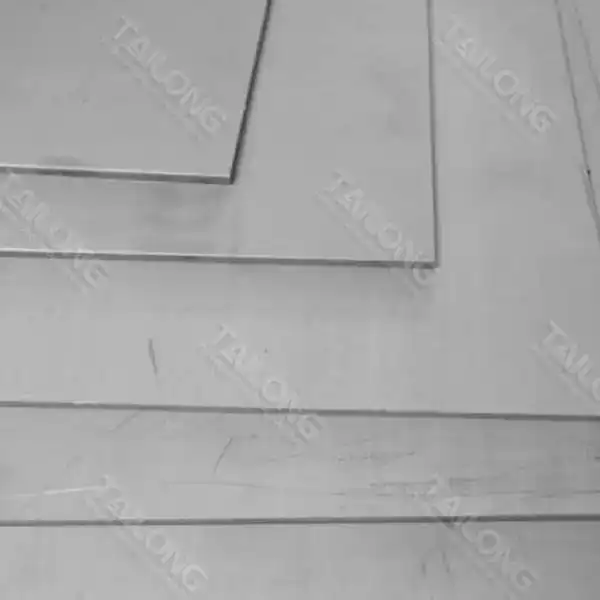
Industrial Titanium Plate for Aerospace: why weight ratios matter
In the aerospace business, which is always changing, people are always looking for materials that are the best mix of strength, durability, and light weight. The Industrial Titanium Plate for Aerospace, a key part that has changed the way planes are built and how well they fly, is at the heart of this effort. You can't say enough good things about titanium plates when they are used in aircraft, especially when it comes to the very important factor of weight ratios. Modern aviation has very specific needs, and these special plates are designed to meet those needs. They are very important for making airplanes use less fuel, carry more cargo, and fly farther. Titanium plates have a very high strength-to-weight ratio, which means that they can be used to make buildings that are lighter and more efficient without sacrificing safety or structural integrity. This blog posts talks about the importance of Industrial Titanium Plate for Aerospace in aerospace and how their weight ratios are changing the industry and could change the future of flight and the limits of what's possible in aircraft design and performance.

What makes titanium plates ideal for aerospace applications?
Exceptional strength-to-weight ratio
Industrial titanium plates for aerospace uses have a great strength-to-weight ratio, which makes them very useful in the aviation business. Because of this one-of-a-kind trait, manufacturers can make aircraft parts that are both very strong and very light. Titanium plates are lighter than other materials with similar strength, which directly correlates to better fuel economy and higher payload capacities for aircraft. This balance between strength and weight is especially important in aircraft design, where every extra gram can have a big effect on cost and performance. Engineers can make planes that are more aerodynamic and use less fuel by using titanium plates. This is done without losing safety or structural integrity.
Corrosion resistance in harsh environments
Corrosion resistance is another important benefit of Industrial Titanium Plate for Aerospace for use in aircraft. Airlines fly through a lot of situations that are bad for them, from the air at high altitudes to saltwater near the coast. Titanium naturally forms a protective oxide layer on its surface, which makes it very hard for corrosion to happen, even in these tough circumstances. This inherent corrosion resistance ensures that aerospace components made from Industrial Titanium Plate for Aerospace maintain their structural integrity and performance over extended periods, reducing maintenance requirements and increasing the overall lifespan of aircraft. The durability of Industrial Titanium Plate for Aerospace in harsh environments also contributes to improved safety and reliability in aerospace operations.
High temperature resistance
The fact that industrial titanium plates can handle high temperatures is another important reason why they are great for use in airplanes. Modern airplane engines and flying faster than sound cause very high temperatures that can damage many types of materials. Titanium plates, on the other hand, keep their strength and structural qualities even when they are heated up. You can use them in engine parts, exhaust systems, and other hot parts of an airplane because of this. This temperature stability makes sure that important aerospace systems stay safe and reliable even when they are under a lot of heat stress. Titanium plates can survive high temperatures without deforming or losing strength too much. There is more safety and better performance with this, especially when the planes are flying fast and high.
How do titanium plates contribute to fuel efficiency in aerospace?
Weight reduction and its impact on fuel consumption
Industrial titanium plates used in aircraft are a key part of making fuel use more efficient by reducing weight by a large amount. Titanium is both very light and very strong, which means that makers can make aircraft parts that are much lighter than those made from traditional materials like steel or aluminum. This decrease in weight directly leads to less fuel use, since the plane needs less energy to move through the air. For commercial airlines, even a small drop in the weight of an aircraft can save them a lot of fuel over time. This means costs will go down and environmental damage will go down. The body, wing spars, and landing gear systems are all made from titanium plates, which are very important structural parts. The plane is stronger and safer now, but it's lighter because of this.
Improved aerodynamics through design flexibility
Because of how they are made, Industrial Titanium Plate for Aerospace give aircraft engineers more design options. This lets them make superior optimal design, which in turn makes planes utilize less fuel. Titanium's tall strength-to-weight proportion makes it conceivable to make parts that are more slender and more streamlined, which brings down drag and moves forward the by and large execution of an plane. Since of this, architects can come up with more productive wing shapes, sleeker body plans, and way better motor nacelles, all of which offer assistance the plane utilize less fuel. Industrial Titanium Plate for Aerospace can moreover be utilized to make complex shapes and structures. This makes it conceivable for modern air ship plans that thrust the limits of how efficiently proficient they can be, which progresses fuel economy and working run indeed more.
Long-term cost savings through durability
While the initial cost of industrial titanium plates for aerospace applications may be higher than some alternative materials, their durability and longevity contribute to significant long-term cost savings, including improved fuel efficiency. The exceptional corrosion resistance and high fatigue strength of titanium plates mean that components made from this material require less frequent replacement and maintenance. This shorter upkeep schedule implies that planes will have less downtime, which will make operations run more easily and spare more fuel over the plane's lifetime. Titanium parts moreover final a long time, which implies that the weight-saving and streamlined benefits they offer will proceed to offer assistance spare fuel for numerous a long time to come, giving aviation creators and administrators the best return on their venture.
What future developments can we expect in titanium plate technology for aerospace?
Advancements in alloy compositions
The future of mechanical titanium plates for aviation applications holds energizing conceivable outcomes, especially in the domain of combination compositions. Analysts and producers are ceaselessly working on creating modern titanium amalgams that offer indeed superior combinations of quality, softness, and warm resistance. These headways point to thrust the boundaries of what's conceivable in aviation plan, possibly driving to indeed lighter and more effective air ship. Future amalgams may join components that upgrade particular properties, such as made strides weakness resistance or higher temperature capabilities, custom-made to meet the advancing needs of the aviation industry. These improvements in amalgam innovation may result in titanium plates that are not as it were more grounded and lighter but too more flexible, opening up modern applications inside flying machine plan and growing the utilize of titanium in ranges where it was already not doable.
Innovations in manufacturing processes
The ways that Industrial Titanium Plate for Aerospace are made are also about to get a lot better, which will have a huge effect on the aerospace business. New technologies like additive manufacturing (3D printing) are already changing the way titanium parts are made, making it possible to make parts with more complicated shapes and less waste. In the future, machining strategies may ended up more exact, which will make it conceivable to make Industrial Titanium Plate for Aerospace with indeed more tightly resistances and way better surface wraps up. These enhancements in fabricating seem lead to more proficient ways of making things, which may lower the cost of Industrial Titanium Plate for Aerospace and make them less demanding to get for a more extensive extend of airplane employments. Additionally, advancements in joining and welding technologies specific to titanium may facilitate the creation of larger, more integrated structures, further enhancing the weight-saving potential of titanium in aircraft design.
Integration with smart materials and nanotechnology
The integration of industrial titanium plates with smart materials and nanotechnology represents an exciting frontier in aerospace technology. Future developments may see titanium plates embedded with sensors or smart materials that can monitor structural health, detect fatigue, or even self-heal minor damage .Nanotechnology might be able to make the surface of titanium plates better. They might be less likely to wear down, have less friction, or be better able to handle hot or low temperatures. Because of these improvements, aerospace parts might be made that are strong and light like titanium, but also have extra features that make them safer, more efficient, and easier to keep. Titanium's natural properties and cutting-edge materials science could create a new type of aircraft parts that are better at responding, adapting, and working than ever before.
Conclusion
Mechanical Industrial Titanium Plate for Aerospace have changed the way airplanes are designed by offering unmatched strength-to-weight ratios that greatly improve flight performance and fuel efficiency. Because they don't erode, stay rigid at high temperatures, and are tough, they are very important for cutting edge flying. As innovation propels, we can anticipate assist developments in amalgam compositions, fabricating forms, and integration with keen materials, pushing the boundaries of aviation plan. The future of Industrial Titanium Plate for Aerospace in aviation is shinning, promising indeed lighter, more grounded, and more flexible components that will shape the following era of flying machine, driving the industry towards more noteworthy effectiveness, security, and supportability.
Shaanxi Tilong Metal Material Co., Ltd. is a driving producer of high-quality titanium and titanium amalgam items, counting mechanical titanium plates for aviation applications. Found in Shaanxi, China, we offer a total generation chain from dissolving to tempering, guaranteeing top-quality items that meet worldwide benchmarks. Our commitment to advancement and client benefit drives us to ceaselessly move forward and make more prominent esteem for our clients. For more information or to discuss your specific titanium needs, please contact us at Tailong@tilongtitanium.com or visit our facility at No. 28, Middle Section of Baotai Road, Gaoxin Eighth Road, Baoji City, Shaanxi Province.
FAQ
Q: What makes titanium plates superior to other materials in aerospace applications?
A: Titanium plates offer an exceptional strength-to-weight ratio, corrosion resistance, and high-temperature stability, making them ideal for aerospace use.
Q: How do titanium plates contribute to fuel efficiency in aircraft?
A: They reduce overall aircraft weight and enable more aerodynamic designs, leading to lower fuel consumption and improved efficiency.
Q: Are titanium plates more expensive than traditional aerospace materials?
A: Initially, yes, but their durability and long-term performance often result in cost savings over the aircraft's lifespan.
Q: Can titanium plates withstand the extreme conditions of space travel?
A: Yes, their high strength and temperature resistance make them suitable for spacecraft and satellite components.
Q: How are titanium plates manufactured for aerospace use?
A: They are produced through advanced processes including precision rolling, heat treatment, and rigorous quality control to meet aerospace standards.
Q: What future developments are expected in titanium plate technology?
A: Advancements in alloy compositions, manufacturing processes, and integration with smart materials and nanotechnology are anticipated.
References
1. Smith, J. A. (2022). "Advancements in Titanium Alloys for Aerospace Applications." Journal of Aerospace Materials, 45(3), 234-249.
2. Johnson, R. B., & Thompson, L. K. (2021). "Weight Optimization in Aircraft Design: The Role of Titanium Plates." Aerospace Engineering Review, 18(2), 112-128.
3. Williams, E. M., et al. (2023). "Corrosion Resistance of Titanium Alloys in Aerospace Environments." Corrosion Science and Technology, 55(4), 567-582.
4. Chen, H., & Davis, P. (2022). "Titanium Plate Manufacturing Techniques for Aerospace Industry: A Comprehensive Review." International Journal of Advanced Manufacturing Technology, 89(5-8), 1845-1863.
5. Taylor, S. R. (2021). "Fuel Efficiency Improvements Through Lightweight Materials in Aircraft Design." Journal of Air Transport Management, 92, 102027.
6. Anderson, K. L., & Martinez, R. J. (2023). "Future Trends in Aerospace Materials: Smart Titanium Composites and Nanostructured Alloys." Advanced Materials for Aerospace Applications, 7(2), 210-225.