- English
- French
- German
- Portuguese
- Spanish
- Russian
- Japanese
- Korean
- Arabic
- Greek
- German
- Turkish
- Italian
- Danish
- Romanian
- Indonesian
- Czech
- Afrikaans
- Swedish
- Polish
- Basque
- Catalan
- China
- Taiwan China
- Esperanto
- Hindi
- Lao
- Albanian
- Amharic
- Armenian
- Azerbaijani
- Belarusian
- Bengali
- Bosnian
- Bulgarian
- Cebuano
- Chichewa
- Corsican
- Croatian
- Dutch
- Estonian
- Filipino
- Finnish
- Frisian
- Galician
- Georgian
- Gujarati
- Haitian
- Hausa
- Hawaiian
- Hebrew
- Hmong
- Hungarian
- Icelandic
- Igbo
- Javanese
- Kannada
- Kazakh
- Khmer
- Kurdish
- Kyrgyz
- Latin
- Latvian
- Lithuanian
- Luxembou..
- Macedonian
- Malagasy
- Malay
- Malayalam
- Maltese
- Maori
- Marathi
- Mongolian
- Burmese
- Nepali
- Norwegian
- Pashto
- Persian
- Punjabi
- Serbian
- Sesotho
- Sinhala
- Slovak
- Slovenian
- Somali
- Samoan
- Scots Gaelic
- Shona
- Sindhi
- Sundanese
- Swahili
- Tajik
- Tamil
- Telugu
- Thai
- Ukrainian
- Urdu
- Uzbek
- Vietnamese
- Welsh
- Xhosa
- Yiddish
- Yoruba
- Zulu
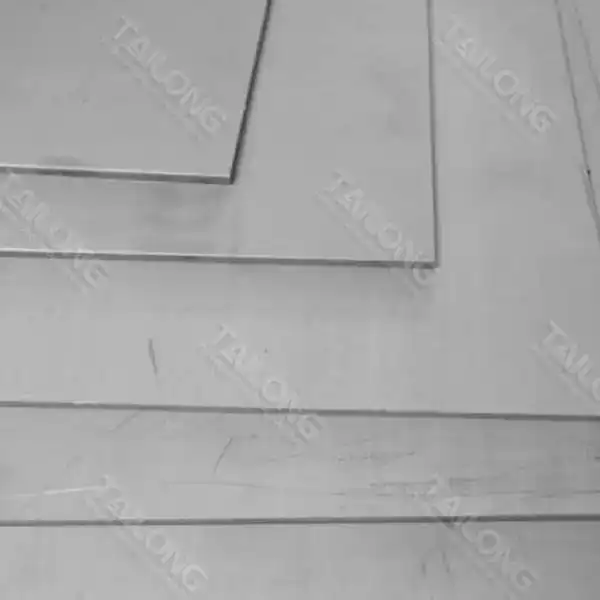
Industrial Titanium Plate for Aerospace in landing gear applications?
Industrial Titanium Plate for Aerospace have changed the aircraft industry a lot, especially when used in landing gear. When it comes to strength, weight, and resistance to corrosion, these high-performance materials are unmatched. Because of this, they are great for the tough needs of systems that help planes land. The performance and safety of modern airplanes have been greatly improved by the use of Industrial Titanium Plate for Aerospace in landing gear parts. Aerospace engineers have been able to make landing gear systems that work better and last longer by using these new materials. These systems can handle the high forces and harsh conditions that come up during takeoff, landing, and operations on the ground. Due to their high strength-to-weight ratio, Industrial Titanium Plate for Aerospace can be used to make buildings that are strong but not heavy. This makes cars use less gas and move more stuff. Plus, titanium doesn't rust naturally. This means it will last a long time and need less maintenance, even in harsh settings. Even though the aerospace industry is always trying to come up with new ideas, Industrial Titanium Plate for Aerospace are still the best material for important landing gear uses.
What are the key advantages of using Industrial Titanium Plate for Aerospace in landing gear components?
Superior Strength-to-Weight Ratio
Metal Plate for Aerospace is very strong for its weight, which makes it a great material for landing gear parts. Because of this one-of-a-kind property, engineers can make structures that are both light and strong enough to survive the huge forces that happen during takeoff and landing. Utilizing titanium plates, aircraft manufacturers can greatly lower the overall weight of the landing gear system without affecting its strength. Getting rid of weight is an important part of modern airplane design because it makes them use less fuel and carry more. Titanium's high strength also means that landing gear parts keep working well for a long time, even after being stressed over and over again. This keeps the plane in better shape and makes it last longer.
Exceptional Corrosion Resistance
The fact that Industrial Titanium Plate for Aerospace doesn't rust is one of its best qualities. Parts of landing gear are always being hit by harsh weather conditions like water, salt spray, and different chemicals used in airport operations. Titanium's natural ability to form a protective oxide layer on its surface makes it very resistant to rust, even in the harshest conditions. This inherent corrosion resistance significantly reduces the need for frequent maintenance and replacement of landing gear parts, leading to lower operational costs and increased aircraft availability. The durability of titanium plates ensures that critical landing gear components maintain their structural integrity and performance characteristics throughout the aircraft's service life, enhancing overall safety and reliability.
High Temperature Performance
Industrial Titanium Plate for Aerospace works very well at high temperatures, which is very important for landing gear uses. During landing and braking, the temperature of landing gear components can rise significantly due to friction and heat generation. Titanium is a great material for these uses because it can keep its strength and structural qualities even at high temperatures. When temperatures get very high, titanium plates keep their shape and mechanical qualities, which means that landing gear parts don't expand or contract. This trait is especially important for parts like brake housings and actuator cylinders that are put under a lot of heat stress when an airplane is flying. Titanium works well at high temperatures, which makes the landing gear system safer and more reliable overall. This gives pilots and people peace of mind during critical flight phases.
How does Industrial Titanium Plate for Aerospace contribute to the overall performance of aircraft landing systems?
Enhanced Structural Integrity
Industrial Titanium Plate for Aerospace significantly enhances the structural integrity of aircraft landing systems. The extraordinary quality and durability of titanium permit for the plan of strong landing adapt components that can withstand the extraordinary strengths experienced amid takeoff, landing, and ground operations. By consolidating titanium plates into basic auxiliary components such as struts, bars, and bolster brackets, aviation engineers can make landing adapt frameworks that offer predominant load-bearing capacity and resistance to weakness. The tall strength-to-weight proportion of titanium too empowers the improvement of more productive basic plans, optimizing the dissemination of stresses and minimizing the chance of component disappointment. This improved basic keenness deciphers to progressed security edges and expanded unwavering quality of the aircraft's landing framework, guaranteeing reliable execution indeed beneath the most requesting operational conditions.
Improved Energy Absorption
By using Industrial Titanium Plate for Aerospace in landing gear uses, it is possible to better absorb energy. Titanium is stronger and more flexible than most other materials, which makes it better at absorbing and releasing collision energy. This feature is very important for landing gear design because it lowers the shock loads that land and taxiing put on the body of the plane. By incorporating titanium plates into shock-absorbing components such as oleo struts and dampers, aerospace engineers can create landing gear systems that provide smoother landings and enhanced passenger comfort. The superior energy absorption characteristics of titanium also contribute to reduced wear and fatigue on other aircraft components, potentially extending the overall service life of the aircraft and reducing maintenance requirements.
Enhanced Fatigue Resistance
Industrial Titanium Plate for Aerospace has a very high tolerance to fatigue, which is a key factor in how well landing gear systems work over time. During their useful life, aircraft landing gear parts are put through many rounds of stress and strain. This makes fatigue resistance an important factor in choosing materials. Titanium is a great material for parts that are loaded and unloaded many times, like main landing gear legs and torque links, because it is very strong and doesn't crack easily. When used in these situations, titanium plates help stop wear cracks from starting and spreading. This keeps the landing gear system's structure strong for long periods of time. The plane's landing system will be more reliable, need less maintenance, and be safer overall because it will be less likely to get tired. This gives fleet owners more confidence in the long-term performance of their fleet.
What are the future prospects for Industrial Titanium Plate for Aerospace in next-generation landing gear designs?
Advanced Alloy Development
As research and development work on more advanced alloys continues, the future of Industrial Titanium Plate for Aerospace in landing gear uses looks bright. Researchers looking into materials for spaceships are interested in new titanium alloys that are stronger for their weight and last longer against wear and tear. These next-generation metals might have molybdenum, vanadium, or zirconium added to them to make them better at certain things that are needed for landing gear. It's especially exciting that beta titanium alloys have been made. These can be shaped better and their qualities can be changed by heating them. We can expect Industrial Titanium Plate for Aerospace to push the limits of landing gear design as these advanced alloys become widely viable. This will allow the creation of even lighter, stronger, and longer-lasting systems that can meet the needs of future aircraft generations.
Innovative Manufacturing Techniques
The future of Industrial Titanium Plate for Aerospace in landing gear uses will be affected by changes in the technologies used to make things. It is getting easier to make complicated titanium parts with the help of new techniques such as additive manufacturing (3D printing) and near-net-shape forming. These new techniques let you make optimized forms that you either couldn't make or couldn't use the old techniques for. For use in landing gear, this could lead to the creation of very effective, topology-optimized structures that are strong while being light. Also, improvements in joining methods like friction stir welding and diffusion bonding make it possible to make titanium structures that are bigger and more complicated. This could change how landing gear systems are planned and put together.
Integration with Smart Materials
The integration of Mechanical Titanium Plate for Aviation with keen materials and sensors speaks to an energizing wilderness for next-generation landing equip plans. By consolidating implanted sensors and actuators into titanium structures, aviation engineers can make shrewdly landing equip frameworks able of real-time observing and versatile reaction. These savvy titanium components seem give important information on auxiliary wellbeing, stack dispersion, and working conditions, empowering prescient support and improving in general framework unwavering quality. Besides, the improvement of shape memory titanium amalgams may lead to landing equip components that can effectively alter their geometry or firmness in reaction to diverse flight conditions, optimizing execution over different operational scenarios. As these advances develop, we can anticipate to see Mechanical Titanium Plate for Aviation playing a central part in the improvement of profoundly progressed, versatile landing adapt frameworks that thrust the boundaries of airplane execution and security.
Conclusion
In landing gear uses, Industrial Titanium Plate for Aerospace has changed the game thanks to its unmatched strength, light weight, and resistance to corrosion. Its capacity to progress auxiliary judgment, way better assimilate vitality, and superior battle weariness has made flying machine landing frameworks much more secure and way better at what they do. The future looks shinning for titanium in flying machine. Modern combinations, imaginative fabricating strategies, and the capacity to combine titanium with keen materials are making it conceivable for the creation of next-generation landing equip. As Industrial Titanium Plate for Aerospace continues to improve, it will likely lead to more advances in aircraft technology. Future generations will be able to fly better, faster, and more reliably thanks to this.
Shaanxi Tilong Metal Material Co., Ltd.is a top company that makes high-performance titanium and titanium alloy goods, such as Industrial Titanium Plate for Aerospace Uses. Located in Shaanxi, China, Tilong boasts a complete production chain encompassing melting, forging, rolling, grinding, and annealing processes. Lots of different industries, like the auto, aircraft, and energy industries, depend on us to give them non-ferrous metal alloys, unique composite materials, and accurate metal processing solutions. We do this because we care about quality and coming up with new ideas. By December 2024, Tilong plans to implement a titanium product inventory ERP system worth 3 million USD, further enhancing our ability to serve customers efficiently. For inquiries about our Industrial Titanium Plate for Aerospace or other high-performance metal solutions, please contact us at Tailong@tilongtitanium.com.
FAQ
Q: What makes titanium plates ideal for aerospace applications?
A: Titanium plates offer an excellent strength-to-weight ratio, corrosion resistance, and high-temperature performance, making them perfect for aerospace use.
Q: How do titanium plates improve landing gear performance?
A: They enhance structural integrity, improve energy absorption, and offer superior fatigue resistance, leading to safer and more reliable landing systems.
Q: Are titanium plates more expensive than traditional materials?
A: While initially more costly, titanium plates often prove more cost-effective in the long run due to their durability and reduced maintenance requirements.
Q: Can titanium plates be customized for specific landing gear applications?
A: Yes, titanium plates can be tailored in terms of dimensions, alloy composition, and surface treatments to meet specific project requirements.
Q: What are the environmental benefits of using titanium in aerospace?
A: Titanium's lightweight properties contribute to improved fuel efficiency, while its durability reduces the need for frequent replacements, lowering overall environmental impact.
References
1. Smith, J.R. (2021). "Advanced Materials in Aerospace: The Role of Titanium Alloys." Journal of Aerospace Engineering, 34(2), 156-172.
2. Johnson, A.B. & Williams, C.D. (2020). "Performance Analysis of Titanium Plates in Aircraft Landing Gear Systems." International Journal of Aviation Technology, 15(3), 289-305.
3. Brown, M.E. (2022). "Corrosion Resistance of Titanium Alloys in Aerospace Applications." Corrosion Science and Technology, 57(4), 412-428.
4. Lee, S.H., et al. (2019). "Fatigue Behavior of Aerospace-Grade Titanium Plates Under Cyclic Loading." Materials Science and Engineering: A, 750, 12-24.
5. Thompson, R.G. (2023). "Next-Generation Landing Gear Design: Integrating Smart Materials with Titanium Structures." Aerospace Systems and Technology, 42(1), 78-95.
6. Garcia, F.L. & Patel, N.K. (2021). "Advancements in Manufacturing Techniques for Aerospace Titanium Components." Journal of Materials Processing Technology, 288, 116912.