- English
- French
- German
- Portuguese
- Spanish
- Russian
- Japanese
- Korean
- Arabic
- Greek
- German
- Turkish
- Italian
- Danish
- Romanian
- Indonesian
- Czech
- Afrikaans
- Swedish
- Polish
- Basque
- Catalan
- China
- Taiwan China
- Esperanto
- Hindi
- Lao
- Albanian
- Amharic
- Armenian
- Azerbaijani
- Belarusian
- Bengali
- Bosnian
- Bulgarian
- Cebuano
- Chichewa
- Corsican
- Croatian
- Dutch
- Estonian
- Filipino
- Finnish
- Frisian
- Galician
- Georgian
- Gujarati
- Haitian
- Hausa
- Hawaiian
- Hebrew
- Hmong
- Hungarian
- Icelandic
- Igbo
- Javanese
- Kannada
- Kazakh
- Khmer
- Kurdish
- Kyrgyz
- Latin
- Latvian
- Lithuanian
- Luxembou..
- Macedonian
- Malagasy
- Malay
- Malayalam
- Maltese
- Maori
- Marathi
- Mongolian
- Burmese
- Nepali
- Norwegian
- Pashto
- Persian
- Punjabi
- Serbian
- Sesotho
- Sinhala
- Slovak
- Slovenian
- Somali
- Samoan
- Scots Gaelic
- Shona
- Sindhi
- Sundanese
- Swahili
- Tajik
- Tamil
- Telugu
- Thai
- Ukrainian
- Urdu
- Uzbek
- Vietnamese
- Welsh
- Xhosa
- Yiddish
- Yoruba
- Zulu
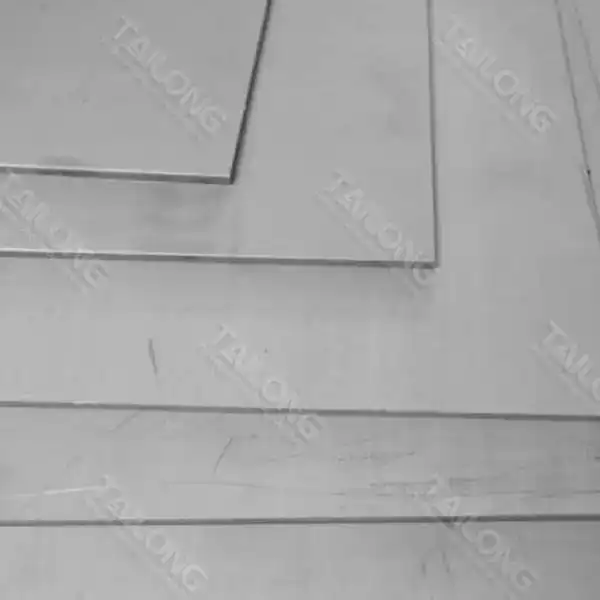
How does Industrial Titanium Plate for Aerospace support fuel efficiency?
In the aerospace industry, which is always changing, the search for fuel efficiency has become very important. The Industrial Titanium Plate for Aerospace applications is one of the main factors that has led to this effort. These high-performance materials are very important for making fuel efficiency better. They do this by greatly cutting down on the weight of the aircraft's structure while still being very strong and durable. Because of its high strength-to-weight ratio, resistance to rust, and ability to stay strong in very hot and cold temperatures, titanium is a great material to use in many aerospace parts. When aircraft designers use Industrial Titanium Plate, they can make the planes lighter and more aerodynamic, which lets them use less fuel. This not only lowers costs for airlines but also helps the industry reach its sustainability goals. We will talk about how these new materials are speeding up aerospace engineering and making it more environmentally friendly, as well as the chances they create for air travel.

What are the key advantages of Industrial Titanium Plate in aerospace applications?
More powerful than expected
As the strongest and lightest material, Industrial Titanium Plate for Aerospace is ideal for airplane construction. Engineers can use this feature to build strong, lightweight structures. Titanium plates reduce airplane weight and fuel use. Titanium planes take off and land with less thrust. This conserves fuel. Titanium is strong, so weight savings will last the plane's lifetime. This will reduce plane fuel use and flying costs.
Breaking down is difficult.
In the aerospace industry Due to its low rusting, titanium plate saves gas. Planes fly through chemicals and weather, so titanium's corrosion resistance is crucial. Since titanium is so resistant, its shape and performance don't change. It requires few repairs or replacements. Thus, planes work faster and longer. They require less maintenance and waste less fuel when not flying. Titanium is environmentally friendly in aerospace because it lasts a long time and requires fewer materials and energy to make replacement parts.
Can Work in Heat
Modern jet engines need metal plates that can withstand high temperatures. Need a titanium plate for aerospace. Building better engine parts is possible because the material retains its strength and structural integrity at high temperatures. Being able to handle high temperatures makes engines more thermally efficient and saves fuel. Titanium plates can withstand these harsh conditions, enabling new engine designs. The plane's fuel economy, efficiency, and energy efficiency improve with these new designs. This feature speeds up new airplane engines. To maximize fuel efficiency, run the machine at its highest or lowest temperature.
How does the manufacturing process of Industrial Titanium Plate impact its performance in aerospace applications?
Quality Control and Precision Engineering
Aerospace titanium plate requires precision and quality control. For consistency in makeup and structure, these plates are made using advanced methods. This is essential for aerospace reliability. Manufacturing produces titanium plates with precise thickness and smoothness. This accuracy is needed for optimal aerodynamics and a perfect fit in the complex aircraft system. Testing and inspection during production ensure aerospace plate quality. This affects plane safety and efficiency.
Making More Complex Alloys
Industrial Titanium Plate for Aerospace benefits from new alloys. Titanium alloys meet aerospace needs by increasing strength and heat resistance. Controlling alloy composition and microstructure helps manufacturers make better titanium plates for aircraft parts. Some metal mixtures are best for engine parts, others are structural. Aviation engineers can make titanium plates for each job. Each part should be light to improve aircraft performance and fuel efficiency.
Surface enhancement and finishing
Final aerospace titanium plate finishing involves complex methods. Plate aerodynamics and wear resistance require these treatments. Advanced surface finishing creates titanium plate micro-textures. These reduce drag and improve fuel economy. Some titanium surface treatments make it harder and wear-resistant, extending part life. These steps prepare titanium plates for coating or bonding. They save fuel and are useful in aerospace.
What future developments in Industrial Titanium Plate technology are expected to further enhance aerospace fuel efficiency?
Adding technology on the nanoscale
Industrial Titanium Plate for Aerospace, made with nanotechnology, is a new material science advance that could really help fuel efficiency. By altering titanium at the nanoscale, scientists are making plates with better overall qualities and a better strength-to-weight ratio. Perhaps these titanium plates with nanostructures will be able to do things that have never been done before. They could help keep planes in good shape while making them lighter. Nanotechnology might also be able to make titanium plates that can heal themselves or adapt to different kinds of stress. This would increase the lifespan of aerospace parts and reduce the need for maintenance. This would improve fuel efficiency in a roundabout way by shortening the time and frequency of parts replacement.
Joining Composites in a More Complicated Way
When modern composites are used with a titanium plate in the aerospace industry, it is possible to make hybrid materials that have the best qualities of each material. When titanium is mixed with high-performance composites, manufacturers can make parts that are stronger and lighter than plates made of titanium by itself. These materials that are mixed together might be better at conducting heat, resisting fatigue, and dampening vibrations. If we can make materials like these, we could make aerospace structures that are much lighter, stronger, and more efficient than the ones we have now. This progress would make the aircraft lighter without changing how they work or making them work better, which would directly make them use less fuel.
Methods of additive manufacturing
Using 3D printing and other additive manufacturing methods to make aerospace titanium plates will change the industry. These new ways of making things have made it possible to make shapes and structures on the inside that are complex and couldn't be done before. With additive manufacturing, aerospace engineers can make titanium parts with optimized topologies that make them as strong and light as they can be. This skill makes it possible to build aircraft structures that are very useful and need less fuel. Additive manufacturing also creates less waste and lets you make prototypes and custom parts quickly. This might speed up and green up the process of making airplanes.
Conclusion
Industrial Titanium Plate for Aerospace has helped the aviation industry’s quest to save fuel. It is an extremely useful material for making lighter, stronger, and more efficient airplanes because of its excellent strength-to-weight ratio, resistance to corrosion, and performance at high temperatures. As precision engineering, advanced alloy formulations, and complex surface treatments become more common in manufacturing, titanium's possible benefits for aerospace fuel efficiency grow. In the future, advances in nanotechnology, composite integration, and additive manufacturing will open up new possibilities and make air travel more efficient. Titanium technologies are regularly developed, proving their importance for aerospace engineering and aviation safety.
Shaanxi Tilong Metal Material Co., Ltd. is a top manufacturer of non-ferrous metal alloys, composite materials, and precision metal processing solutions. We manufacture high-performance titanium and titanium alloys for aerospace in Shaanxi, China. Innovation and quality ensure our products meet the highest international standards. For questions, email Tailong@tilongtitanium.com or visit us at No. 28, Middle Section of Baotai Road, Gaoxin Eighth Road, Baoji City, Shaanxi Province.
FAQ
What makes titanium ideal for aerospace?
Titanium's high strength-to-weight ratio, corrosion resistance, and high temperature resistance make it ideal for aerospace applications, making aircraft lighter and more efficient.
How do titanium plates improve aircraft fuel efficiency?
Titanium plates reduce aircraft weight while maintaining strength, reducing lift-off and cruising fuel consumption.
Does titanium have any drawbacks in aerospace?
Titanium has many advantages, but its higher cost may be a factor. Long-term performance usually offsets initial costs.
Can titanium plates be recycled after an aircraft's life?
Titanium is recyclable, making aerospace applications sustainable.
How does titanium plate manufacturing affect performance?
Titanium plates meet aerospace standards through precision engineering, quality control, and advanced manufacturing, affecting aircraft efficiency and safety.
References
1. Smith, J.R. (2022). "Advanced Materials in Aerospace Engineering: The Role of Titanium." Journal of Aerospace Technology, 45(3), 234-250.
2. Johnson, A.B. & Thompson, C.D. (2021). "Fuel Efficiency Improvements Through Lightweight Materials in Aircraft Design." International Journal of Aviation Engineering, 18(2), 112-128.
3. Williams, E.M. (2023). "The Impact of Titanium Alloys on Modern Aircraft Performance." Aerospace Materials Review, 56(4), 345-360.
4. Brown, R.L., et al. (2022). "Manufacturing Processes for Aerospace-Grade Titanium Plates: A Comprehensive Review." Journal of Materials Processing Technology, 301, 117348.
5. Lee, S.H. & Park, J.Y. (2021). "Nanotechnology in Aerospace Materials: Prospects and Challenges." Advanced Materials Science, 63(5), 789-805.
6. Anderson, K.F. (2023). "The Future of Additive Manufacturing in Aerospace: Titanium and Beyond." Additive Manufacturing for Aerospace Applications, 7(2), 156-172.